
Among heatwaves, majority of US public wants climate action
As record-breaking heatwaves sweep the US, new polling shows two-thirds of Americans are concerned about climate change, even as the Trump administration moves to expand fossil fuel production and promote animal-derived foods.
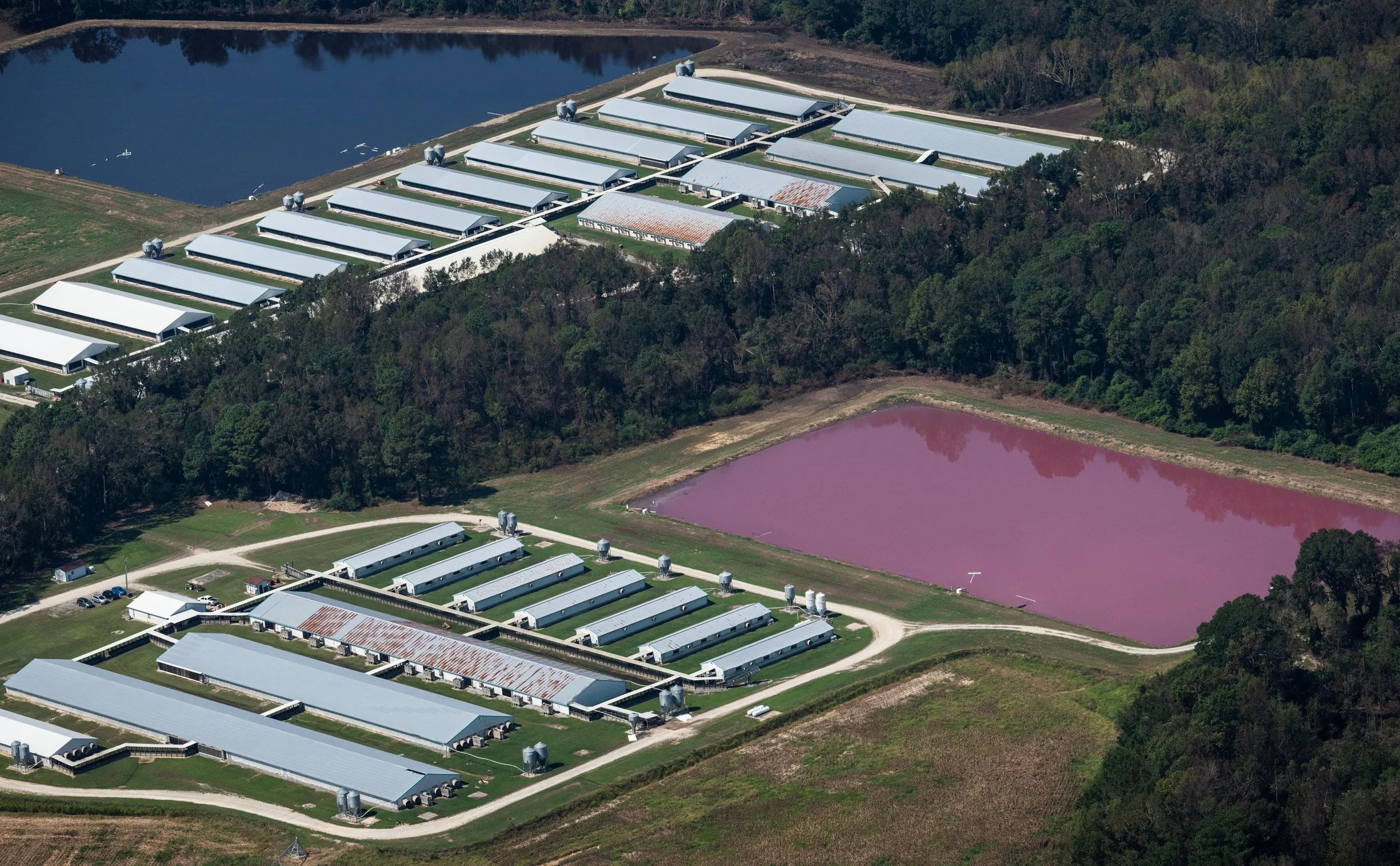
Credit: Jo-Anne McArthur/We Animals
Potentially deadly heatwaves are sweeping the US, with cities including New York, Philadelphia, Washington DC, St. Louis, and Chicago seeing temperatures hovering around 100°F, some of the most extreme temperature spikes in over a decade.
Polling has shown that the majority of US citizens are worried. Recent research by Yale and the George Mason Center for Climate Change Communication has found that two-thirds of Americans are concerned about the climate catastrophe, with the topic still at the front of people's minds despite other pressing issues such as the Iran war.
Over half of Americans also believe that the effects of global warming have already begun, and 62 percent believe that the climate crisis is a result of human-made pollution. Beyond the US, Europe is also facing devastating heat. Temperatures have been record-breaking in France, Spain, the UK, Germany, and many other countries.
“We have just lived through the eleven hottest years ever recorded. Climate disasters are becoming more frequent, more destructive, and more costly,” said UN Secretary General António Guterres at London Climate Week in June. “And the World Meteorological Organization has warned we ain’t seen nothing yet. El Niño is not just knocking on the door. It risks blowing the house down. Turning up the heat. Disrupting food and water systems. And hitting the vulnerable the hardest.”
Despite the US public still favoring action on climate change, the Trump administration continues to push forward with climate-destructive policies. The Interior Department announced plans to roll back two Biden-era regulations on oil and gas drilling on public lands, one reducing the cleanup fees companies must pay before drilling, the other allowing higher methane releases. The Bureau of Land Management would also no longer be required to assess conflicts with wildlife habitat, and the public's ability to weigh in on permitting decisions would be significantly reduced.
“We have just lived through the eleven hottest years ever recorded.”
The mass-rearing and slaughter of animals for human food chains is responsible for 60 percent of global greenhouse gas emissions from agriculture. Animal agriculture is also a massive contributor to deforestation, with forests being cut down to grow feed for farmed animals, including feed crops such as soy. The majority of all soy in the world is used as feed for animals destined for consumption, and it is estimated that 80 percent of deforestation rates in the Amazon rainforest are tied to cattle ranching and the production of leather and beef.
The Trump administration's Make America Healthy Again (MAHA) initiative is heavily supportive of animal-derived foods. Experts have warned the 2026 update to the dietary guidelines will likely worsen the food system's environmental impact, with the potential to spike emissions by more than 30 percent, according to a study in Proceedings of the National Academy of Sciences.
“Given that the majority of protein currently consumed in the US is animal-based and that the new inverted food pyramid places red meat and other meats at the top (indicating that they should be consumed regularly), the public is likely to interpret calls to increase protein intake as encouragement to consume more meat, which is disproportionately environmentally costly,” the study authors write.

A burning pasture at a cattle farm also burns a neighboring forest area. Undisclosed location, Mato Grosso, Brazil, 2019. Credit: Victor Moriyama / We Animals
Research has repeatedly shown that a plant-based diet is one of the best steps individuals can take to minimize their impact on the environment. A landmark study from Oxford University and the Nature Food Journal has found that a vegan diet only has 30 percent of the climate impact of a meat-forward way of eating.
This year, research from Physicians’ Committee for Responsible Medicine (PCRM) revealed that a plant-based diet can cut an individual’s environmental footprint in half. “This is real-world clinical trial data showing that changing what we eat can rapidly and meaningfully reduce environmental impact—while simultaneously improving metabolic health,” said Dr. Hana Kahleova MD, PhD, who led the study.
The public may be on board: last year, a study from PCRM also found that nearly half of Americans would be willing to reduce their meat consumption to help reduce greenhouse gas emissions.
Join Species Unite's 30-Day Plant-Powered Challenge, a free month of recipes and tips to help you reduce demand for animal products, one meal at a time.
We Have A Favor To Ask…
Species Unite amplifies well-researched solutions to some of the most abusive animal industries operating today.
At this crucial moment, with worldwide momentum for change building, it’s vital we share these animal-free solutions with the world - and we need your help.
We’re a nonprofit, and so to keep sharing these solutions, we’re relying on you - with your support, we can continue our essential work in growing a powerful community of animal advocates this year.


As opposition to octopus farming grows worldwide, Colombia is moving to ban the practice before a single farm is built.