
Kittens tortured in NIH-funded University of Florida lab, new report reveals
An investigation has found animals mistreated and neglected in University of Florida laboratories funded by the National Institutes of Health.
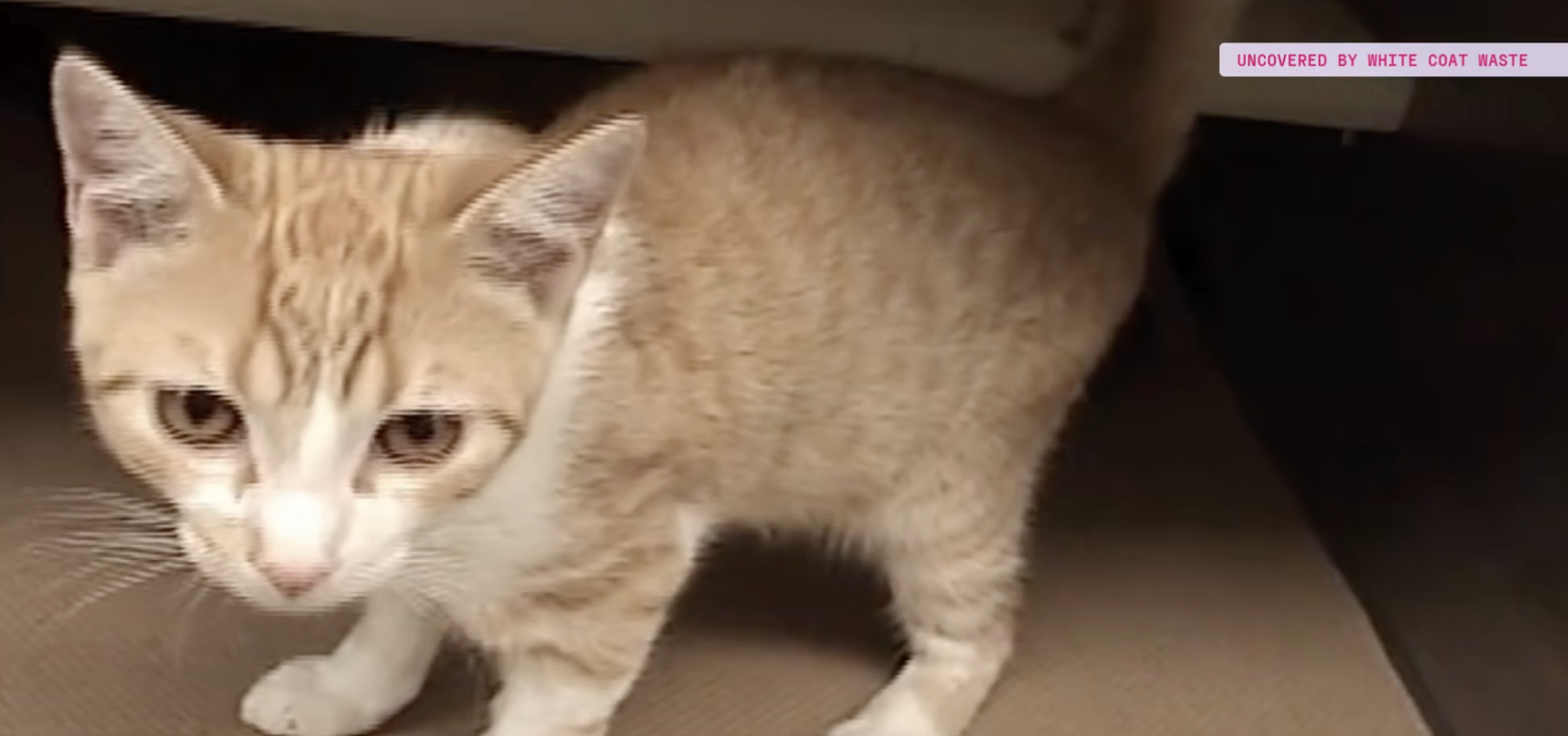
An investigation and a 2025 Freedom of Information Act lawsuit have uncovered video footage and evidence of systemic animal mistreatment at a University of Florida laboratory funded by the National Institutes of Health (NIH).
The footage, obtained by nonprofit organization White Coat Waste, shows kittens bred with conditions including Niemann-Pick type C1 (NPC1), a disease that can cause progressive neurological decline, loss of muscle control, difficulty swallowing, and dementia.
Up to 119 cats have been approved for the experiments. Each animal is killed at the end of the program, either at 24 weeks old, after three years of experimentation, or when the disease has progressed beyond survival.
The program has cost taxpayers more than $2,639,000 so far.
When the kittens are just three weeks old, they are subjected to brain and carotid artery injections, blood and tissue sample collections, and neurological and behavioral tests.
As their health deteriorates, the report found that experimenters push the animals to continue. Padded cages and feeding assistance are provided only when the cats can no longer eat independently.
These findings run counter to the Secretary of Health and Human Services, Robert Kennedy Jr.’s plans to m minimize experimentation on animals at the NIH.
Exposés by WCW have found that the NIH has devoted nearly $150million in new funding for experiments on dogs and cats at the University of Florida and other laboratories.
Research has also shown that most American taxpayers support an end to experimentation on animals such as cats and dogs: a 2024 study by Physicians’ Committee for Responsible Medicine and Morning Consult found that approximately 85 percent of respondents agreed with the claims: “Government funding should prioritize research methods that do not involve animal testing” and “Animal experimentation should be phased out in favor of more modern research methods”.
“The results reflect the growing appreciation of animals’ inner lives,” said Neal Barnard, MD, president of the Physicians Committee, which commissioned the survey. “Also, we now have research technologies that allow us to harmlessly study human beings in ways that were not possible a few decades ago. The use of animals now seems more antiquated.”
Another study in 2024 by the Colorado State University Human-Animal Policy Center found that 71 percent of respondents agreed that government programs and policies are “very or extremely important” to reduce the suffering of animals used in experimentation.
Alternative methods, such as organs-on-a-chip, tissue culture techniques, AI models, and more have been found to be more effective and reliable than outdated experiments on the bodies of animals that are physiologically and biologically very different from humans.
White Coat Waste is working with bipartisan lawmakers in Florida to reduce NIH funding for animal-based research.
Recently, the NIH’s House funding panel advanced legislation backed by White Coat Waste, cutting funding for painful testing on cats and dogs in the agency’s 2027 spending bill.
Please reach out to your representatives and urge them to do the right thing by cosponsoring the FDA Modernization Act 3.0, which would end a federal mandate that experimental drugs must be tested on animals before they are used on humans in clinical trials - a requirement that had been in effect since 1938. Send your letter here - it takes 30 seconds.
We Have A Favor To Ask…
Species Unite amplifies well-researched solutions to some of the most abusive animal industries operating today.
At this crucial moment, with worldwide momentum for change building, it’s vital we share these animal-free solutions with the world - and we need your help.
We’re a nonprofit, and so to keep sharing these solutions, we’re relying on you - with your support, we can continue our essential work in growing a powerful community of animal advocates this year.

As opposition to octopus farming grows worldwide, Colombia is moving to ban the practice before a single farm is built.