
New USDA proposal could allow slaughterhouses to set their own limits on killing speed
New rules could mean higher line speeds, putting workers in danger and increasing animal suffering.
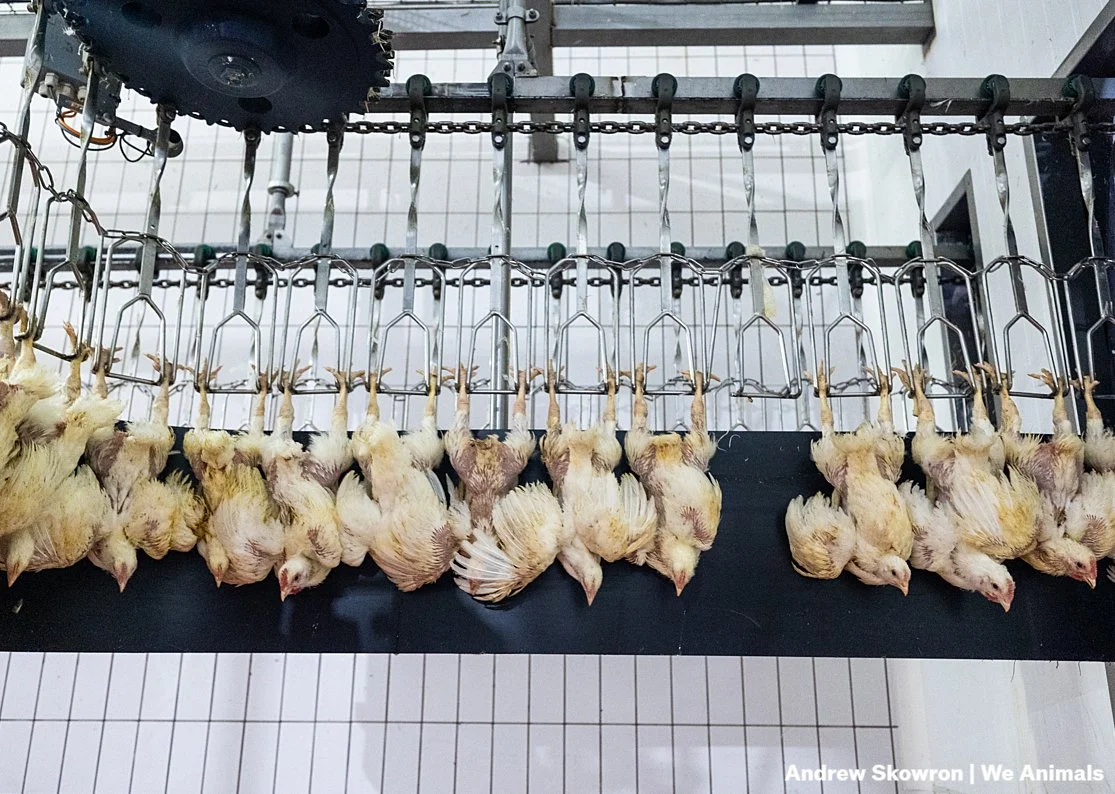
Photo: Andrew Skowron/We Animals
Proposed updates from the U.S. Department of Agriculture (USDA) could allow pig and poultry slaughterhouses to set their own limits on slaughter line speeds. This could mean increased animal suffering, more risks for workers, and a threat to food safety.
Currently, poultry slaughterhouses operate at line speeds of up to 140 birds per minute. Many facilities continue to use COVID-era waivers to increase that number to 175. Pig slaughterhouses can kill up to 1,106 animals per hour, with six facilities that hold waivers authorizing higher line speeds.
The new proposals would increase chicken line speeds to 175 birds per minute, raise turkey speeds from 55 to 60 birds per minute, and eliminate line speed limits for pigs.
While meat industry representatives support the new rules, animal welfare advocates worry that existing animal abuse in the industry could significantly worsen. The stunning process, already ineffective at times, would be even more affected: it would be more difficult for workers to take the time to properly stun animals, meaning that the risk of botched slaughter would increase.
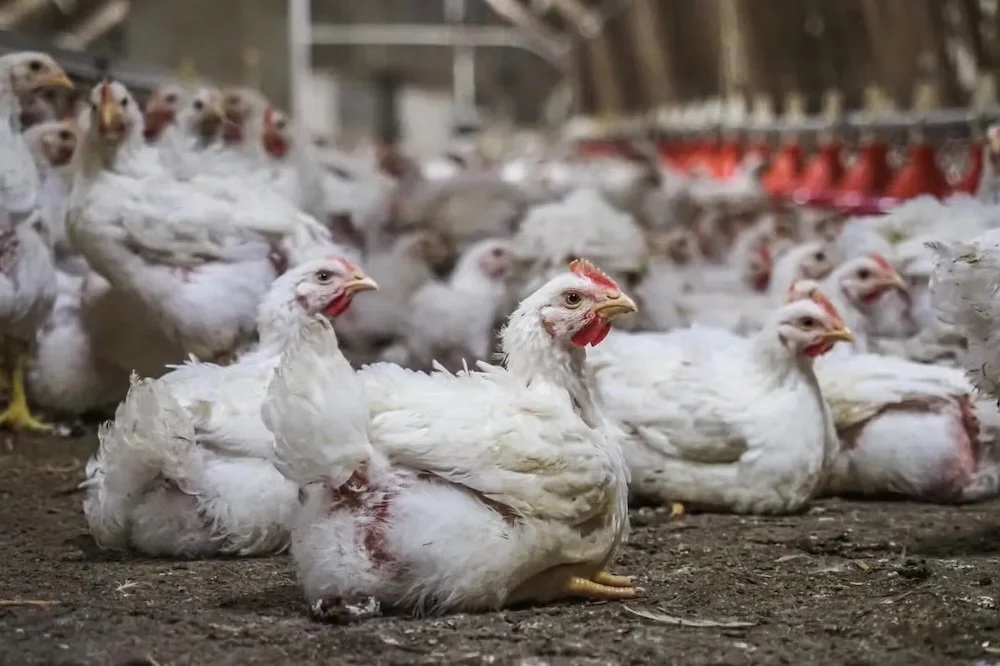
Photo: Lukas Vincour/We Animals
“Accelerated slaughter line speeds are a harsh recipe for cruelty and chaos,” said Kitty Block, president and CEO of Humane World for Animals. “We already know what can happen when corners are cut: birds are boiled alive in scalding tanks, pigs are butchered while still conscious, and workers suffer higher rates of debilitating injuries, while food safety is compromised. This is the exact opposite of both compassion and sound judgment. The USDA is sacrificing humane standards and workplace safety to satisfy industry demands even while claiming this is good for consumers.”
Furthermore, these new regulations may increase the risk of contaminated meat entering the food supply. Magaly Licolli, the co-founder and director of the poultry worker advocacy group Venceremos, told Vox that increased line speeds can further compromise food safety: “Many workers explain that they simply cannot check for contamination, defects, or improperly processed meat when items pass by them in a blur.”
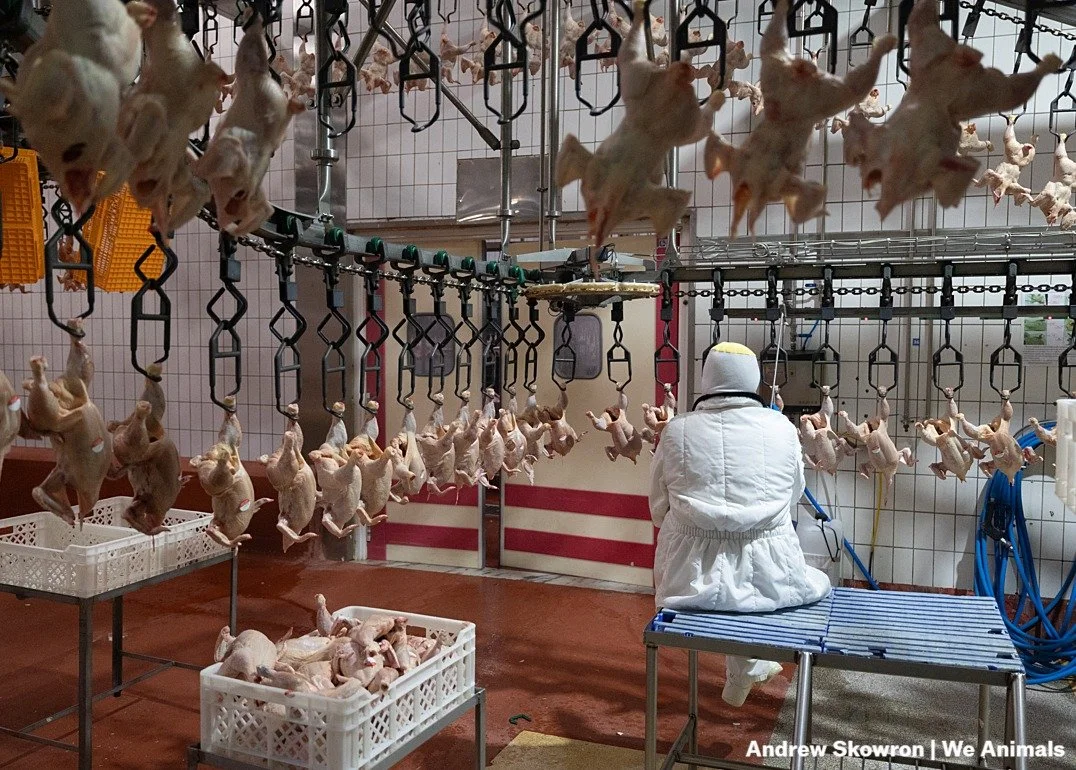
Photo: Andrew Skowron/We Animals
According to the U.S. Department of Labor's Occupational Safety and Health Administration, slaughterhouse workers (many of whom are vulnerable people such as immigrants) are already at risk of workplace incidents – they experience double the rate of serious illness and injury compared to the average across all industries, though those numbers may be underestimated
The government’s own studies have found increased risk of musculoskeletal injuries (such as tendinitis and carpal tunnel syndrome) among slaughterhouse workers in these two industries – pork and poultry – when higher line speeds are implemented. These proposed new rules also include ending the requirements for slaughterhouses to publish annual reports on worker safety.
There are nearly 500,000 people working in slaughterhouses in the U.S., many of whom are affected by mental health issues such as anxiety and PTSD. Up to 125 million pigs and around nine billion chickens are killed in the U.S. every year.
Choosing a plant-based lifestyle is one of the most impactful choices you can make for animals, the environment, and your own well-being. Take Species Unite’s 30-Day Plant-Powered Challenge and become part of a movement that's changing the world for the better.
We Have A Favor To Ask…
Species Unite amplifies well-researched solutions to some of the most abusive animal industries operating today.
At this crucial moment, with worldwide momentum for change building, it’s vital we share these animal-free solutions with the world - and we need your help.
We’re a nonprofit, and so to keep sharing these solutions, we’re relying on you - with your support, we can continue our essential work in growing a powerful community of animal advocates this year.


Some developers suggest that adopting cultivated meat could also improve animal welfare by significantly reducing the number of farmed animals slaughtered.