
Gorilla skulls, ivory, and pangolin scales seized at Cameroon–Nigeria border
The ‘shocking’ seizure of illegal wildlife parts has led to the strengthening of anti-poaching efforts between conservation and government bodies.
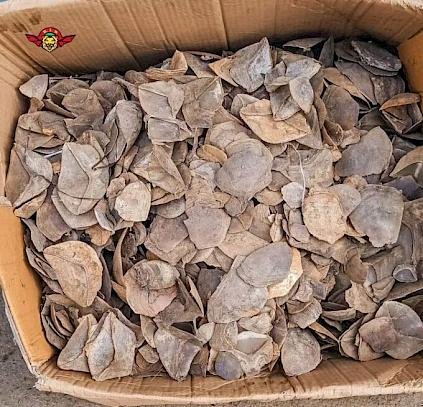
50kg of pangolin scales were included in the seizure of trafficked wildlife. Photo: Cameroon rapid intervention battalion
A haul of illegally trafficked wildlife products was seized at the Cameroon-Nigeria border in January, authorities have revealed including ten gorilla skulls.
The illicit items were uncovered as part of a major operation by the Cameroon specialized defence unit Brigade d’Intervention Rapide (BIR).
Alongside the gorilla skulls, officials confiscated 19 ivory tusks, the heads of protected bird species, including hornbills, parrots, and vultures, as well as vulture feathers and approximately 50 kilograms of pangolin scales according to the anti-poaching NGO, TRAFFIC.
Two suspects were arrested and handed over to the gendarmerie, while the seized items were transferred to the Ministry of Forestry and Wildlife (MINFOF) for legal proceedings.
“Killing of endangered wild animals, such as gorillas, elephants and pangolins, for smuggling across borders and into the hands of ruthless trafficking gangs is on the rise in West Africa,” said Denis Mahonghol, TRAFFIC’s Central Africa Director. “This shocking seizure demonstrates growing wildlife crime between Cameroon and Nigeria, which we must take immediate steps to stop.”
In response to the haul, international crime-fighting counterparts gathered for an emergency meeting last week. TRAFFIC and the U.N. Office on Drugs and Crime (UNODC) have agreed to strengthen collaboration with national law enforcement bodies to track trafficking routes, monitor wildlife markets, and identify the criminal networks and final destinations behind the trade.
“No one organization can beat wildlife trafficking alone,” said Mahonghol. “TRAFFIC has significant amounts of data and knowledge of wildlife trafficking which we look forward to bringing to the table and sharing with key partners such as UNODC and, of course, government bodies.
“Together we have the skills and expertise to beat organized crime and protect nature,” he added.
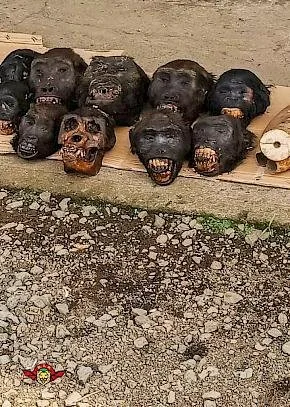
Gorilla skulls seized. Photo: Cameroon rapid intervention battalion
Cameroon and Nigeria’s shared border has been routinely exploited by wildlife traffickers who target both local and migratory species, according to TRAFFIC.
Nigeria has become a major global hub for illegal wildlife exports, particularly pangolin scales, taken from the world’s most trafficked mammal and smuggled to markets in Asia. Between 2016 and 2019, the country was linked to more than half of all major global pangolin scale seizures. Between 2010 and 2021, more than a million pangolins, nearly 90,000 animals per year, were trafficked through Nigerian crime groups.
Last October, the Nigerian Senate passed a sweeping new bill introducing tougher penalties for wildlife trafficking, including fines of up to 12 million naira ($8,300) and jail sentences of up to ten years for those convicted of trading in elephant ivory, pangolin scales, and other prohibited wildlife products.
Wildlife crime is now the fourth largest transnational organized crime in the world, behind only arms, drugs, and human trafficking. It is estimated to generate up to $23 billion each year.
Research published in the Journal of Economic Criminology found that the same organized crime groups trafficking wildlife are often involved in other illegal activities, including drugs, arms, human trafficking, stolen vehicles, mined resources, counterfeit goods, and even human body parts.
“We’re seeing criminal networks around the world being more adaptable and interconnected and almost commodity agnostic,” said study lead author Michelle Anagnostou, a University of Oxford researcher of illegal wildlife trade who conducted the research while a PhD student at Canada’s University of Waterloo. This indicates the need for “a comprehensive organized crime approach to trafficking activities as a whole, with less focus on the commodity being trafficked,” she said.
Learn more about transnational organized crime against wildlife by listening to this Species Unite podcast episode featuring Olivia Swaak-Goldman, the executive director of the Wildlife Justice Commission.
We Have A Favor To Ask…
Species Unite amplifies well-researched solutions to some of the most abusive animal industries operating today.
At this crucial moment, with worldwide momentum for change building, it’s vital we share these animal-free solutions with the world - and we need your help.
We’re a nonprofit, and so to keep sharing these solutions, we’re relying on you - with your support, we can continue our essential work in growing a powerful community of animal advocates this year.
More stories:
A former president and conservationists have criticized Botswana’s decision to kill 23 elephants for meat as part of its 60th independence celebrations.