
Cyanide bombs are back on America's public lands. Here's what that means for wildlife - and family dogs
The Trump administration has reinstated cyanide bombs on more than 245 million acres of public land, reversing a ban that had been in place since 2023. Here's what that means for wildlife, family dogs, and the communities living alongside them.
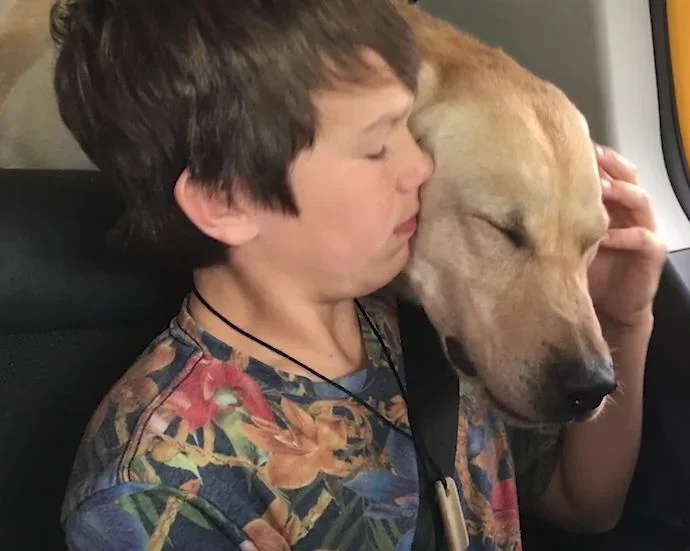
Canyon Mansfield with his dog Kasey. Photograph: Theresa Mansfield
On a bright mid-March afternoon in 2017, 14-year old Canyon Mansfield and his dog Casey, climbed the slope overlooking their Pocatello, Idaho home to do homework, play and reflect. “It’s our special place,” explained Canyon.
Neither anticipated being sprayed in the face with .88 grams of sodium cyanide, shot upwards by an innocuous sprinkler-head in the ground.
Poisoned, Canyon began washing his eye with a patch of lingering snow. Then he heard Casey grunting and gasping nearby. Froth bubbled from Casey’s muzzle; he began to spasm. They were 300 yards from their swing set.
By the time Canyon got his mom up the slope, the beloved three-year-old Labrador was dead.
Unbeknownst to local law enforcement, to emergency medics or the Mansfield family, two M44 cyanide bombs had been planted near their home, 60’ apart. Another 16 were spiked throughout the county by Supervisor Todd Sullivan of the Wildlife Services agency, a branch of the U.S. Department of Agriculture, which slaughters wildlife that farmers and ranchers consider a threat to farmed animals.
Sullivan had planted the M44s at the behest of a sheep farmer who leased an adjacent plot. Although there had been no predation in the area, Sullivan was “trying to get ‘a jump on the season’ by poisoning any coyotes that might pass through.”
Baited with a carrion scent and triggered when pulled, M44s attract “coyotes, wolves, beavers, and bears,” explains Collette Adkins of Center for Biological Diversity (CBD). “They also kill unintended victims, like family dogs.”
Weimaraners like six-year old, Molly, happily hiking Wyoming’s prairie one minute; frothing, gasping, and dying in Todd Sexton’s arms the next. Ruby, a mastiff-mix, whose owner Amanda Kingsley inhaled the “metalic odor” herself, while franticaly trying to clean Ruby’s mouth. Or two-year old Max, a loyal German Shepherd whose grieving owner, Sharyn Aguiar, found him dead, fifteen feet from the road, pink foam leaking from his nose and mouth. Aguiar filed a $1,500 tort claim against the USDA for failing to post mandatory signs. But Wildlife Services Utah State Director, Michael Bodenchuk, urged against even a token compensation, warning that: “...it is all too easy for someone to intentionally take a dog into an area posted with signs with the intention of getting the dog killed.”
In the seven years since Casey’s death, Wildlife Services self-reported that its M44 cyanide bombs killed 55,073 coyotes; 5,072 foxes (gray, red and swift); one Timber wolf and three black bears. 60,077 deaths by poison, of which only the endangered wolf and bears might have posed a livestock threat.
During that same time period, Wildlife Services poisoned 64 American dogs with M44s. 41 of them, intentionally. Helpless human owners may have watched their death throes; or were left wondering why their dog disappeared.
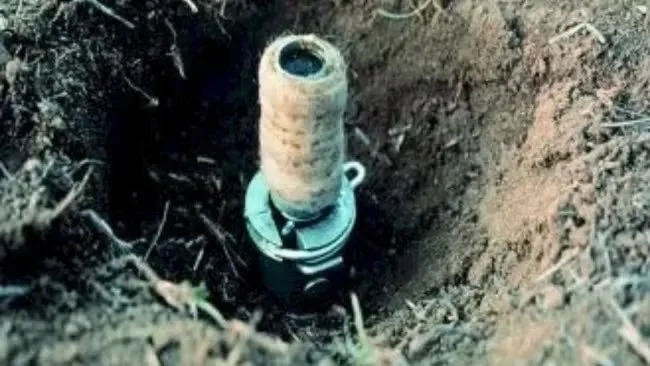
Credit: Humane World
John and Carole Gardener of West Virginia spent ten anxiety-filled days searching for their husky, Charm, before finally learning she was poisoned and “buried by a Wildlife Services agent. The agent never notified them, despite Charm wearing her collar, county tag and rabies tag.”
1,000 miles to the southwest, Texan agent-turned-whistleblower, Rex Shaddox, corroborated that “shoot, shovel and shut up” is standard Wildlife Services procedure when family dogs die. Shaddox recalls being “told not to report dogs we killed because it might affect our funding. If we were working on a ranch and killing dogs coming in from town, we didn’t report those,” said Shaddox. “We buried them, got the collars and threw them away.”
Shaddox also described how Wildlife Services (then called Animal Damage Control) tested expired M44 capsules on shelter dogs at the Uvalde, Texas city dump. Disputes with Supervisor Charles Brown, eventually forced Shaddox to quit, turn whistleblower, and devote many subsequent years in law enforcement investigating his former employer.
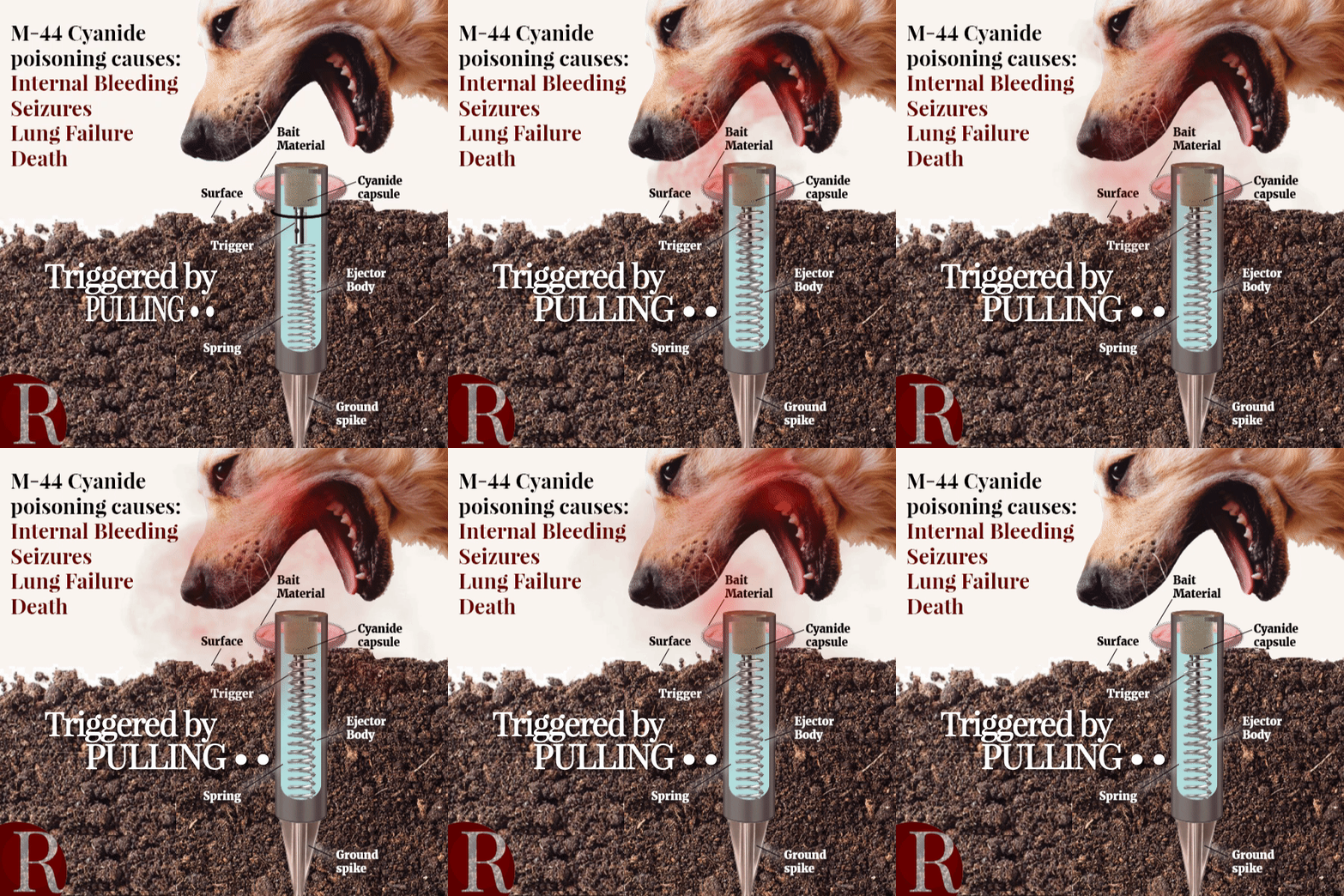
Credit: CBD
Meanwhile, according to a 1986 study published by the US Fish and Wildlife Service, the USDA-APHIS continued testing M44s on shelter dogs to benefit its operational and field agency, Wildlife Services, as per. In 1986, they compared who died faster: coyotes or shelter dogs. Each “subject” was isolated in a pen baited with M44s at US Fish and Wildlife Service’s predator research facility near Logan, Utah. Researchers videotaped the results.
“The average lapsed time from pull to first observed symptoms was 32 seconds for coyotes and 30 seconds for dogs. The average time from pull until animals went down was 46 seconds for coyotes and 40 seconds for dogs. These values do not differ significantly between species. However, the average observed time to death was appreciably shorter for coyotes (127 seconds) than for dogs (182 seconds).”
Not my values. Why my tax dollars?
American taxpayers (who funded Wildlife Services to the tune of $130,793,645 in 2024) feel differently about shelter dogs; adopting two million of them last year. Once adopted, a whopping 97% consider a dog or cat their family member.
Americans are also increasingly protective of wildlife; even predators like bobcats and coyotes. A 2022 study revealed that 78.5% of urban respondents expressed consistent preference for non-lethal control, compared with 72.8% of suburban respondents, and 51.3% of rural respondents.
Taxpayers aware of Wildlife Services, denounce the slaughter of nearly two million individual wild animals annually because a handful may pose a potential threat to commercial interests - interests compensated by federal (USDA's Livestock Indemnity Program) and state (e.g. Colorado's Wolf Depredation) programs.
Their skepticism is rooted in science: meta-studies show that random carnivore killing is inefficient while studies of coyotes specifically indicate indiscriminate slaughter is actually counterproductive.
Leading coyote researcher Ronald Kays observed: “We’ve already tried getting rid of coyotes with cyanide bombs last century. It didn’t work. Coyote populations rapidly compensate when hunted by humans by reproducing at a younger age and rapidly dispersing to fill vacancies.”
Convinced that M44s are as ineffective as they are lethal, over 60 conservation groups petitioned USDA Secretary Vilsack in 2024, to ban them on land administered by the US Forest Service.
Simultaneously, agrieved dog owners, wildlife aficionados and congressmen tried to pass Canyon’s Law, prohibiting M44s from all public land.
Both groups had taken heart when earlier that year, the head of BLM, Tracy Stone-Manning, banned M44s from BLM’s 245 million acres. But unlike Manning, a longtime conservationist and public lands advocate, Secretary Vilsack had been President and CEO of the U.S. Dairy Export Council (USDEC).
Efforts to remove M44s from USDA’s kit of predator killing tools, failed.
Two years later, under President Trump, M44s are quiety making a comeback on BLM land.
Brooks Fahy of Predator Defense, discovered last month that a USDA-BLM memo re-established M44 cyanide bombs on BLM land until 2031.
“It is the height of stupidity,” said former Oregon Congressman DeFazio in our phone call, “to reinstate a program that kills indiscriminately, costs millions and was proven ineffective. Instead of containing coyotes, Wildlife Services has dispersed them across 49 states because of the unscientific, brutal methods its been using since the 1930s.”
Collette Adkins, who organized the 2024 petition to Vilsack, tells me she is meeting with partner organizations to develop a coordinated campaign, while the CBD legal team explore possible litigation.
What you can do
Please reach out to your members of Congress and urge them to cosponsor Canyon’s Law (H.R. 4180), which would ban the use of M-44 “cyanide bombs” on public lands. If your representative is already a cosponsor, the form will allow you to send a message thanking them for protecting pets, wildlife, and people from these indiscriminate killers.
We Have A Favor To Ask…
Species Unite amplifies well-researched solutions to some of the most abusive animal industries operating today.
At this crucial moment, with worldwide momentum for change building, it’s vital we share these animal-free solutions with the world - and we need your help.
We’re a nonprofit, and so to keep sharing these solutions, we’re relying on you - with your support, we can continue our essential work in growing a powerful community of animal advocates this year.
Nearly 200 police officers carried out 24 searches and checked more than 1,000 horses in a Europe-wide investigation into suspected falsified passports and manipulated microchips.