
The pioneering sequencing of pangolin DNA will reveal trafficking networks, and allow authorities to create effective conservation management.
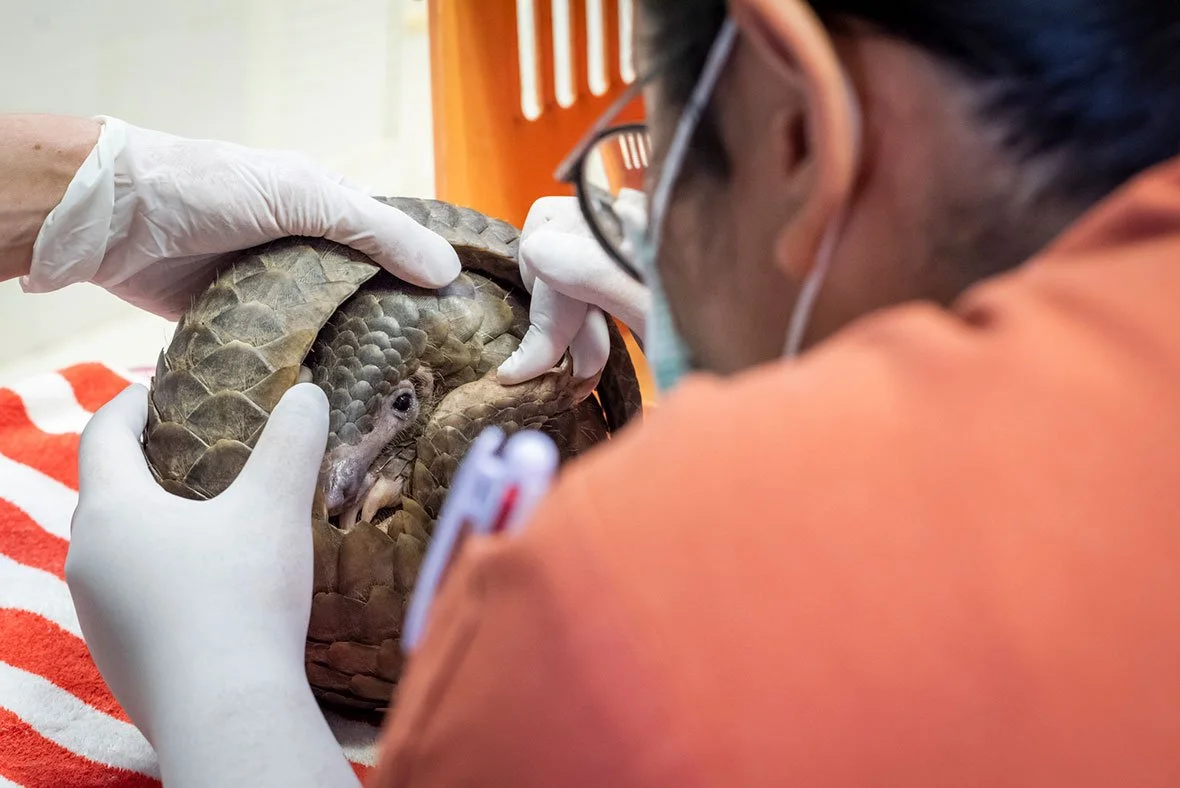
Photo: WFFT/Amy Jones
Pangolins are among the most poached species in the world, recently accounting for almost one-third of all recorded international seizures.
Now, unprecedented new research shows how the use of pangolin DNA can offer a chance to clamp down on the illegal trade.
Led by staff from the University of Toulouse and the Institute de Recherche pour le Développement in France, the team sequenced DNA from more than 700 samples of pangolins.
They utilized a DNA-based tool known as geographic traceability, which is able to assign a sample of unknown geographic provenance to its population or geographic region. This tool is already being used by authorities in ivory trafficking, fishery fraud, and timber trade.
But it relies on a large number of geo-referenced samples spanning the species' range. Since pangolins are so endangered, and elusive in nature, procuring samples isn't always financially or logistically viable.
Published in the journal PLOS Biology, the study supplemented low-yield or compromised DNA, from international trade seizures, bushmeat markets, and archival specimens from museum collections, with samples taken from the wild.
As the study’s lead author Sean Heighton explains: "One of the most exciting aspects of this work is that we developed a single-gene capture kit that works across all eight pangolin species and on degraded museum specimens, making genomic tracing more accessible, scalable, and practical for real-world pangolin conservation and forensic use."
In total, the team sequenced 711 gene-captured samples. A geo-referenced DNA database for the three most trafficked species offered a snapshot insight into pangolin trafficking hotspots, and trade dynamics of both domestic markets and international trade seizures.
It is now possible, says the team, to trace each trafficked pangolin back to within a few kilometers of their geographic origins.
As such, they hope that authorities can use this model to identify the regions at the heart of pangolin trafficking, which in this case, are southwestern Cameroon, southwestern Borneo Island, and Myanmar.
“One of the most striking findings was that domestic pangolin trade is largely local, but it overlaps with the same sourcing regions that supply international trafficking - revealing a connected supply chain rather than separate markets," said Philippe Gaubert, co-lead of the study at the University of Toulouse and the IRD.
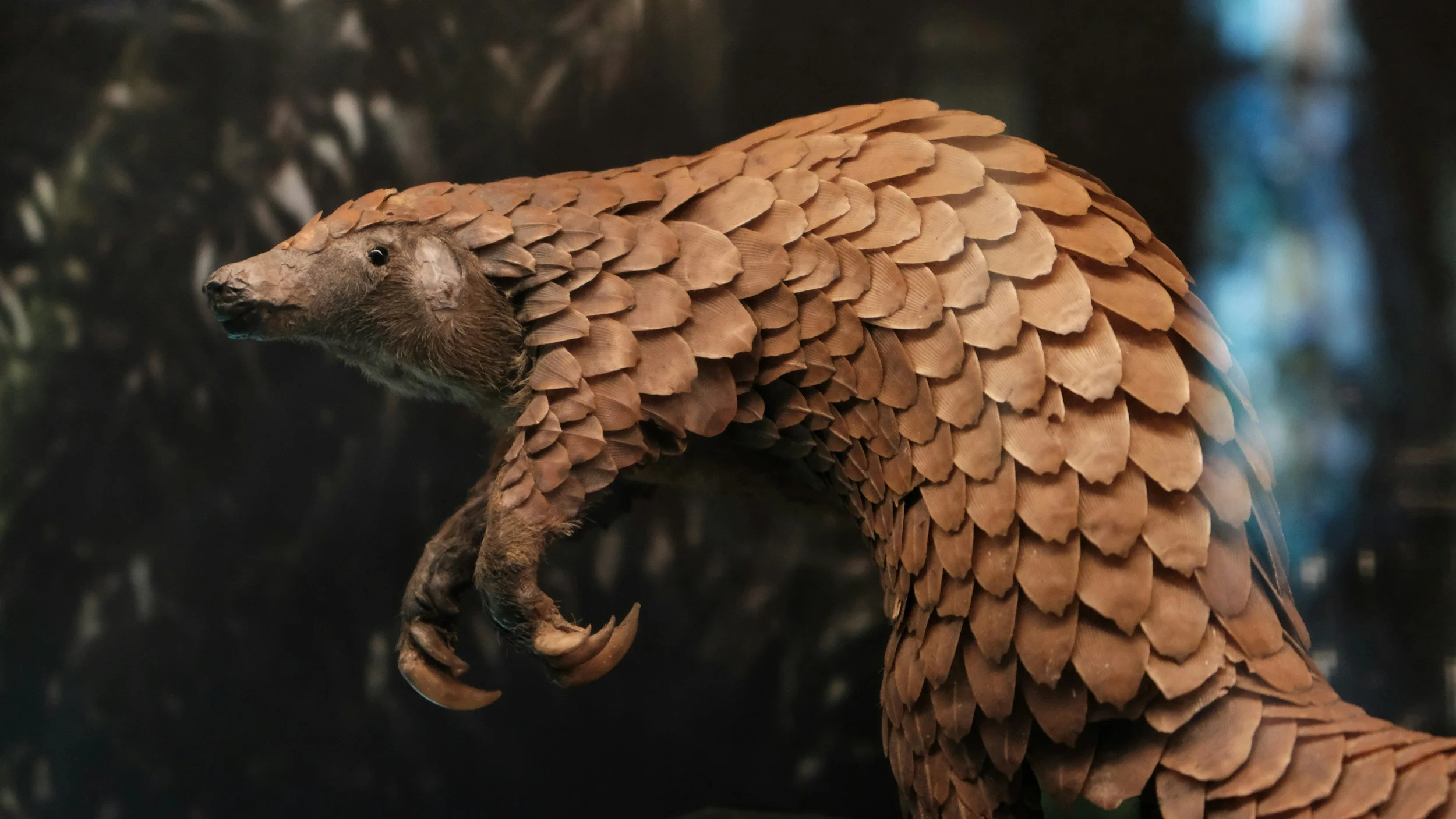
The local trade centers around the consumption of pangolin bushmeat, while the international trade prizes their scales for use in traditional medicine.
Regarding the former, it is estimated that in central Africa alone, between 0.4 to 2.7 million individuals are hunted and traded annually for their bushmeat in local-to-regional markets.
The end-consumer of pangolin scales, meanwhile, is almost exclusively traditional medicine markets in Asia. Demand has risen sharply in the past decade, with 100 tons traded in 2019.
Indeed, Asian pangolins have declined to such an extent that the African white-bellied pangolin is now the most trafficked species in Asian markets.
All eight pangolin species are protected under national and international laws, but this hasn't stopped the demand. Indeed, some estimates suggest that a pangolin is poached every three minutes.
Wildlife are facing threats from poaching and hunting across the world. American trophy hunters import an average of 126,000 wildlife trophies to the United States every year. Please take action to help end this here.
We Have A Favor To Ask…
Species Unite amplifies well-researched solutions to some of the most abusive animal industries operating today.
At this crucial moment, with worldwide momentum for change building, it’s vital we share these animal-free solutions with the world - and we need your help.
We’re a nonprofit, and so to keep sharing these solutions, we’re relying on you - with your support, we can continue our essential work in growing a powerful community of animal advocates this year.

A cattle truck crash in Kansas City, Missouri, is one of several recent ones, as Mercy for Animals urges the US Department of Agriculture to update its rules on animal transport.