
Happy was the most famous elephant in America. Why did she die in a one-acre enclosure?
When the Bronx Zoo euthanized Happy on May 26, tributes flooded social media for an elephant who had passed the mirror self-recognition test, survived a legal battle that reached New York's highest court, and spent decades alone in a one-acre enclosure. Now advocates are asking what happens to the elephant she left behind.

Credit: Gigi Glendinning/NhRP
As news broke that the Bronx Zoo euthanized its Asian elephant Happy on May 26, memorials flooded social media, commemorating this extraordinary individual.
Many recalled how this daughter of Thailand famously recognized herself in 2005, something five of New York’s top judges failed to do 17 years later. Others questioned if her bleak, one-acre enclosure ever met “the needs of an animal accustomed to roaming vast distances in the wild.”
Wildlife Conservation Society’s (WCS) newsroom said Happy “died peacefully” at 55.
Had Happy avoided capture, she may have lived five to ten years longer; nurtured by her mother, aunts and grannies, perhaps becoming a mother, grandmother or matriarch herself. Matriarchs lead matrilineal herds to long-remembered streams, avoiding human roads and villages; then passing spacial-geographical information to younger females, perhaps by infrasound.
The Bronx Zoo necropsied her.
Had Happy died in the wild, she would have been mourned by “members of her family and perhaps matriarchs of other families, with visible expressions of grief” explained Professor Barbara J. King, author of How Animals Grieve. “Happy’s female kin might have stood vigil near her body, exploring it gently with their trunk or feet.” Years later, once “her bones had bleached in the sun, granddaughters might have caressed those bones, remembering her,” King added in an email to Species Unite.
The WCS newsroom touted “longstanding, deep relationships” Happy (had) throughout her life, listing “keepers, curators and veterinarians.”
The zoo did not mention Grumpy, Happy’s elephant friend of 30 years. Named after Snow White’s dwarves, the two calves endured capture, purchase, an airplane flight over the Pacific and cross country transportation, from California’s Lion County Safari to Florida’s, then ultimately to the Bronx Zoo in 1977. They may have been born to the same herd; cousins, perhaps.
In October 2002, the zoo quietly euthanized Grumpy, her “cause of death initially listed as unknown.”
But Swedish researcher and zookeeper, Dan Koehl, discovered that cellmates Patty and Maxine had attacked Grumpy in July, knocking her down, beating and trampling her. Grumpy’s internal injures worsened over three months, so the zoo euthanized her. Happy witnessed the assault.
“It must have been pretty violent,” said Ed Stewart, co-founder of PAWS, which runs sanctuaries in California. “Things like that just don’t happen in the wild.”
Or in sanctuaries.
In a 2019 Opinion piece, elephantologist Dr. Joyce Poole listed anti-social, even dangerous, captive elephants who relaxed and blossomed socially when allowed to decompress in vast sanctuary space and choose their own companions.
The Bronx Zoo however, chose to split its two-acre enclosure, keeping Patty and the aggressor, Maxine, on one side and Happy on the other.
The Mirror Test
“What does it mean to recognize yourself in a mirror?” asks psychologist Gordon Gallup, Jr. “It has little or no adaptive value for human evolution… (but) it’s an index and proxy of self-awareness.” Inspired by Darwin and by watching himself shave, Gallup designed the Mirror Self Recognition (MSR) test in 1970 and began testing non-human primates.
By 2005, individual chimpanzees, orangutans, bonobos and two bottle nosed dolphins had realized the image in the mirror was, in fact, themselves.
Emory psychology student, Joshua Plotnik, wanted to test the Bronx Zoo elephants. He glued an eight-foot by eight-foot pleximirror to plywood, encased it in steel, and bolted it to an enclosure wall for safety. Inserting a video camera in the mirror, he climbed onto the barn roof to watch.
Plotnik recalls Maxine and Patty approaching the mirror very quickly. “Within the first 30 minutes, there was a lot of close inspection.” Trumpeting, too.
While Maxine and Patty tried to “climb over the mirror wall” and knelt before the mirror to “get their trunks underneath it,” when the three elephants were marked with a non-toxic “X” on their forehead, only Happy actually used the mirror to repeatedly “touch and investigate the X with her trunk.”
Happy’s reaction shaped Plotnik’s subsequent career, (he went on to found Think Elephants International) and launched a philosophical and legal firestorm.
The Elephant In The (Court)room
While Plotnik observed elephants from Bronx Zoo’s rooftop, Steve Wise, Esq. and members of the Nonhuman Rights Project (NhRP) pondered how to get non-human animals recognized by law.
“As long as all nonhuman animals are considered things without capacity for legal rights,” Wise reasoned, “they and their interests will remain invisible and civil judges will always defer to human owners and their interests.”
A few months before Happy passed her MSR test, Wise published Though the Heavens May Fall, a legal analysis of the 1772 James Somerset case, which Wise saw as a blueprint to free cognitively-complex autonomous individuals from institutionalized captivity.
Shortly thereafter, Wise filed habeas corpus petitions for four chimpanzees (2013-2014); later, for four elephants 2017-2022.
As Happy’s lawyer, Wise petitioned a Bronx court (2018) to “immediate(ly) release Happy from imprisonment,” moving her from a 1.15-acre enclosure to PAWS' 2,300-acre ARK Natural Habitat Sanctuary in California. Wise lost. He appealed to New York’s appellate court (2020) then finally to New York’s highest court (2022).
In that final round of argument, the Bronx Zoo convinced five of the seven judges that Happy could not qualify for a right to be free from captivity because she is not human.
It was an odd argument for the zoo to make considering they had previously exhibited a human - a man kidnapped from Congo, displayed in a cage alongside the primates and armed with a bow and arrow as part of the exhibit.
In September 1906, Ota Benga was exhibited for 20 days in New York's Bronx Zoo, attracting huge crowds. Every day, 300 to 500 people surrounded his cage in the zoo's Monkey House to read his plaque; laughing, jeering, perplexed or troubled. Visitor numbers doubled and WCS founding director William Hornaday defended the spectacle on "purely ethnological" grounds.
Benga was released in 1906 but never recovered from the trauma. He died by suicide in 1916.
It took 114 years for the Wildlife Conservation Society to finally acknowledge its racism. Following decades of misleading narratives and institutional denial, it made its Ota Benga archive available online and challenged itself "to do better and to never look away whenever and wherever injustice occurs."
Is that commitment to self-scrutiny being applied to complex, autonomous animals still at the Bronx Zoo?
What will happen to Patty?
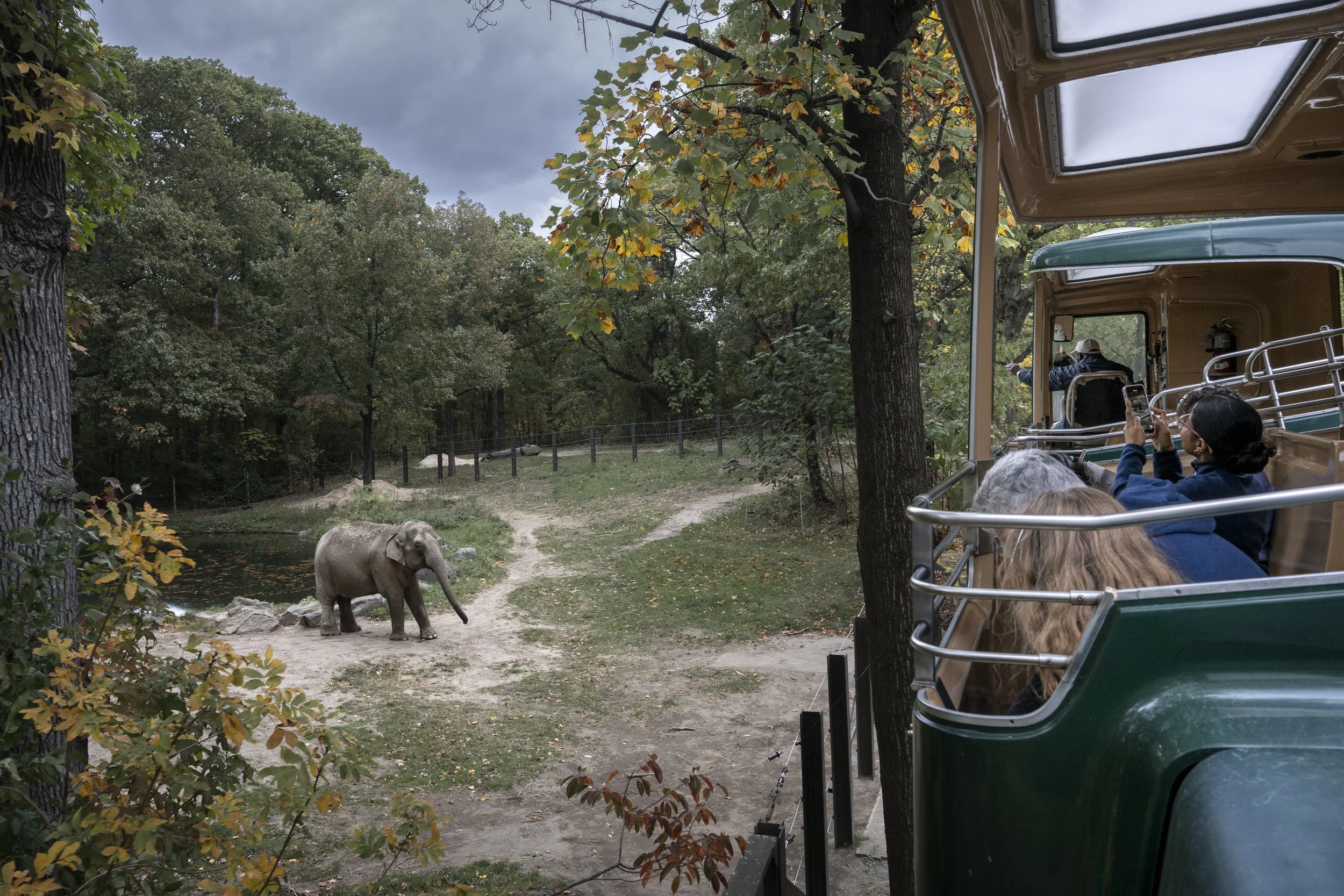
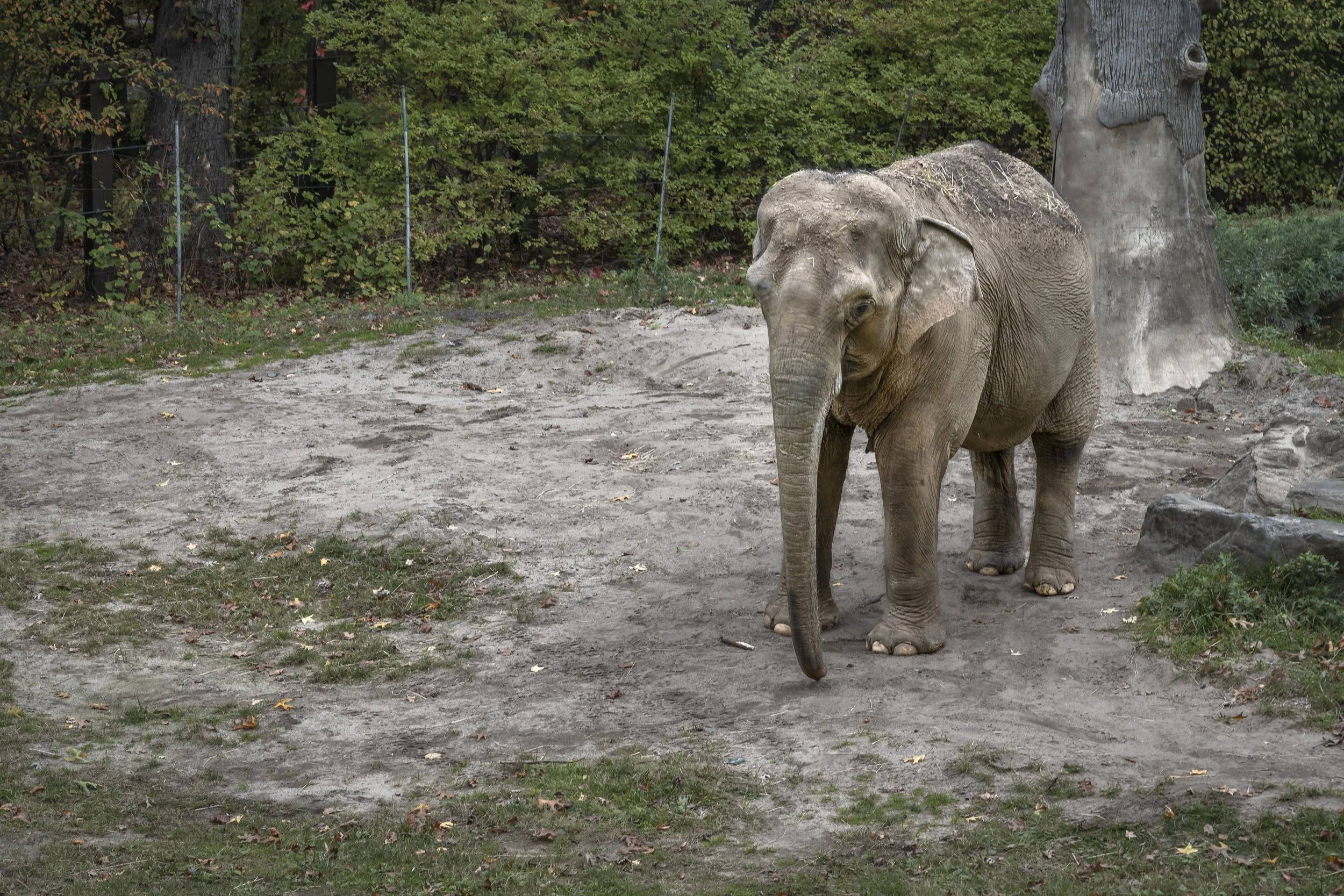
Happy's death leaves just one elephant left at Bronx Zoo: Patty, a 54-year-old Asian elephant who was captured from the wild in India at three years old and sold to the Bronx Zoo for $6,000.
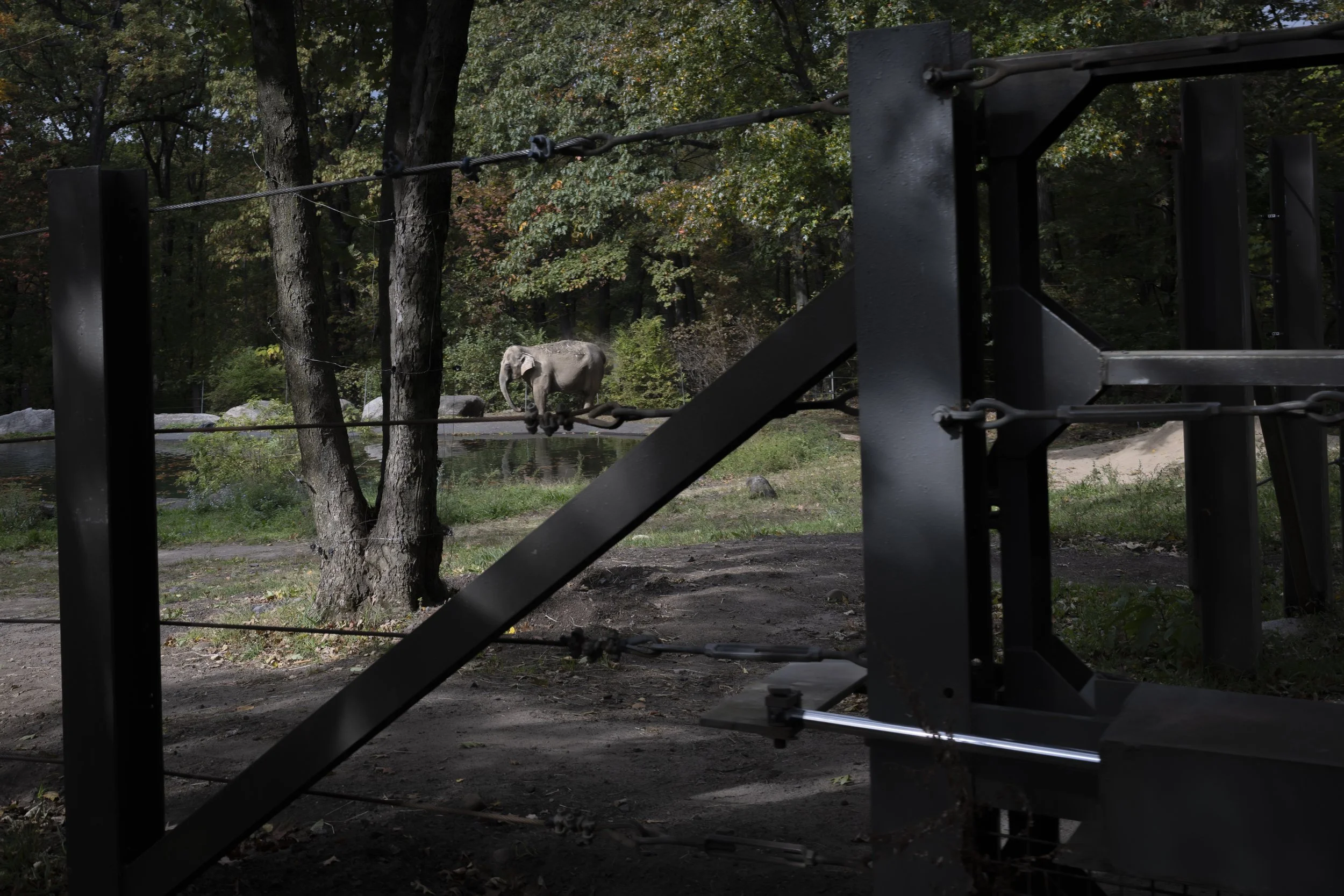
Following Happy's death, the Bronx Zoo has reportedly "discussed options" with other Association of Zoos & Aquariums (AZA) accredited facilities regarding whether Patty will remain at Bronx Zoo. In June 2026, Bronx Zoo Director Craig Piper and three other WCS officials on the elephant care team visited Tennessee's AZA-accredited 2,700-acre Elephant Sanctuary, home to five female Asian elephants - all captured as calves, retired from zoos or circuses, and around Patty's age or older.
Stephen Scott, DVM heads the veterinary team and has worked at the sanctuary for thirty years. The most common malady “Doc” treats is caused by years of walking on concrete. Echoing Dr. Poole, Dr. Scott sees “huge improvements in attitude after they (newly arrived elephants) have been here for a few months and are free to do what they want.”
Credit: Amy Jones/Species Unite
For the Nonhuman Rights Project, there is only one acceptable outcome for Patty: a move to sanctuary. “Captivity at the Bronx Zoo denies Patty nearly everything that makes an elephant's life worth living,” said Chris Berry, Executive Director of NhRP. “Beyond space and companionship, the greatest benefit Patty would gain at a sanctuary is autonomy, she could decide for herself where to walk, what to forage, whom to spend time with, and when to rest.
“The Elephant Sanctuary cannot return the 50-plus years captivity has taken from Patty; but it can offer her the chance to live the rest of her life at long last as an elephant.”
What you can do
Please join Species Unite and 40,760 other supporters in urging the Bronx Zoo to release Patty to sanctuary. Add your name here.
We Have A Favor To Ask…
Species Unite amplifies well-researched solutions to some of the most abusive animal industries operating today.
At this crucial moment, with worldwide momentum for change building, it’s vital we share these animal-free solutions with the world - and we need your help.
We’re a nonprofit, and so to keep sharing these solutions, we’re relying on you - with your support, we can continue our essential work in growing a powerful community of animal advocates this year.
Nearly 200 police officers carried out 24 searches and checked more than 1,000 horses in a Europe-wide investigation into suspected falsified passports and manipulated microchips.