
Imports of elephant ‘trophies’ to the U.S. have soared during Trump’s second term
More than 300 permits were issued by the Trump administration last year – up from 114 in 2018.
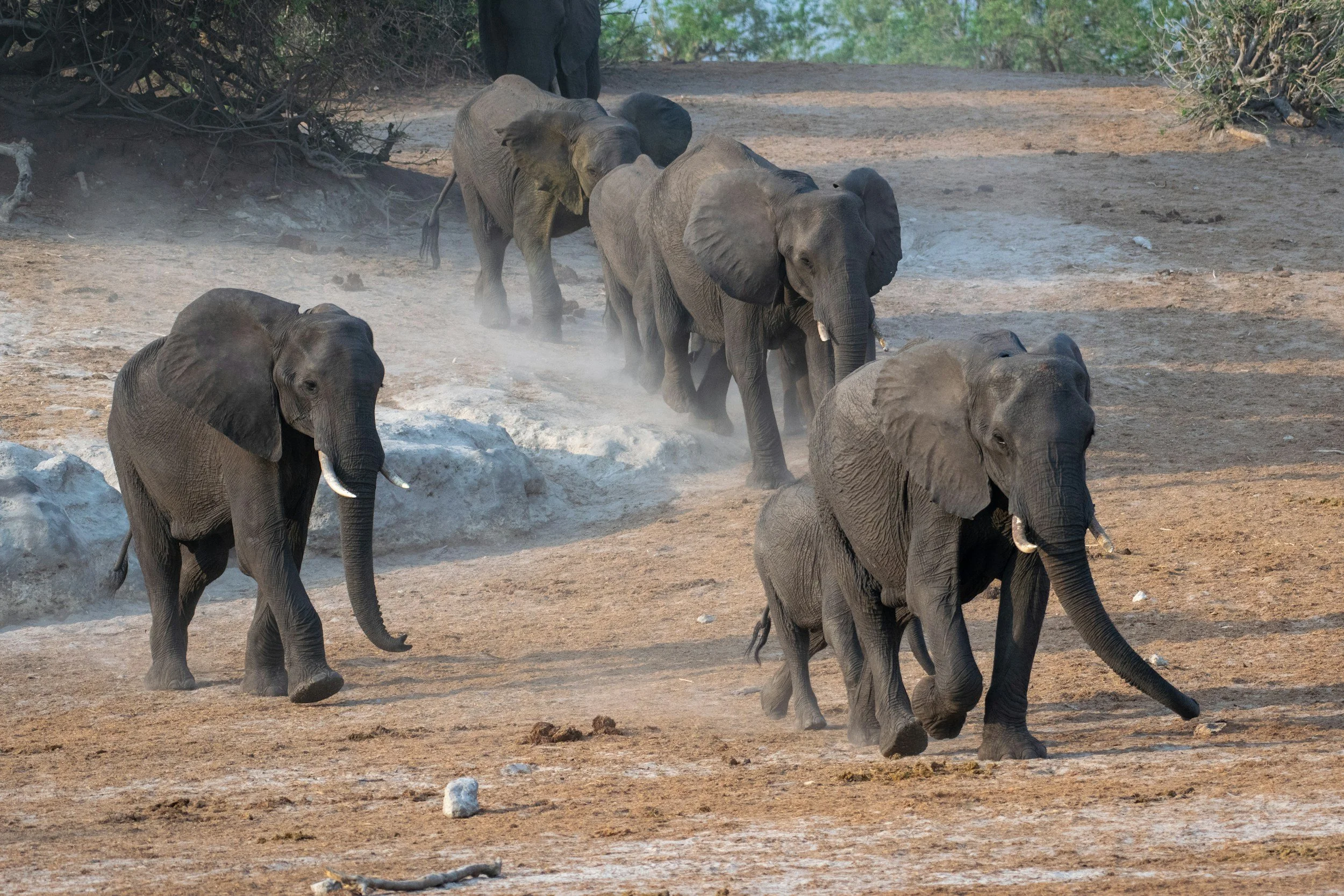
New figures reveal that permits for elephant trophy imports to the U.S. have almost tripled during Donald Trump’s second term as president.
In his first term, in 2018, 114 permits for elephant trophies were issued. That number has since risen to more than 300, in 2025.
Obtained by the Center for Biological Diversity (CBD) under a Freedom of Information Act request, the figures appear to contradict Trump’s earlier stance on elephant hunting, which he described as “a horror show” in a Twitter post of November 19, 2017.
“Why is a president who once decried elephant hunting rolling out the red carpet for the elitist practice of killing these imperiled animals for décor?” said Tanya Sanerib, international legal director at the CBD. “This about-face is terrible for Africa’s beleaguered elephants.”
Indeed, for the past decade, this highly contentious issue has been at the center of abrupt reversals between administrations. After the Obama administration issued rules suspending the importation of elephant trophies from Tanzania and Zimbabwe, the Trump administration announced that it would instead review permits on a case-by-case basis.
In 2024, under the Biden administration, the criteria for importing elephant trophies was strengthened, making it more difficult for hunters to bring home the tusk, horn, or other body part. The U.S. Fish and Wildlife Service had invited comments from the public ahead of this proposal, and said that the “overwhelming majority" of the 130,000 responses "highlighted a desire to ensure healthy populations of wild African elephants.”
In the latest figures obtained by CBD, 65 percent of the imports to the U.S. originate from elephants killed in Botswana. Having previously banned trophy hunting from 2014 to 2019, Botswana now has an annual hunting quota that allows for more than 400 elephants to be killed.
However, CBD reports that local scientists recommend no more than 280 elephants - approximately 0.2 percent of the population - should be shot each year, to ensure the continuity of mature male elephants, who are most at risk from trophy hunting.
Hunters tend to value mature male elephants for their heavier tusks. So-called 'super tuskers' - elephants whose tusks weigh 100lb or more - are the most desirable. There are thought to be as few as 50 super tuskers left in the whole of Africa.
Campaigners fear that the continued loss of mature male elephants will negatively impact breeding success, genetic diversity, and social functioning of the wider population of African elephants.
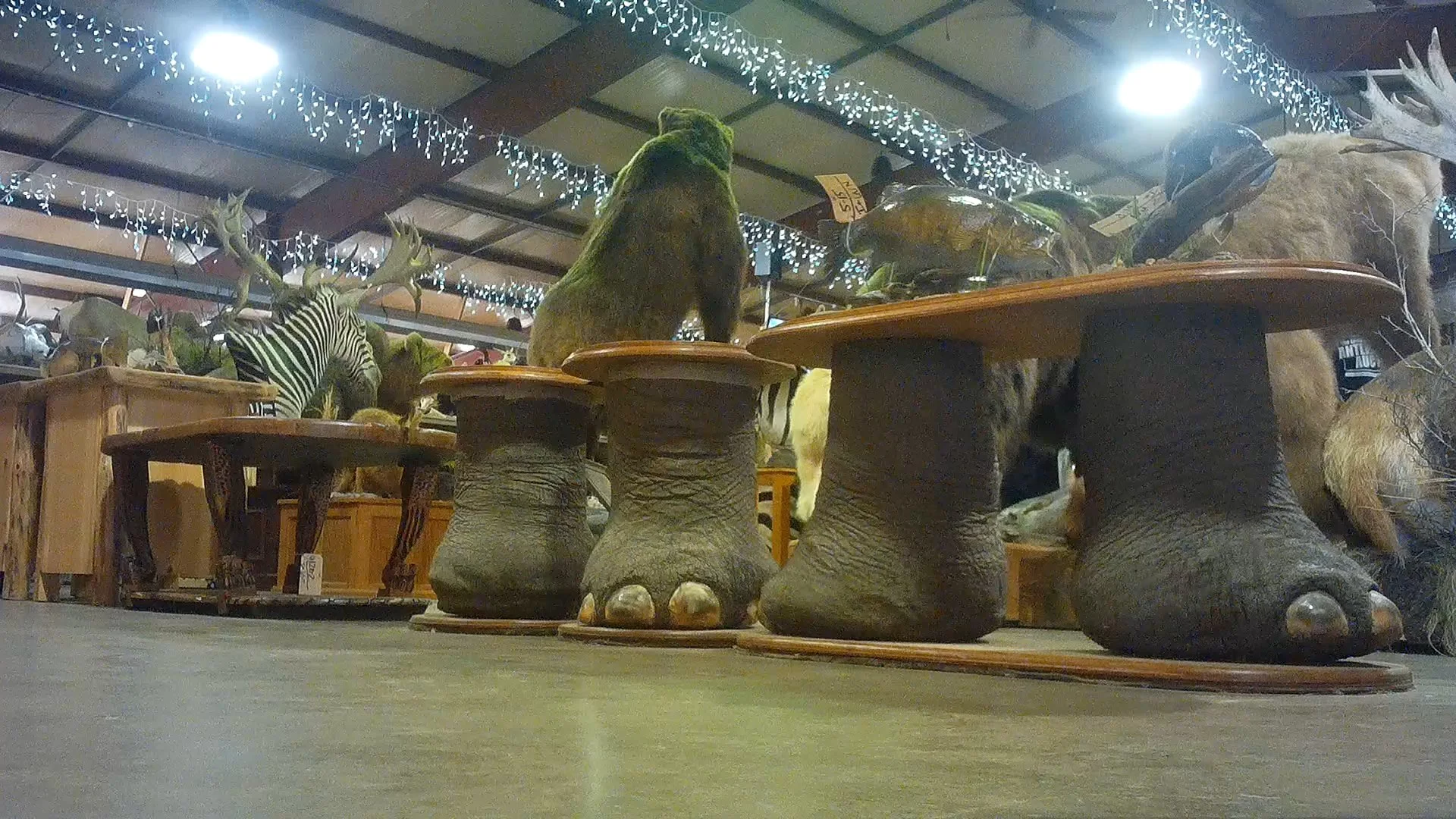
Taxidermied elephant feet tables for sale at Circle M’s fall auction in October 2021 at Jackson County Fairgrounds, Maquoketa, Iowa. Credit: Humane World for Animals
While France, the Netherlands and most recently Belgium have all passed laws banning the import of hunting trophies, it remains legal in most countries. The U.S. imports more hunting trophies than any other country, accounting for 75 percent of all global permits.
Supporters say that trophy hunting provides an economic boost to otherwise impoverished local communities, while the animals are dependent on land managed for trophy hunting; without it, the land could be turned into maize fields or cattle ranches.
But opponents argue that trophy hunting is cruel and unethical, and the animals can suffer a long, torturous death at the hands of inexperienced or less skilled hunters. It's reported that Cecil the Lion - whose killing in 2015 by a U.S. dentist sparked international condemnation - took 40 hours to die.
Furthermore, the economic benefits to local communities are often exaggerated, with most of the money going to the government and the hunting operators. In fact, for many, trophy hunting merely perpetuates colonial tropes of rich, white Westerners exploiting the country's resources while excluding poverty-stricken locals.
Since the U.S. government classified African elephants as threatened under the Endangered Species Act in 1978, the population has plummeted by at least 60 percent. Habitat loss and land degradation, ivory poaching, and trophy hunting - where hunters can pay around $40,000 to shoot an African elephant - are among numerous, ongoing threats to their survival.
American trophy hunters import an average of 126,000 wildlife trophies to the United States every year. Please take action to help end this - sign the petition here.
We Have A Favor To Ask…
Species Unite amplifies well-researched solutions to some of the most abusive animal industries operating today.
At this crucial moment, with worldwide momentum for change building, it’s vital we share these animal-free solutions with the world - and we need your help.
We’re a nonprofit, and so to keep sharing these solutions, we’re relying on you - with your support, we can continue our essential work in growing a powerful community of animal advocates this year.


As opposition to octopus farming grows worldwide, Colombia is moving to ban the practice before a single farm is built.