
The beginning of the end for South Africa’s captive lion industry?
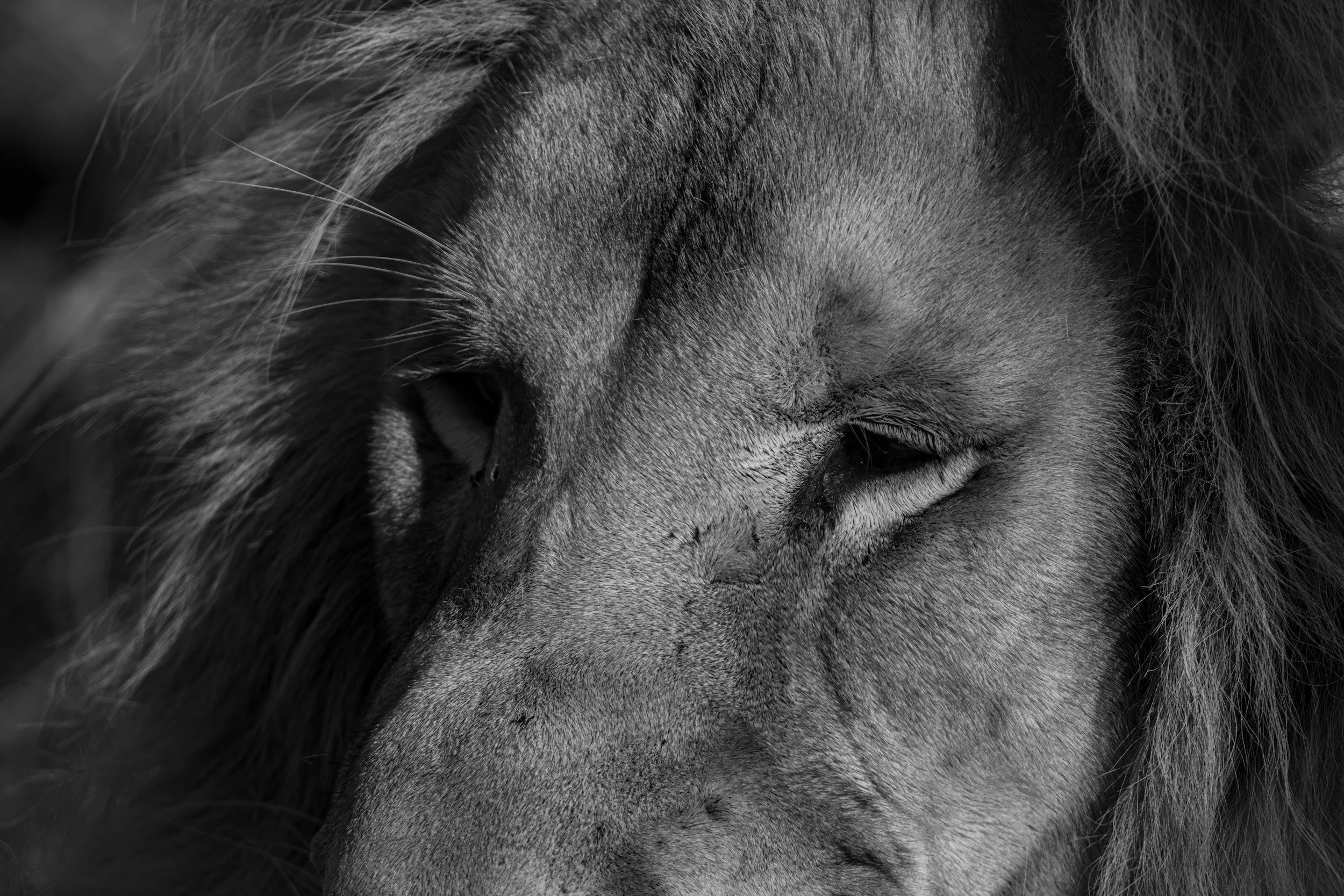
There are more lions in captivity across South Africa than there are in the wild.
Around 10,000 lions are held captive across more than 350 commercial facilities, trapped in a multi-million-dollar industry where they are cruelly exploited for money. Yet across the entire country, just 3,000 remain in the wild.
Lions bred in captivity are hand-raised from a young age, with unwitting tourists encouraged to pet and bottle-feed them under the false assumption that the cubs will eventually be released into the wild. Instead, the cubs are taught to trust humans and then, when they are too large to be tourist attractions, they are moved to fenced enclosures where they are shot by paying hunters. Unfortunately, the cruelty doesn’t end there, as the remaining lion bones are then sold on to fuel the illegal lion bone trade.
Over the years, animal welfare organizations have lobbied to end South Africa’s captive lion industry. Now, it seems, the South African government is finally starting to listen, although with a very small but significant move.
In June 2025, the Department of Forestry, Fisheries and the Environment (DFFE) finalized the Lion Prohibition Notice under their newly elected minister, Dr. Dion George. It’s now thought to be under review for final approval. Once published, this long-awaited initiative would ban the creation of new captive lion breeding facilities in South Africa. While this only affects new facilities, it sends a clear message that the use of lions for commercial purposes is no longer acceptable.
The worldwide reaction to this news has been one of tentative celebration. Animal organizations have publicly acknowledged the move as a positive step forward. However, as Director of FOUR PAWS South Africa, Fiona Miles, explains, there is much more that needs to be done.
“While the announcement is welcome, it is still a far cry from the objective of ending the commercial captive lion sector as a whole. We are calling for swift and concrete implementation to prevent further suffering.”
To ensure meaningful change, FOUR PAWS is calling on the South African government to:
End all commercial breeding, keeping, and trade of big cats and their parts, with a complete phase-out of captive facilities by 2030.
Ban the private keeping of big cats and the use of big cats in circuses.
Set up a database to monitor all captive big cats and the facilities that house them.
Close all loopholes that allow the illegal trade of lions and lion parts.
Follow the CITES (Convention on the International Trade of Endangered Species) guidelines relating to big cats and lead global advocacy efforts for stricter protections.
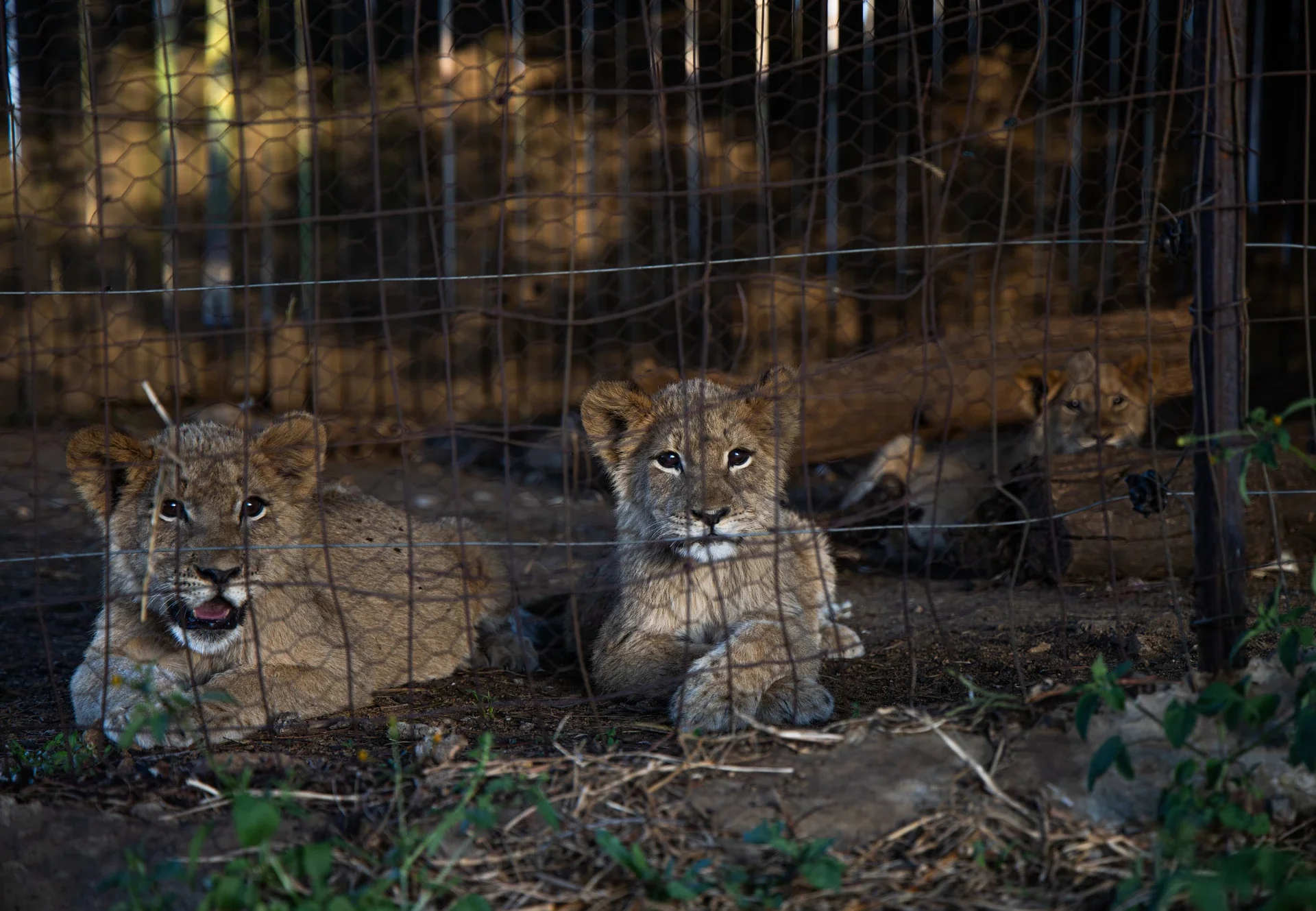
Photo credit: FOUR PAWS
A Life in Captivity
In the wild, lions thrive in complex social groups that can be up to 40 members strong. They typically spend their days hunting, caring for young, or simply sharing a well-earned meal. As highly territorial animals, they fiercely defend their territories with scent marking and by using that deep, powerful roar these animals are known for.
Unfortunately, the reality is very different for captive lions, who often live in cramped, overcrowded enclosures. They are grouped unnaturally, often sharing spaces with other species, and fed an insufficient diet of chicken and even rotting meat. As a result, captive lions can suffer from disease and nutritional deficiencies, as well as exhibit harmful stress-related behaviors. These include self-mutilation, pacing, and aggression.
To simply state that this is how captive lions are suffering is one thing, but to see it in real life is something else entirely. During an April 2019 inspection of Pienika Farm in South Africa’s Northwest Province, members of the National Council of Societies for the Prevention of Cruelty to Animals saw this cruelty firsthand. They found 34 lions crammed into a muddy enclosure meant for three. 27 of the lions were so affected by mange that they had lost most of their fur. Three young cubs lay in the mud, surrounded by rotting carcasses. They were so weak that they repeatedly tried and failed to pull themselves to standing.
“Every day, more big cats are born into captivity and condemned to lives of silent suffering,” says Miles. The cycle of exploitation continues unchecked. We owe it to every lion enduring this injustice to act now, not in another year or two, but today.”
The Conservation Myth
South Africa’s captive lion breeding industry was reportedly set up to support conservation efforts, but this has been hotly debated by both conservationists and scientists. Captive-bred lions can’t be released into the wild because their natural fear of humans has been removed. There’s also a serious lack of suitable habitat available for the rewilding of captive lions. The fact is that captive lion breeding is purely for commercial gain.
Lions deserve our respect and protection, not to be simply used as money-making machines. While we should be pleased that the South African government is finally making a move towards banning the captive lion breeding industry, we need to remain firm that much more needs to be done to ensure these majestic animals can live the lives they were born for.
For more on how exploitative eco-tourism is harming lions and other wild animals, check out this Species Unite podcast episode with Daniel Kaul, founder of Natucate.
Download FOUR PAWS’ free guide to Travel Kind: An essential guide to being an animal-friendly traveler.

Written by Carla Shaik
Carla Shaik and I am a passionate freelance writer with over 10 years experience in the industry, writing about a range of topics including animal behavior, welfare, sustainability, and environmental conservation.
Want to write for Species Unite? We are looking for well-written stories focusing on content that informs, inspires, and engages our audience with topics surrounding animal rights.
We Have A Favor To Ask…
Species Unite amplifies well-researched solutions to some of the most abusive animal industries operating today.
At this crucial moment, with worldwide momentum for change building, it’s vital we share these animal-free solutions with the world - and we need your help.
We’re a nonprofit, and so to keep sharing these solutions, we’re relying on you - with your support, we can continue our essential work in growing a powerful community of animal advocates this year.

Some developers suggest that adopting cultivated meat could also improve animal welfare by significantly reducing the number of farmed animals slaughtered.