
Commercial whaling continues in three countries, 40 years after ban
Despite a global moratorium adopted in 1986, Norway, Iceland and Japan continue to kill whales under objections or outside the agreement.
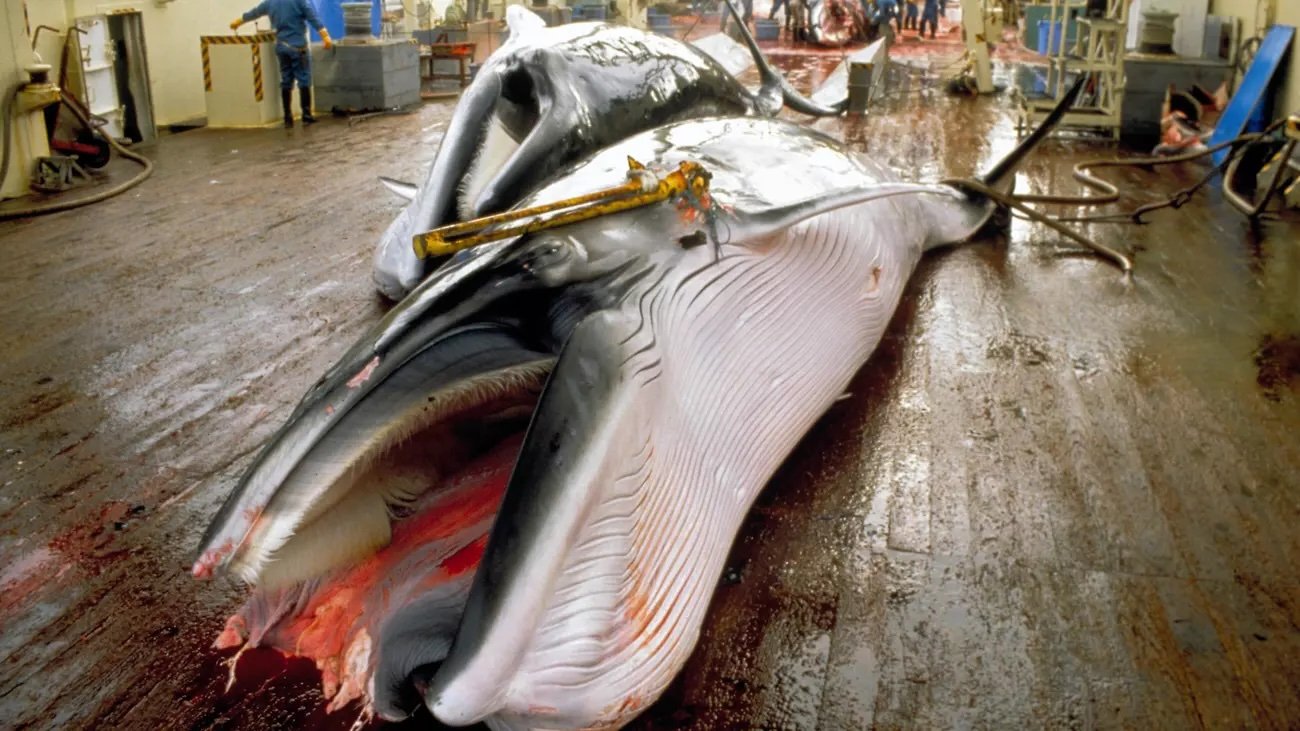
Minke whales waiting to be flensed on the Japanese factory ship Nisshin Maru during a whale hunt in the Southern Ocean Sanctuary. Photo: IFAW
Whales are still being hunted by three countries despite a forty year global whaling moratorium preventing the commercial killing of these marine mammals, campaigners warn.
The governments of Iceland, Norway and Japan have allowed the slaughter of around 45,000 whales since the adoption of the moratorium on commercial whaling by the International Whaling Commission (IWC) in 1982.
“Whales are under massive threat worldwide from man-made dangers,” explains Andreas Dinkelmeyer, campaign manager for International Fund for Animal Welfare (IFAW) in Germany. “It is alarming that new catch quotas are still being allocated while at the same time an increasing number of animals are being injured or killed by ship strikes or through entanglement in fishing gear. The sea must finally become a safe habitat for whales again.”
Three million whales had perished due to commercial whaling operations between the start of the 20th century and 1982, leading to serious concerns about plummeting populations and animal cruelty. Up to 90 percent of blue whales and 70 percent of fin whales, the two largest animals on Earth, were killed. It is considered the largest removal of wildlife by total biomass in human history.
Although whaling was banned sooner for some whale species, the international moratorium went into effect in 1986. In combination with CITES’ prohibitions on the international whaling trade, this move effectively ended the mass slaughter of whales, giving populations the chance to recover.
For some, like humpback whales, the recovery was substantial, with 50,000 humpback whales now migrating down Australia's east coast - a sharp contrast to the just over 100 in 1963 before humpback hunting was banned.
However, for others, recovery has been impeded by other threats, such as the climate crisis, deadly ship strikes, and fishing gear entrapment. Seven out of the 14 great whale species are classified as endangered or vulnerable by the International Union for Conservation of Nature (IUCN). The North Atlantic right whale is one of the most endangered of all large whales, with only around 380 remaining.
“Human impacts on our oceans are growing,” Chris says. “Ship strikes from increasing vessel traffic, bycatch by fisheries, underwater noise, plastic and chemical pollution, and climate change are overlapping more than ever across the critical habitats and migratory corridors of whales.”
Norway and Iceland remain members of the IWC but continue commercial whaling in their own waters by formally objecting to the global moratorium. Norway hunts minke whales, while Iceland hunts both minke and fin whales.
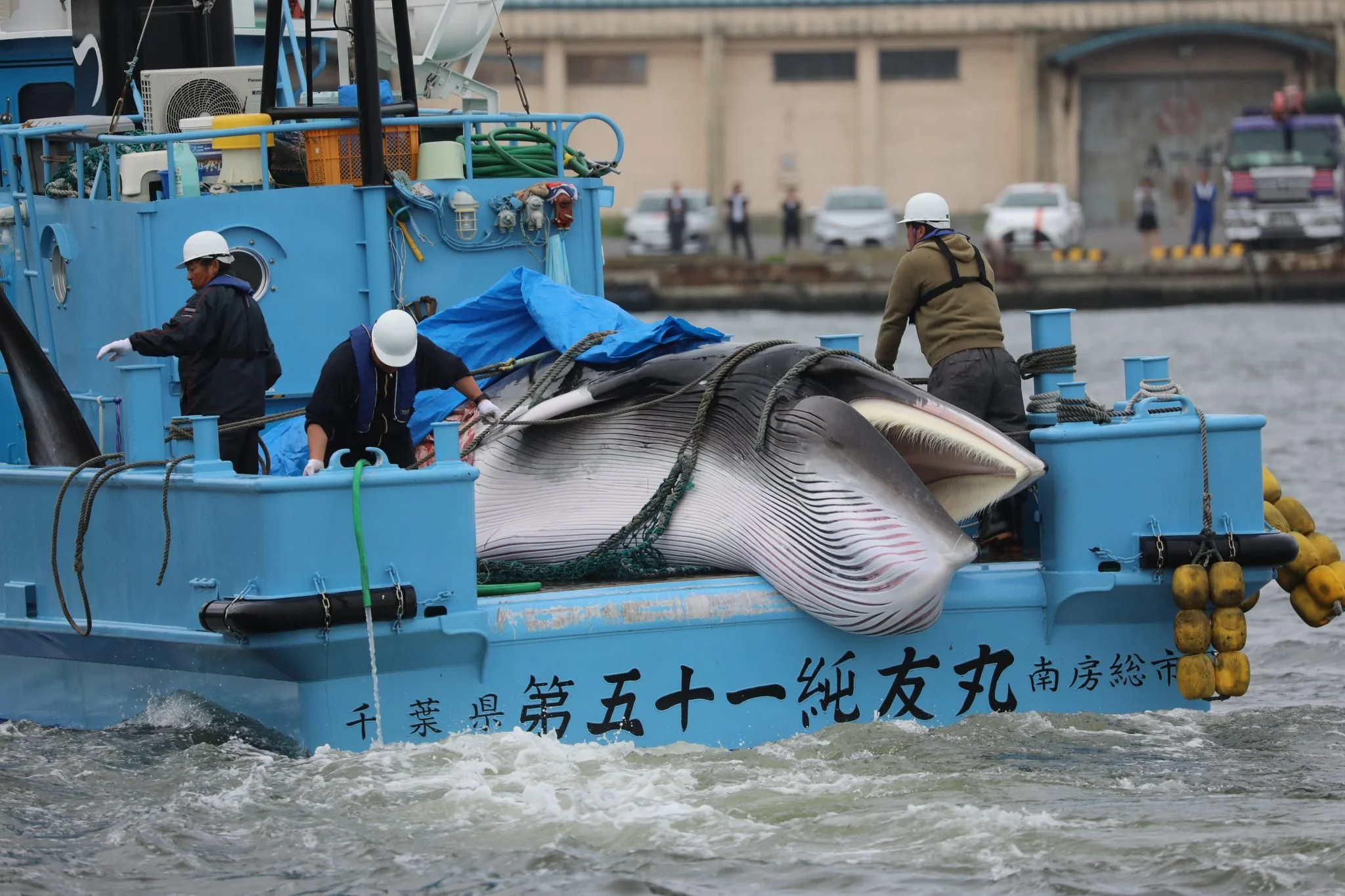
The first minke whale in Japan’s new hunts landed in 2019. Credit: EIA
Japan continued so-called “scientific whaling” in the Antarctic until 2018, widely regarded as commercial whaling in practice. After leaving the IWC in 2019, Japan resumed commercial hunts within its Exclusive Economic Zone, targeting minke, Bryde’s, sperm, and fin whales. However, domestic demand for whale meat has fallen sharply, dropping from a peak of 226,000 tons in 1962 to just 3,000 tons in 2017.
“Commercial whaling undermines global efforts to recover whale populations that are still rebuilding from past exploitation,” said Chris Johnson, the Global Lead of WWF’s Protecting Whales and Dolphins Initiative. “Whales migrate across entire ocean basins, often moving through the waters of multiple countries, making their protection a shared international responsibility.”
To mark the 40th anniversary of the global whaling ban, a global petition has launched calling for the complete abolition of commercial whaling in an international coalition of animal and species conservation organisations. The End Commercial Whaling Coalition went live on World Whale Day, 15 February 2026.
Whales play a vital role in maintaining healthy oceans. As they migrate, they circulate nutrients that boost phytoplankton growth - microscopic organisms that produce around half of the world’s oxygen and absorb significant amounts of carbon. Whales also store carbon in their bodies, and when they die and sink to the ocean floor, that carbon can remain trapped for centuries.
“Commercial whaling must finally come to an end – immediately,” said Dinkelmeyer. “At the same time, we must drastically reduce man-made hazards: slower ships, environmentally friendly shipping routes and modern fishing gear without dangerous lines. Otherwise, entire species such as the North Atlantic right whale are at immediate risk of extinction.”
We Have A Favor To Ask…
Species Unite amplifies well-researched solutions to some of the most abusive animal industries operating today.
At this crucial moment, with worldwide momentum for change building, it’s vital we share these animal-free solutions with the world - and we need your help.
We’re a nonprofit, and so to keep sharing these solutions, we’re relying on you - with your support, we can continue our essential work in growing a powerful community of animal advocates this year.
More stories:

The Trump administration has moved to rescind the Roadless Area Conservation Rule, putting 45 million acres of pristine wilderness and the species that live there at risk.