
Baby orangutan rescued from captivity as a family pet
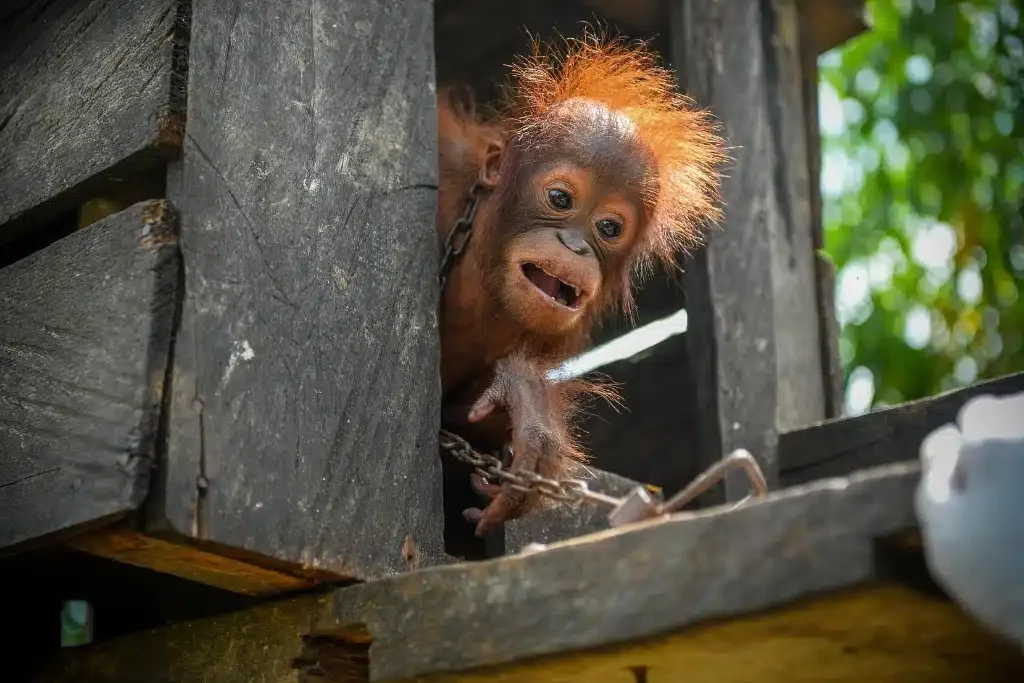
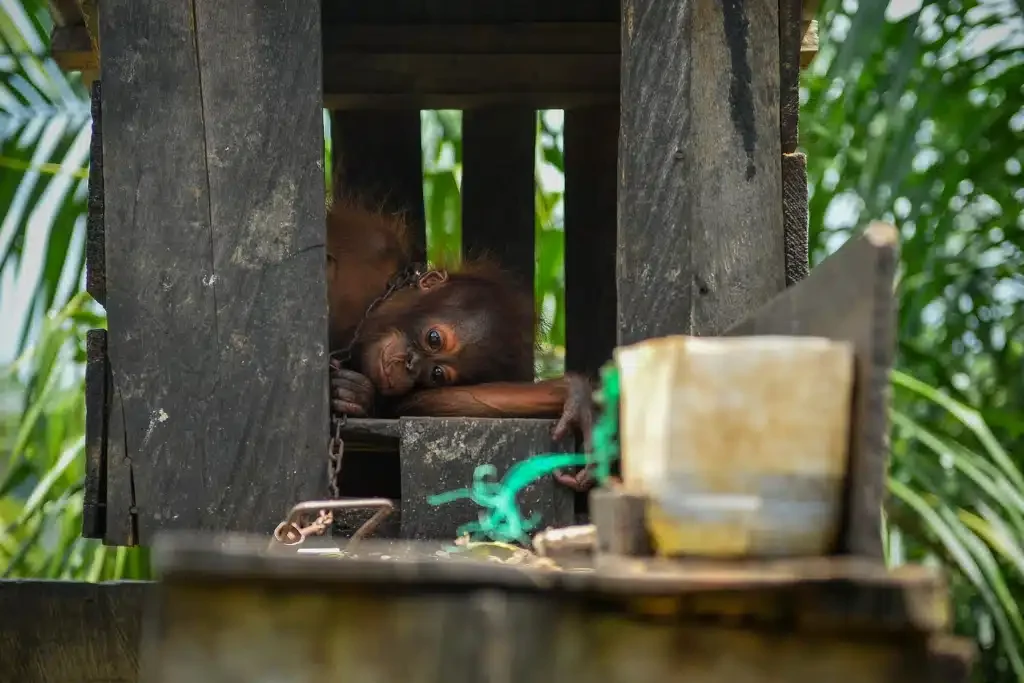
Chained tightly by its neck to a wooden box, the young orphan is now recovering in a rescue centre.
Credit: The Orangutan Project
A baby orangutan found chained up as a family pet is now recovering in a rescue centre in Indonesia.
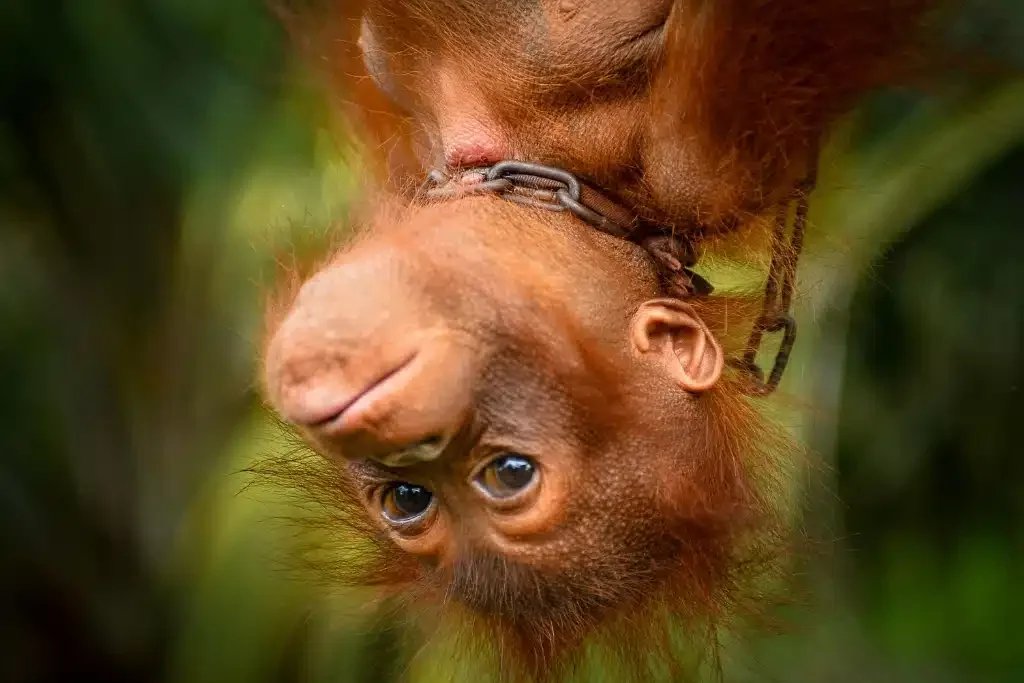
The 18-month-old orphan was confined to a small wooden box two meters above the ground. The rope and metal chain around his neck was so tight that it left a deep, open wound.
According to volunteers from The Orangutan Project – the non-profit looking after him at their Borneo Alliance Rescue Centre (BORA) in East Kalimantan – he was “terrified”.
Now given the name Jack, he has undergone a full medical examination, and his wound is healing well. Jack has been described as “gentle, sweet, always smiling, and full of playful curiosity” by his caregivers.
He is due to be introduced to BORA’s other orphaned youngsters, before starting its Jungle School program.
BORA’s mission is to rehabilitate all its orangutans for release into protected forest areas, where they can live independently and reproduce.
As one of the most intelligent species on Earth, orangutans can experience deep emotional states of grief, loss, and pain. As such, Jack now faces “a long recovery from both the physical and emotional effects of his early life.”
Credit: The Orangutan Project
In the wild, orangutans are entirely dependent on their mother for the first eight years, in which time they learn how to climb, forage, and build nests, while also developing social skills and building confidence.
Rescue centres such as BORA are crucial, then, in allowing orphaned orangutans a chance to succeed in their natural habitat.
Jack is among 1,500 orangutans currently in rehabilitation centres in Borneo and Sumatra. Many have been rescued from the illegal pet trade.
Law enforcement is often weak, and investigations in Sumatra reveal that possession of orangutans is typically by politicians and senior figures from the military and the police. In this respect, keeping them as pets is a “a way for the owner to demonstrate that he or she is above the law,” says Orangutan Republik.
Others are drawn to the cute faces and sweet temperament of infant orangutans but, by the time they reach maturity, the animals can become aggressive and unpredictable. As such, many end up being permanently restrained, or simply discarded/killed by their owners.
In recent cases, the pet trade has become a by-product of habitat loss. Displaced and hungry, the adult orangutans are forced to enter nearby villages, where they are often killed. The orphaned infants are later seen wandering alone, and taken in as pets.
While the owner’s intentions may be genuine, most of the orangutans rescued by The Orangutan Foundation, in Central Kalimantan, are ultimately malnourished and/or depressed.
Credit: The Orangutan Project
Through increased education and awareness, it is hoped that villagers will alert their local animal charity upon finding an orphaned orangutan.
As well as the pet trade and habitat loss, other threats to this critically endangered species include being poached for their meat, and being illegally exported across Asia as part of the entertainment industry.
We Have A Favor To Ask…
Species Unite amplifies well-researched solutions to some of the most abusive animal industries operating today.
At this crucial moment, with worldwide momentum for change building, it’s vital we share these animal-free solutions with the world - and we need your help.
We’re a nonprofit, and so to keep sharing these solutions, we’re relying on you - with your support, we can continue our essential work in growing a powerful community of animal advocates this year.
Fires are sweeping through rainforests home to 13 of the 20 largest surviving populations of Bornean orangutans, with rescuers already treating injured animals and conservationists warning of long-term habitat loss.