
Mother and son orcas left in a shut-down aquarium may now be transferred to marine park in Spain
Reports indicate that plans may be under way to transfer Wikie and Keijo the two remaining orcas at the now-closed Marineland Antibes to Tenerife’s entertainment venue, Loro Parque, before the end of June.
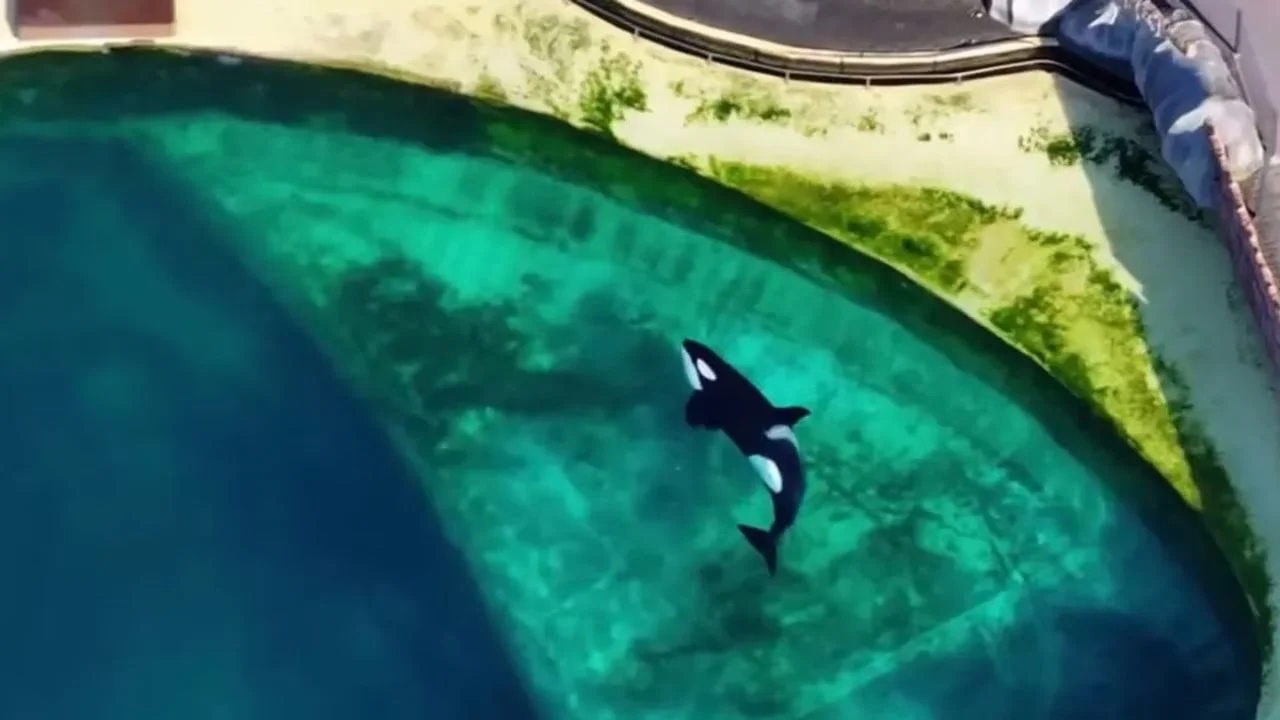
Wikie and Keijo, who have been filmed in algae-covered tanks following the park's closure. Credit: Tidebreakers
Two orcas held at the closed French marine park Marineland in Antibes are set to be transferred to Spain.
Following France's ban on using animals in performances, Marineland closed its doors in January 2025, leaving 24-year-old Wikie and her 12-year-old son Keijo stranded at the empty facility ever since.
Earlier this month, the French government approved their transfer to Loro Parque in Tenerife, although the move cannot go ahead until the Spanish government gives its own authorization.
Animal advocates have raised concerns that the transfer would do little to improve the orcas' conditions. Loro Parque, they warn, is likely to put Wikie and Keijo back to work in performances, and both could be used for breeding purposes.
An alternative plan had previously been approved by France's Minister for Ecological Transition, Mathieu Lefèvre, that would have seen the pair transferred to the Canadian Whale Sanctuary Project, a facility built specifically for animals rescued from marine parks, offering a space the size of 50 football fields. Those plans were scrapped when it was established that Canadian waters would be too cold for the animals.
Lefèvre announced last week that the orcas would now be moved to Loro Parque "in the coming weeks, before the end of June." The transfer is expected to cost several hundred thousand euros and will be carried out by cargo plane. If it does not happen before the end of June, rising summer temperatures will force an indefinite postponement.
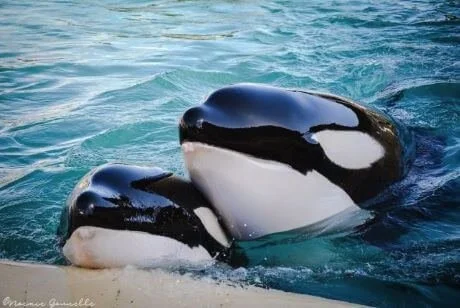
Loro Parque, located in Puerto de la Cruz, Tenerife, has faced repeated accusations of animal abuse.
Reports have revealed that the animals held at Loro Parque exhibit rake marks as a result of fights with tank-mates, biting the sides of the tanks in desperation (which leads to broken teeth), and floating listlessly.
Veterinarian Dr. Heather Rally examined the animals at Loro Parque, observing that “they exhibited signs of distress, including broken teeth from chewing on concrete tanks, painful rake marks from social stress, and mucus-filled eyes from chemically treated water.”
Since 2021, at least four orcas have died at Loro Parque, and calves as young as four months are being forced to perform in potentially stressful environments.
A scientific agency in Spain was consulted by French authorities, advising against the transfer. The agency reported that the tanks at Loro Parque did not meet minimum standards for animals’ well-being.
Lefèvre is reported to have seen the deteriorating conditions at Marineland where Wikie and Keijo currently reside, saying “Everyone who cares about the wellbeing of these cetaceans must understand that we need to break the deadlock and act as quickly as possible. The status quo is not a solution.”
Charles Vinick, CEO of the Canadian Whale Sanctuary, reminds that French law specifically aims to protect animals like Wikie and Keijo from the type of life they would have at Loro Parque.
“The law explicitly prohibits these practices,” he said. “However, Loro Parque continues to rely on performance-based programming and breeding, particularly following the deaths of four orcas at the facility since 2019. Transferring Wikie and Keijo into that environment risks perpetuating the very system the law was designed to phase out.”
In the wild, orcas travel up to 60 miles a day and live in complex social groups. In captivity, they are confined to severely restricted spaces, often with companions they did not choose. Experts say the resulting understimulation can cause significant psychological harm.
We Have A Favor To Ask…
Species Unite amplifies well-researched solutions to some of the most abusive animal industries operating today.
At this crucial moment, with worldwide momentum for change building, it’s vital we share these animal-free solutions with the world - and we need your help.
We’re a nonprofit, and so to keep sharing these solutions, we’re relying on you - with your support, we can continue our essential work in growing a powerful community of animal advocates this year.

Some developers suggest that adopting cultivated meat could also improve animal welfare by significantly reducing the number of farmed animals slaughtered.