
New documentary explores the impact of AI on factory-farmed animals
Artificial intelligence could spell good or bad news for animals on farms.
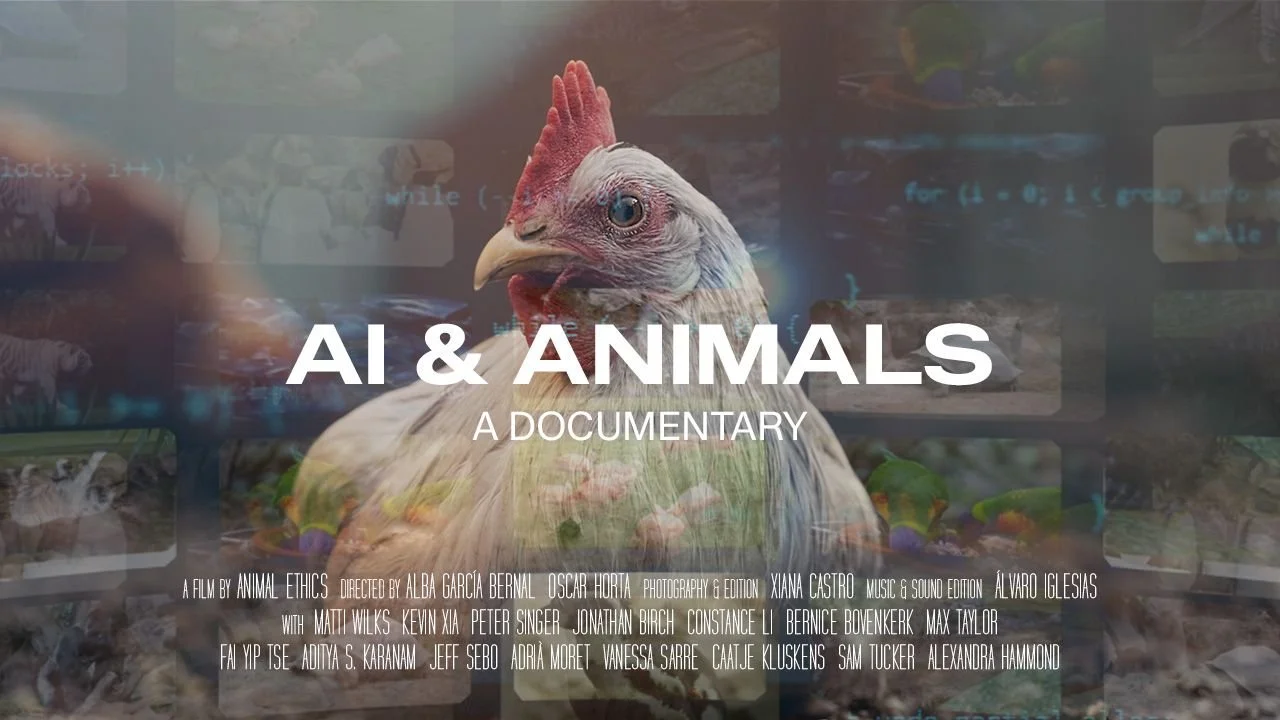
A new documentary titled AI & Animals explores the ways in which artificial intelligence could change conditions for factory-farmed animals, among other animal issues. The documentary presents the argument that AI could either dramatically improve or terribly worsen the lives of the billions of animals who live their entire lives on factory farms.
Made by international organization Animal Ethics, AI & Animals shines a light on the debate about large language models – a kind of artificial intelligence that is made to understand, process and generate text similar to what a human would produce.
The film argues that there is a limited window of time to determine whether AI's impact on factory-farmed animals would be positive or negative. Its central premise focuses on speciesism: the belief that one species (for example the human species) is superior to others.
The film hypothesizes a future where large language models embed speciesist values and perpetuate them – but it also imagines what would happen if AI could help us decode animal language, which it is partially already doing. We've seen AI models coming close to decoding whales' sounds, bringing us one step closer to understanding the beings with whom we share this planet. Understanding factory-farmed animals could change the way we see, approach and interact with them.
A powerful tool like AI has the potential to make factory farms more efficient, providing more precise data and preventing health issues, meaning that fewer animals on farms may get sick. Used in the correct way, AI could also mitigate environmental impact. But with animals reduced to mere data, their complex individual needs could be taken into consideration even less than they are today.
Their emotional and social needs would be completely set aside as contact with humans would be greatly reduced. With AI taking the place of regulatory frameworks, existing issues of animals' well-being could be made even more serious.
Aside from the future of animals on factory farms, the film also touches on how AI can be used to reduce the suffering of wild animals and how to boost our advocacy for animals using artificial intelligence.
Contributors include representatives from Animal Ethics, Sentient Futures, and Animal Charity Evaluators, as well as philosophers Jonathan Birch, Jeff Sebo, and Peter Singer. Other participants include Open Paws, a company building AI for animal advocates; the Center for Reducing Suffering; the NYU Center for Mind, Ethics & Policy and more. Directed by Alba García Bernal and Oscar Horta, the film is narrated by voice actor Samantha Damiano.
“The stakes could not be higher. If we don’t start working on this right away, it may soon be too late to make a difference,” says Damiano in the film. “Animals need us to take this task seriously. Not next decade, not in a few years, but now.”
We Have A Favor To Ask…
Species Unite amplifies well-researched solutions to some of the most abusive animal industries operating today.
At this crucial moment, with worldwide momentum for change building, it’s vital we share these animal-free solutions with the world - and we need your help.
We’re a nonprofit, and so to keep sharing these solutions, we’re relying on you - with your support, we can continue our essential work in growing a powerful community of animal advocates this year.

Wildlife cameras, night-vision binoculars, GPS devices, fire sensors, and snowshoes are among the items that have been available to borrow free of charge at a new public nature library.