
How Ukraine's volunteers keep the animal welfare system alive
Credit: Domivka Vryatovanykh Tvaryn (Shelter of Rescued Animals) team
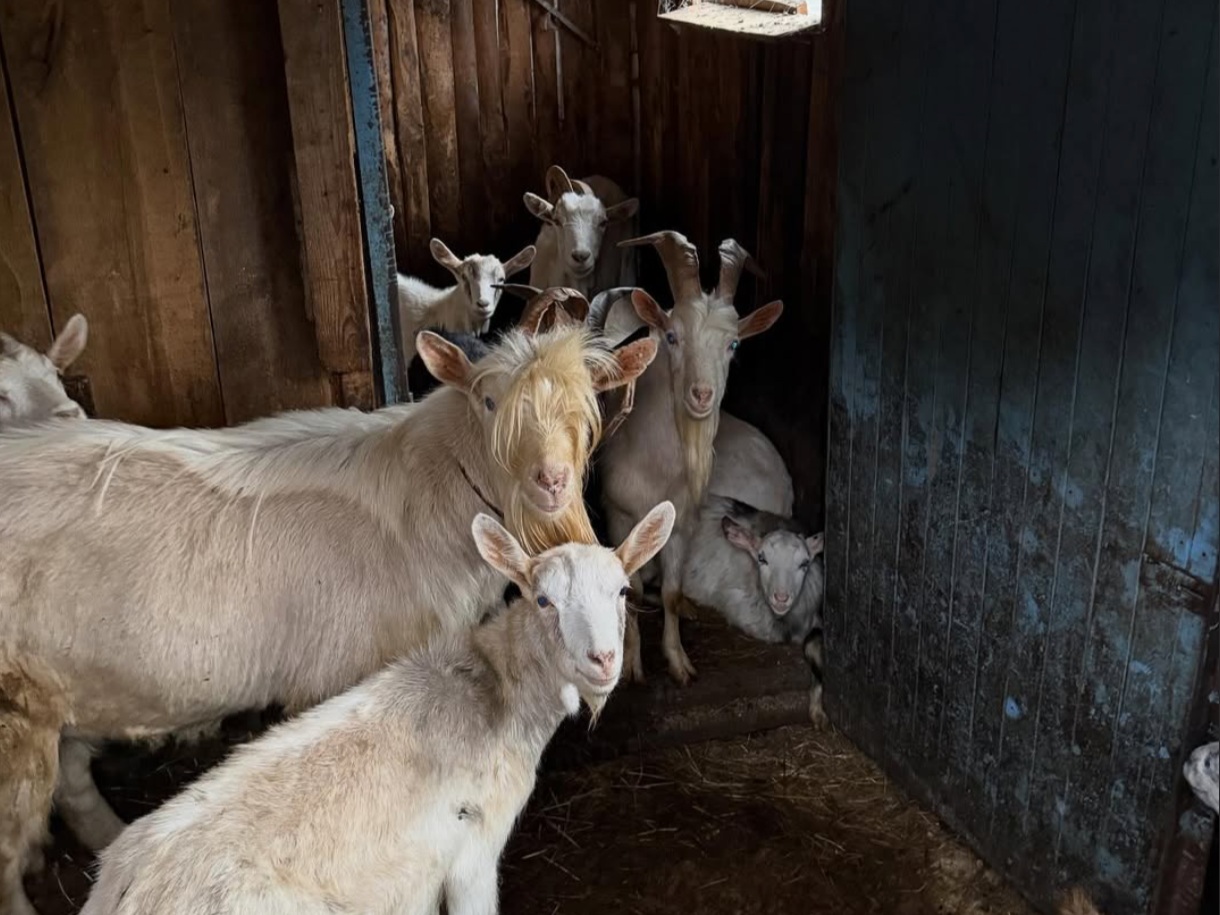
In the Kyiv region, a man kept 16 goats covered in their own feces. He starved, beat them, and broke their legs. He broke one goat's horn and gouged out another's eye. When volunteers from Lviv's Shelter Home arrived, they were shocked — the animals were locked up, without food or water. Police seized five goats. After six hours of negotiation, volunteers bought the remaining twelve for 20,000 hryvnias (approximately $500). "Those goats had you and us," the volunteers said. "That's all that kept us going." The man faced no consequences.
This is Ukraine — a country where animal cruelty is effectively legal.
Nadiia Maksiuta, a Ukrainian volunteer and lawyer, has been helping animals since 2023. She rehomes them and fights legal battles for those who have been abused. Again and again, she sees abusers walk free. One of her hardest cases involved the killing of a dog in the Rivne region. A man stabbed a dog to death with a pitchfork because it "ate all the poultry." The court found him guilty and sentenced him to two years of restricted freedom. However, it replaced the punishment with a one-year probation. The man remained free because of "mitigating circumstances" — four minor children and a third-degree disability.
"So the judge considers a person who stabbed a dog to death with extreme cruelty fit to raise four young children. And the crime is not considered serious under Ukrainian law."
Maksiuta believes the injustice comes down to one simple reason: Ukrainian law classifies animals as property, like a phone. Because of this, it is impossible to commit a serious crime against an object. Although the law defines animal cruelty as causing them suffering or torment, their legal status remains unchanged. The second problem is the penalties for criminal offenses — killing or injuring animals. Under Ukrainian law, punishments for these crimes range from one year of probation to eight years in prison. But courts usually hand down probation.
In cases of killing or maiming, the animal's interests must be represented either by a prosecutor or by the owner (who is often the perpetrator). Usually, only the prosecutor remains, and they are often part of a system that does not view crimes against animals as serious.
Most extreme cruelty cases happen in villages, where attitudes toward animals are exploitative, and dogs are used as alarm systems. When soldier Vitaliy's dog, Lucy, went missing, he shared it in his village chat group. A reply came back: she was dead. The killer even sent a photo. Vitaliy, who was serving at the front, had his mother call the police and show them the messages. But the police did nothing. Maksiuta tried to start a criminal case, but like with the goats, nothing came of it.
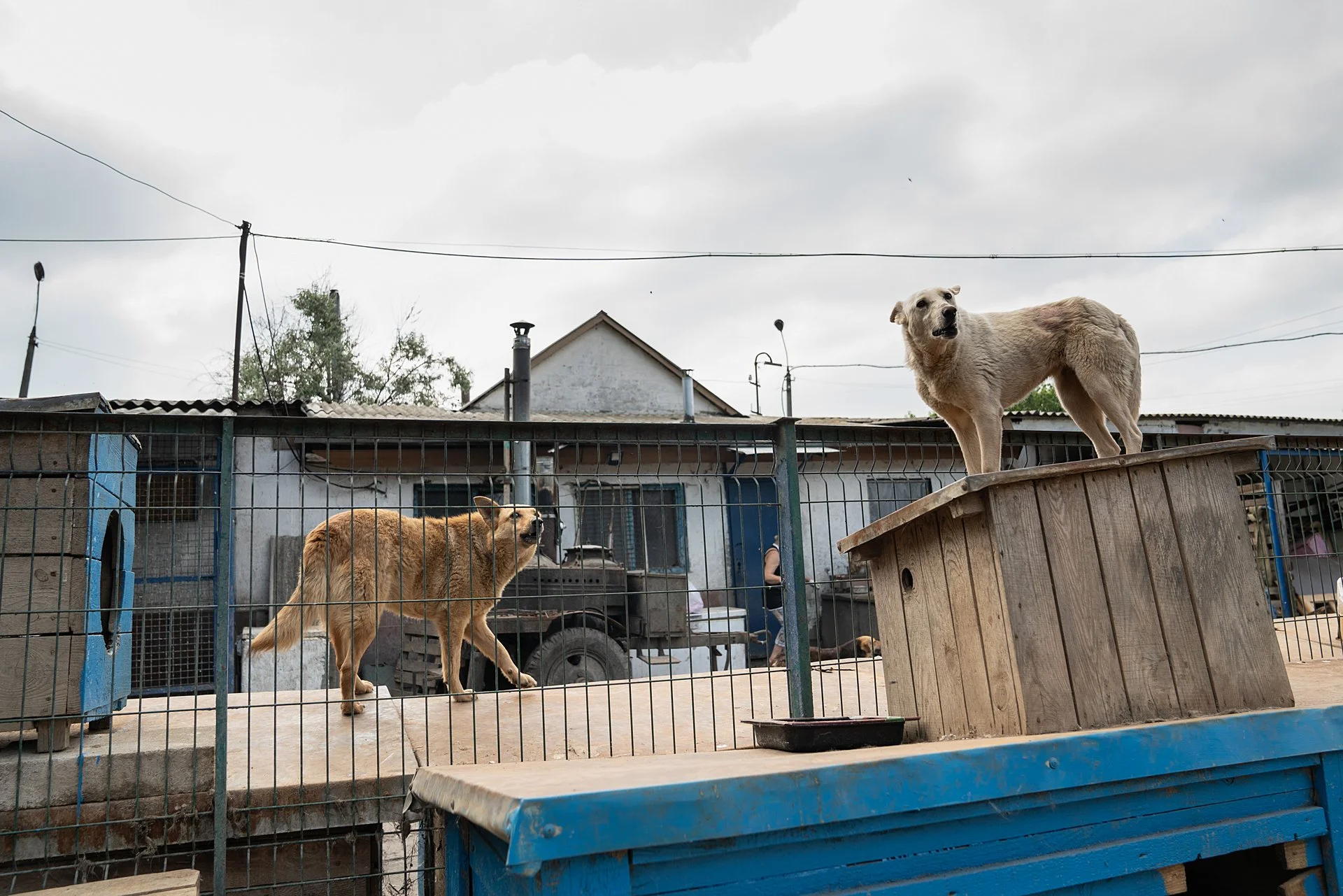
Dogs at the SOS animal shelter near Kyiv, Ukraine Credit: Thomas Machowicz / We Animals
Every few months, I file complaints about cases like these. But the mentality in villages is tough. People there fear being shunned by neighbors — or worse, retaliation. Most cases never go to court because witnesses stay silent.
She's seen it firsthand: the police are either uninterested or unaware of how to handle these cases legally. When police don't respond, witnesses lose faith, and investigations stall.
In 2023, Maksiuta was part of an effort to change the system. Animal protection groups proposed creating an Animal Police — a specialized unit to investigate crimes against animals. It would require no extra funding — just training for current officers and a small coordination team. The government refused.
So people like Nadiia keep fighting to be animals' advocates in court. And people like Anastasiia Tykha, a longtime volunteer since she was 16, become their last hope for life itself. She now owns one of Ukraine's largest shelters, "Home of Special Tails." Her team of over 30 volunteers cares for 400 animals, including more than a hundred with spinal injuries or disabilities.
"Municipal shelters rarely accept animals with disabilities,” said Tykha. “When they do, those animals often don't survive long. Without volunteers, vets simply euthanize them."
Her motivation is simple: animals either spend their lives in care or find new families, even after cases like Charlie, a Pekingese. When a car hit him, his owners abandoned him. Volunteers fought for his life for months but eventually lost.
The only funding for "Home of Special Tails" comes from their own efforts, individual donations, and support from caring businesses. The government provides nothing.
Credit: We Animals
The war makes things harder — volunteers take in dozens of animals each month from the Donetsk, Sumy, and Zaporizhzhia regions. Municipal services and other volunteers across Ukraine often turn to them when they can't take an animal themselves. This is no longer just charity. It’s a parallel system, run by private individuals using their own money.
At Shelter Home in Lviv, the twelve goats are safe and thriving. After the winter holidays, volunteers organized a festive meal — community members brought used Christmas trees for the goats to enjoy. But this winter, they faced another battle. A man deliberately ran over a dog named Naida twice. The video shows her trying to escape from under the wheels. Volunteers fought to save her, but she died. Orest Zalypskyi, the shelter's co-founder, reported it to the police. Nearly two months later, the case still hasn't gone to court — despite video evidence, national outrage, and thousands tagging police on social media.
The goat abuser remains free. He still has a dog at home. The man who killed Naida also walks free. This pattern repeats across Ukraine, and volunteers are the only ones trying to stop it. They continue doing everything: buying back goats, hosting feasts for rescued animals, fighting for dogs like Naida, and running shelters without any government support. Because the alternative — abandoning animals to people who gouge out their eyes and break their legs — is unthinkable.
Written by Oleksandra Kvochka
Oleksandra Kvochka is a Ukrainian journalist and writer, focusing on animal welfare, veganism, and environmental issues. She maintains a blog about her life with Trinity, a dog rescued from war-torn Kherson after the Kakhovka Dam was flooded.
Want to write for Species Unite? We are looking for well-written stories focusing on content that informs, inspires, and engages our audience with topics surrounding animal rights.
We Have A Favor To Ask…
Species Unite amplifies well-researched solutions to some of the most abusive animal industries operating today.
At this crucial moment, with worldwide momentum for change building, it’s vital we share these animal-free solutions with the world - and we need your help.
We’re a nonprofit, and so to keep sharing these solutions, we’re relying on you - with your support, we can continue our essential work in growing a powerful community of animal advocates this year.


Some developers suggest that adopting cultivated meat could also improve animal welfare by significantly reducing the number of farmed animals slaughtered.