
Pittsburgh Zoo elephant case will head to Pennsylvania Superior Court
The move comes after an Allegheny County judge dismissed the case seeking freedom for five African elephants at the Pittsburgh Zoo.
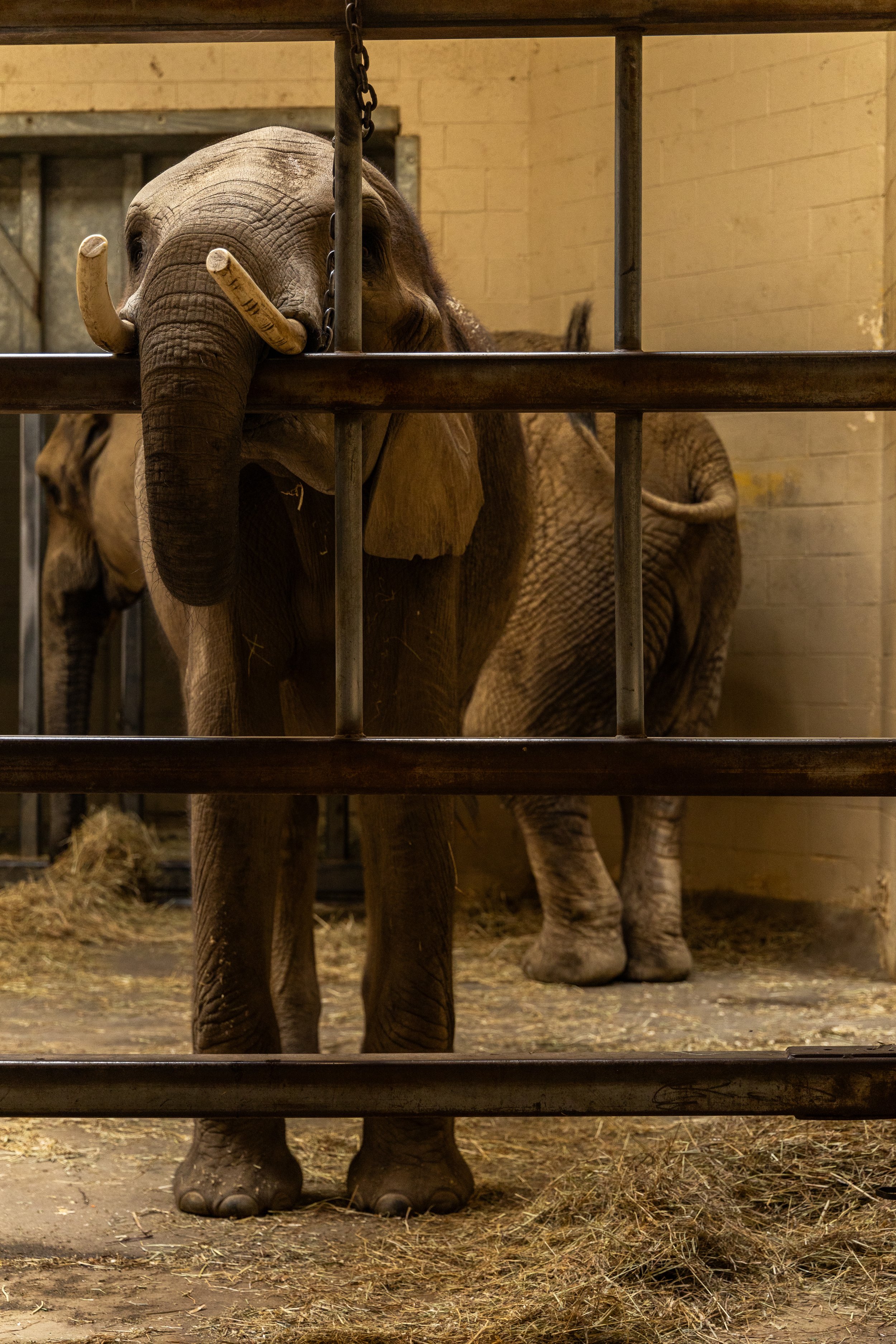
Angeline at Pittsburgh Zoo. Credit: Molly Condit
The Allegheny Court of Common Pleas has dismissed the case brought by the Nonhuman Rights Project (NhRP) to grant habeas corpus on behalf of African elephants at the Pittsburgh Zoo.
The suit seeking the release of the elephants Savanna, Tasha, Angeline, Victoria, and Zuri was filed in October, arguing that the elephants at the Pittsburgh Zoo have a basic right to freedom and should be moved to a sanctuary.
The zoo, in its motion to dismiss, contended that under Pennsylvania law, animals are property, and that the right to bodily liberty applies only to humans.
The Allegheny Court of Common Pleas granted the Pittsburgh Zoo’s Motion to Dismiss the NhRP petition on February 12, 2026, concluding that although the elephants are magnificent beings, they’re not “persons” under the law, and therefore cannot challenge their imprisonment.
“For centuries, habeas corpus has served as a safeguard against unjust confinement,” said NhRP Senior Staff Attorney Jake Davis, the lead attorney for the case. “Today’s dismissal disregards the common law nature of habeas corpus, which has been successfully invoked on behalf of individuals with few or no rights.
The NhRP says it will to appeal the decision in state Superior Court.
“Although we are disappointed with today’s outcome, we appreciate Judge McGinley’s engagement with the arguments,” said Davis. “That engagement itself represents progress in our current legal system, where the rights and interests of nonhuman animals are so often invisible. We look forward to now taking our case to the Superior Court of Pennsylvania to obtain justice for Savanna, Tasha, Angeline, Victoria, and Zuri.”
Several nonhuman animals in Latin America have been granted legal rights and several nonhuman animals in the US have has habeas corpus petitions filed on their behalf.
In 2022, Ecuador's Constitutional Court ruled that wild animals are subjects of rights under the country's "Rights of Nature" provisions, following a habeas corpus action on behalf of Estrellita, a woolly monkey. In Argentina, courts recognized the legal personhood of Sandra the orangutan in 2015 and Cecilia the chimpanzee in 2016, granting both habeas corpus relief and ordering their transfer from zoos to sanctuaries. Colombian courts granted similar recognition to Chucho, an Andean bear.
In the United States, the NhRP has filed habeas corpus petitions for Happy the elephant at the Bronx Zoo, and for Tommy and Kiko, two chimpanzees held in captivity. All were ultimately unsuccessful, but each case advanced the legal argument that animals should not be classified as property under the law.
Who are NhRP’s Pittsburgh Zoo clients?
The Nonhuman Rights Project is the only civil rights organization in the United States working to secure fundamental rights for nonhuman animals through litigation, legislation, and education.
Its clients in the Pittsburgh Zoo case are five female African elephants, Savanna, Tasha, Angeline, Victoria, and Zuri, who advocates say have suffered lasting physical and psychological harm in captivity. The zoo has repeatedly appeared on the "10 Worst Zoos for Elephants in North America" list.
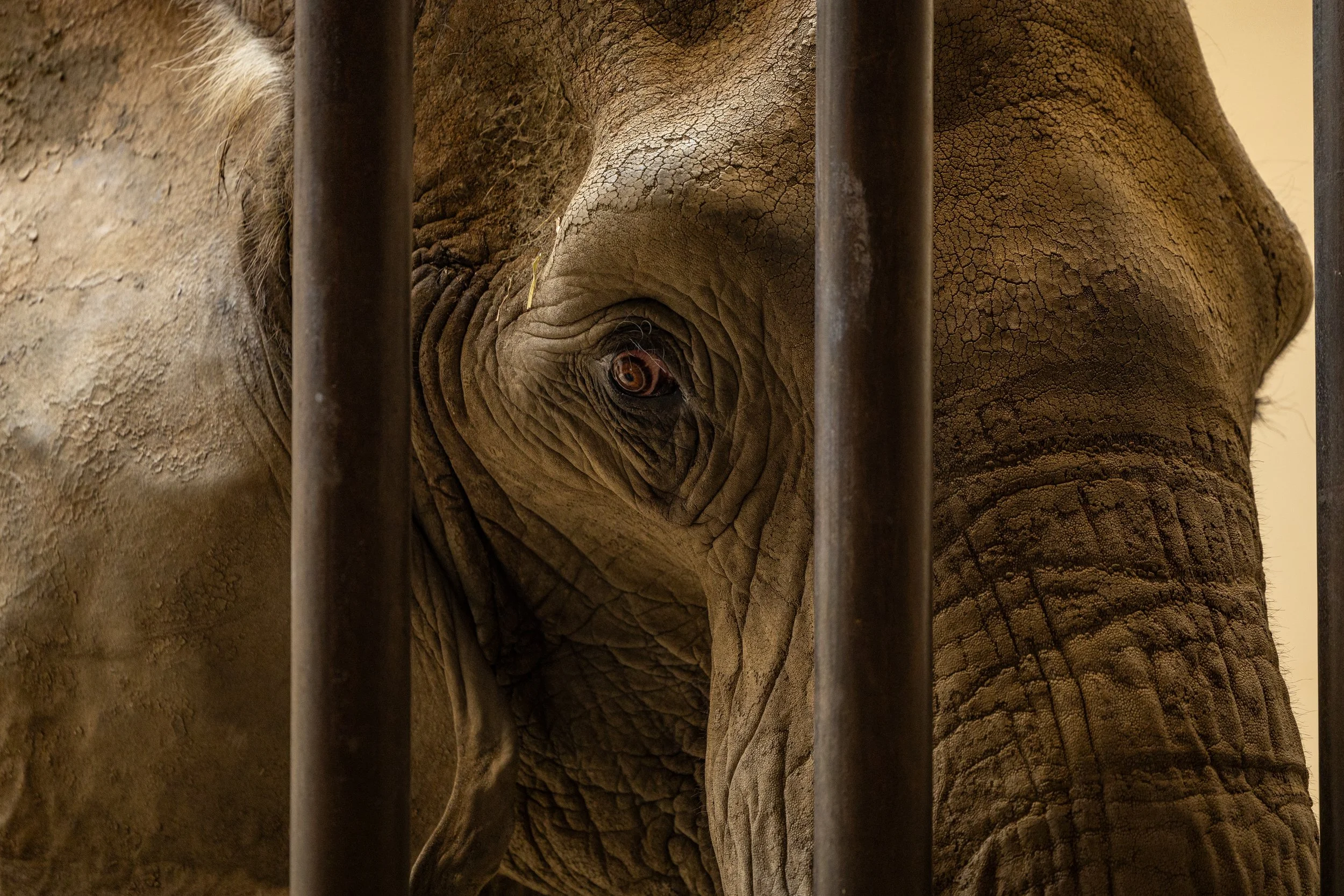
Tasha at Pittsburgh Zoo. Credit: Molly Condit
Savanna and Tasha were taken from the wild as calves. Victoria and Zuri were separated from their mother while young. Angeline has never known life outside the zoo.
In October, just six days after NhRP filed a habeas corpus petition, Victoria and Zuri were transferred to an offsite breeding facility, the International Conservation Center (ICC) in Somerset County, removing them from the original lawsuit's jurisdiction. NhRP filed a second petition demanding their liberty. According to the filing, both elephants face repeated restraint, blood draws, and artificial insemination, a procedure the petition says has a low success rate in captive elephants.
NhRP’s legal challenge for the elephants is backed by leading experts in elephant behavior and cognition, who say elephants have a profound physical and psychological need to make their own choices and move freely.
“By its nature, the common law evolves to accord with justice, responding to societal changes including advancements in scientific knowledge,” NhRP said in a statement. “Elephants have not yet been recognized as individuals possessing inherent dignity under the law, but we will continue to challenge this unjust status quo. Angeline, Savanna, Tasha, Victoria, Zuri are owed nothing less than their birthright to live freely.”
Species Unite is examining elephant captivity in the United States and the growing movement to change the system. Our upcoming documentary, A Case for Freedom, follows the legal challenge brought by the Nonhuman Rights Project to secure the release of five African elephants held at the Pittsburgh Zoo. Help us bring this film to life here.
Please also join Species Unite in demanding freedom and reunification for Angeline, Savanna, Tasha, Victoria, and Zuri. Sign the petition here.
We Have A Favor To Ask…
Species Unite amplifies well-researched solutions to some of the most abusive animal industries operating today.
At this crucial moment, with worldwide momentum for change building, it’s vital we share these animal-free solutions with the world - and we need your help.
We’re a nonprofit, and so to keep sharing these solutions, we’re relying on you - with your support, we can continue our essential work in growing a powerful community of animal advocates this year.
More stories:

A cleaner New York Harbor has drawn hundreds of humpback whales back to its waters for the first time in generations, but the same busy port that welcomes them is also killing them.