
Virus outbreak kills 72 captive tigers at Thailand tourist attraction
Campaigners point to low welfare standards and poor disease management, as the mass deaths shine a harsh light on wildlife tourism.
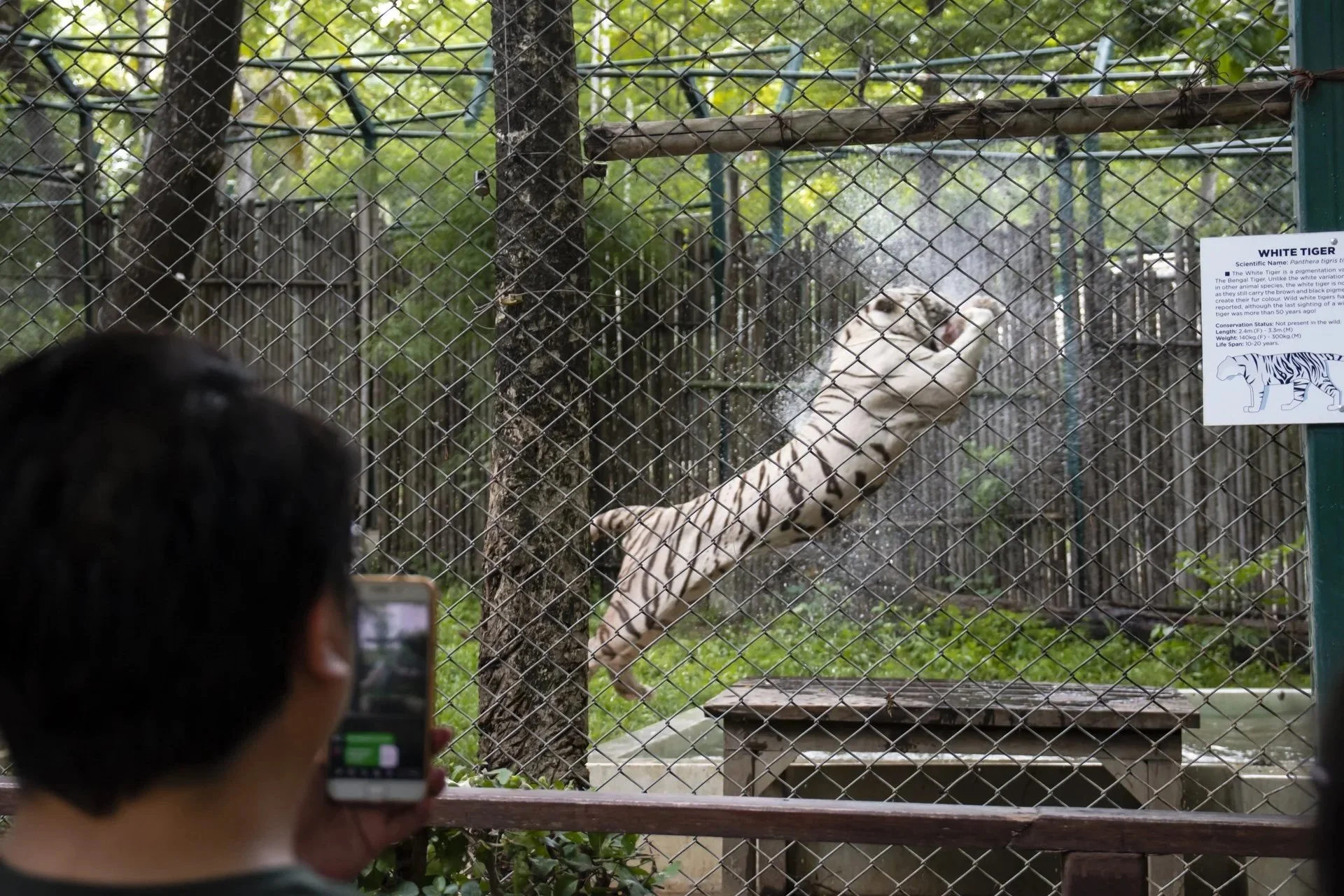
A tiger taking part in a tourism performance at Tiger Kingdom, Chiang Mai, 2019. Credit: Amy Jones/Moving Animal
A devastating virus outbreak has killed 72 tigers at two popular tourist attractions in the northern province of Chiang Mai in Thailand.
The tigers, who died between February 8 and 19, tested positive for canine distemper virus (CDV).
They were among more than 240 tigers living across two parks operated by Tiger Kingdom.
CDV is highly contagious – spread through respiratory secretions and bodily fluids – and so campaigners fear the animals’ close living conditions contributed to the sheer scale and speed of the outbreak.
The deaths have raised concerns about the risks of breeding and keeping large numbers of wild animals in confinement.
In particular, questions have been asked as to whether the tigers were routinely vaccinated against CDV. Annual vaccinations are effective and relatively cheap; the cost is around a tenth of what Tiger Kingdom reportedly charges tourists for interacting with a tiger.
“Why were these animals not routinely vaccinated against a well-known, preventable disease?” asked Wildlife Friends Foundation Thailand (WFFT) in a statement. “And why were they not housed in conditions where the likelihood of disease transmission was minimized?”
Tigers are known to be susceptible to CDV, and the inbreeding among captive tigers leads to weakened immune systems, making them more vulnerable to viral infections.
Furthermore, a veterinarian involved in handling the outbreak has voiced concerns over the park’s “disease surveillance and epidemiology system”, adding that improvements must be made to avoid a similar tragedy.
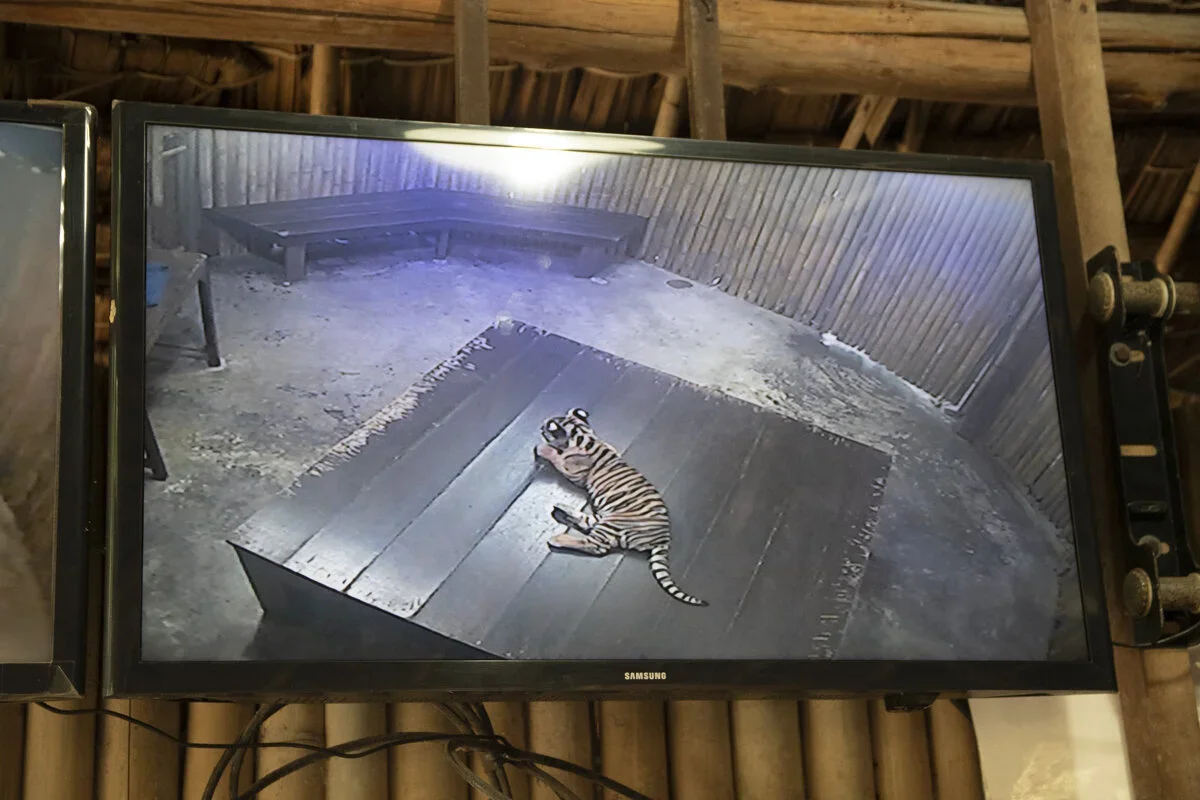
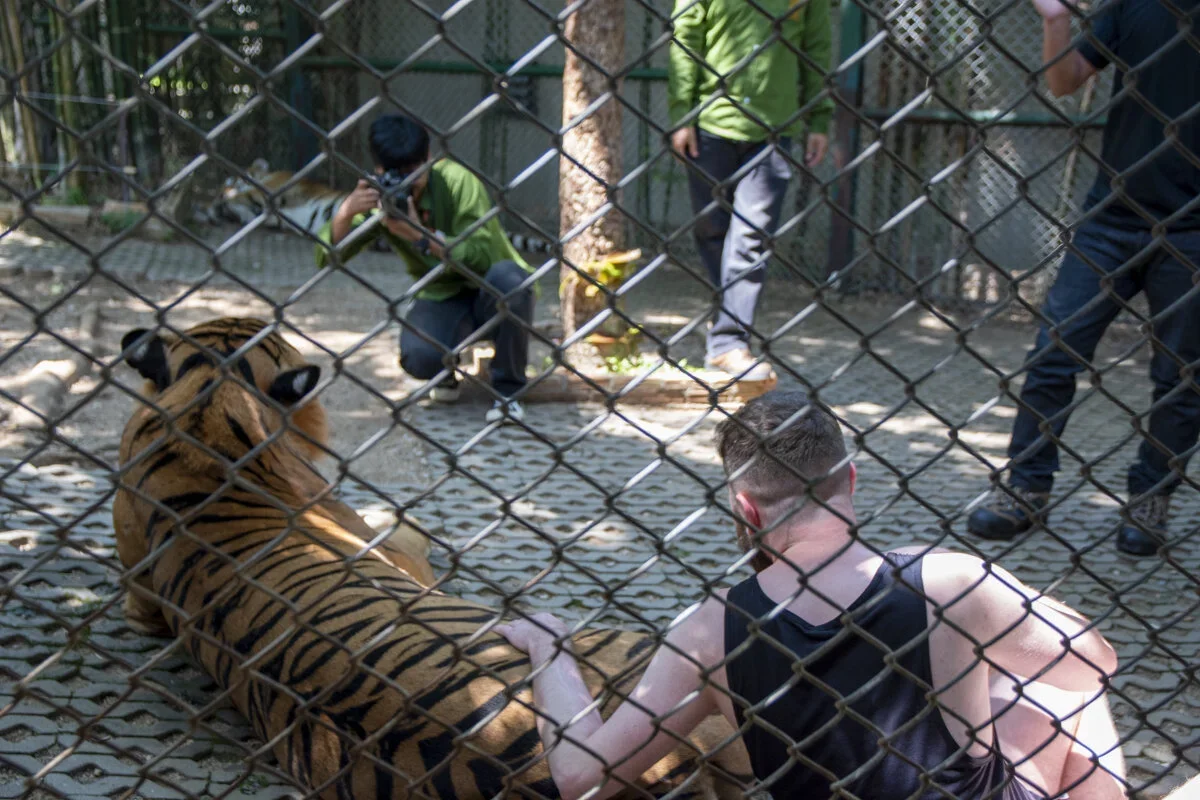
Left: A tiger cub on CCTV footage inside a photo room for tourists at Tiger Kingdom, Chiang Mai, 2019. Right: A tiger being used as a photo prop for tourists at Tiger Kingdom, Chiang Mai, 2019. Credits: Amy Jones/Moving Animals.
Wisit Arsaithamkul also suggested that the animals’ food source – raw chicken – was to blame. While the exact cause of the outbreak has yet to be revealed, Thai authorities said that all veterinarians and Tiger Kingdom staff are currently under observation for 21 days as a precaution.
Infected raw chicken was the suspected cause of Thailand’s last mass death of tigers, when an outbreak of bird flu killed over 80 big cats at Sriracha Tiger Zoo in 2004.
This latest tragedy has sparked renewed calls from animal charities to ban wildlife tourism.
According to WFFT, there are 1,500 captive tigers held across sixty locations in Thailand, of which many are ill-treated, and bred for tourism.
Tiger Kingdom allows tourists to pose for selfies and to interact with its tigers, and campaigners fear the animals are likely drugged, such is their unnaturally docile manner.
When not being forced to interact with tourists, the tigers are confined to tiny concrete enclosures.

Elderly Indochinese tigress, Salamas, on a tiger farm in Northern Thailand. She was kept inside this enclosure for more than 20 years. Photo: Amy Jones/WFFT
Tiger Kingdom – which owns six tiger parks in Thailand – was established with the stated aim of breeding and conserving Indochinese tigers. However, “the facilities have zero benefit for conserving wild tigers, provide no educational benefit, and, apart from causing immense suffering to tigers, put staff and visitors at risk of injury and disease,” said World Animal Protection.
WFFT has called for the phase out of all tiger entertainment venues, and for the animals to be moved to sanctuaries: “WFFT is deeply concerned by reports of this mass mortality event and emphasises the urgent need for stronger regulation, strict biosecurity measures, and a transition away from exploitative wildlife tourism. Wild animals do not belong in entertainment venues. They belong in the wild – or, when that is no longer possible, in genuine sanctuaries that prioritise their welfare above profit.”
For a deeper look at the realities of commercial tiger breeding and the hidden costs of wildlife tourism, listen to this Species Unite podcast episode on tiger factory farming with award-winning photojournalist and Species Unite team member Amy Jones.
We Have A Favor To Ask…
Species Unite amplifies well-researched solutions to some of the most abusive animal industries operating today.
At this crucial moment, with worldwide momentum for change building, it’s vital we share these animal-free solutions with the world - and we need your help.
We’re a nonprofit, and so to keep sharing these solutions, we’re relying on you - with your support, we can continue our essential work in growing a powerful community of animal advocates this year.

Some developers suggest that adopting cultivated meat could also improve animal welfare by significantly reducing the number of farmed animals slaughtered.