
It is unlawful and unethical to keep elephants in Johannesburg Zoo, say campaigners in landmark court case
Animal rights groups, indigenous leaders, and elephant experts are calling for the zoo to rehome the three elephants, whose lives are "nothing but a succession of boring and frustrating days, damaging to their bodies and their minds, with no prospect of any relief or change."
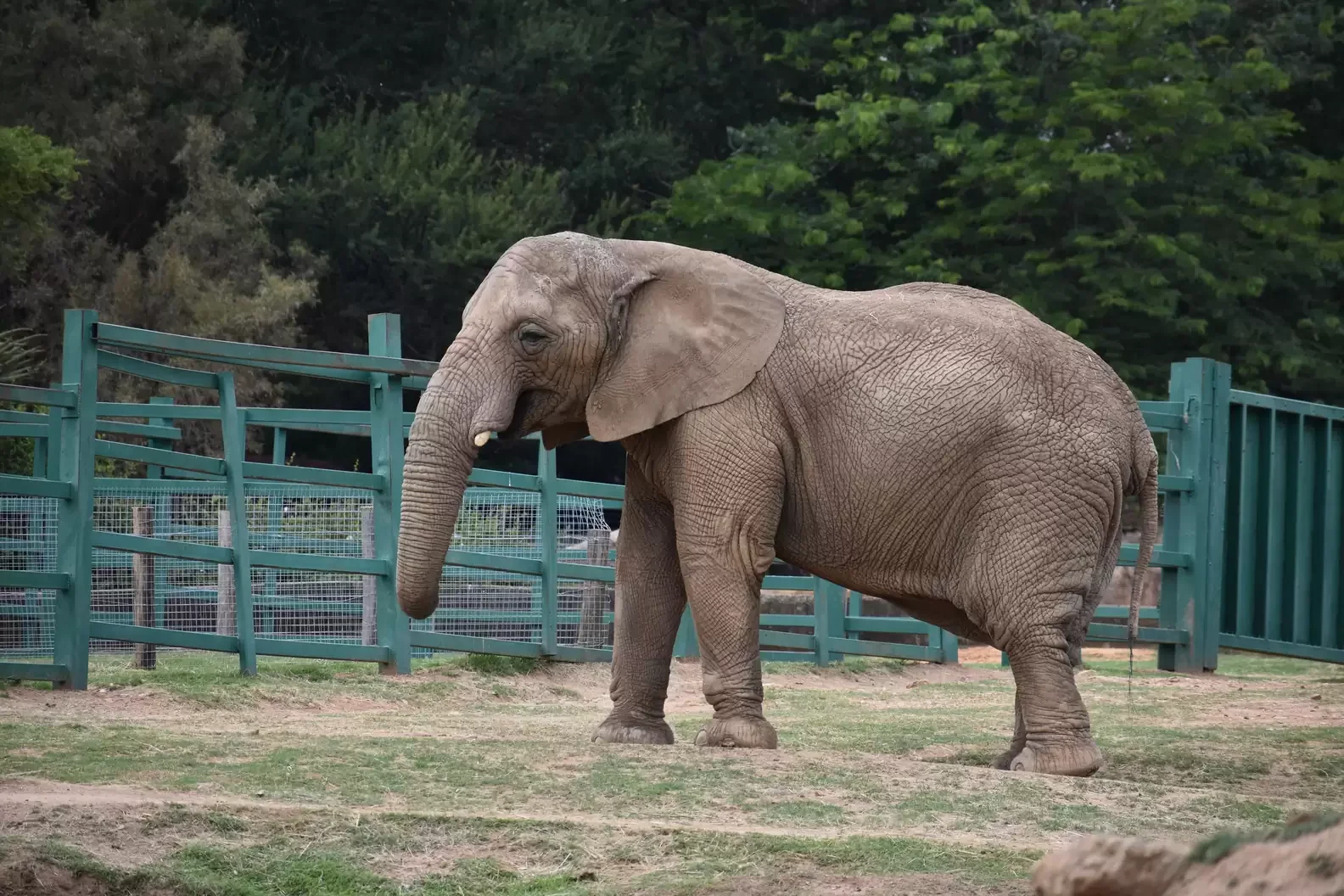
Photo: HSI
A court in South Africa has heard that the ongoing captivity of three elephants in a publicly-owned zoo is unconstitutional and unlawful.
Animal Law Reform South Africa (ALR), the EMS Foundation, and Stephen Fritz, senior Chief of the indigenous South Peninsula Khoi Council, say that Johannesburg Zoo is failing to meet its legal obligation to care for the animals.
According to David Bilchitz, a board member at ALR, the elephants,named Lammie, Ramadiba and Mopane, are "sad, depressed, and frustrated," and showing "repetitive compulsive behavior."
The court application - which was heard at Gauteng High Court, Pretoria, from May 19 to 21 - is the first in South Africa to demand the release of a zoo animal.
William Lindsay was among the expert witnesses who testified for the elephants' prompt rehoming to a sanctuary. He described their current lives as "nothing but a succession of boring and frustrating days ... to the point of a long, drawn-out form of inhumane cruelty."
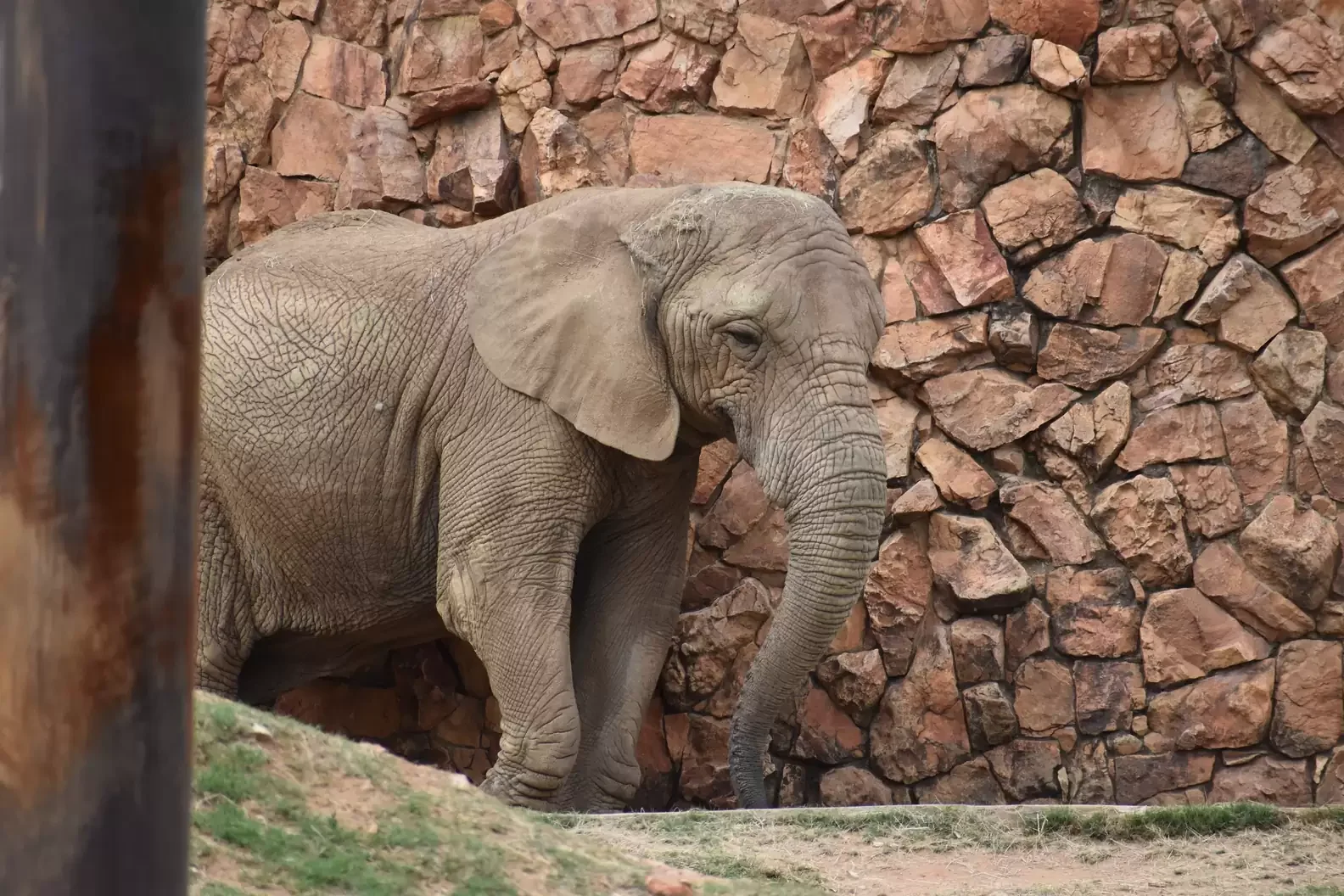
Actively involved with the Amboseli Elephant Research Project since 1977, Lindsay said the outdoor area of the exhibit has "serious drawbacks," including that it is barren and flat, and so offering no incentive for movement from the elephants, who in the wild enjoy diverse and varied terrain.
In addition, there is no shade, and very limited provision of mud for wallowing, or loose soil for dusting, which are essential for cooling and for skin care, and mandated by international guidelines.
Lindsay also observed the elephants eating sand, possibly in search of minerals that are not being offered in their food supply. Indeed, wild elephants draw on a rich diet of minerals and a huge variety of plant species. Sand provides no nutritional benefit; on the contrary, it simply accumulates in the gut.
In court papers, Lindsay described Lammie as showing "the behavior of an animal that has known nothing but a life of unstimulating tedium." Mopane and Ramadiba were brought in by the zoo to keep Lammie company, but Lindsay saw very little social interaction between them. Instead, their addition to the exhibit has served only to inflict suffering on the two younger elephants. While Mopane was "listless", Ramadiba was clearly unhappy with his new life, as he displayed stereotypic behaviors such as "pronounced swaying and head-bobbing."
Of course, there is often the argument that zoos allow the public a chance to observe, and learn about, rare and beautiful animals. But, according to Lucy Anne Bates, "the stress and lethargy expressed by Lammie, Mopane and Ramadiba means the animals viewed by zoo visitors bear almost no resemblance to 'real' wild elephants, whose lives are full of vigour and drama."
The co-director of South Africa's Elephant Special Advisory Group, Bates added that visitors would learn far more from watching a giant screen of the elephants' release, and to see how they operate in more natural surroundings.
While Lammie has spent her whole life in captivity (she is now 47), Mopane (23) and Ramadiba (26) were both taken from the wild for Elephant Back Safari Tourism. Their acquisition by the zoo, in 2019, sparked outrage, and the National Council of Societies for the Prevention of Cruelty to Animals resigned from the zoo's Animal Ethics Committee in protest.
Experts are hopeful that, given elephants' extreme intelligence and adaptability, all three of the animals can adjust to a new life in a sanctuary. A private nature reserve in the Limpopo province has said that it would welcome the elephants. This is significant, given that the same reserve successfully rehabilitated Charley (since renamed Duma), an elephant who outlived his companions at Pretoria Zoo.
Indeed, there is already a precedent for rehoming lonely zoo elephants. Duma was all alone, after his last remaining companion, Landa, died in 2020. Duma spent four years in isolation, and was exhibiting signs of stress and loneliness. Animal groups successfully argued for his release, in 2024.
Having been taken from the wild and forced to perform for 16 years in a circus, before enduring a further two decades confined in Pretoria Zoo, Duma is now adapting to his new life at Shambala Private Reserve, which boasts over 10,000 hectares.
"With every day, he is starting to behave more and more like a wild elephant," said Dr Marina Ivanova, FOUR PAWS veterinarian, in an update of September 2024. "It is simply beautiful to see that he has already started communicating with the other elephants in the reserve from afar. Last week, he trumpeted for the very first time and used his trunk to pour water over his head. Yesterday, he has enjoyed his first mud bath since being in captivity for over four decades."
Duma's success story makes for perhaps the most compelling argument for releasing the elephants from Johannesburg Zoo.
More countries are starting to recognise animals as legal persons, and there is a growing appreciation of the cognitive, social, and emotional complexity of elephants in particular. They possess many characteristics evocative of human beings, such as self-awareness, empathy, and knowledge of others.
It is well-documented that wild elephants live much longer than those in captivity. One particular study, conducted over six years of some 4,500 elephants and referenced in court papers, found female African elephants at Amboseli National Park in Kenya lived to around 56 years, while zoo-born females lived to just 17.
Most experts believe that such disparity is purely down to the emotional and physical effects of living in captivity. In the wild, elephants are constantly on the move - walking up to 30 miles, over 18 hours, every day. In Johannesburg Zoo, the enclosure is around the size of a football pitch.
This lack of space leads to numerous health problems, most of which are caused by a lack of exercise. Deprived of the problem-solving skills - like foraging, finding water during droughts, and locating certain foods and minerals - needed to survive in the wild, the zoo elephants are left bored and depressed, and so stand around for much of the day. Indeed, foot/joint problems are the main causes of death in captive elephants, while 75 percent of captive elephants are overweight.
They often display stereotypic behaviors - repetitive movements, such as swaying or pacing, which is indicative of boredom and stress. This often gets worse, and can result in withdrawal, aggression, or self-harm. With intervention, elephants can reduce such behaviors, and even stop it altogether.
As of May 27, judgment in the case has been reserved.
Species Unite is examining elephant captivity in the United States and the growing movement to change the system. Help us bring this film to life here.
We Have A Favor To Ask…
Species Unite amplifies well-researched solutions to some of the most abusive animal industries operating today.
At this crucial moment, with worldwide momentum for change building, it’s vital we share these animal-free solutions with the world - and we need your help.
We’re a nonprofit, and so to keep sharing these solutions, we’re relying on you - with your support, we can continue our essential work in growing a powerful community of animal advocates this year.
Some developers suggest that adopting cultivated meat could also improve animal welfare by significantly reducing the number of farmed animals slaughtered.