
Conservation group stages the biggest rescue of moon bears from illegal bile farm in Southeast Asia
At the facility in Laos, 27 moon bears had been confined to tiny metal cages for at least two years, with several showing signs of muscle atrophy.
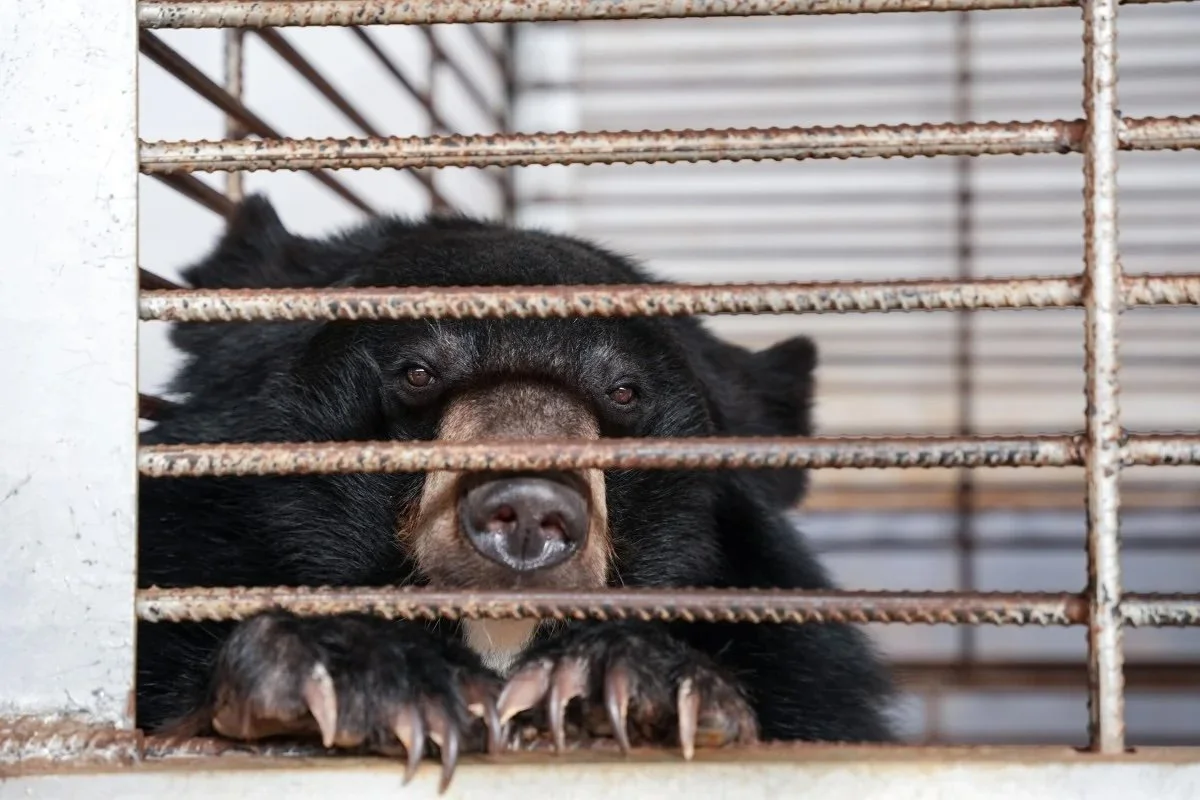
One of the moon bears rescued from an illegal bear bile farm in Laos. Photo: Free the Bears
Twenty-seven moon bears have been rescued from an illegal bear bile farm in Laos.
Conducted with the support of the Laotian government, Free the Bears said the speed and scale of the operation was unprecedented.
"In our 30-year history, Free the Bears has never closed a bear bile farm of this size, and we believe it's the biggest bear bile farm closure in Southeast Asia," said the conservation group's CEO, Matt Hunt.
Such a rescue typically requires months of planning, but here the charity had only days to act.
Owned by a Chinese national, the farm in northern Laos had been registered as a zoo. Rescuers were shocked to find so many empty cages - evidence that the owner intended to expand operations. In all, there were over 80 empty cages.
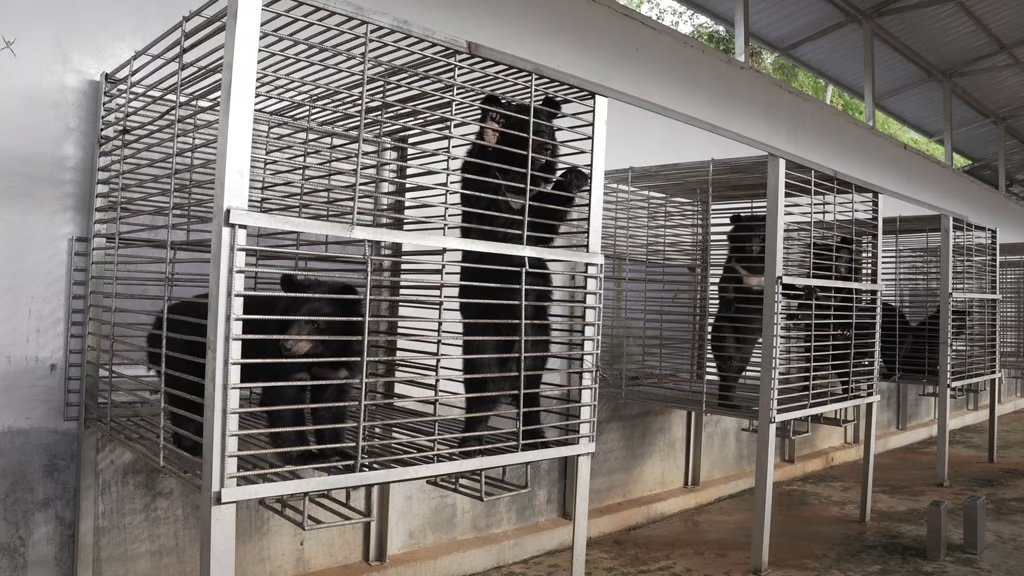
Moon bears seen in cages at the illegal bear bile farm in Laos. Photo: Free the Bears
Each of the 27 rescued bears was confined to a tiny metal cage, measuring one meter by two meters maximum. Several of the bears showed signs of muscle atrophy. Indeed, it is thought the bears have been held at the farm for at least two years.
The bears were loaded onto vehicles and transported hundreds of kilometers south, to the Luang Prabang Wildlife Sanctuary, home to more than 150 bears rescued in Laos by Free the Bears. They will undergo veterinary assessment and a period of quarantine, before eventual integration into a forested enclosure.
"It's insane to think they have been deprived of so much," said Hunt. "For some, it's the first time they've had access to a decent amount of drinking water, and some of them haven't trodden on solid ground in two years." As such, the bears will require lifelong care at the sanctuary.
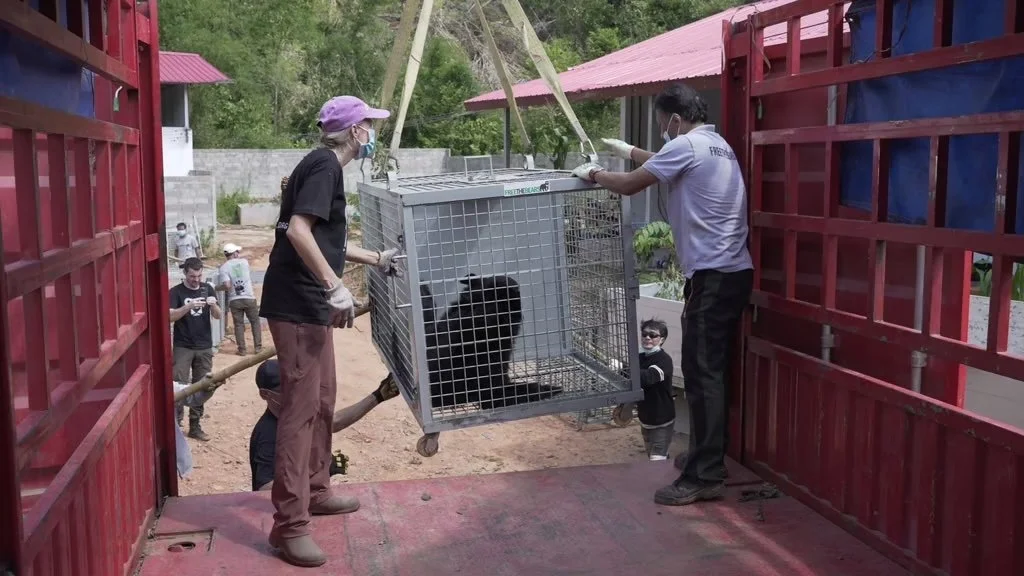
The 27 animals were loaded onto vehicles and driven hundreds of kilometres south. Photo: Free the Bears
The moon bear is classified as vulnerable to extinction on the IUCN Red List, with habitat loss and poaching among the main threats to its survival. Geographically, Laos is both a source for rare and protected species as well as a transit corridor for smuggling routes into China.
But the latest raid sends out a strong message to people thinking of setting up a bear bile farm in Laos. "It’s not going to be allowed," said Hunt. "They will be shut down, and the government will take action to protect these species".
Indeed, recent collaborations between Laotian authorities and Free the Bears have seen a raid on Laos' longest-running bear farm, which had been operating before the 2007 Wildlife & Aquatic Law that made it illegal to harm, capture, or trade protected species. And a year earlier, in March 2024, they rescued 16 orphaned cubs, apparently destined for life on a bear bile farm.
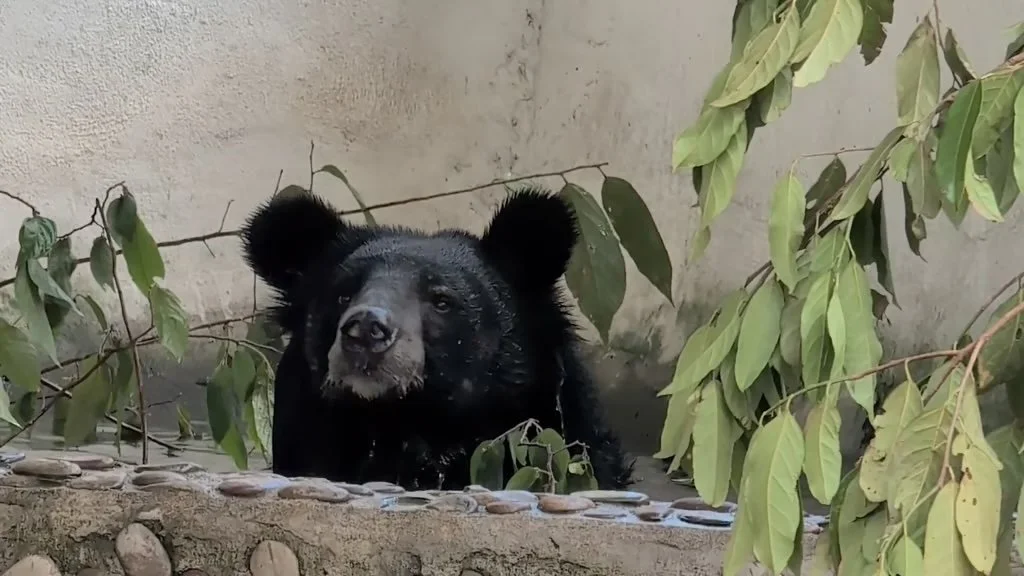
One of the rescued moon bears rests in quarantine after arriving at the sanctuary in Luang Prabang. Photo: Free the Bears
The bear bile industry has been described as “one of the worst forms of animal abuse in the world today.” The bears are typically kept in cages so small that they cannot turn around or stand up. The extraction of bile from live bears is painful and invasive, carried out via syringes or catheters inserted into their gallbladder, usually while the animal is either sedated or restrained.
They are often malnourished and dehydrated, and so vulnerable to disease and infections. Furthermore, farmed bears have been observed displaying stereotypic behaviors, such as rubbing their heads repeatedly against the cage, or self-harming - indicative of extreme boredom and/or stress. On average, they live to just five years old. In the wild, the average moon bear will reach the age of 30.
China, Hong Kong, and Japan are the main countries driving demand for bear bile, where it is used in traditional Chinese medicine. It remains legal in China, but Laos, Vietnam, and most recently, South Korea, have all outlawed the industry.
More stories:
We Have A Favor To Ask…
Species Unite amplifies well-researched solutions to some of the most abusive animal industries operating today.
At this crucial moment, with worldwide momentum for change building, it’s vital we share these animal-free solutions with the world - and we need your help.
We’re a nonprofit, and so to keep sharing these solutions, we’re relying on you - with your support, we can continue our essential work in growing a powerful community of animal advocates this year.
Some developers suggest that adopting cultivated meat could also improve animal welfare by significantly reducing the number of farmed animals slaughtered.