
Iain Douglas-Hamilton, elephant expert, conservationist, and campaigner, dies aged 83
The person who taught the world to see elephants as individuals leaves an enduring conservation legacy.
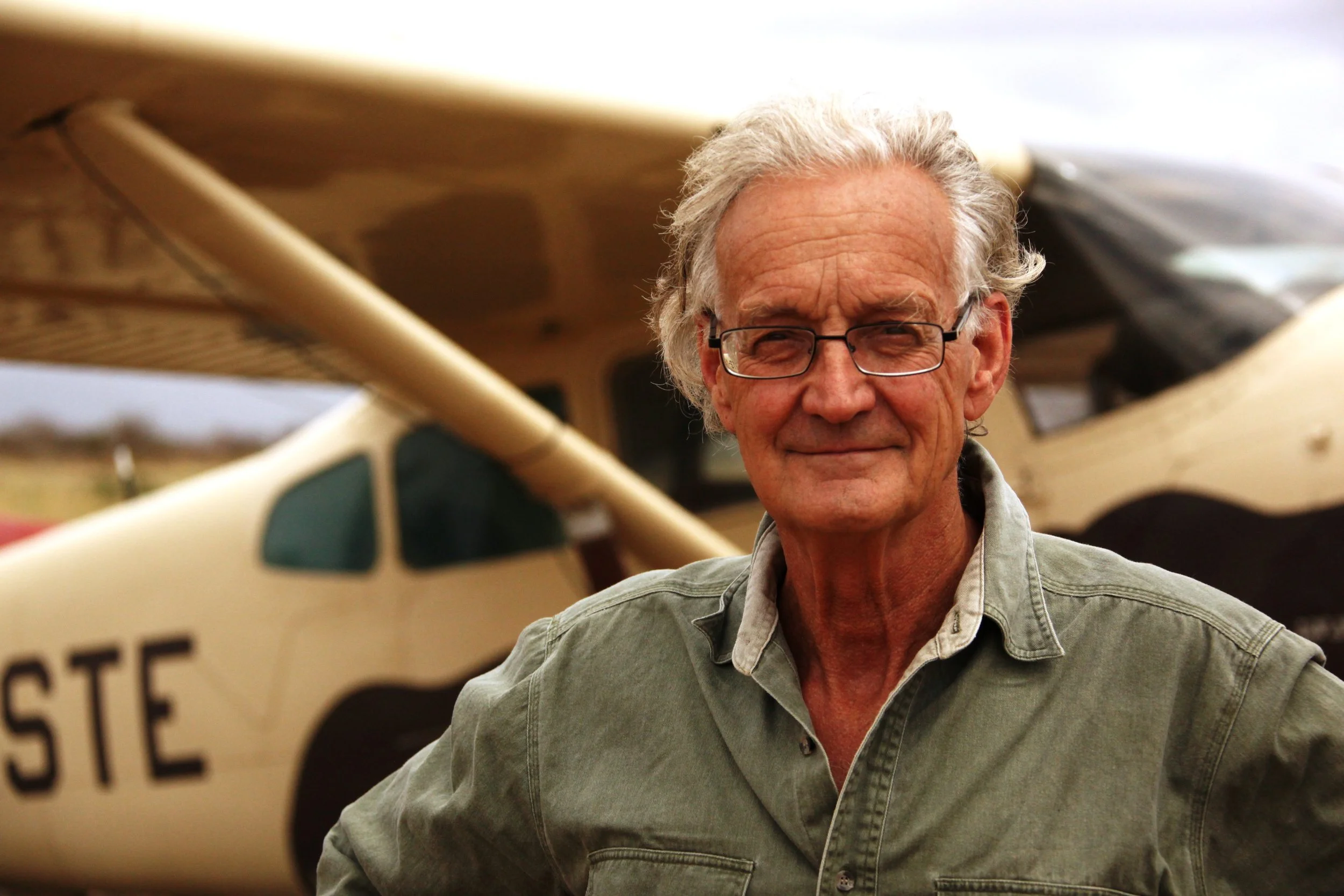
Douglas-Hamilton with the Save the Elephants Cessna in Samburu National Reserve, Kenya. Source: Ndovultome/CC BY-SA 4.0
Tributes have been paid to Iain Douglas-Hamilton, one of the world’s leading zoologists who spent more than 60 years studying and supporting elephants.
After graduating in zoology from Oxford University, he travelled to Tanzania in 1965, to work at Lake Manyara National Park. Over the next five years, he lived among Manyara’s 450 elephants, conducting the first systematic study of elephant behavior in the wild.
Early attempts at living alongside the animals proved difficult; he often had to escape via climbing up trees or seeking refuge in his car, after the elephants became angered by his work, but they soon came to share the park in peace. Indeed, such was his close bond that he could identify the animals by the pattern of their ear or the wrinkles in their skin.
"Nobody had lived with wildlife in Africa and looked at them as individuals yet,” he later said. “I was incredibly lucky to have had the chance to be the first person to do that with elephants.”
In 1969, he met Oria Rocco, whom he would later marry and have two daughters with. In 1975, they wrote Among the Elephants, a best-selling book that told of their early life together. “Was it their size, their power, or their gentleness that attracted me? I could not tell,” Oria writes in the book. “I just knew I loved being surrounded by elephants.”
From the late 1970s onwards, however, ivory poaching threatened their idyllic way of life. Indeed, their next book, Battle for the Elephants (1992), documents a decade-long fight to save the African elephant from extinction.
With ivory prices suddenly rocketing, elephant herds across Africa found themselves at the mercy of gun-wielding poachers.
In Uganda, poachers had killed around 18,000 elephants. By the time Douglas-Hamilton was offered the job of Honorary Chief Park Warden, in 1980, only around 1,600 elephants remained.
In the two years he spent living in Uganda, he arranged for air and ground patrols to show the true extent of what he described as “the greatest animal tragedy of this century”. As a skilled pilot, his low-flying patrols also disrupted poachers, who often shot at his plane.
Within a decade, Douglas-Hamilton estimated that the African elephant population had plummeted by more than half, to just 600,000.
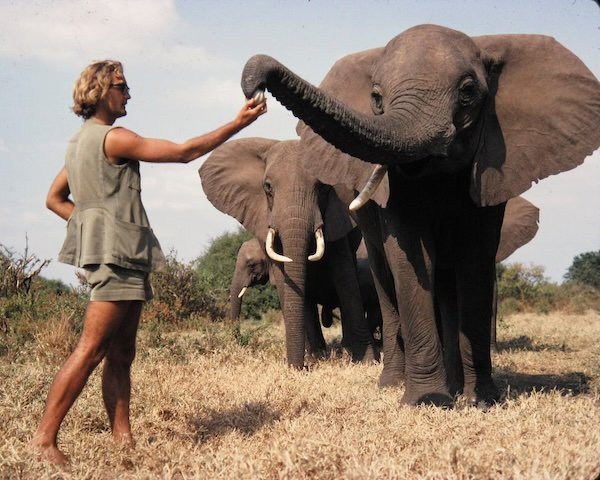
Iain Douglas-Hamilton offering a ball to an elephant Photograph: Oria Douglas-Hamilton
Thanks to his tireless efforts, the ivory wars soon became a worldwide concern, and an international ban was announced in 1989. He received the Order of the Golden Ark, one of conservation’s most prestigious awards. More honours followed, such as the Indianapolis Prize for animal conservation, in 2010, but elephants, and their conservation, always remained his priority.
In 1993, he founded Save the Elephants (STE), a research and conservation organization based in Samburu National Park, northern Kenya. During this period, he has tracked the interactions and movements of nearly 1,000 resident elephants, through the innovative use of radio and GPS technology. As such, STE tries to understand ecosystems from an elephant’s perspective, while the real-time information on their whereabouts is proving crucial in the continued fight against illegal poaching.
The organisation's CEO, Frank Pope, who is also his son-in-law, said: "Iain changed the future not just for elephants, but for huge numbers of people across the globe. His courage, determination and rigour inspired everyone he met."
What can you do?
Please join Species Unite in advocating for elephants by urging your member of Congress to cosponsor the CHER Act to help ensure these amazing animals are finally awarded the freedom they deserve. Take action here.
We Have A Favor To Ask…
Species Unite amplifies well-researched solutions to some of the most abusive animal industries operating today.
At this crucial moment, with worldwide momentum for change building, it’s vital we share these animal-free solutions with the world - and we need your help.
We’re a nonprofit, and so to keep sharing these solutions, we’re relying on you - with your support, we can continue our essential work in growing a powerful community of animal advocates this year.

A cleaner New York Harbor has drawn hundreds of humpback whales back to its waters for the first time in generations, but the same busy port that welcomes them is also killing them.