
Goldfish are sentient beings, according to historic court ruling in Argentina
The landmark decision saw a judge order the removal of two goldfish from their small tank in a busy sushi restaurant, on grounds of animal cruelty.
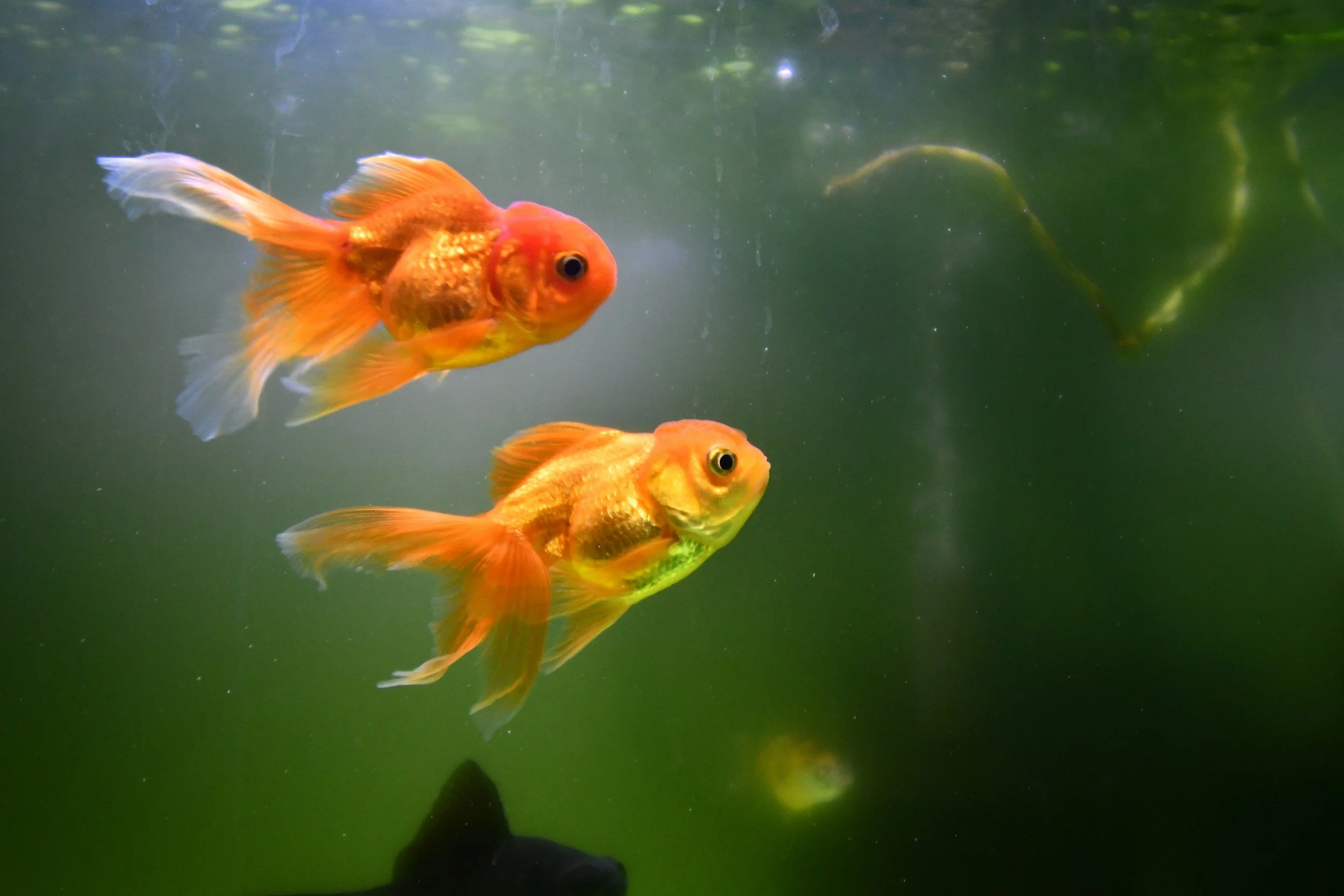
Two goldfish owned by a sushi restaurant in Buenos Aires have been transferred to a new home, after a judge ruled their living conditions violated Argentina’s animal welfare laws.
Lawyers successfully argued that Fede and Magui were victims of animal abuse, having spent their lives in a glass display case outside a busy restaurant, in which they were exposed to constant sunlight, and to the noise of traffic, while passersby – especially children – often tapped on the tank, causing further stress.
In addition, the “space was so small that they could not spread their fins without hitting the glass, or grow to the size appropriate for their species,” said Jaulas Vacías (Empty Cages), who launched legal proceedings against the restaurant owner.
The nonprofit had observed the fish losing scales and showing signs of lethargy – indicative of both mental and physical suffering.
“Anyone passing by and stopping to look could see it wasn’t suitable for the fish,” said lawyer Matías Trufero, acting for Empty Cages.
The judge found that the restaurant had violated Law 14.346, which prohibits animal cruelty in Argentina. Explaining its decision, the Buenos Aires misdemeanor court said that the goldfish “are not merely inanimate material objects … Their rights must be recognized as part of the obligation to respect the life and dignity of sentient beings.”
The restaurant owner was ordered to surrender the fish. Receiving an eight-month suspended sentence, the owner will undertake a course on animal rights, and has been banned from keeping animals at the restaurant.
Fede and Magui left the restaurant’s 40-liter display case and are now enjoying life in a 2,500-liter tank, under the care of an animal rights campaigner who helped with their rescue.
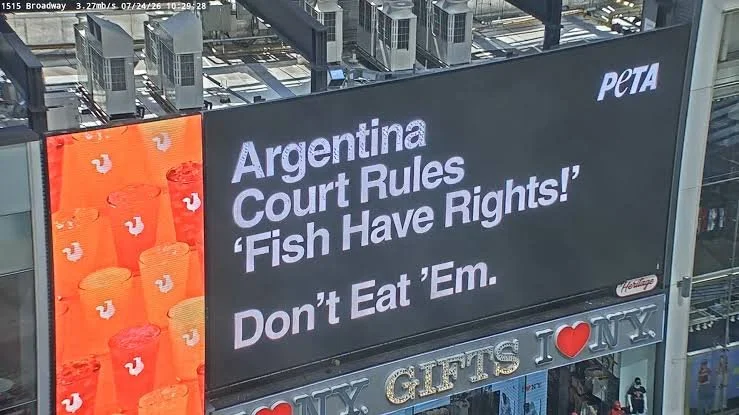
The case was recently celebrated by PETA with a billboard in New York’s Times Square. “Fish are thinking, feeling beings who show affection, are resourceful, and have unique personalities – and the Argentina court’s ruling should inspire everyone to see fish for who they really are,” said Tracy Reiman, PETA President.
This is the first time that any court has recognized common goldfish (Carassius auratus) as sentient beings. It follows an increasing global awareness of sentience in marine life. A major review in 2021 concluded that crabs, octopuses, lobsters, and other sea creatures can feel pain, stress, and pleasure, which led to the UK government amending the national Animal Welfare Bill accordingly. And a Spanish multinational has recently abandoned plans to build the world’s first octopus farm, after the Canary Islands government requested more detailed information on the project. The issue had united a coalition of nearly 200 organizations who highlighted serious ethical and environmental concerns over octopus farming.
Ultimately, this latest ruling further establishes Argentina’s position as a pioneer in the animal rights movement. For example, a Buenos Aires court made history in 2015 after granting legal rights to Sandra the orangutan. Thanks to this unprecedented case, Sandra was freed from captivity in Buenos Aires Zoo and is now living in a Florida animal sanctuary, paving the way for similar cases across the country.
Argentina also introduced the legal concept of a ‘multi-species family,’ whereby pets are considered non-human ‘children’ of their human owners. Commenting on the 2019 case of Tita – a pet dog shot and killed by a policeman in Chubut, south Argentina – a judge said that “non-human animals that live with us are our family. We give them a name, our own surname when we take them to the vet, take care of their health, feed and educate them, and ensure they have leisure time.”
Go deeper into the topic of legal rights for animals:
What does justice actually look like for an animal? Species Unite explores the question in our long-form feature, 'Inside the legal fight for animal rights.'
Species Unite is also examining elephant captivity in the United States and the growing movement to change the system. Our upcoming documentary follows the legal challenges brought by the Nonhuman Rights Project to secure the release of elephants held at zoos. Help us bring this film to life here.
Species Unite News is a weekly round-up of the most important animal stories happening around the world. Join over 250,000 others who start their week with the latest animal stories delivered straight to their inbox.
We Have A Favor To Ask…
Species Unite amplifies well-researched solutions to some of the most abusive animal industries operating today.
At this crucial moment, with worldwide momentum for change building, it’s vital we share these animal-free solutions with the world - and we need your help.
We’re a nonprofit, and so to keep sharing these solutions, we’re relying on you - with your support, we can continue our essential work in growing a powerful community of animal advocates this year.
More stories:
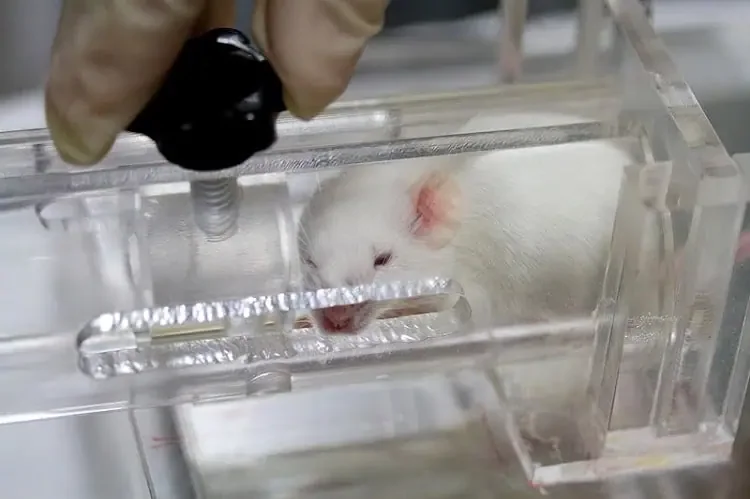
Significant investment and revised regulations across four government agencies are part of an ongoing effort to support innovative scientific research ahead of “outdated” testing on animals.