
Plans to build the world’s first octopus farm are called off
Nueva Pescanova wanted to breed and slaughter up to one million octopuses a year, but critics have long questioned the ethical, environmental, and public health impacts of such a project.
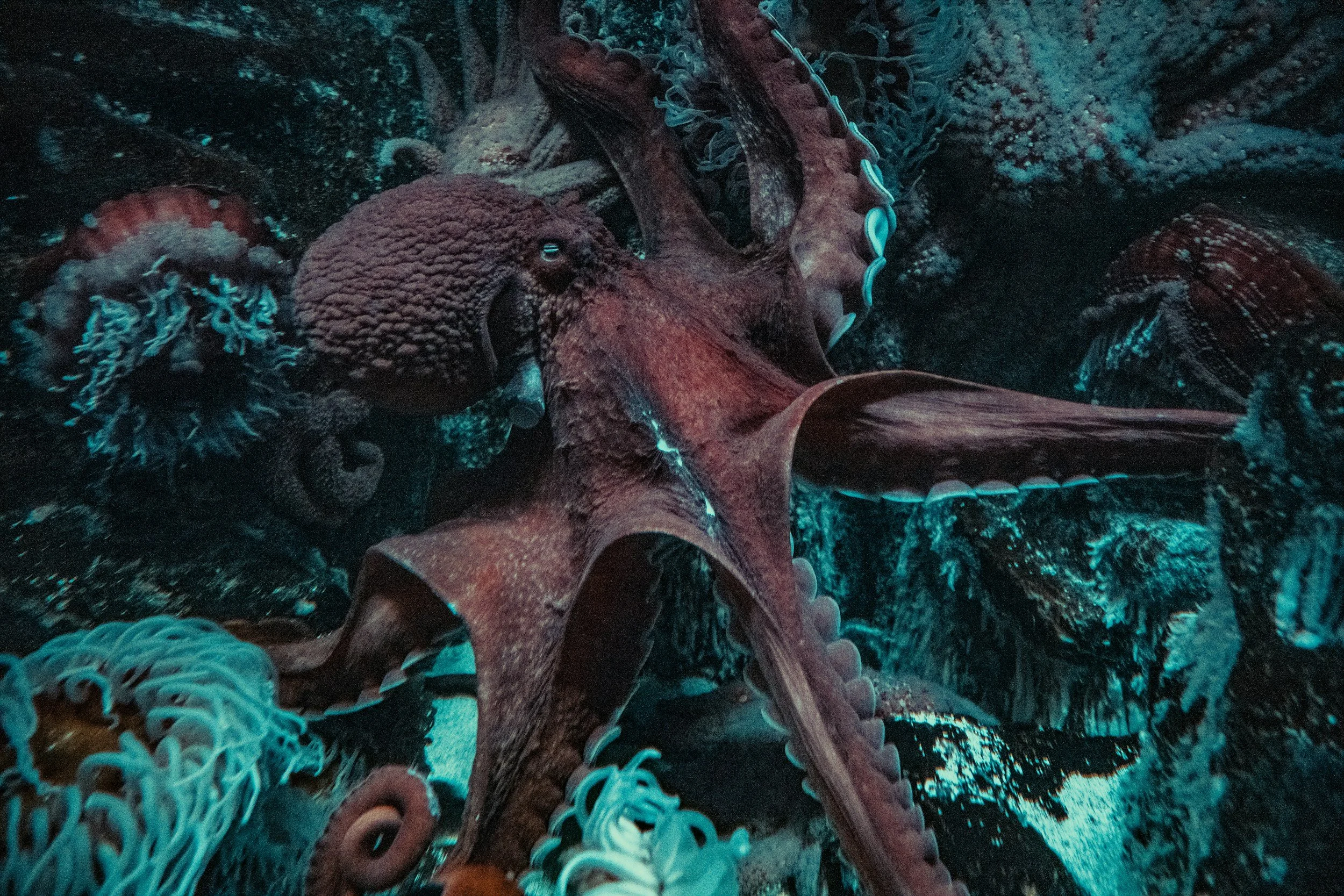
Controversial plans to build the world’s first octopus farm in the Spanish port of Las Palmas, in the Canary Islands, have been abandoned.
The Spanish seafood multinational, Nueva Pescanova (NP), made the decision last week to officially withdraw its application, and suspend construction of a two-storey facility spanning 52,000 square meters.
Conservationists, scientists, and nonprofits around the world had been fighting the project ever since it was first proposed five years ago. Their campaigning prompted the Canary Islands government to request more detailed information from NP regarding the octopus farm’s environmental impact. This helped slow down the project, and by late 2024, investment reportedly stalled.
According to reports, NP has blamed administrative delays and uncertainty over regulatory approvals as the main reasons for withdrawing its application.
"Nueva Pescanova's decision to abandon the pursuit of the Las Palmas commercial octopus farming project is a watershed moment in the global effort to ensure this practice, which has negative implications for animal welfare, the environment, and public health, is never established," said Tessa Gonzalez, Director of Research and Impact at Aquatic Life Institute, who led a coalition of over 190 organizations in opposing the project.
NP announced in 2019 that it had discovered how to breed octopuses in captivity. After ten years of research, a scientific breakthrough saw the successful incubation, hatching, and raising of the Common Octopus (Octopus vulgaris).
The proposed facility, then, would cover the entire process, from breeding and slaughtering the octopus to packaging and shipping. They would be shipped frozen, with fresh octopus sent to delicatessen markets. NP said it hoped to produce over 3,000 tons of octopus meat per year, which equates to one million animals.
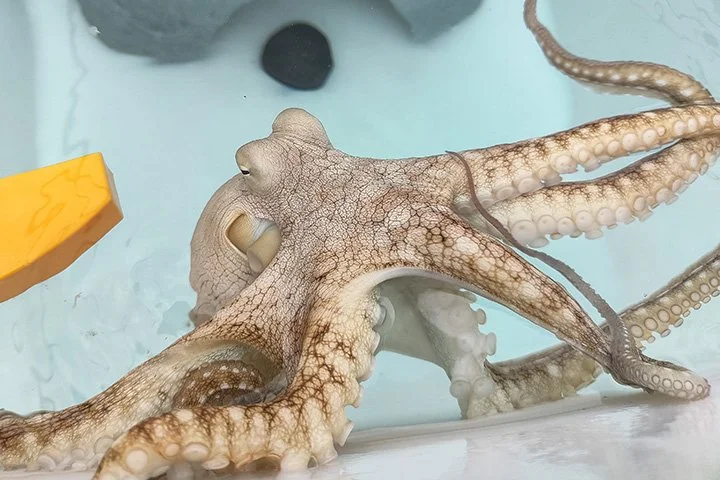
Credit: We Animals
The race to discover how to breed octopuses in captivity has been ongoing for decades, amid growing consumption of wild-caught octopus meat – estimated to be around 350,000 tons each year. According to NP, octopus farming would relieve the pressure on wild populations.
However, many considered the plans counterproductive, as the octopuses need to be fed large amounts of fish. It takes around three pounds of fish to produce one pound of farmed octopus meat, and such an imbalance would severely affect ocean biodiversity.
Furthermore, the wastewater produced by the farm would be released back into the sea, creating more problems for ocean life, as octopuses produce nitrogen and phosphates as waste.
Aside from biodiversity issues, critics felt that it would be particularly cruel and unethical to farm octopuses, given their solitary and territorial nature. Being confined in around 1,000 communal tanks would profoundly affect their emotional and physical wellbeing, likely resulting in self-harm and cannibalism. By its own estimates, NP had projected a mortality rate of 10–15 percent.
As for the slaughter, there is no humane method for killing octopuses, and the method proposed by NP – to submerge them in tanks of water kept at –3°C – is scientifically proven to produce a slow and painful death.
A major review in 2021, by the London School of Economics, concluded that octopuses can feel pain, stress, and pleasure, and should therefore be protected in general legislation. In light of this report, the UK government amended the Animal Welfare Bill to recognize crabs, octopuses, and lobsters as sentient beings. At present, EU legislation on the welfare of farm animals only applies to vertebrates, meaning octopuses fall outside any protections.
In the U.S., Washington and California have already passed pre-emptive bans on octopus farming, while legislative proposals have been introduced in Connecticut, Massachusetts, New Jersey, New York, and North Carolina. And a bill introduced last year means that Chile could become the first Latin American country to prohibit octopus farming.
A crucial bill would prohibit the intensive breeding of octopuses in the United States and ban imports of octopus products from international farms. Please reach out to your United States Senators and ask them to do the right thing by cosponsoring the Opposing the Cultivation and Trade of Octopus Produced through Unethical Strategies (OCTOPUS) Act. Send you letter here - it takes 30 seconds.
Species Unite News is a weekly round-up of the most important animal stories happening around the world. Join over 250,000 others who start their week with the latest animal stories delivered straight to their inbox.
We Have A Favor To Ask…
Species Unite amplifies well-researched solutions to some of the most abusive animal industries operating today.
At this crucial moment, with worldwide momentum for change building, it’s vital we share these animal-free solutions with the world - and we need your help.
We’re a nonprofit, and so to keep sharing these solutions, we’re relying on you - with your support, we can continue our essential work in growing a powerful community of animal advocates this year.
More stories:
A new report finds that while overall salmonella rates are falling, the most severe, drug-resistant strains are rising across the US poultry industry, with the largest producers showing the highest rates.