
Menu labels not enough to change food choices, new research shows
The designer says there is “no wool on the runway this season,” as her Paris Fashion Week collection takes on industrial fishing and the oceans.
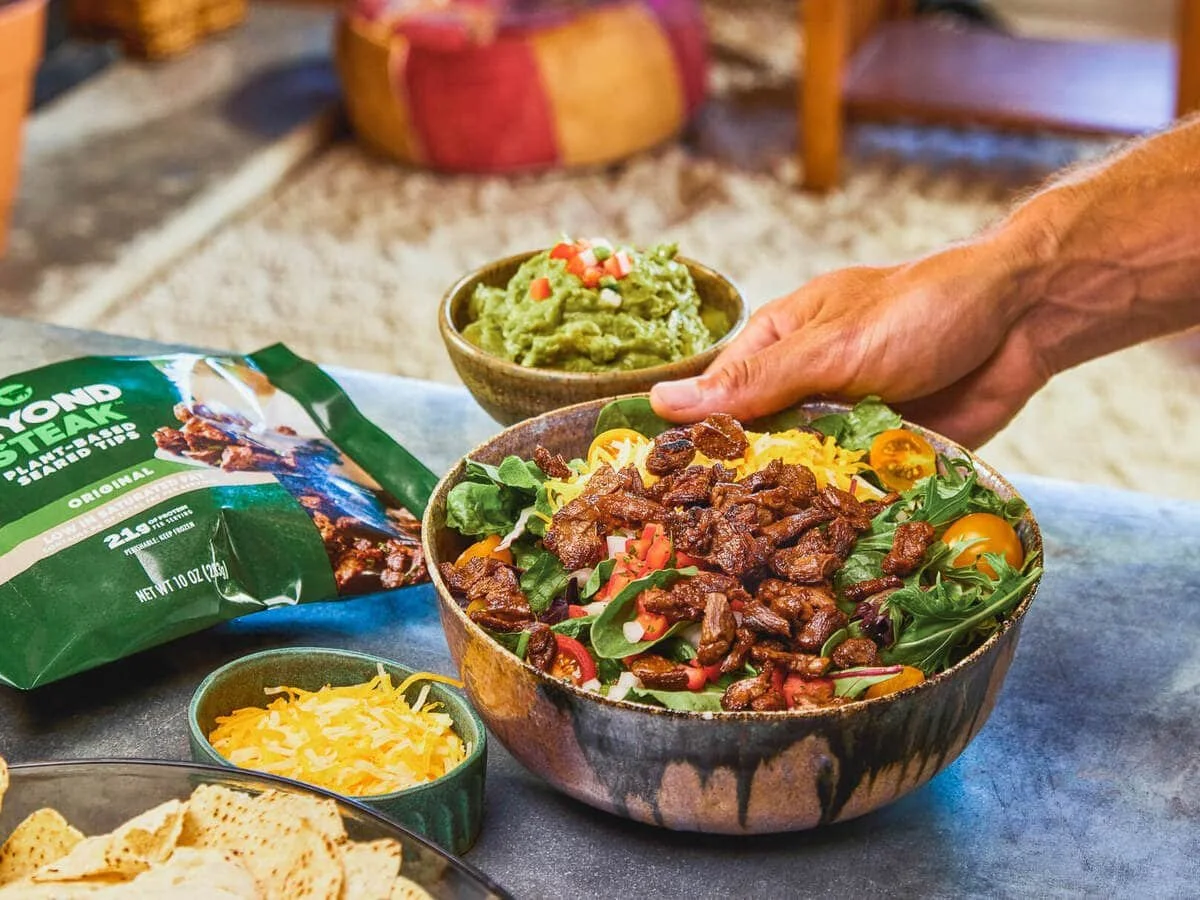
A taco salad topped with Beyond Meat Plant-Based Steak Tips. Offering plant-based dishes by default has been linked to higher uptake in separate research. Credit: Beyond Meat
Labeling meals for their sustainability and ethics did not significantly change what people ordered at three German university cafeterias, according to new research into 1.7 million food orders over three years.
The study, by the University of Hamburg, Kiel University, and the Kiel Institute for the World Economy, compared the share of daily orders for labeled dishes with total daily orders. The findings suggest that while people identify as ethically concerned and report a priority for more sustainably made foods, this is not reflected in their actual purchases.
“Across specifications, labels are associated with either unintended or statistically nonsignificant changes in market shares,” reads the report.
The study also included follow-up research finding that consumers may subconsciously associate animal welfare with tastier food, but higher animal welfare was also connected to a perception of being more expensive. This could play a significant role in consumer choices.
“I think we can put to bed the idea that environmental labeling is going to be the thing that alone gets people to make better choices,” Andrew DeCoriolis, executive director of Farm Forward, a non-profit advocacy and consulting organization, told Sentient. “There’s very clear psychological trade-off for people between seeing something as ethically oriented and having it be both affordable and tasty.”
In the US, factory farming is subsidized by the government, which makes products deriving from factory farms more affordable to consumers. In the meantime, more ethically motivated initiatives like lab-cultured meat are sometimes met with obstacles on a state level, such as the states that have banned the sale and production of these items.
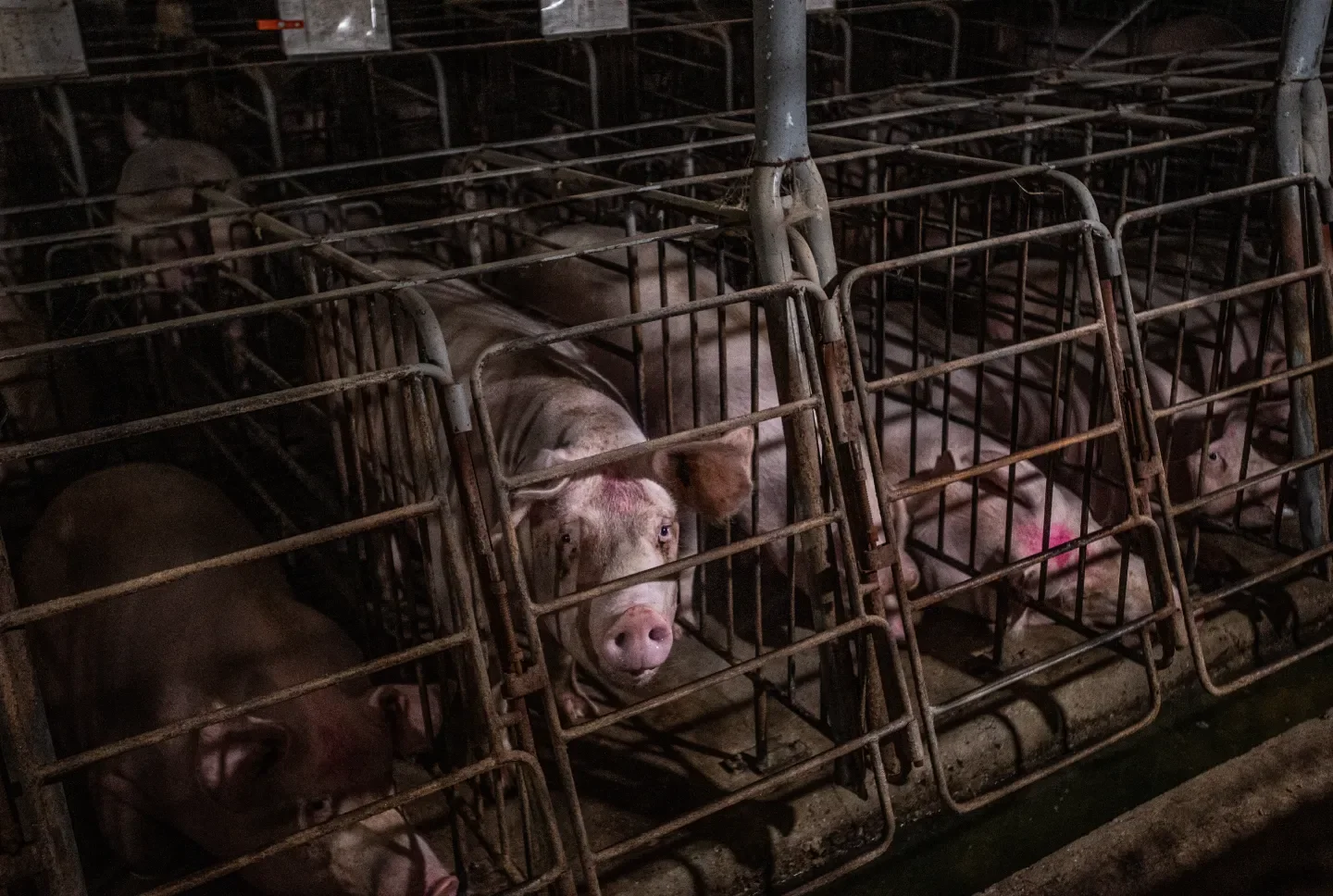
Pigs inside gestation crates. An estimated 3.5 to 4 million mother pigs (sows) are confined in gestation crates across the United States. Credit: Jo-Anne McArthur/We Animals
Interest in ethically driven food choices is a fact: 40% of US consumers purchase plant-based alternatives to meat and dairy as part of their daily lives. Alongside labelling, offering plant-based options by default can lead to a significant uptake in vegetarian and vegan orders: research has found that people presented with plant-based foods as a default are 3.5 times more likely to choose them rather than those presented with a meat option as default. Consumers are also twice as likely to choose a meat-free dish if it is listed first on a menu. Placing the items in the meat aisle rather than a dedicated plant-based or “free from” section may also help maximise uptake.
Policy can also play a key role in improvements improvements to animal welfare, such as the 15 states that have banned or limited extreme confinement of animals on factory farms.
“When you ask voters about [animal welfare] as a collective values issue, they make a choice that’s going to raise their prices. When you ask them to make that choice in a grocery store over and over again, it’s a different outcome,” says DeCoriolis. “If what we want is to ban certain kinds of practices or not have certain kinds of practices in animal farming, that has to happen at a collective policy level.”
With animal stories making up less than 2% of the news cycle, we're here to fill that gap. Sign up for Species Unite’s weekly news digest.
The animals need a newsroom in their corner
Every week we dig into the animal stories the mainstream news overlooks. Investigations, exposés, legal battles, and victories - none of it happens without your support. A monthly gift of as little as $5 keeps us covering the 98% of animal news the world isn't seeing.
More stories:

A cattle truck crash in Kansas City, Missouri, is one of several recent ones, as Mercy for Animals urges the US Department of Agriculture to update its rules on animal transport.