
Boiling lobsters alive to be banned in England after recognition of sentience
This is the first time that decapods and cephalopods have been protected by UK law since they were recognised as sentient beings capable of feeling pain in 2022.
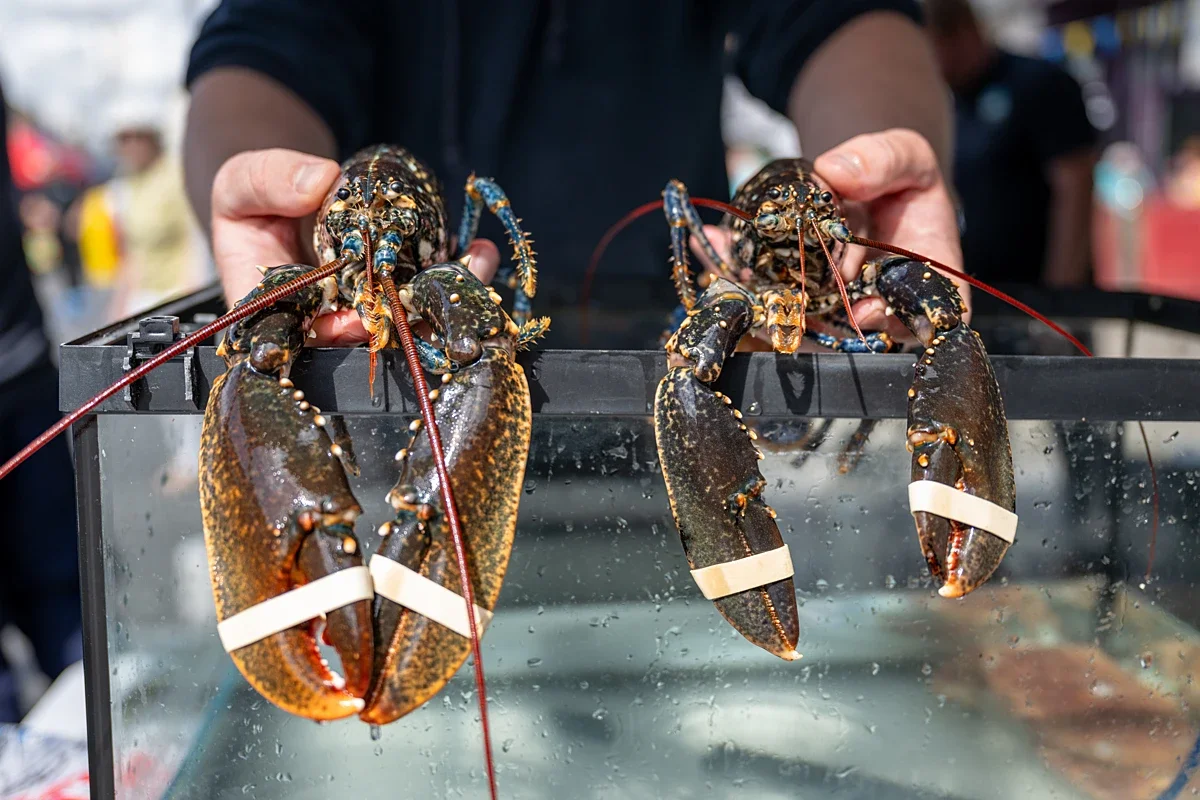
Bridlington Seafood Festival, Bridlington, East Yorkshire, England, UK, 2024. Photo: Amy Jones / Viva! / We Animals
The boiling of live lobsters and other shellfish will soon be illegal in England, as part of an ambitious programme of reforms to animal welfare.
According to the strategy recently set out by the UK Government, live boiling is not an acceptable method of killing decapod crustaceans (including crabs, crayfish, lobsters, prawns, and shrimps) and cephalopod molluscs (including cuttlefish, octopods, and squid).
This is due to come into effect by 2030. Protections for other wild animals, including the banning of trail hunting, and introducing a close season for hares, were also announced.
“Together with industry, animal welfare organisations, and individuals across the country who share our values, we will deliver the most ambitious reforms to animal welfare in a generation,” said Emma Reynolds MP, Secretary of State for Environment, Food and Rural Affairs. “This strategy combines scientific rigour with moral purpose to create enforceable, lasting change and a legacy we can all be proud of.”
Boiling live lobsters is already banned in countries such as Austria, New Zealand, Norway, Switzerland, and parts of Italy.
The reason that lobsters and other shellfish are boiled alive is to reduce the risk of food poisoning. The bacteria naturally present in their flesh starts to multiply upon death, with harmful toxins also released. It is preferable, then, to keep them alive immediately prior to cooking.
Supporters of this harrowing practice argue that lobsters have primitive nervous systems and therefore cannot experience pain and distress. Historically, there has been insufficient research to counter these claims.
However, since the turn of the century, scientific understanding has increased significantly. Dedicated studies have concluded that cephalopods and decapods have sensory systems and brain mechanisms that generate complex, genuine responses.
Scientists found that when boiled alive, lobsters release cortisol into the bloodstream – the same hormone produced by humans when in pain.
Lobsters thrash about violently, for as long as two minutes, after being placed in boiling water. The twitching of their tail, which evolved as an escape reflex, is further indication of their suffering. Crabs, meanwhile, shed their limbs when boiled alive.
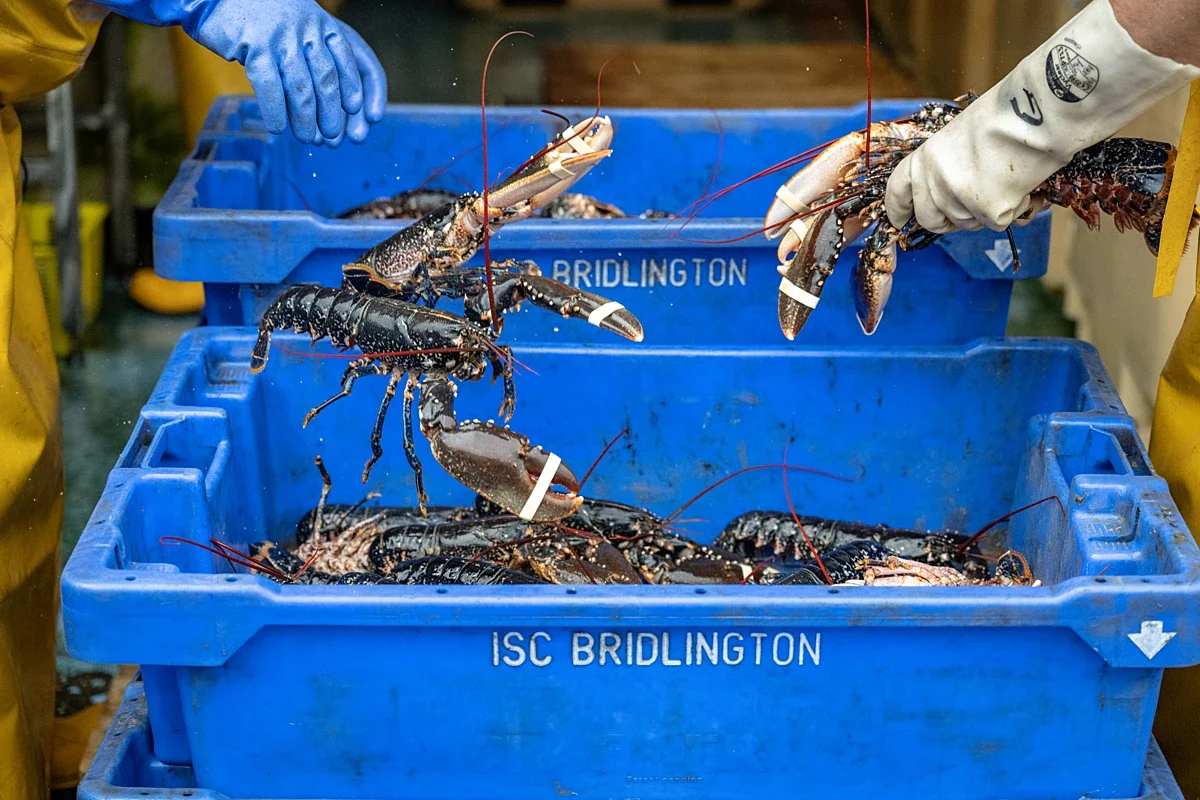
Live European lobsters just caught from the North Sea are roughly thrown into storage containers as workers at a fishing port sort them by size. Bridlington Bay Harbour, Bridlington, East Yorkshire, England, UK, 2024. Photo: Amy Jones / Viva! / We Animals
After conducting extensive studies on the issue of sentience, the London School of Economics and Political Science (LSE) made strong recommendations that all cephalopods and decapods should be regarded as sentient animals for the purposes of UK law.
As such, the report concluded that live boiling should be banned in all cases. Electrocution and whole-body splitting (carried out by a skilled professional) were deemed the only humane methods of killing a lobster.
Following this report, cephalopods and decapods were formally recognised in the UK as sentient beings in the Animal Welfare (Sentience) Act 2022, having been omitted from the Animal Welfare Act 2006.
However, this landmark victory did not lead to the introduction of any legislation, regulations, or safeguarding – until now.
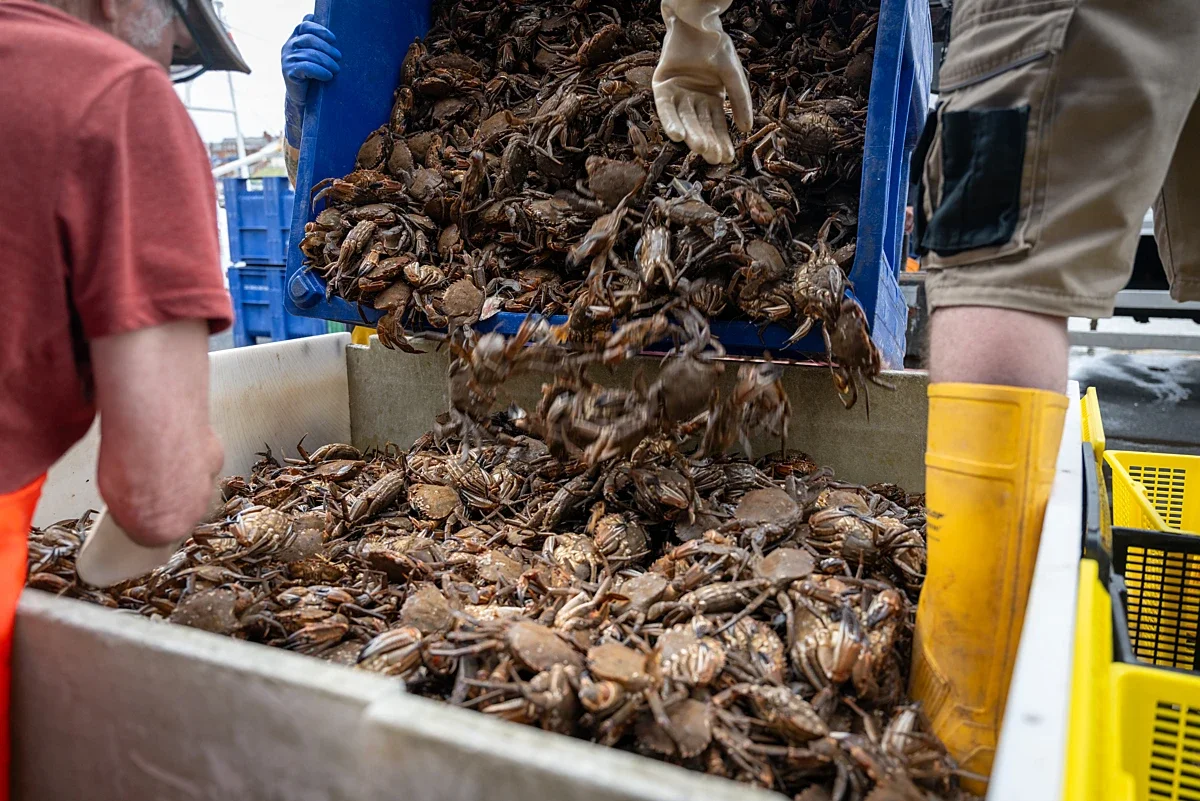
Countless live velvet crabs, recently caught from the North Sea, fall from a large tub as workers tip them onto a table for sorting at a commercial fishing harbour. The sorted crabs will be tightly packed inside plastic tubs. Bridlington Bay Harbour, Bridlington, East Yorkshire, England, UK, 2024. Photo: Amy Jones / Viva! / We Animals
The UK Government has said that in addition to banning live boiling, it will also consider further protections for decapods and cephalopods as they move through the supply chain, from catch to kill.
The LSE report gave specific instructions to ensure the humane storage and transport of live decapods, and recommended a ban on their sale to non-expert handlers.
Regarding cephalopods, the report concluded that none of the current slaughter methods used on European fishing vessels were humane. These methods include clubbing, slicing the brain, reversing the mantle, and asphyxiation.
What can you do?
Amazon allows consumers across the United States to purchase live lobsters who are stuffed into styrofoam containers with a few ice packs, piled on top of one another and mailed across the country. Join Species Unite in calling on Amazon to prohibit this cruel practice. Sign the petition here.
We Have A Favor To Ask…
Species Unite amplifies well-researched solutions to some of the most abusive animal industries operating today.
At this crucial moment, with worldwide momentum for change building, it’s vital we share these animal-free solutions with the world - and we need your help.
We’re a nonprofit, and so to keep sharing these solutions, we’re relying on you - with your support, we can continue our essential work in growing a powerful community of animal advocates this year.
Some developers suggest that adopting cultivated meat could also improve animal welfare by significantly reducing the number of farmed animals slaughtered.