
Annual supersized squid catchers are emptying the oceans, investigation reveals
Squid caught by these vessels is shipped to the US, UK, and Europe, linking global markets to alleged abuse and destruction.
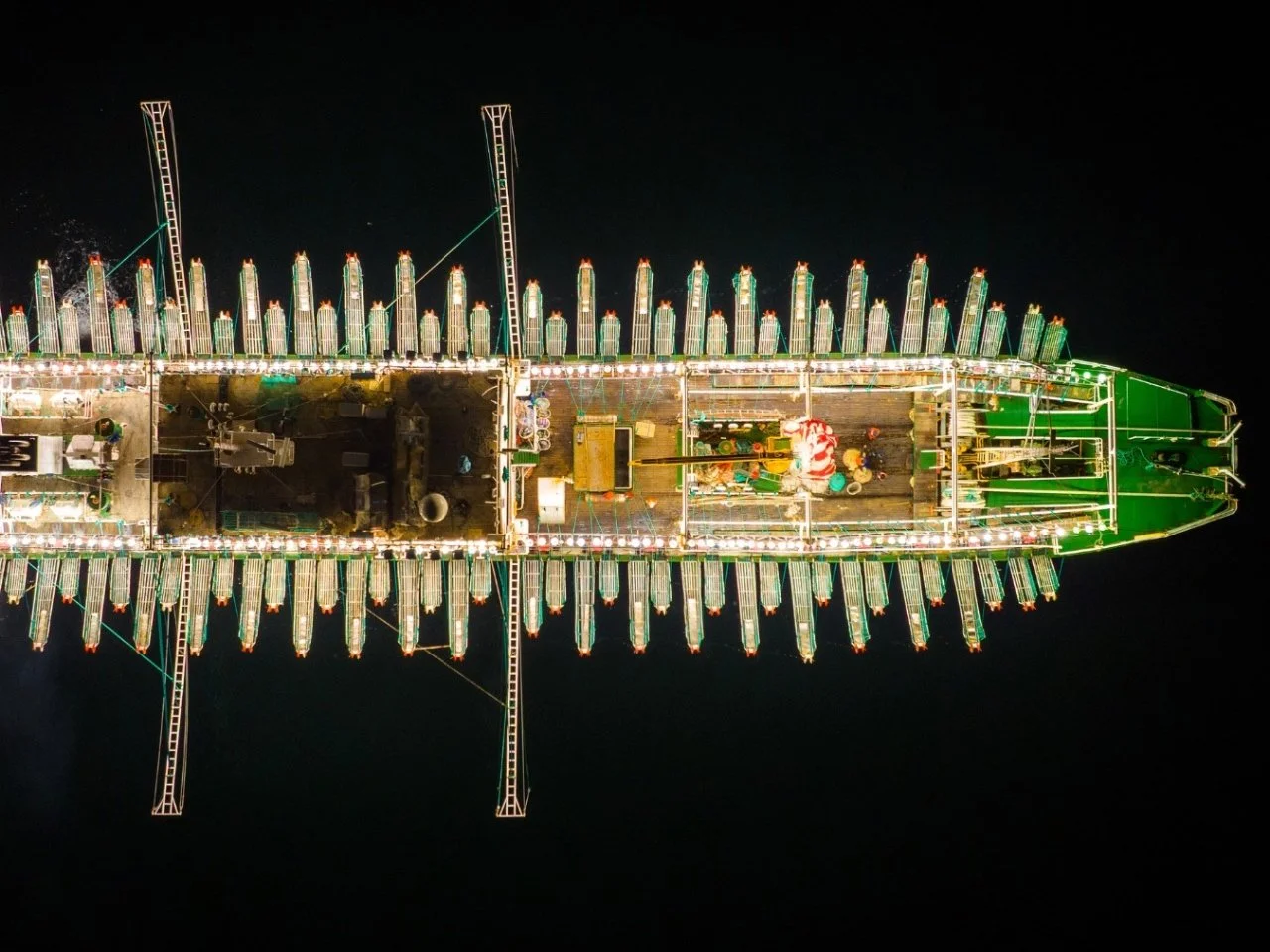
Photo: Environmental Justice Foundation
Hundreds of distant-water vessels are plundering squid populations in the Southwest Atlantic, driving a keystone species towards collapse and exposing workers to horrific abuses, according to a new investigation and film from the Environmental Justice Foundation (EJF).
The flotilla, the majority of which is Chinese but also includes vessels from Taiwan and South Korea, is large enough to sometimes be seen from space, the investigation revealed.
The operation takes place on Mile 201, on the Argentinian coast, an area of the South Atlantic that is largely ungoverned, due to being outside Argentina's Exclusive Economic Zone.
The lack of regulations around the area is what makes this possible, creating a regulatory hole: there are no internationally agreed limits on fishing in the area that cover squid. These massive fishing operations take advantage of this to maximise catch.
“With so many ships constantly fishing without any form of oversight, the squid’s short, one-year life cycle simply is not being respected,” said Lt Magalí Bobinac, a marine biologist with the Argentinian coast guard.
EJF has warned that these activities, done at this scale, could destabilise ecosystems and potentially cause squid to disappear from the area.
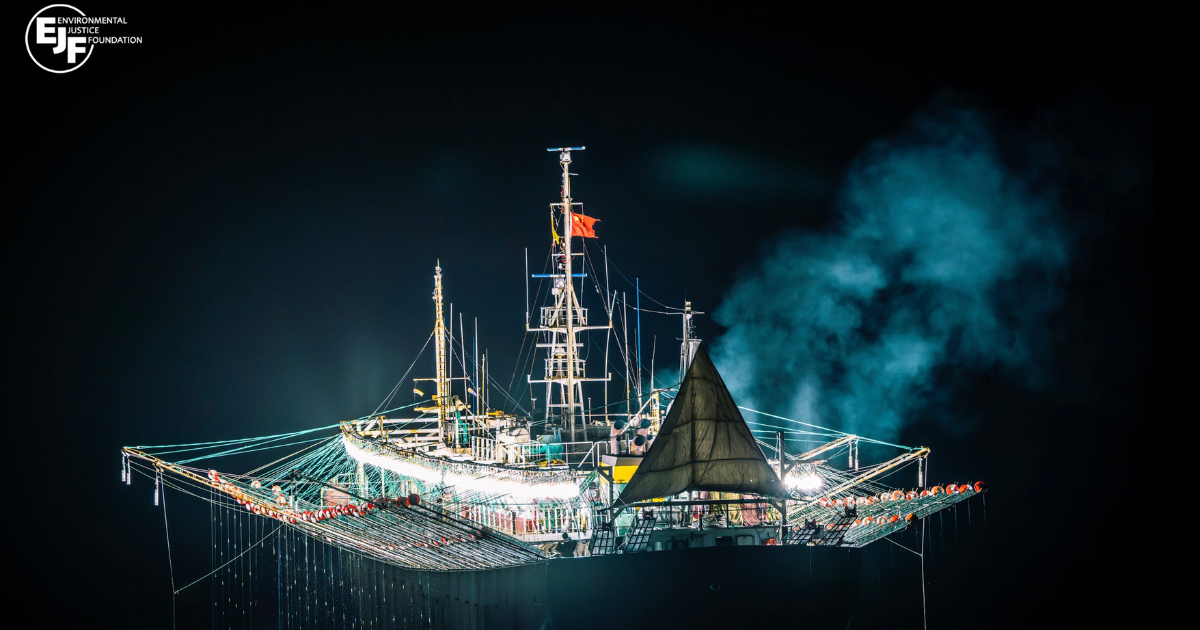
Photo: Environmental Justice Foundation
The nonprofit’s research reveals that between 2019 and 2024, fishing hours by Chinese squid vessels in the region increased by 85%, even as landings showed alarming signs of decline.
Squid are not the only animals affected. Whales, dolphins, seals, sea birds and fish species such as tuna and hake could all be impacted by a decline in squid numbers, which would have a massive effect on the ecosystem but also bring consequences for the local community and its key economic markets. Deep-sea corals would also be impacted by a disruption in squid populations.
“If this species is affected, the whole ecosystem is affected,” Bobinac says. “It is the food for other species. It has a huge impact on the ecosystem and biodiversity.”
“Without urgent action, we are heading for disaster,” said Steve Trent, Founder and CEO of the EFJ. “Overfishing and climate breakdown are placing enormous pressure on this keystone species, while those responsible – primarily fishers from China – commit shocking human rights abuses with impunity.
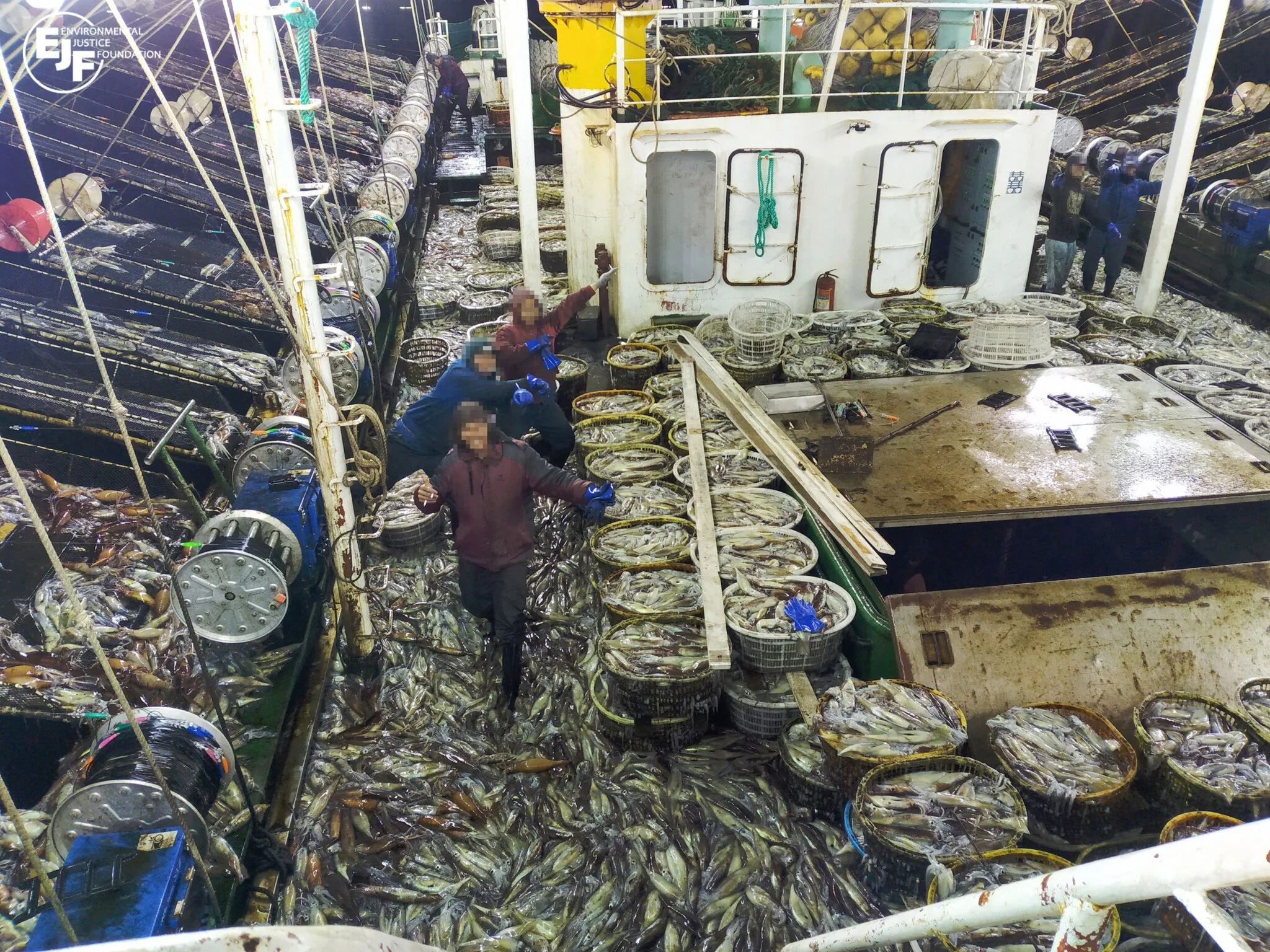
Photo: Environmental Justice Foundation
Cruelty to animals has also been observed in these operations. On over 40% of Chinese vessels and a fifth of vessels deriving from Taiwan, hundreds of seals are deliberately slaughtered, reveals EJF's research.
The lack of regulations also create conditions where crew members working on the ships are subjected to human rights violations such as intimidation, wage deductions, and physical violence, state EJF.
Due to the zone issue, local authorities stand powerless. Coast guard lawyer Lt Luciana De Santis told the Guardian: “Outside our exclusive economic zone, we cannot do anything – we cannot board them, we cannot survey, nor inspect.”
The squid fished by these vessels is exported to the US, UK, and Europe, according to EJF, meaning consumers could be unwittingly supporting the destruction and abuse.
The organization is calling for official bans on imports of products of illegal fishing, a heightened transparency in the industry, and an international charter to regulate fishing beyond national limits.
“A collapse could happen extremely rapidly, triggering cascading impacts on marine life,” warned Trent. “Governments must act now to bring regulation, transparency and accountability to this lawless fishery.”
What can you do?
Read the full investigation and watch the film here.
Species Unite’s 30-day challenge sees people swap the animal products in favor of plant-based foods for an entire month. Take the challenge here to receive recipes, support, and advice straight to your inbox.
We Have A Favor To Ask…
Species Unite amplifies well-researched solutions to some of the most abusive animal industries operating today.
At this crucial moment, with worldwide momentum for change building, it’s vital we share these animal-free solutions with the world - and we need your help.
We’re a nonprofit, and so to keep sharing these solutions, we’re relying on you - with your support, we can continue our essential work in growing a powerful community of animal advocates this year.

Nearly 200 police officers carried out 24 searches and checked more than 1,000 horses in a Europe-wide investigation into suspected falsified passports and manipulated microchips.