
What the Farm Bill could mean for 55 billion animals
Credit: Stefano Belacchi/Essere Animali / We Animals
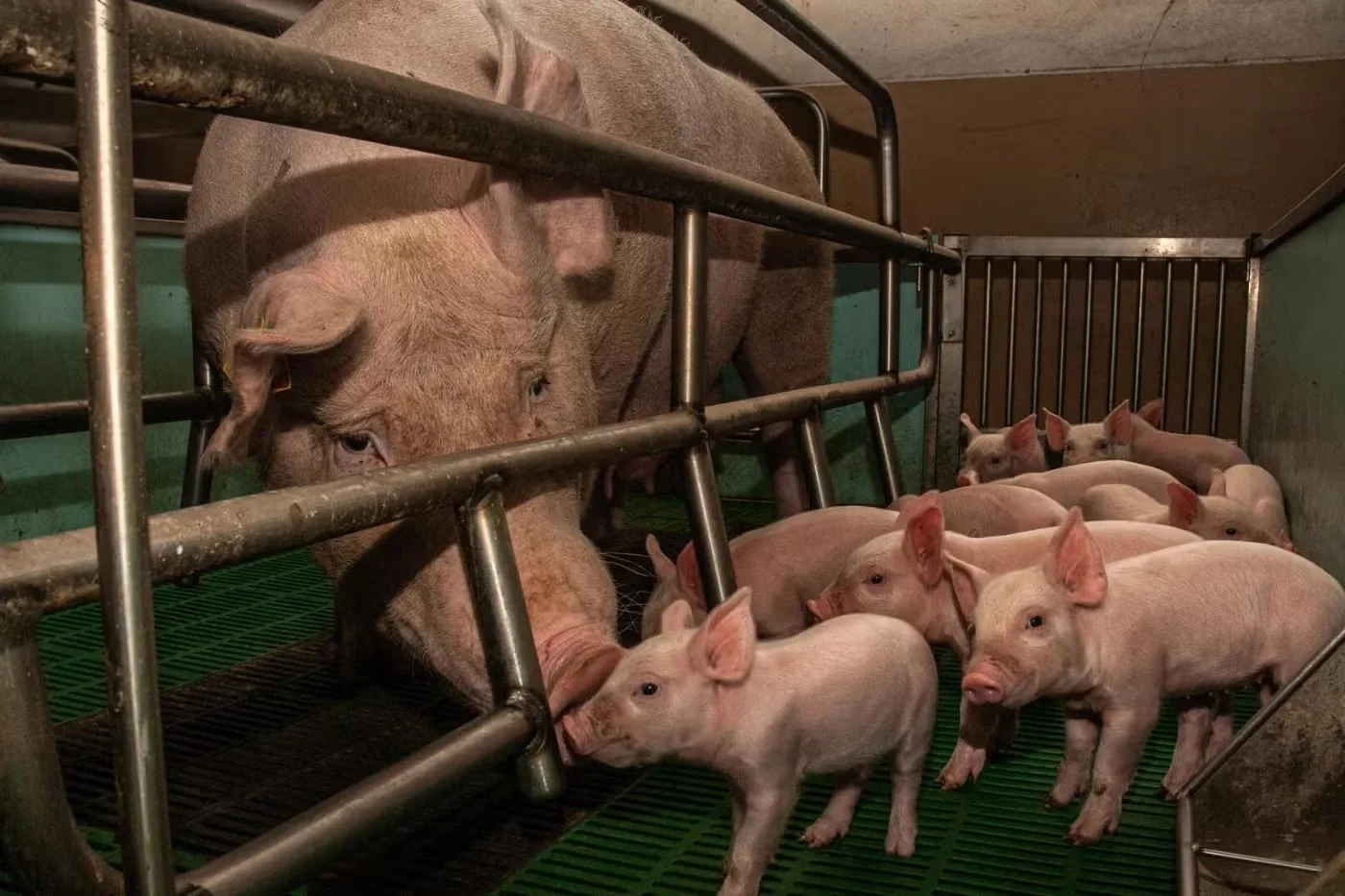
Update: April 30th, the US House passed the Farm Bill (224 to 200, 6 abstentions) with the controversial Save Our Bacon (SOB) Act intact. SOB would undermine all state-level farm animal welfare laws, particularly bans on gestation crates passed by the following states: Maine, Massachusetts, Rhode Island, New Jersey, Florida, Ohio, Michigan, Colorado, Arizona, California and Oregon.
The Farm Bill did not include the widely popular (227 bipartisan sponsors) Save Our Forgotten Equines Act which would have made horse meat illegal in America and also would have prohibited transporting American horses to Canada and Mexico for slaughter.
On a positive note, the Greyhound Protection Actwas incorporated into the Farm Bill which, if approved by the Senate and signed by the President, would make greyhound racing illegal nationwide.
Another animal bill incorporated into the 800+ page Farm Bill was Rep. Nancy Mace's Violet's Law, which promotes adoption rather than killing of primates, dogs, cats, hamsters, rabbits and guinea pigs once they are done being experimented on in government laboratories.
This fortunate advance for laboratory animals partially rests on Robert F. Kennedy's determination to curtain/end medical testing on animals, the continued efforts of White Coat Waste Project and the April 18th attempt by nearly 1000 activists to rescue ~2000 beagles at Ridglan Farms, Wisconsin. The thwarted rescue attempt received nationwide coverage and re-invigorated Congressional discussion on animal testing.
On March 5, the U.S. House Agriculture Committee passed the Farm Bill - a six year plan regulating a host of agriculture and food programs. The bill (H.R.7567) now awaits the full House floor vote, before heading to the Senate and presidential signature.
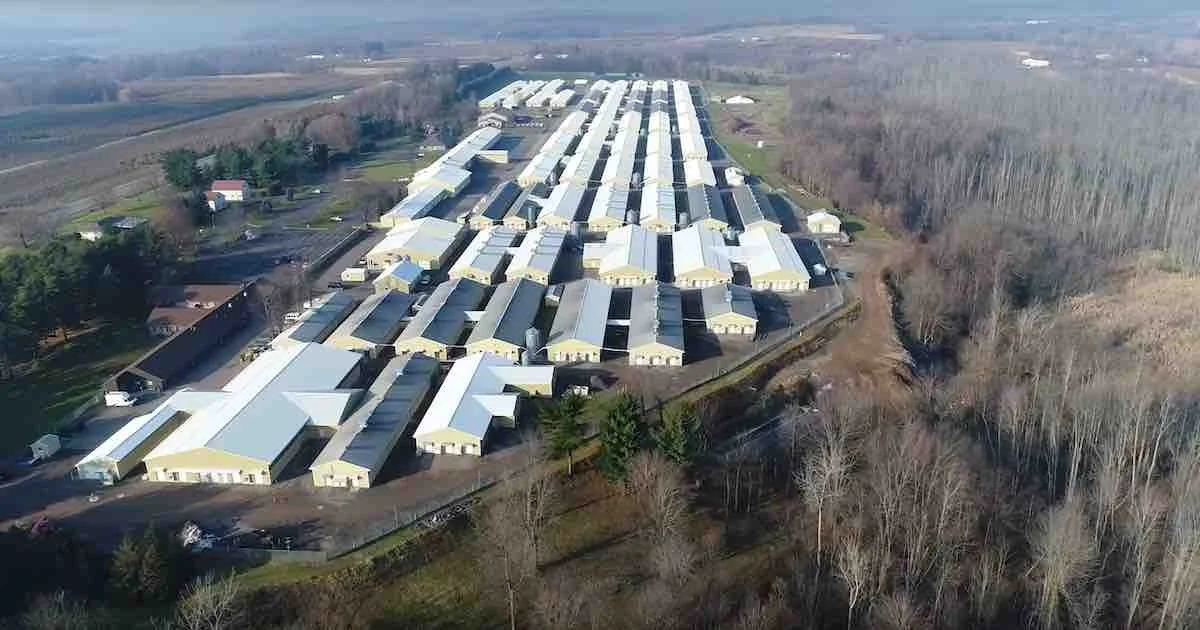
Over 55.8 billion farm animals are affected by the 800-page bill because American farms raise and slaughter 9.3 billion animals for food annually.
The Farm Bill regulates dogs, horses, mink and game animals too; their concerns were included (as amendments) or excluded on March 3 and 4 when Congressmen from different states pitched favored animal-related bills before the Agriculture Committee.
Persuading the Agriculture Committee to include a bill doubles its chances of becoming law - it can still move forward as a stand-alone bill but now it’s also an amendment embedded in the Farm Bill package. This applies to the three initiatives below, affecting greyhounds, pigs and horses.
The Good
Since 2001, Grey2K USA Worldwide founders Christine Dorchak and Carey Theil, have steadily beaten America’s greyhound racing industry.
Their first state-wide ban was Oregon in 2004.
Twenty-five years and 44 states later, “it feels like we’re nearly done” Theil tells me. “Then again, we’ve been on this 2-yard line for six years.”
That “2-yard line” refers to the two last greyhound racetracks in West Virginia; holdouts owned and operated by the entertainment, hospitality and gambling conglomerate Delaware North. West Virginia law forces Delaware North to subsidize two greyhound racetracks to the tune of $15 to $22 million annually, to run their Mardi Gras and Wheeling Island casinos.
Given declining patrons and revenue, Delaware North has publicly stated its willingness to stop greyhound racing. Spokesman Glen White, reiterated to Species Unite that “if legislation allowed us to operate our two casinos without racing, we would work with kennel owners to orderly phaseout racing in West Virginia as we did in Arkansas.”
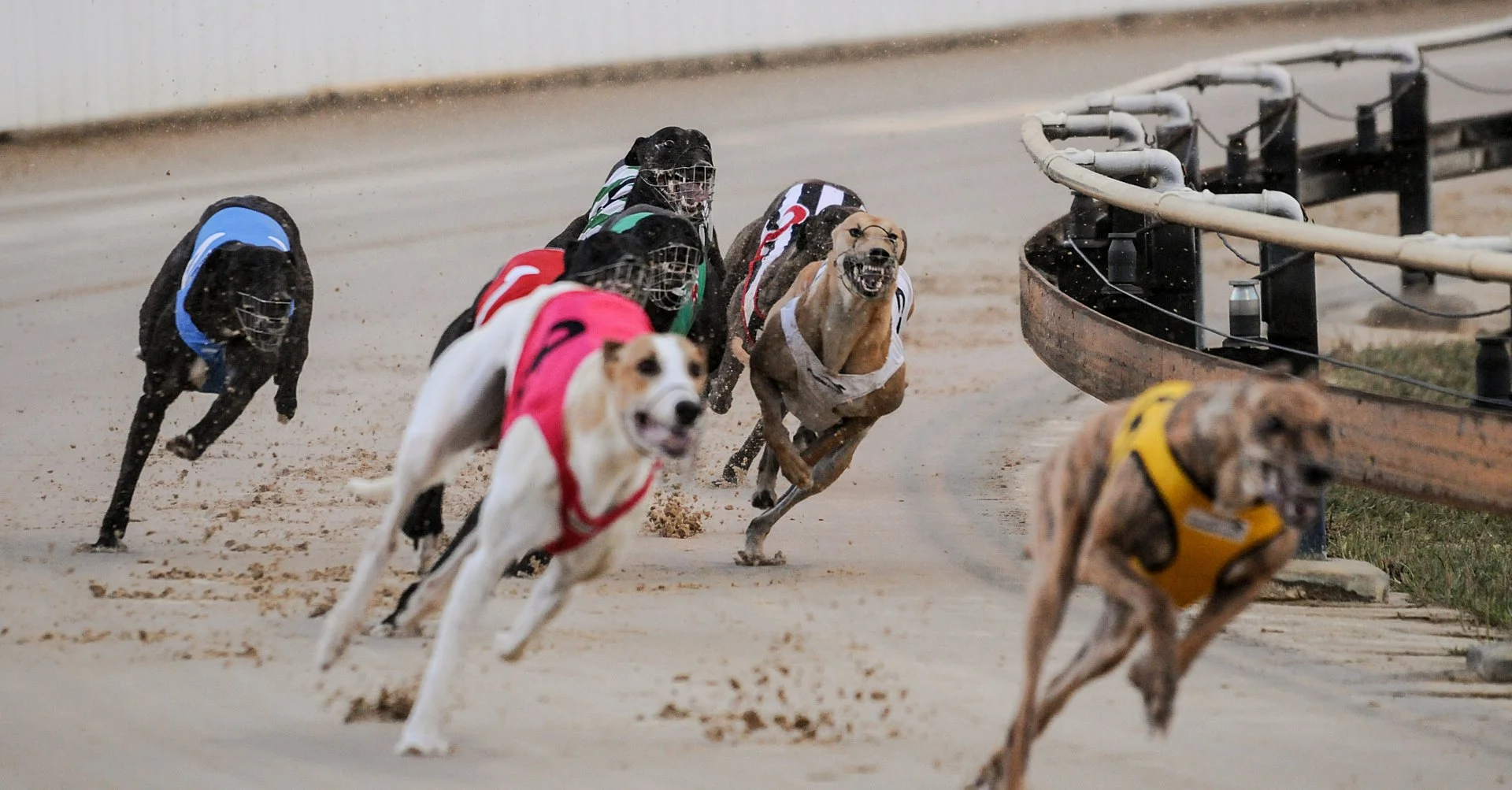
Photo: We Animals
Grey2K is pushing for that legislation on the state level in West Virginia and on the federal level via bill H.R. 5017, sponsored by longtime greyhound advocate Congressman Carbajal of California.
On March 3, Congressman Carbajal appeared before the House Agriculture committee persuading colleagues to incorporate H.R. 5017 into the federal Farm bill. This gives Grey2K a third potential path towards success.
Theil says “the Farm Bill is the easiest way forward,” because a farm bill is mandatory every six years, this one is two years overdue and “not much is passing America’s dysfunctional Congress these days - even bills with bipartisan support like H.R. 5017.”
The Bad
No federal law addresses living conditions of 9.3 billion American farm animals; in fact, the Animal Welfare Act specifically excludes them. Every single gain for farm animals is a state-level victory, eked from Big Agriculture.
Pork producers characterize animal advocates as “crazy liberals from California, but 14 red, blue and purple states have passed laws relieving intense confinement on factory farms,” explained President Amundson of Humane World Action Fund.
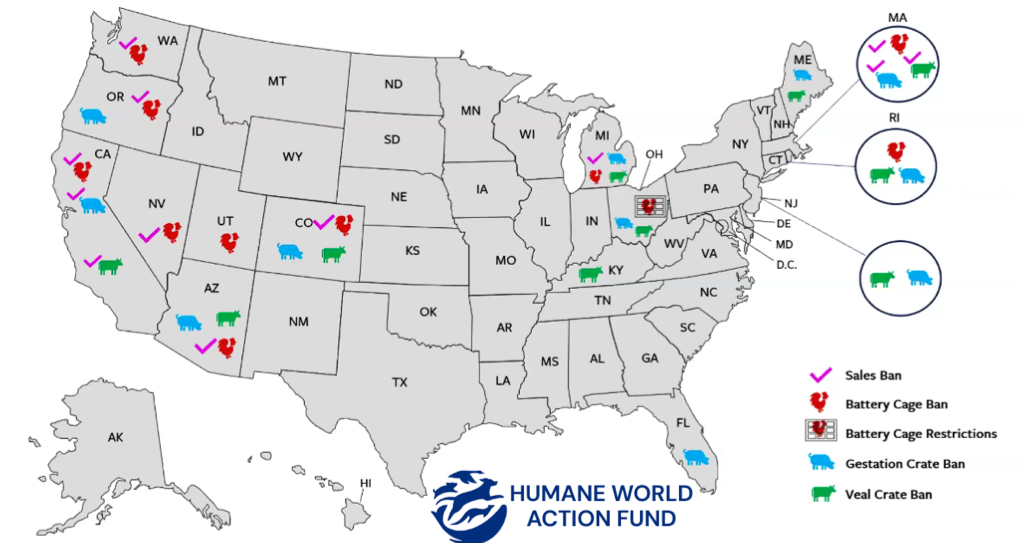
Conservative Florida (2002) and Arizona (2006) banned gestation crates 16 and 12 years before California did, in citizen-driven ballot box initiatives launched by Humane Society’s (then) chief lobbyist, Wayne Pacelle.
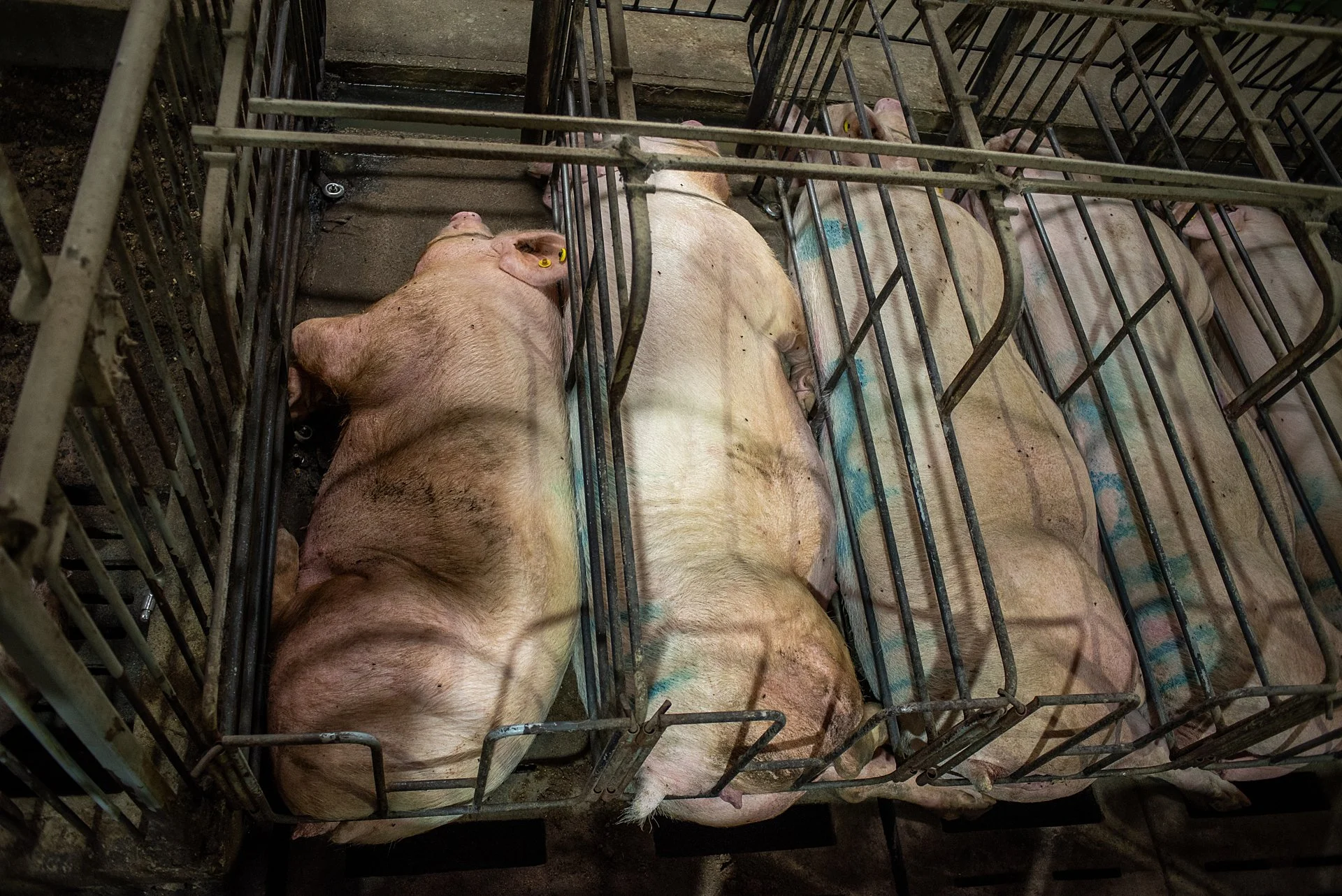
“California’s Proposition 12 followed,” recalls Pacelle, “a 2018 citizens’ initiative that collected over 402,468 residential signatures (to get on the state ballot) and passed with 63% of residential support.” It mandated one square foot of space for egg-laying hens, 43 sq.ft. per calf and 24 sq.ft. for each breeding sow.
Prop. 12 also banned sale of pork, veal and eggs from non-compliant producers.
Even before Prop. 12 passed, Iowa congressman Steve King tried to prevent one state from regulating another state’s livestock practices by inserted that language into the 2014 farm bill. But his ‘King Amendment’ faced strong resistance in the Senate and was eventually removed.
Next, the National Pork Producers Council sued California over Prop 12: first in District Court (2019), then on the appellate level (2021) and finally in the Supreme Court (2023). They lost every time.
Credit: We Animals
In 2023, Iowa’s Congresswoman Hinson introduced the EATS Act, later renamed the Save Our Bacon Act (SOB). SOB language was successfully embedded into the current farm bill. If the language survives the full House vote and thereafter the Senate, a massive rollbackof farm animal welfare laws will likely begin, erasing twenty years of activism.
Not all Iowa farmers are cheering.
“Nearly all CAFOs in Jefferson County, Iowa grow already-weaned piglets, so Prop 12 doesn’t even apply,” explains Diane Rosenberg of Jefferson County Farmers & Neighbors. “The real problem are CAFOs that squeeze traditional, independent, small farmers out of the market.”
These “Hog Bosses” drove “nearly 90% of Iowa’s small hog farmers out of business between 1982 and 2017.” In a 2019 Johns Hopkins poll, 63% of Iowans sought a moratorium on CAFOs.
Fourth generation hog farmer Joe Maxwell sees a bigger picture. “What’s really at stake is control — who gets to shape the future of farming: independent producers or corporations?” As President of the Farm Action Fund, Maxwell believes “(t)he same corporate interests claiming to defend pork farmers from regulation are actually blocking us from accessing California’s market... or any market.”
The Ugly
It is hard to imagine iconic American mustangs-- running free, manes blowing in the wind-- reduced to a can, spat out by a Japanese vending machine. But in the far East, (France and Belgium, too) mustangs are on the menu.
Once America closed its last equine slaughtering plant in 2007, “kill buyers” began hauling horses to Mexico and Canada for slaughter. In 2025, America exported 25,128 horses for slaughter and consumption.
Who are these horses? “Racehorses, show horses, companion horses, work horses-- even wild horses-- all are just one owner away from a kill buyer,” replied Elizabeth Zarkos of Hanaeleh Horse Rescue.
Although the total number of American horses slaughtered annually has declined since 2012, for the unlucky 25,000 crammed into cattle cars too short for them and traveling greater distances, welfare concerns are acute.

To end such transports, “Representatives Buchanan and Schakowsky urged the SAFE Act - a bipartisan federal bill that would prohibit exporting American horses for slaughter,” explains Debra West of Liberty Sanctuary. “It would also ban horse meat consumption nationwide.”
That was 2015. Since then, Reps. Buchanan and Schakowsky reintroduced the SAFE Act six consecutive times. 83 percent of Americans support a ban and 227 cosponsors support the current bill.
But despite its popularity, H.R.1661 has sat in the House Agriculture committee for a year and was not included in the Farm Bill last month.
We asked Neda DeMayo of Return to Freedom why the House Agriculture committee ignored a bill nearly everyone supports.
“Well, the House Agriculture committee is not especially receptive to animal welfare issues.” DeMayo admits. “Although the SAFE ACT has broad support, it’s never yet come to a vote. Now we have 227 cosponsors; if we get a chance to offer an amendment on the House floor, it would likely pass."
As to when the House might review the Farm Bill it received from the Agriculture committee, political strategist Chris Heyde thinks “maybe later this month,” quickly adding: “They have been saying that for a year.”
What You Can Do
International readers: Is there greyhound racing where you live? Grey2K fights greyhound racing worldwide - Asia to Australia, N. America and Europe. In March they helped end greyhound racing in Wales and Scotland; next it’s New Zealand and Tasmania. Join them: GREY2K USA Worldwide
If you’re in Canada, follow The Canadian Horse Defence Coalitionfor updates and actions concerning the slaughter of horses for export and consumption abroad. CHDC track’s wild horses as they cross the border and approach their final destination. They also investigate, petition and rescue.
American readers have the most options. First, Find Your Congressional Rep. Next, email and call him/her to:
1. Ask them to coSponsor Rep. Carbajal’s H.R. 5017, banning greyhound racing nationwide.
2. Request your representative to remove Save Our Bacon language from the farm bill. That language, intended to nullify animal welfare laws like California's Proposition 12, is located in Section 12006. That language must go.
3. Finally, tell your Congressperson to support H.R.1661 banning horse meat consumption and ending horse transports to Mexico and Canada.
4. Lastly, stay informed! When the Farm Bill passes the House, repeat #1-3 above, for both your Senators.
If you’re inspired to take a stand for farmed animals, join Species Unite’s 30-Day Plant-Powered Challenge. It’s a month of free recipes, tips, and daily emails that help you explore delicious plant-based meals and reduce demand for farmed animals. Sign up here to make a compassionate change, one meal at a time.

Written by Tamara Bedić, Esq.
Tamara Bedić, Esq. is a New York attorney, championing women in the workplace. When she's not litigating, she is rescuing injured birds, chairing the Animal Rights Committee of the National Lawyers Guild or walking her special needs cat, ILLYA.
We Have A Favor To Ask…
Species Unite amplifies well-researched solutions to some of the most abusive animal industries operating today.
At this crucial moment, with worldwide momentum for change building, it’s vital we share these animal-free solutions with the world - and we need your help.
We’re a nonprofit, and so to keep sharing these solutions, we’re relying on you - with your support, we can continue our essential work in growing a powerful community of animal advocates this year.

Some developers suggest that adopting cultivated meat could also improve animal welfare by significantly reducing the number of farmed animals slaughtered.