
Two orcas stuck in closed marine park should move to sanctuary in Canada, says french government
Campaigners hope Wikie and her son, Keijo, could finally experience a better life having spent years in concrete tanks and forced to perform.
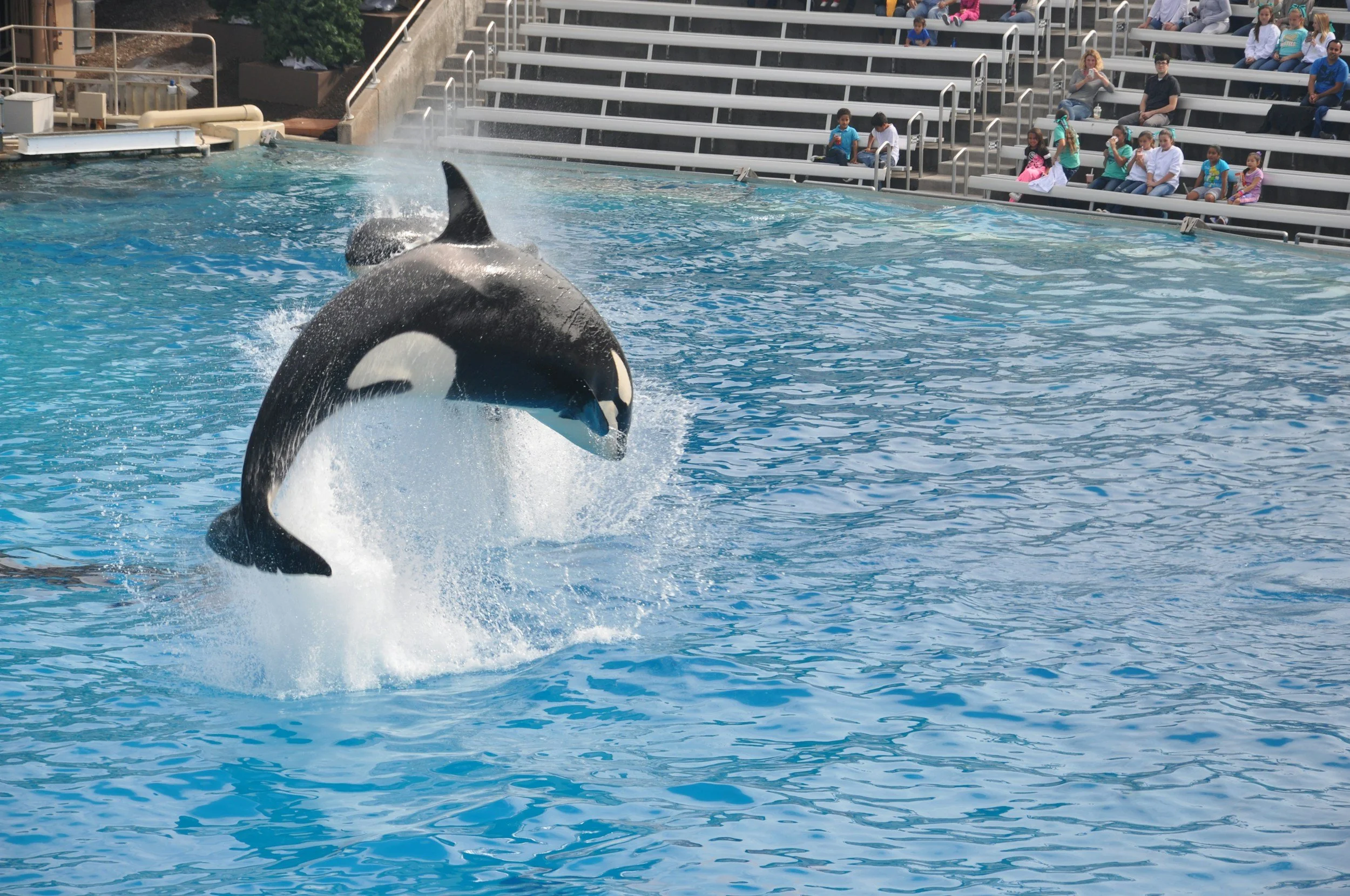
Two orcas held captive in a controversial and defunct marine park in France could be transferred to a sanctuary in Canada.
Wikie and her son, Keijo, have been languishing in concrete tanks amid fierce debate as to where they should be moved to, after Marineland Antibes shut down in January 2025.
But now the French government has announced that the orcas should be transferred to the Whale Sanctuary Project’s proposed sanctuary in Nova Scotia, Canada.
Although the move still hinges on Marineland’s approval, the decision is a major step toward finally giving these highly social, intelligent animals the expansive, natural habitat they’ve been denied since birth.
“After reviewing all the options, we are now making the necessary decisions to ensure the welfare of the animals,” said Mathieu Lefèvre, Minister Delegate to the Minister of Ecological Transition, Biodiversity and International Negotiations on Climate and Nature. “The orcas’ place is at the sanctuary of Nova Scotia: it is the only ethical solution, credible and in accordance with the law,” he added.
The fate of Wikie and Keijo has remained in limbo since 2021, when France passed new animal welfare laws banning the use of dolphins and whales in performances.
Located near Cannes in the French Riviera, Marineland Antibes had intended to sell its orcas to marine parks abroad before the legislation came into effect this year.
In early 2024, Marineland applied to send Wikie, her brother, Inouk, and Keijo to Kobe Suma Seaworld in Japan. Campaigners objected, citing the park’s poor animal welfare record, and that the orcas could well be split up, and used for breeding. Furthermore, the concrete tanks in Japan were smaller than those in Marineland.
Tragically, Inouk died in March 2024. He was recognizable for his toothless mouth, having ground his teeth to a pulp, a result of repeatedly biting the edges of his tank. This caused Inouk years of significant mouth pain, including gum ulcers, abscesses in his jaw, and throat infections. Such behavior is indicative of the extreme stress and boredom typically suffered by captive orcas.
The French government rejected the proposed move to Japan, in November 2024. Not long after, Marineland applied to transfer Wikie and Keijo to Loro Parque de Tenerife in Spain, despite protests from animal charities.
Ultimately, a scientific agency in Spain concluded that Loro Parque failed to meet “minimum standards in terms of area, volume and depth”, and blocked the move.
It is hoped that this latest development, then, will give Wikie and Keijo the chance to finally escape captivity and experience a better life.
Born in Marineland in 2001, Wikie was unable to form a close bond with her mother – who had been captured in Icelandic waters – as they were kept in separate tanks for the first year-and-a-half; this isolation left her emotionally scarred, say experts, who point to the close familial bonds formed by orcas in the wild.
While in captivity, Wikie was forced to give birth to two sons; the first, Moana, was a result of artificial insemination, in 2010, and the second, Keijo, was fathered by her half-brother, Valentin, in 2013. Such rapid pregnancies, and inbreeding, are wholly unnatural for orcas.
On average, wild orcas can live to around 50-60 (males), and to 80-90 (females). That Moana died aged 12 – from septicaemia – and Inouk at 25 – after years of chronic dental problems – shows how captivity drastically reduces their life expectancy.
Although Wikie and Keijo can never be released into the wild, life at the potential Whale Sanctuary offers the closest alternative. However, the sanctuary must raise $15 million in construction costs to accommodate them, and be ready by the end of this summer, so that the orcas have time to adapt to ocean waters and temperatures before the Canadian winter.
We Have A Favor To Ask…
Species Unite amplifies well-researched solutions to some of the most abusive animal industries operating today.
At this crucial moment, with worldwide momentum for change building, it’s vital we share these animal-free solutions with the world - and we need your help.
We’re a nonprofit, and so to keep sharing these solutions, we’re relying on you - with your support, we can continue our essential work in growing a powerful community of animal advocates this year.
A cattle truck crash in Kansas City, Missouri, is one of several recent ones, as Mercy for Animals urges the US Department of Agriculture to update its rules on animal transport.