
History made for elephants held at the Pittsburgh Zoo
A judge has issued Pennsylvania’s first habeas corpus order for a nonhuman animal, advancing NhRP’s fight to move five African elephants from the Pittsburgh Zoo to a sanctuary.
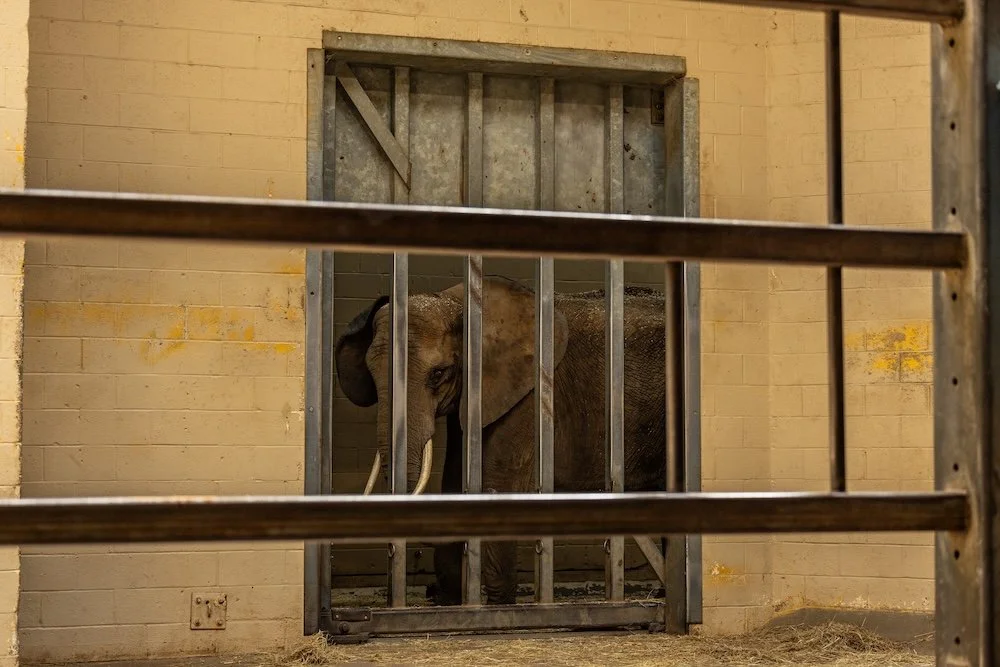
Zuri inside the Pittsburgh Zoo. Credit: Molly Condit
Pennsylvania’s first-ever habeas corpus order for a nonhuman animal has been issued by a judge, allowing a legal challenge on behalf of African elephants at the Pittsburgh Zoo to move forward.
Habeas corpus is a long-standing legal protection against unlawful confinement. In this case, the Nonhuman Rights Project (NhRP) has filed the petition, arguing the elephants at the Pittsburgh Zoo have a basic right to freedom and should be moved to a sanctuary.
The Pennsylvania ruling is only the third nonhuman animal habeas corpus order in U.S. history, marking this as a landmark case that could see a profound shift for animals gaining legal rights.
“The legal system routinely refuses to even hear cases brought on behalf of animals simply because they are not human,” said NhRP Senior Staff Attorney Jake Davis. “That the court is examining this case is a welcome departure from business as usual and an opportunity to correct the gross injustice of the elephants’ captivity.”
NhRP’s petition is backed by leading experts in elephant behavior and cognition, who say elephants have a profound physical and psychological need to make their own choices and move freely.
William Keith Lindsay, a researcher for the Amboseli Trust for Elephants, wrote in his declaration cited in the lawsuit that the “continued keeping of elephants at Pittsburgh Zoo & Aquarium cannot be justified on any basis.”
“Their behavior has been completely controlled by their human handlers, and for this reason has been stressful to the point of psychological damage,” Mr. Lindsay, who said he studied photos, videos and documents about the elephants’ captivity at the zoo, wrote. “It is inhumane and cruel to subject these sentient animals to continuous control over their lives.”
Who are NhRP’s clients?
Angeline, Savanna, Tasha, Victoria and Zuri, five female African elephants at the Pittsburgh Zoo, have spent years in captivity under conditions advocates say have caused lasting physical and psychological harm.
Savanna and Tasha were taken from the wild as calves and have lived in zoo enclosures for more than four decades. Victoria and Zuri were separated from their mother, Moja, while still young, a break from the close family bonds elephants maintain in the wild. Angeline was born at the zoo in 2008 and has lived there her entire life.
In October 2025, just six days after NhRP filed the habeas corpus petition, Victoria and Zuri were transferred to the zoo’s offsite facility, the International Conservation Center (ICC) in Fairhope, Somerset County to undergo breeding.
NhRP sought a temporary restraining order to block the transfer, but by the time a hearing was scheduled, the elephants had already been relocated, which took them out of the jurisdiction of the initial lawsuit. This led NhRP to file a second habeas corpus petition in Somerset County demanding the right to liberty for Victoria and Zuri.
“This parallels our ongoing litigation for Angeline, Savanna, and Tasha, ultimately seeking the release of all five elephants,” explains NhRP.
Victoria and Zuri will be “repeatedly restrained” at the ICC and subjected to blood draws to determine when they are ready to be impregnated, according to the petition. The filing says they would then be artificially inseminated using a tube inserted into their reproductive tract.
The petition adds that the procedure could be repeated multiple times, citing what it says is a low success rate for artificial insemination in captive elephants.
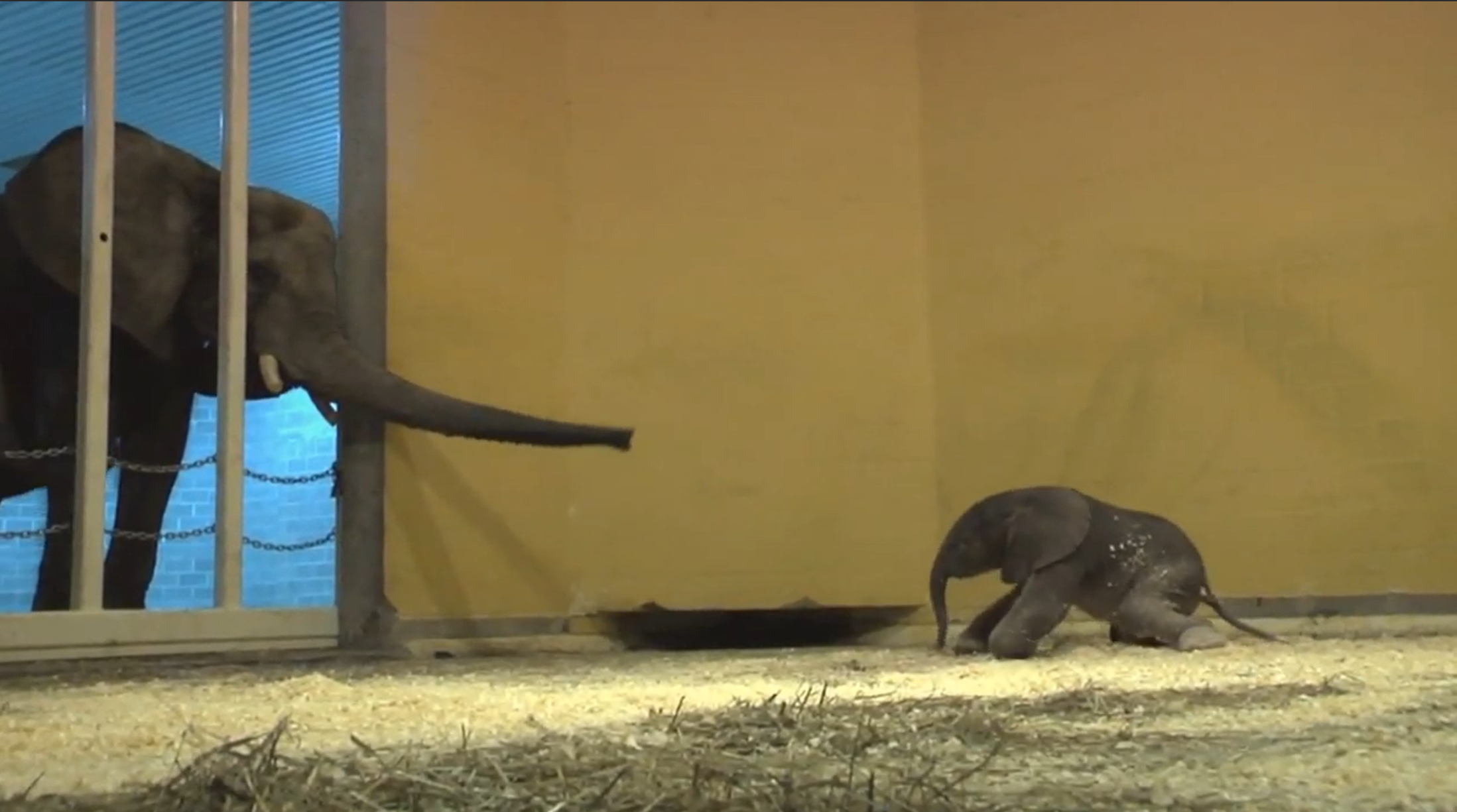
Moja reaching out to Zuri. Taken from a screenshot of the 2012 documentary Elefamilia.
The Pittsburgh Zoo repeatedly has been included on the list of “10 Worst Zoos for Elephants in North America”, by the advocacy group In Defense of Animals. According to experts cited in court filings, the elephants have less than an acre of outdoor space at the zoo, with little vegetation or enrichment.
They also spend long periods on concrete flooring, conditions that specialists say can contribute to chronic pain and foot disease, especially during Pittsburgh’s winters, when the animals are kept indoors for extended stretches. The same filings say all five elephants show stress-related behaviors such as pacing, swaying and rocking.
What happens next?
Judge Mary C. McGinley of the Allegheny County Court of Common Pleas has scheduled a hearing for Feb. 12, 2026, on the zoo’s motion to dismiss the case.
If the judge rejects the motion, the zoo would then have to explain in court why the elephants should remain in captivity at a full hearing on March 2, 2026.
These upcoming hearings will determine whether the elephants will continue to be held captive by the zoo or be returned to their native wilderness or released to a sanctuary.
“Recognizing the elephants’ right to liberty isn’t only appropriate as a matter of law, but also a matter of morality and justice,” said Courtney Fern, the NhRP’s Director of Government Relations and Campaigns. “At its core, this lawsuit is about deepening our respect for the freedom of other beings and making sure we’re upholding the values and principles of justice that protect us all.”
What can you do?
NhRP are urging people in the Pittsburgh area to attend the hearing in-person to help demonstrate that Pennsylvanians support the case. RSVP here to join on Thursday, February 12 at 9:30 am ET.
Add your name to NhRP’s petition here to support Angeline, Savanna, Tasha, Victoria and Zuri’s right to freedom, and their transfer to an elephant sanctuary or rewilding program.
We Have A Favor To Ask…
Species Unite amplifies well-researched solutions to some of the most abusive animal industries operating today.
At this crucial moment, with worldwide momentum for change building, it’s vital we share these animal-free solutions with the world - and we need your help.
We’re a nonprofit, and so to keep sharing these solutions, we’re relying on you - with your support, we can continue our essential work in growing a powerful community of animal advocates this year.
More stories:
Pronghorn have used the overpass to cross Interstate 25 safely for the first time in 30 years, while bears, coyotes, deer, elk, moose, frogs, and a threatened species of mouse have also been taking advantage of the $15 million crossing.