
Mountain gorilla gives birth to twins, in major boost for the endangered species
The birth took place in the war-torn Democratic Republic of Congo, where the population of mountain gorillas continues to rise, despite multiple human threats.
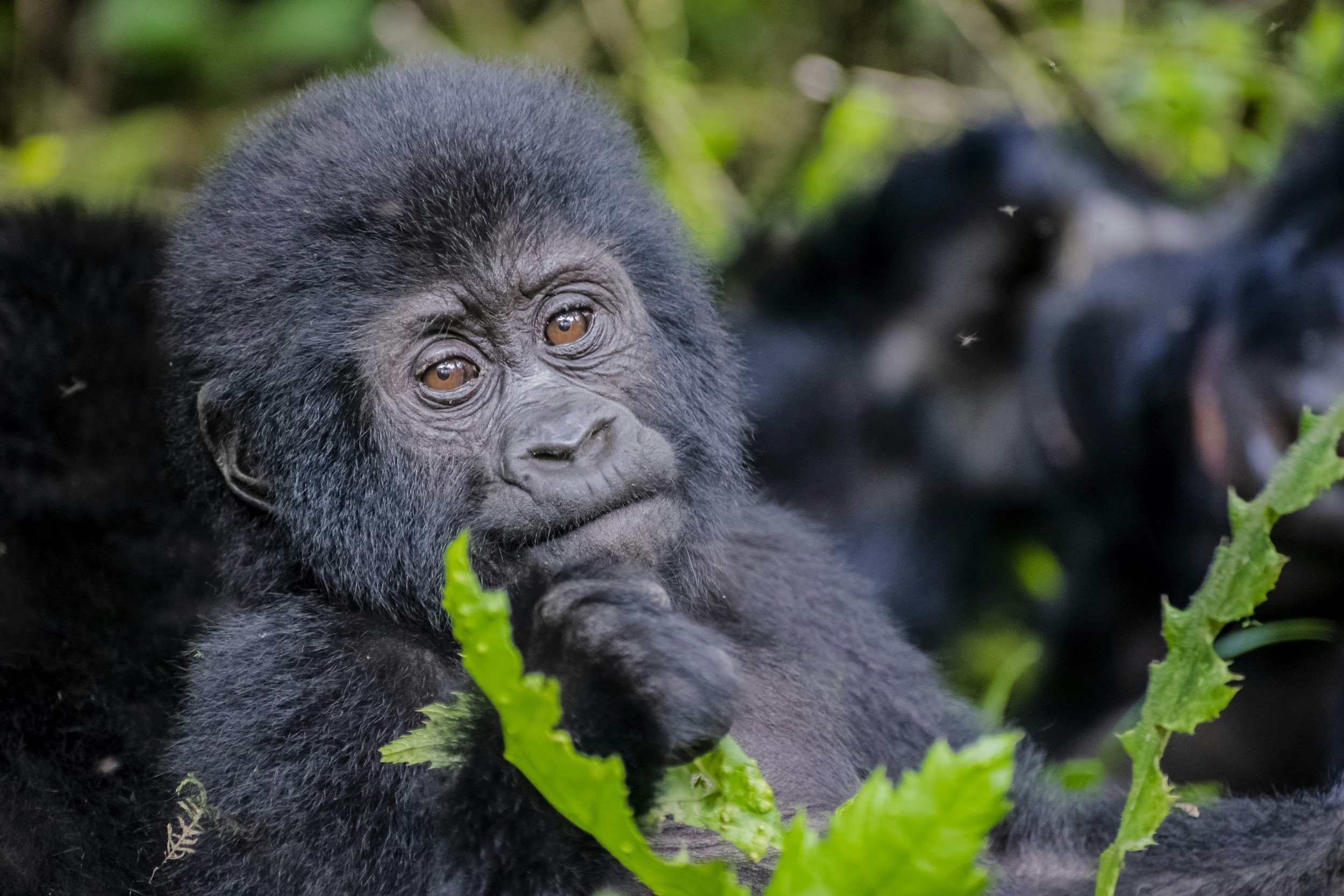
Staff at Africa’s oldest national park are celebrating the birth of twin mountain gorillas.
Virunga National Park, in the Democratic Republic of Congo (DCR), confirmed the news earlier this month, after rangers spotted a 22-year-old female named Mafuko cradling a set of newborn male twins.
Mafuko is part of the Bageni family, which is now the largest in Virunga, with 59 members.
Twin births among mountain gorillas are extremely rare, accounting for less than one percent of all recorded births.
“I’ve only heard of it once before,” said Brent Stirton, a wildlife photographer who has documented the Park’s conservation efforts since 2007. “It’s kind of miraculous”, he added.
Incredibly, Mafuko had already given birth to twins, in 2016. However, they died at just a week old.
Indeed, twin births present additional challenges, since infant gorillas are entirely dependent on their mother. Mafuko, therefore, will need to produce twice as much milk. In addition, she will always be using both arms to hold/carry them; while able to walk on two legs, gorillas prefer to move around on all fours, and so having twins will put extra pressure on Mafuko.
In a statement, the Park said that “additional monitoring and protection measures will be deployed to closely observe the twins and support their health and survival during this critical early period.”
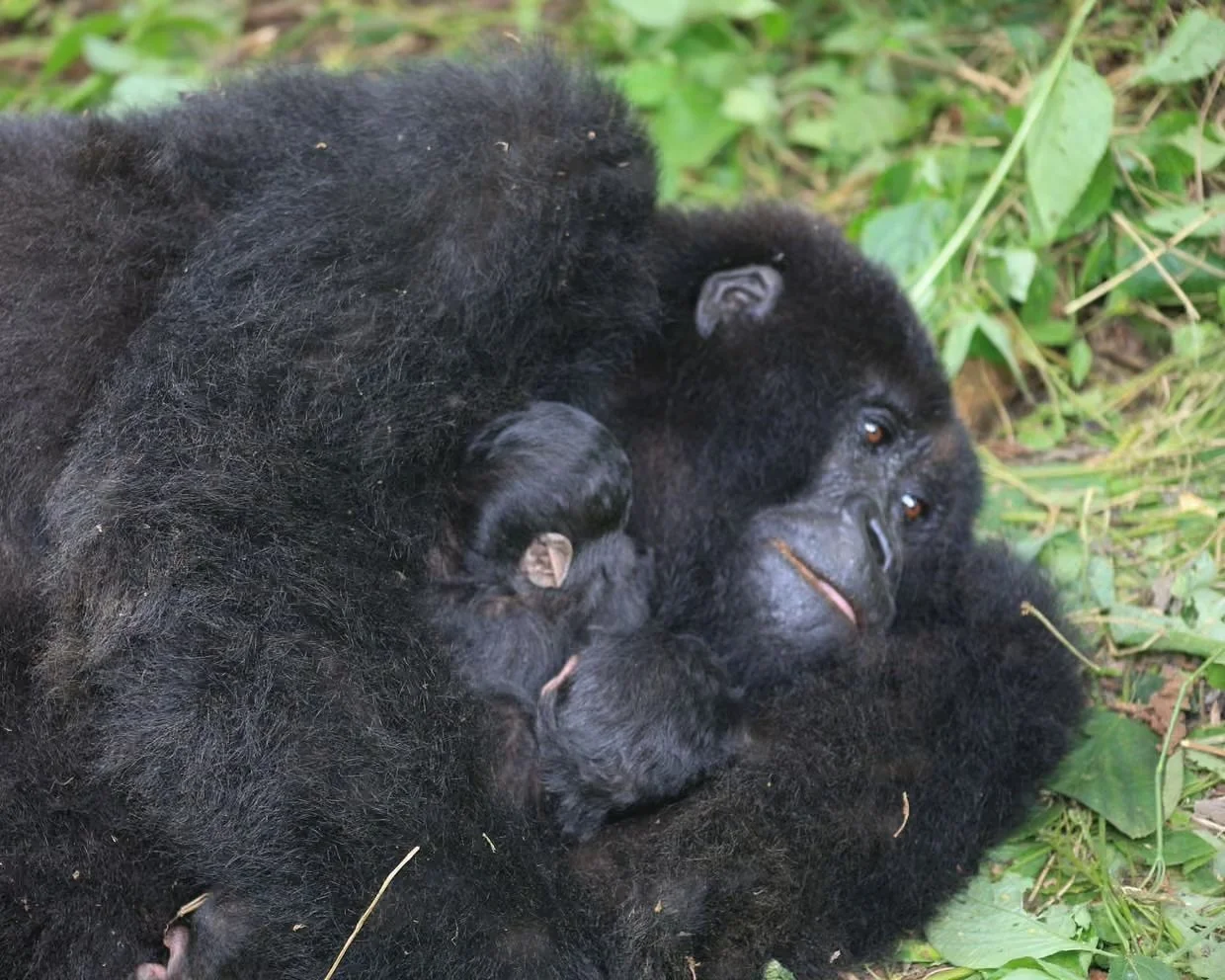
Courtesy of Virunga national park
Gorillas have a slow reproduction rate, with females not giving birth until the age of 10. After that, it will be another four years until their next birth.
The newborn twins, then, are a further boost to the species, which was recently downgraded from Critically Endangered to Endangered. After plummeting to as few as 250, in the 1980s, the global population of mountain gorillas is currently around 1,000, of which one third are living in Virunga.
A world heritage site, the hundred-year-old Park has been at the forefront of protection and conservation efforts. The species has a growth rate of nearly five percent per year in Virunga, with a large team of rangers performing as many as six patrols every day, often in the face of extreme danger and violence.
Following decades of civil war, government armies, rebel armies, and many different militias from the DCR, Rwanda, and Uganda, all operate within the vast Virunga region. The local people have been targeted in terror campaigns, and the Park mercilessly exploited; oil mining, illegal logging, and charcoal production has led to much loss of land.
Today, more than half the Park is under the control of Rwandan-backed rebels. Over 240 rangers have died in the line of duty during the past fifteen years. Whole families of gorillas – including Mafuko’s mother, in 2007 – have been shot and killed.
That the gorilla population has not only survived but increased in the face of such adversity is testament both to the resilience and adaptability of the gorillas and to the dedication of the Park’s rangers.
Indeed, the Park – which is also home to chimpanzees, elephants, hippos, lions, and many other species – continues to defy the odds. Supported by the European Union and UNESCO, Virunga has set up sustainable hydroelectric schemes from the local rivers and mountains, which now power and light much of the region, along with the environmentally friendly production of chocolate, coffee, and palm oil.
In another bright moment for the Park, a ranger made international headlines in 2019, after posing for a selfie as two mountain gorillas stood behind.
We Have A Favor To Ask…
Species Unite amplifies well-researched solutions to some of the most abusive animal industries operating today.
At this crucial moment, with worldwide momentum for change building, it’s vital we share these animal-free solutions with the world - and we need your help.
We’re a nonprofit, and so to keep sharing these solutions, we’re relying on you - with your support, we can continue our essential work in growing a powerful community of animal advocates this year.
A cattle truck crash in Kansas City, Missouri, is one of several recent ones, as Mercy for Animals urges the US Department of Agriculture to update its rules on animal transport.