
‘Sea Life, Not Sea Food’: Stella McCartney’s Paris Fashion Week collection spotlights the oceans
The designer says there is “no wool on the runway this season,” as her Paris Fashion Week collection takes on industrial fishing and the oceans.
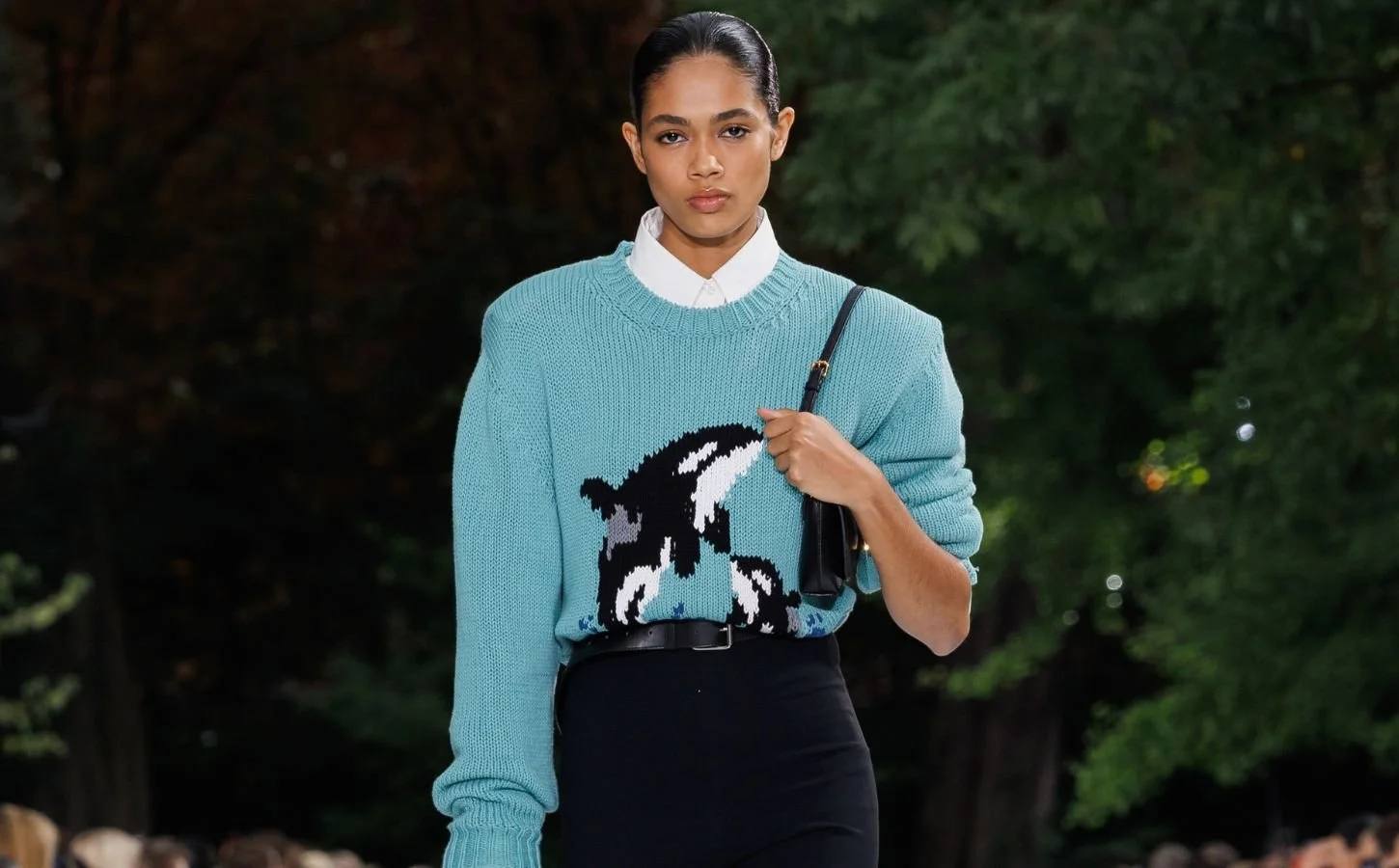
A look from Stella McCartney’s Spring/Summer 2027 collection, which carried the theme “Sea Life, Not Sea Food.” Credit: Stella McCartney
Stella McCartney presented a Spring/Summer 2027 collection built around marine animals and innovative materials at Paris Fashion Week on Wednesday, September 30.
The collection, largely dedicated to marine animals, had a “Sea Life, Not Sea Food” theme. Among fluid, floaty materials and hues of turquoise, coral and seafoam, the designer presented sea-inspired motifs that would inspire respect for ocean creatures.
“We are at war with the oceans, at war with the creatures that live in there,” said McCartney. “For every fish you eat, countless are thrown back dead.” She added, reminiscing about her childhood with parents Paul and Linda McCartney: “I’ve never eaten fish, really, but my mum and dad used to point out that one minute people are watching a sea life documentary with David Attenborough and exclaiming about this magical world and the next, they are looking at a seafood menu. It is grotesque.”
Stella McCartney isn’t a wool-free brand, but this collection was entirely free from wool. “There is no wool on the runway this season, and I’m proud of that,” said the designer.
“One minute people are watching a sea life documentary with David Attenborough and exclaiming about this magical world and the next, they are looking at a seafood menu.”
Instead, the brand has worked with innovative textiles such as Brewed Protein - a fermented wool- and cashmere-like material made from plant-derived feedstock such as sugarcane and corn. The material, created by Japanese biotech company Spiber, was first used in Stella McCartney’s range in 2025.
Wool has been in the spotlight following the viral social media videos of PETA activists being physically restrained by Steven Kolb, CEO of the Council of Fashion Designers of America (CFDA), at Cos’ New York Fashion Week show, where they were protesting the brand’s use of wool.
Stella McCartney has long been vocal about ethics in fashion. Having never used fur or leather, the designer is also feather-free and co-launched the Feather-Free Pledge in collaboration with PETA. The initiative calls on designers, retailers, brands, and fashion events to commit to never using feathers again.
McCartney has also championed plant leathers such as those made from apples, grapes, and mushrooms, as well as plastic-fee, plant-based leather MIRUM.
Other innovative fabrics that got their start on her runways include ECOPEL’s corn-derived fur KOBA and plant-based feather alternative Fevvers.
The brand’s signature Falabella handbag is made without animal-derived materials.
This year, the designer was recognized on the cover of TIME magazine for her commitment to Earth-friendly fashion.
“At the end of the day it’s about how kind you are, but monitoring that kindness requires real work,” said the designer. “At Stella, we police everything from start to finish at my cost, at my time.” Despite continuing to use wool in her collections, the designer acknowledged that “the way a lot of [wool production] is done today is deeply cruel.”
With animal stories making up less than 2% of the news cycle, we're here to fill that gap. Sign up for Species Unite’s weekly news digest.
The animals need a newsroom in their corner
Every week we dig into the animal stories the mainstream news overlooks. Investigations, exposés, legal battles, and victories - none of it happens without your support. A monthly gift of as little as $5 keeps us covering the 98% of animal news the world isn't seeing.
More stories:

Some developers suggest that adopting cultivated meat could also improve animal welfare by significantly reducing the number of farmed animals slaughtered.