
‘No justification’: inside the killing of day-old male chicks
A new investigation has documented the killing of newborn male chicks inside a hatchery, with calls growing for the industry to adopt in-ovo sexing technology that could bring an end to the practice.
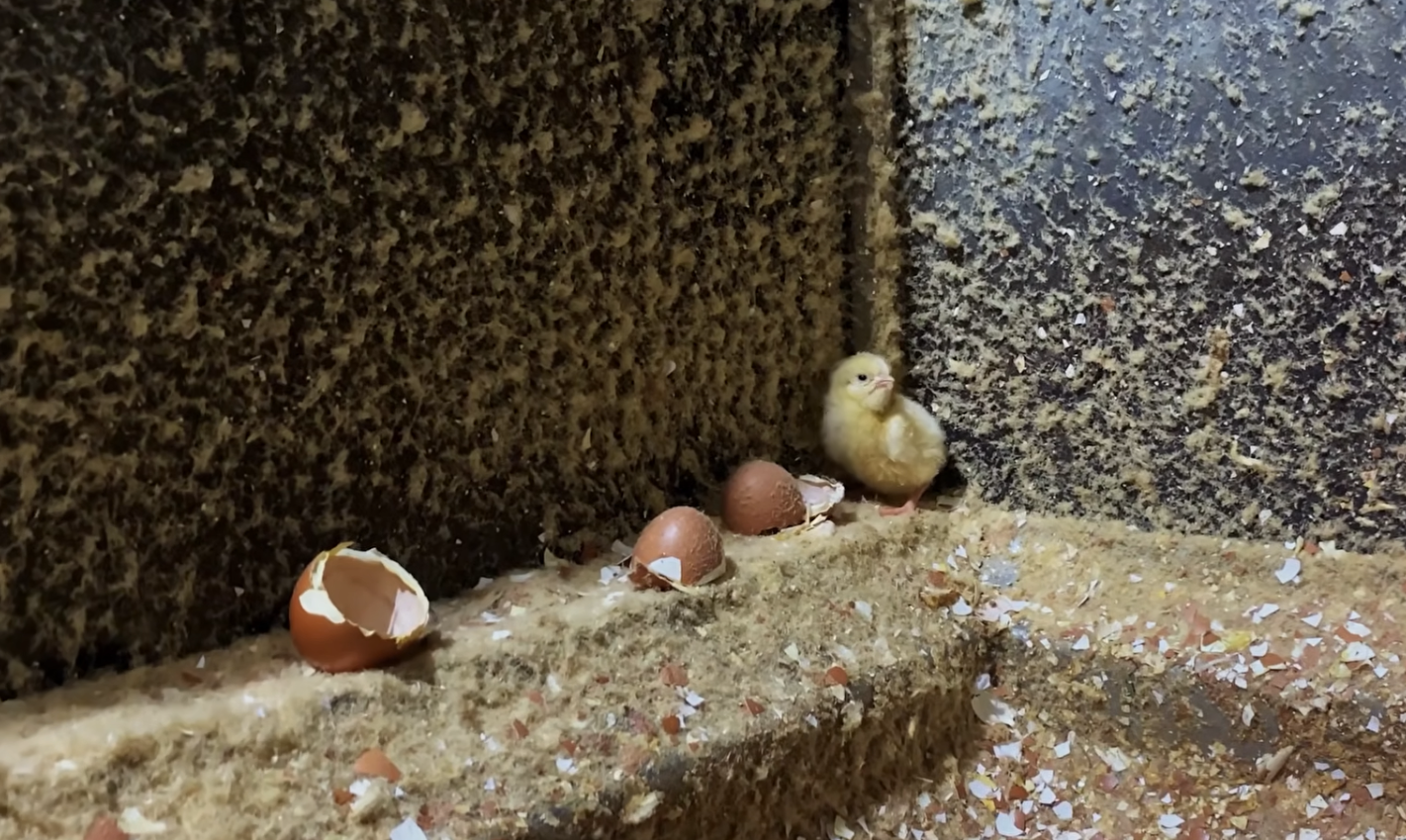
A chick on the edge of an incinerator at a hatchery, moments before he was thrown in. Credit: MFA
A close look at the culling of male chicks in a hatchery in Brazil has been documented by a new investigation, with calls growing for the industry to adopt in-ovo sexing technology that could bring an end to the practice.
In the video footage by campaign group Mercy for Animals (MFA), chicks are seen put onto a conveyor belt, crammed into boxes, and thrown into a macerator where they are shredded while alive and conscious. Female chicks that were considered unsuitable for the industry were also documented meeting the same fate.
Male chicks, considered useless to the egg industry because they don't lay eggs, are mass culled. Nearly eight billion chicks are killed worldwide every year, equating to over 200 animals per second, according to a Faunalytics report.
“Every year, billions of chicks are killed simply because they are born male,” said Arash Yomtobian, president and CEO of MFA. “The technology to end this practice already exists. There is no justification for allowing it to continue.”
The alternatives Yomtobian mentions are beginning to make their way into the industry: in-ovo sexing technology, where the sex of a chicken embryo is determined before the chick hatches, can help bring down the numbers of chicks being killed after birth.
Norway became the first country to adopt this technology in 2023 for its egg industry, bringing in the practice without any regulatory pressure. This year, the Norwegian Meat and Poultry Association announced that the country will phase out the killing of male chicks entirely by July 2027.
Switzerland has also started a transition to in-ovo sexing technology, introducing it in 2025 with an intent to eliminate the culling of male chicks.
In the US and Brazil, where the investigation was filmed, the technology has also entered the market.
The culling of male chicks in the egg industry is banned in France, Germany, Austria, and Italy.
In Canada, in-ovo sexing technology is being developed to be able to detect sex as early as the fourth day of incubation.

Conceptual depiction of in-ovo sexing technology. Credit: MFA
MFA’s global campaign Crack the System supports industry policy and action that helps end chick culling. Part of that is promoting in-ovo sexing technology and calling for more urgent moves towards its implementation and bans on the culling of newborn chicks.
Over half of polled consumers in the US said that they are uncomfortable with the culling of male chicks, and over 70 percent of consumers agree that the industry should find an alternative. The same poll found that only 11percent of consumers were aware of how common culling was in the industry.
“Most people have never heard of chick culling, despite the enormous scale of the practice,” said Yomtobian. “Mercy For Animals wants to change that. By helping more people understand what is happening and what alternatives exist, we can build the public support needed to move the industry toward ending chick culling.”
Join Species Unite's 30-Day Plant-Powered Challenge, a free month of recipes and tips to help you eat in a way that's better for your health, better for the planet, and better for the animals.
With animal stories making up less than 2% of the news cycle, we're here to fill that gap. Sign up for Species Unite’s weekly news digest.
The animals need a newsroom in their corner
Every week we dig into the animal stories the mainstream news overlooks. Investigations, exposés, legal battles, and victories - none of it happens without your support. A monthly gift of as little as $5 keeps us covering the 98% of animal news the world isn't seeing.
More stories:


A new investigation has documented the killing of newborn male chicks inside a hatchery, with calls growing for the industry to adopt in-ovo sexing technology that could bring an end to the practice.