
New silicone model offers alternative to fetal pig dissection
Kind Piglet, a silicone pig model designed to replace fetal pig cadavers in US classroom dissections, has been launched by PETA.
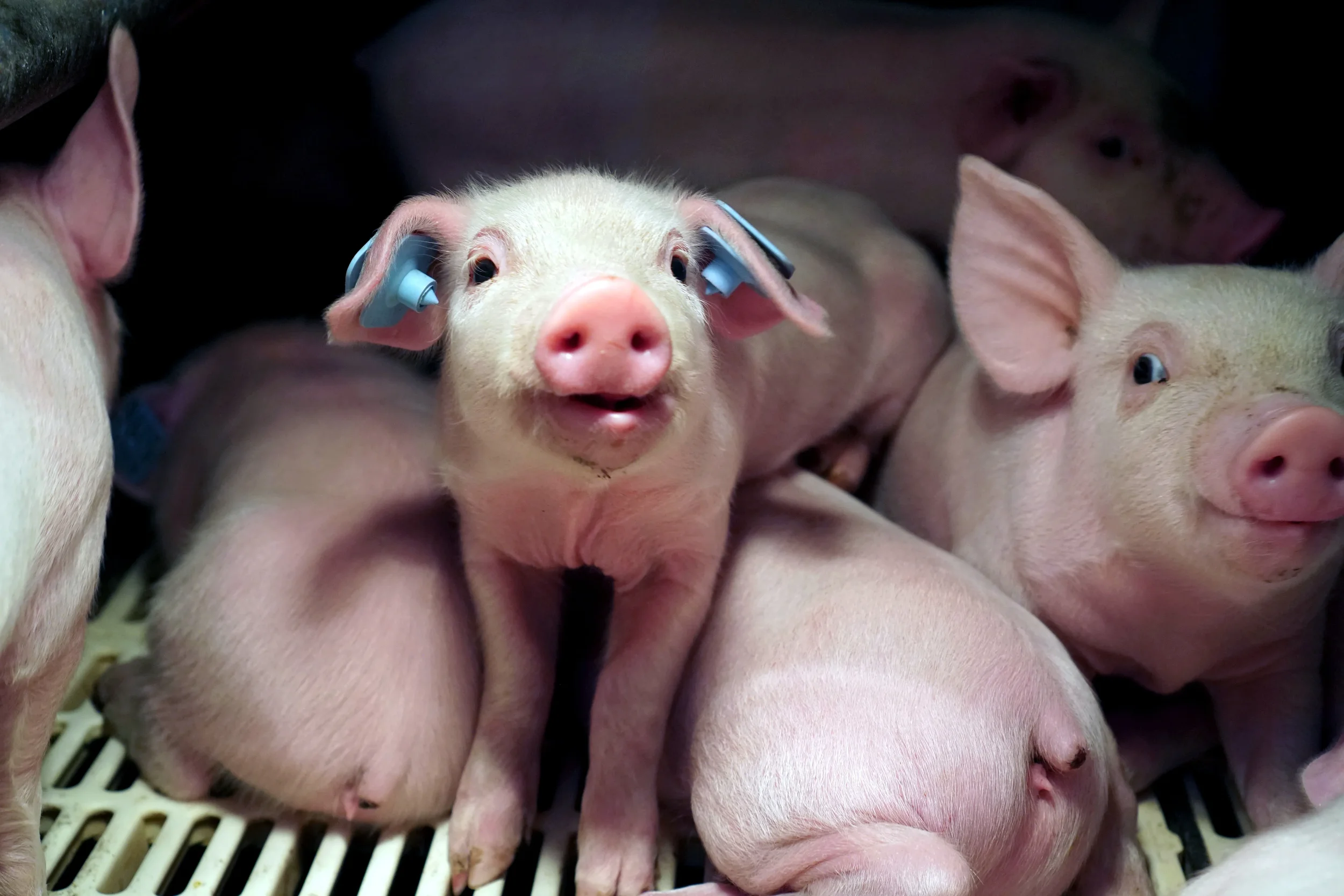
Piglets at Circle Four Farms, one of the largest pig facilities in the US, owned by Smithfield Foods - one of the world's biggest pork producers. Credit: DxE
A new silicone pig model aims to replace the roughly 500,000 fetal pigs used in US classroom dissections each year. Called Kind Piglet, the anatomically accurate model was created by People for the Ethical Treatment of Animals (PETA)'s TeachKind education division as an alternative to fetal pig cadavers in school science classes.
The invention was born from PETA President Tracy Reiman’s own refusal to dissect a pig during her school years. “As a student, I learned firsthand how dissection can leave a lasting impression for all the wrong reasons and even turn them away from a career in science,” said Reiman. “Every student deserves the chance to experience curiosity, not distress, and the Kind Piglet helps make that possible while not harming a hair on an animal’s head.”
The first-of-its kind silicone model is anatomically accurate and features color-coded organs for simple identification. It is also free from formaldehyde, so no PPE is required for its use. Compatible with standard dissection tools, it costs about the same as the pig bodies typically used for dissection in school science lessons.
While there is no centralized government tracking for classroom dissections, animal advocacy organizations like PETA estimate that roughly 500,000 fetal pigs are used annually in U.S. schools. Because federal laws like the Animal Welfare Act exclude livestock used for standard instructional purposes, exact figures rely on industry and advocacy estimates rather than public registries. Coming from the factory-farming industry, some of these animals are still alive when they are cut from their dead mothers’ bodies, according to PETA. They are then killed and sold for dissection.
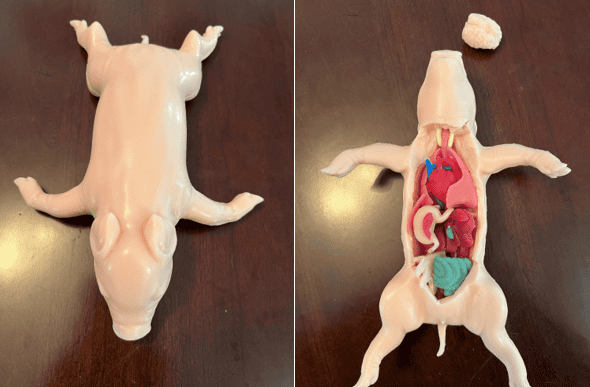
Kind Piglet, a silicone model designed to replace fetal pigs in classroom dissections. Credit: PETA
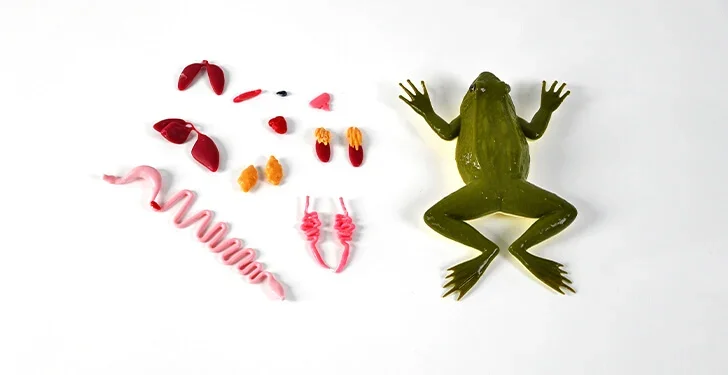
Kind Frog, a silicone model designed to replace frogs in classroom dissections. Credit: PETA
Kind Piglet follows Kind Frog, an earlier silicone model also created by TeachKind under Reiman. Both aim to make science lessons more humane, but also to avoid alienating the students who don't want to dissect real animals. Some students may face taunting due to their discomfort with the dissection practice, which can discourage them from pursuing science in the future, PETA says.
Aside from pigs, the animals most frequently used for classroom dissection in the US are frogs, rats, mice, and cats. Many of them come from biological supply companies - one of the purposes of these companies is specifically to provide animals for school dissection. PETA undercover investigations of these companies have found animals tortured, drowned, and injected with formaldehyde without first being checked for vital signs - a violation of the Animal Welfare Act.
Other animal-free alternatives to dissecting animals include 3D models, synthetic replicas, and computer program.
Certain states, such as California, Florida, Louisiana, Massachusetts and New York (in total 11 states), have passed legislation that requires education staff to give students the right to opt out of animal dissection. In these cases, schools have to provide alternatives for the students and protect them from penalties from teachers. Advance notice of upcoming dissections also has to be given, so that students have time to opt out.
Take the 30 Days of Action for Animals challenge: This August, we're challenging you to take one action for animals every single day. From signing petitions and contacting lawmakers to making different choices at the dinner table, every action adds up. Sign up now to get your first action from tomorrow.
With animal stories making up less than 2% of the news cycle, we're here to fill that gap. Sign up for Species Unite’s weekly news digest.
The animals need a newsroom in their corner
Every week we dig into the animal stories the mainstream news overlooks. Investigations, exposés, legal battles, and victories - none of it happens without your support. A monthly gift of as little as $5 keeps us covering the 98% of animal news the world isn't seeing.
More stories:

A former president and conservationists have criticized Botswana’s decision to kill 23 elephants for meat as part of its 60th independence celebrations.