
‘Everything is dried and burned’: El Niño-fueled fires put Indonesia's orangutans at risk
Fires are sweeping through rainforests home to 13 of the 20 largest surviving populations of Bornean orangutans, with rescuers already treating injured animals and conservationists warning of long-term habitat loss.
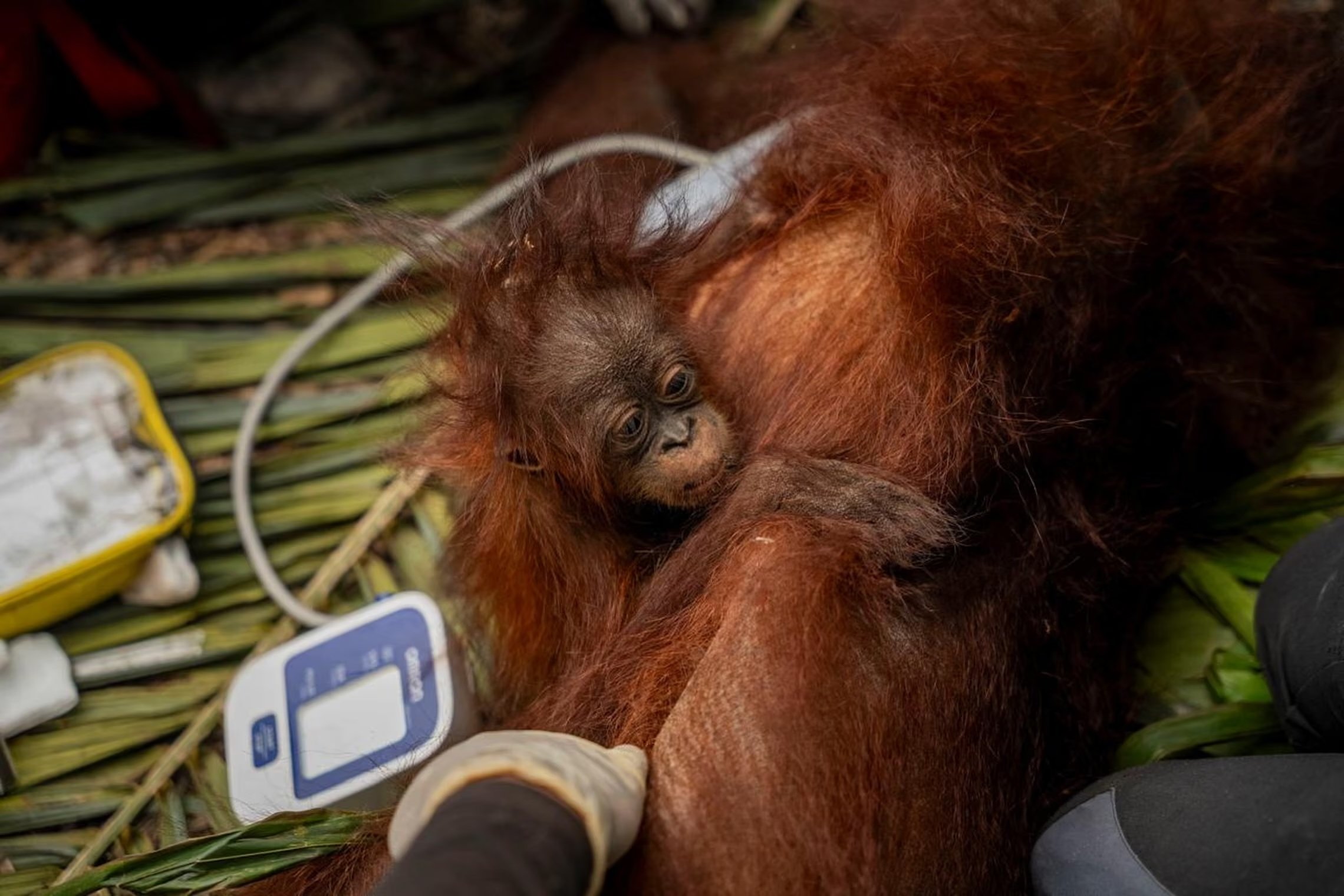
Mama Abu, a Bornean orangutan (Pongo pygmaeus), and her 8-month-old infant, Abu, are being monitored after being trapped by smoke from fires in a West Kalimantan palm oil plantation. Credit: Muffidz Ma'sum/YIARI-Ministry of Forestry
Fires fueled by El Niño are sweeping through Indonesian rainforests that are home to 13 of the 20 largest surviving populations of Bornean orangutans (Pongo pygmaeus), putting animals at risk of being displaced, injured, or killed. Experts from the International Union for Conservation of Nature (IUCN) have called for international assistance to help control the fires.
Rescue efforts are in place, and rescuers are finding animals with severe injuries, according to Mongabay, a four-year-old female orangutan with burns on all hands and feet was found in an affected area near Sebangau National Park in Central Kalimantan province.
Animals like her are taken to local rehabilitation centers to receive treatment. The risks are particularly high when it comes to mother animals, as they are more prone to remaining in one place to protect their young rather than moving to a more safe location.
“I believe that the toll of wild animals being burned, dead, because of the fires is huge,” said Karmele Llano Sanchez, a veterinarian who is the co-founder and CEO of YIARI, a Borneo-based organization that helps establish and maintain the orangutan populations in the area.
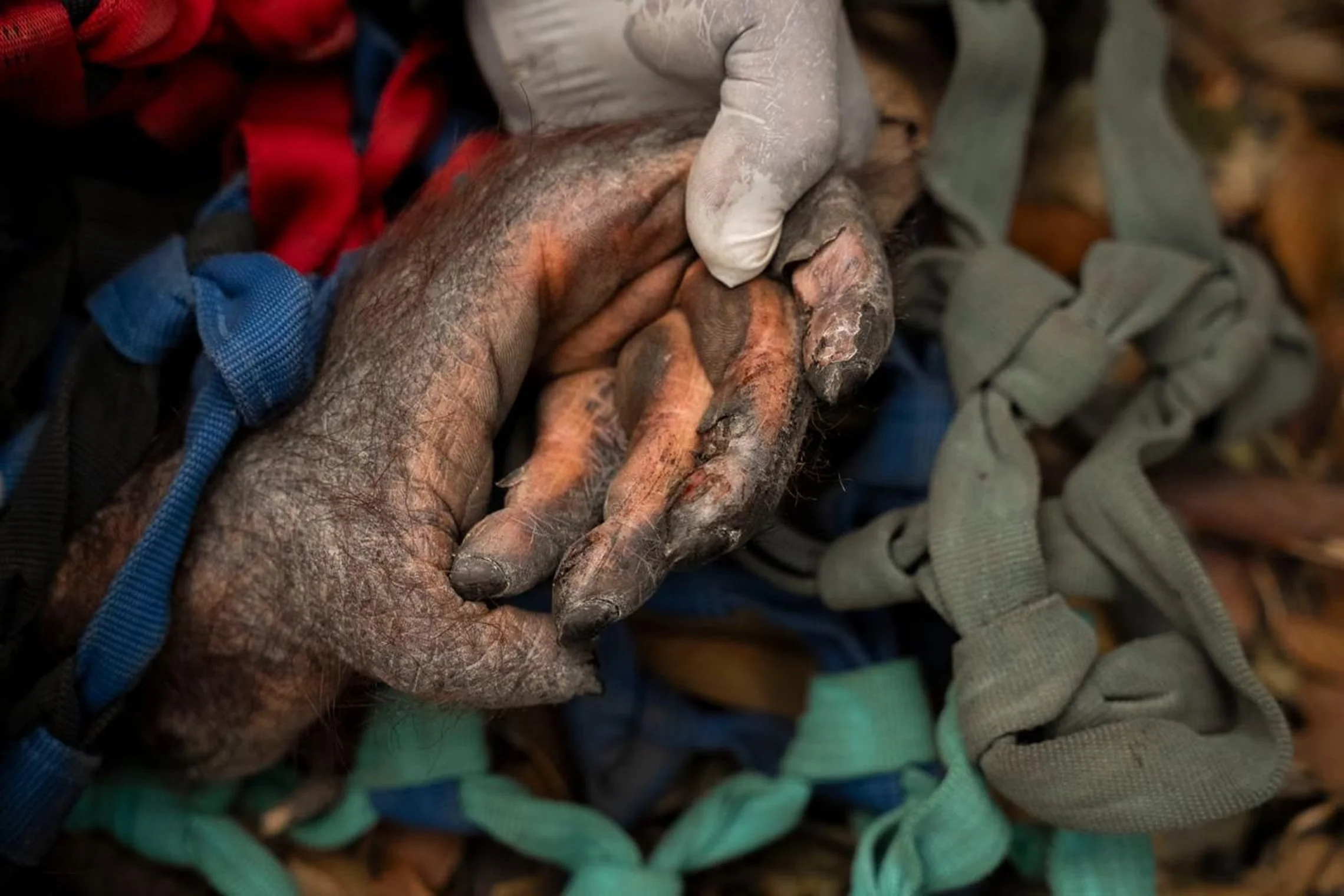
Mama Abu's burned hands after she was rescued from forest fires in West Kalimantan. Credit: Muffidz Ma'sum/YIARI-Ministry of Forestry
Other local groups are just as alarmed. “The concerns are that orangutans may die [because of the fires] and [those who survive] have to leave their habitat,” Ronna Saab, executive director of the Indonesian Orangutan Conservation Forum, told Mongabay. “The short-term concern is that their shelter will be destroyed.”
Wildfires related to El Niño aren’t simply a temporary emergency: the risk is that habitats are destroyed, affecting orangutans in the long term. “It hasn’t rained in 80 days here, and everything is dried and burned,” Sanchez told the Guardian. “[There are] no leaves and no fruits – nothing they can eat.”
These habitats are already highly threatened by industries such as logging, mining and palm oil plantations. The remaining forest is split into isolated areas, leading to orangutans being pushed to live in isolated patches rather than one jungle.
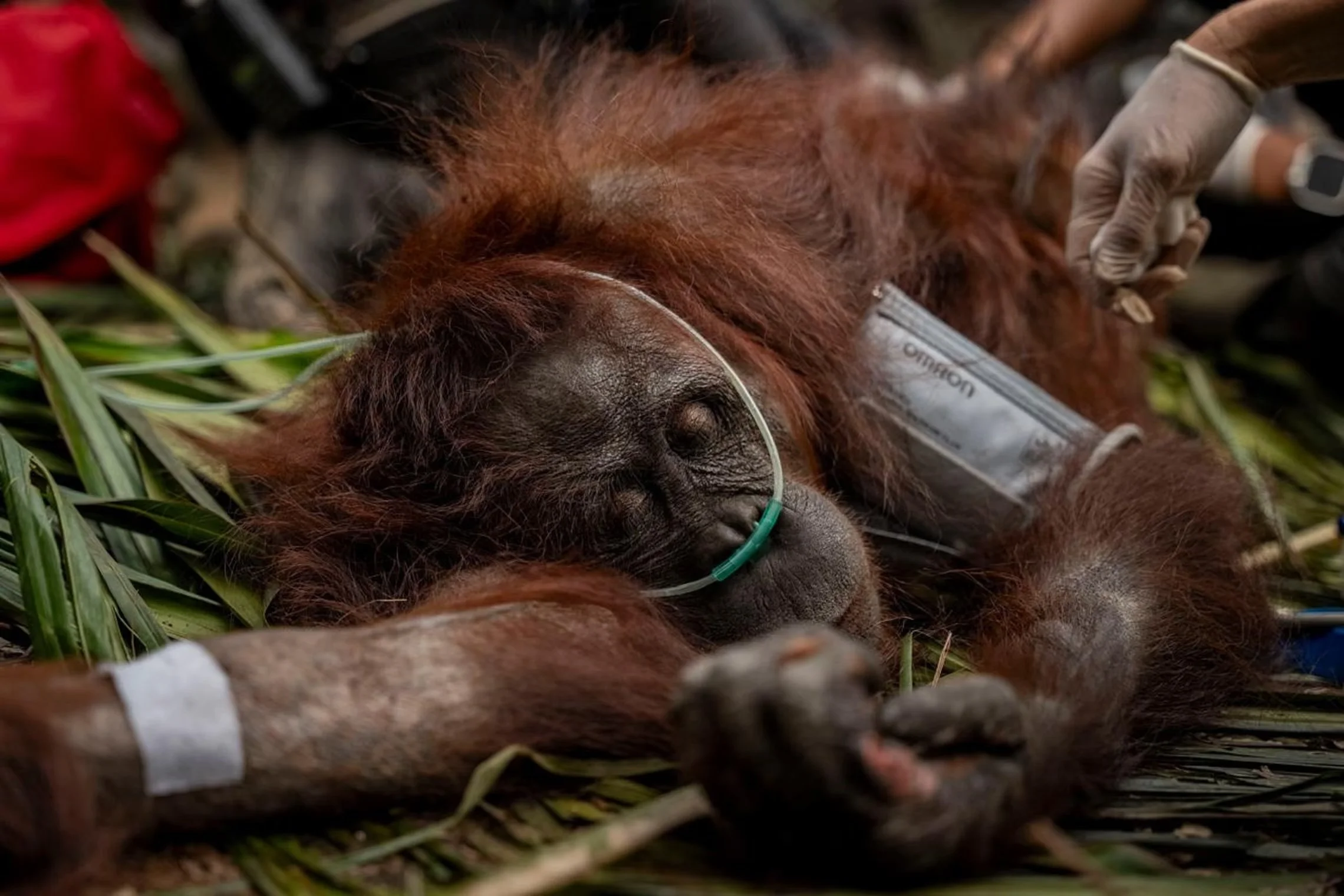
Mama Abu receives treatment from YIARI rescuers. Credit: Muffidz Ma'sum/YIARI-Ministry of Forestry
Smoke from the wildfires can also threaten orangutans by damaging their respiratory system - and exposure to smoke has been connected to an increase in the intensity of hookworm infections, which can cause severe anemia and weakness in orangutans.
While El Niño is a natural phenomenon not caused by climate change, studies have found that the climate crisis could potentially affect it in a variety of ways, with global warming leading to more intense El Niño-related events.
Many scientists believe that the impact of the climate crisis will be intensified by El Niño events, as rising temperatures around the globe are linked to more extreme weather events.
With animal stories making up less than 2% of the news cycle, we're here to fill that gap. Sign up for Species Unite’s weekly news digest.
The animals need a newsroom in their corner
Every week we dig into the animal stories the mainstream news overlooks. Investigations, exposés, legal battles, and victories - none of it happens without your support. A monthly gift of as little as $5 keeps us covering the 98% of animal news the world isn't seeing.
More stories:


As opposition to octopus farming grows worldwide, Colombia is moving to ban the practice before a single farm is built.