
The planet has entered a "danger zone of extreme weather," UN warns
As El Niño intensifies, the world's oceans have hit record heat, fueling die-offs among sea lions, seabirds, and salmon.

The planet has entered a “danger zone of extreme weather,” as El Niño's effects spread across the globe, warns UN Secretary-General António Guterres, with the latest forecasts showing it is set to “blow apart” temperature records.
El Niño events are naturally occurring climate patterns where wind changes over the Pacific lead to rising ocean temperatures and the transfer of huge amounts of heat to the atmosphere, affecting global weather patterns. Already, the current El Niño has brought weak monsoon rains in India and devastating wildfires in Indonesia.
Forecasts by the World Meteorological Organization (WMO) indicate an “exceptionally high likelihood of nearly 100%” that El Niño has yet to peak, and will persist until at least February 2027, increasing the likelihood of extreme heat, drought, and floods over the next six months, with potentially devastating consequences for communities and economies across the world.
Scientists warn this could once again push global temperatures past the critical 1.5°C threshold above preindustrial levels (a level long linked to catastrophic climate consequences) with some forecasts suggesting a temporary breach of 2°C as soon as next year for the first time in recorded history.
“El Niño is being supersized before our eyes,” said Guterres. “The science leaves us no room for doubt: the planet is in uncharted waters, and those waters are heating up. Sea surface temperatures are rising, temperatures keep climbing, and the world is in the danger zone of extreme weather.”
World's oceans hit record heat
In the WMO’s latest figures, recorded in mid-August, sea temperatures in the Pacific Ocean were 2.6 degrees Celsius above average, while subsurface ocean temperatures were more than 8 degrees Celsius above average. The WMO predicts above-average temperatures across almost the whole of the Earth’s surface from September to November.
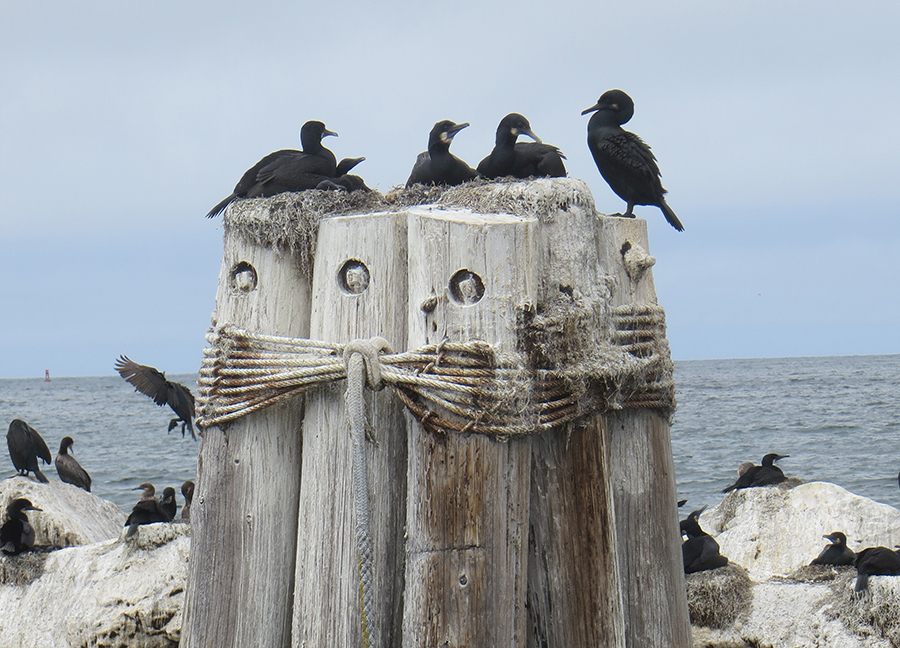
A group of Brandt's cormorants resting on weathered wooden pilings by the sea. State wildlife officials in California have linked a surge in seabird deaths along the state's coastline to starvation, after investigating a rise in reports of sick and dead birds washing ashore. Credit: California Department of Fish and Wildlife
Humans and animals alike will be vulnerable to the extreme weather, but this is especially true of marine life. In August, the global ocean reached its warmest temperature ever recorded – scientists say this was due to the combined influence of long-term climate change, and conditions consistent with the emergence of an El Niño event. Added to this is the fact that 2026 has seen more marine heatwaves than ever before.
“The record is another clear signal of an ocean under growing stress,” said Dr Samantha Burgess, at the European Union’s Copernicus Climate Change Service (C3S), which produced the new data. “El Niño is adding heat to the system, but it is doing so on top of decades of human-driven warming. The consequences are already visible: the number of marine heatwave days globally has more than tripled since the early 1990s.”
Marine heatwaves – five or more consecutive days of temperatures being above the 90th percentile of normal seasonal variation – occur naturally, but are becoming more common and more intense, due to climate change. In addition, while climate change causes a more gradual warming of the sea temperature, marine heatwaves produce rapid and extreme changes, which make it more difficult for marine life to adapt.
In the U.S., parts of the West Coast have endured a year-long marine heatwave – this summer saw record-breaking ocean temperatures at three coastal stations along the California coast. Some of these temperatures persisted for over 40 successive days.
As a result, many seabirds including cormorants, grebes, and loons starved to death. The loss of cold surface water that sardines and anchovies depend on meant there was no food for the seabirds to eat.
And hundreds of California’s sea lions have also been dying – victims of a toxic algal bloom that spans Southern California to the coast of British Columbia, making it one of the largest algal blooms in the world. The growth of algal species occurs when there is too much warm water. Algal blooms reduce oxygen in the water, block sunlight, and emit toxins, which become more potent and frequent in warmer water.
The Marine Mammal Center, in Sausalito, said its dispatchers are receiving up to 600 calls a day reporting sick sea lions. On average, the center treats around 75 sea lions per year, but it has treated over 100 this year already.
Marine heatwaves in the UK, meanwhile, have seen the largest octopus bloom in the English Channel for over 75 years. Along the UK’s South West coast, octopus landings have risen by 7,700 percent compared to last year. In turn, the octopuses have depleted the local crab and lobster populations, while the number of sea animals that eat octopuses, like seals and dolphins, has risen. The warmer waters, and abundance of food, has also encouraged sharks and bluefin tuna to the UK for the first time in many years.
The nonprofit Global Climate Risks estimates that 82 percent of the world’s oceans are currently affected by marine heatwaves, which are set to increase in frequency, duration, and intensity. The impact of El Niño will only make matters worse, and could result in profound and irreversible damage to the marine ecosystem.
The National Oceanic and Atmospheric Administration (NOAA) has already blamed the current El Niño for the deaths of millions of adult sockeye salmon in the Bering Sea. The summer water temperatures had risen by almost 10 degrees Celsius, as the salmon were migrating back to their natal streams.
With El Niño not expected to peak until early 2027, scientists warn the disruption to marine ecosystems seen this year may only be the beginning.
With animal stories making up less than 2% of the news cycle, we're here to fill that gap. Sign up for Species Unite’s weekly news digest.
The animals need a newsroom in their corner
Every week we dig into the animal stories the mainstream news overlooks. Investigations, exposés, legal battles, and victories - none of it happens without your support. A monthly gift of as little as $5 keeps us covering the 98% of animal news the world isn't seeing.
More stories:
Wildlife cameras, night-vision binoculars, GPS devices, fire sensors, and snowshoes are among the items that have been available to borrow free of charge at a new public nature library.