
Botswana approves killing of 23 elephants for Independence Day celebrations
A former president and conservationists have criticized Botswana’s decision to kill 23 elephants for meat as part of its 60th independence celebrations.
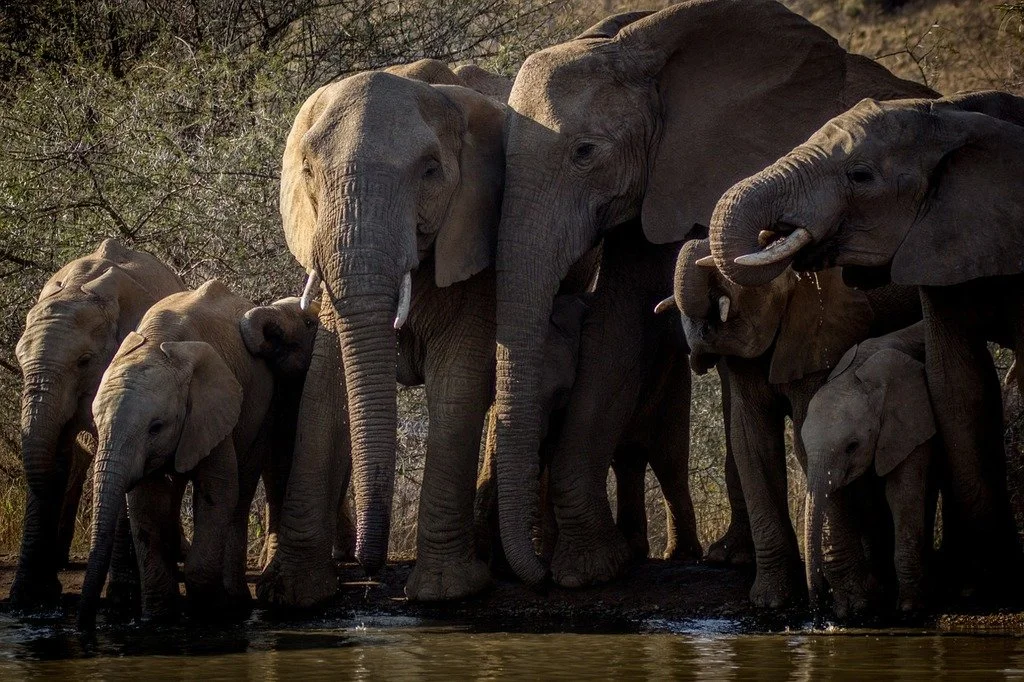
A herd of African savanna elephants (Loxodonta africana), including calves, drinks at a waterhole. Credit: Public domain
Botswana’s government has approved the killing of 23 Endangered African savanna elephants as part of celebrations marking 60 years of independence, drawing criticism from conservationists and one of the country’s former presidents.
The government also authorized the killing of dozens of antelope as part of the initiative on September 30, 2026, with the meat from both animals shared between rural communities.
Dimakatso Ntshebe, deputy director at the government’s Department of Wildlife and National Parks, defended the decision to kill the elephants. “Wildlife conservation must deliver meaningful benefits to the communities that live alongside wildlife and contribute to its protection,” Ntshebe said.
Since lifting the ban in 2020, Botswana has faced criticism over the handling of its 130,000 elephants, the world’s largest population. In 2024, then-president Mokgweetsi Masisi threatened to send 20,000 elephants to Germany, after German environment minister Steffi Lemke expressed plans to stop trophy hunting imports from Africa.
“I want the Germans to feel what we feel, to go through what we go through … and to share the burden,” Masisi told German news channel DW News at the time. Germany – among the largest importers of hunting trophies in the European Union – has no experience of maintaining a wild elephant population, said Masisi.
A month earlier, Botswana threatened to send 10,000 elephants to London, following a vote by MPs supporting a ban on trophy imports. “I want Britons to have a taste of living alongside elephants, which are overwhelming my country,” said environment and tourism minister Dumezweni Mthimkhulu in March 2024. “Elephant numbers, just like those of Scottish stags, have to be controlled. Hunters in the Highlands pay to shoot deer and put their antlers on their walls. So why is Britain trying to stop Africa doing the same?” he added.
Masisi allowed elephant hunting to return to Botswana after a committee set up to review the matter concluded that elephants had not only increased in number but also in range, contributing to a rise in human-elephant conflicts in which crops were destroyed, villages damaged, and livestock and even residents were killed.
Hunters must obtain both a license and a permit in order to shoot elephants. Hunting quotas, as set by the government, have risen, including under President Duma Boko, elected in 2024. In 2019, the quota was set at 290, while this year’s quota rose to 430 – a 48% jump.
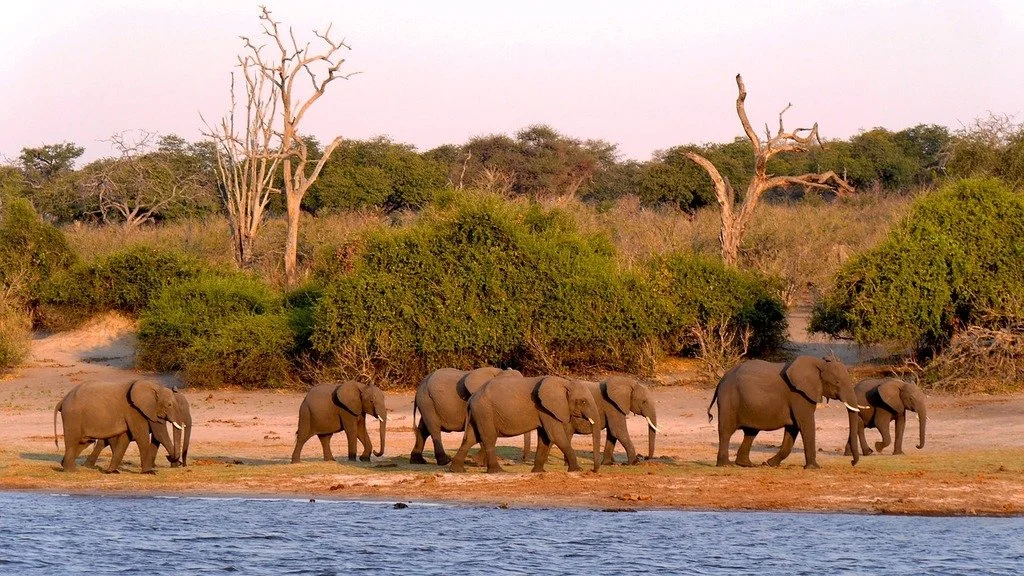
A herd of African savanna elephants walking along a river bank in Botswana. Credit: Public domain
Tschenatshe Monwela, an elder in the northwestern tourism town of Maun, told local media that his community should have received buffalo meat instead, as he said elephants held particular cultural and ecological significance.
Former President Ian Khama, who introduced a ban in 2014 on hunting elephants for food or trophies, said he feared there was now an “expectation” that more elephants would be killed in future national events.
Botswana’s Elephant Protection Society warned that the decision to kill the elephants could undermine conservation and make herds more hostile toward nearby communities. “When one elephant is shot, the rest become defensive,” the society said.
Its chairman, Oaitse Nawa, told the BBC that elephants need stronger protection. He said that killing them for celebratory feasts could encourage poaching, because it suggests the practice is acceptable when the government sanctions it.
"Elephants have lost their social structures because they are always being pushed from one place to another by gunshots," Nawa said.
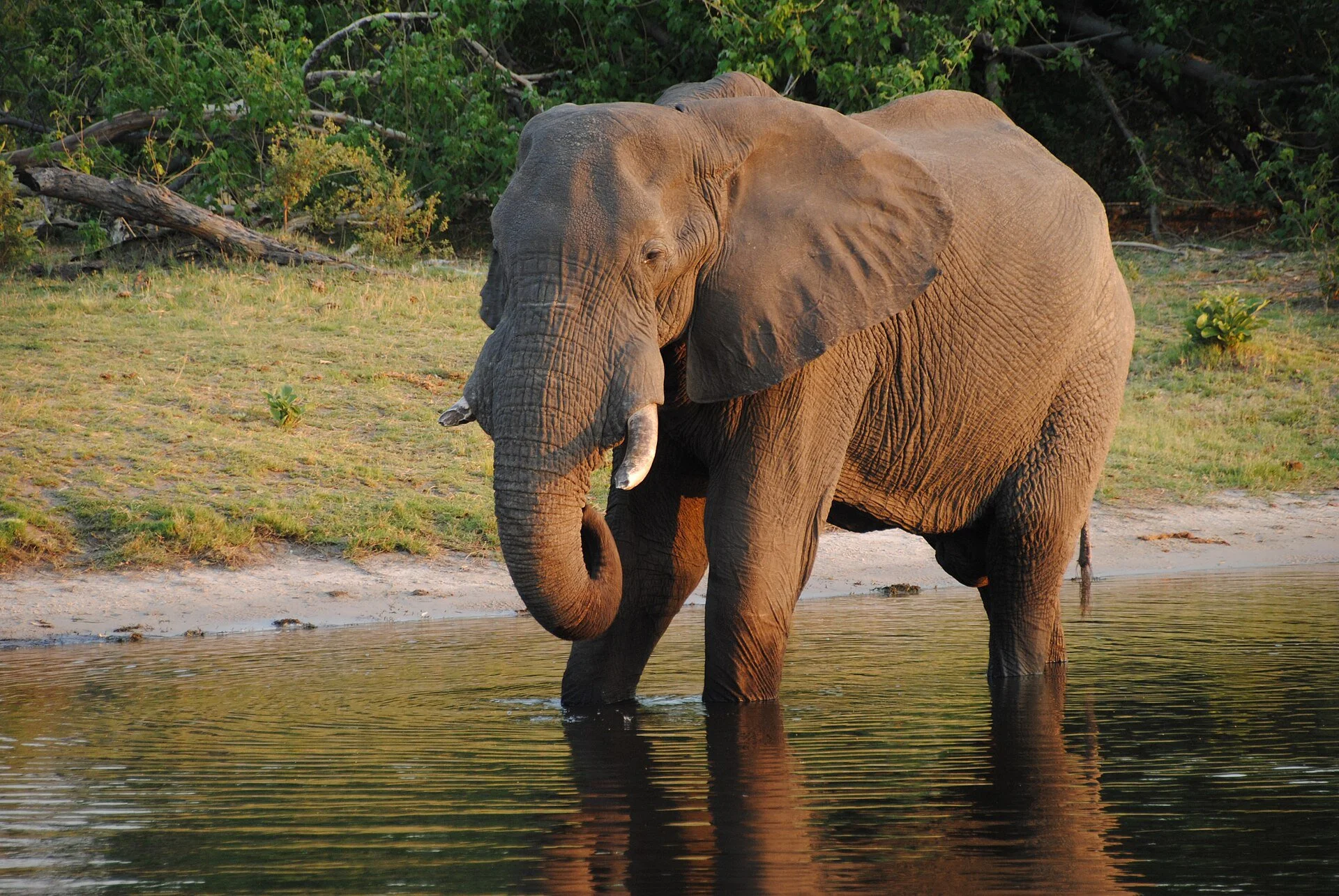
An African savanna elephant in Savuti, Chobe National Park, Botswana. Credit: diego_cue/CC BY-SA 4.0
Conservationists are also worried that hunting will become unsustainable. While the quota accounts for only around 0.3% of the national population, a recent report by Botswana-based NGO Elephants Without Borders (EWB) shows that trophy hunters and poachers are both targeting the same type of elephant – older bulls with big, high-value tusks.
“Trophy hunting doesn’t remove a random sample of elephants. It disproportionately targets the largest, oldest bulls, usually over 40 years old – the carriers of Botswana’s biggest tusks and strongest genetic traits,” said the report’s co-author Dr. Mike Chase.
The report adds that hunting blocks are losing more bulls than they can naturally produce, while early survey data compiled by EWB suggests that older bulls are already starting to avoid certain hunting areas. This would be a further blow to the hunting model, which relies on a regular flow of older bulls migrating from protected areas into designated hunting blocks.
And the consequences will affect far more than the hunting industry, EWB warn. Older bulls play a vital role in genetic health and elephant behavior, as they guide younger bulls through landscapes and migrations. In their absence, younger bulls can become more aggressive and unpredictable, increasing the likelihood of human-elephant conflicts – the very reason why the hunting ban was lifted in the first place.
With animal stories making up less than 2% of the news cycle, we're here to fill that gap. Sign up for Species Unite’s weekly news digest.
The animals need a newsroom in their corner
Every week we dig into the animal stories the mainstream news overlooks. Investigations, exposés, legal battles, and victories - none of it happens without your support. A monthly gift of as little as $5 keeps us covering the 98% of animal news the world isn't seeing.
More stories:
A former president and conservationists have criticized Botswana’s decision to kill 23 elephants for meat as part of its 60th independence celebrations.