
Trump administration moves to open 45 million acres of protected wilderness to logging
The Trump administration has moved to rescind the Roadless Area Conservation Rule, putting 45 million acres of pristine wilderness and the species that live there at risk.
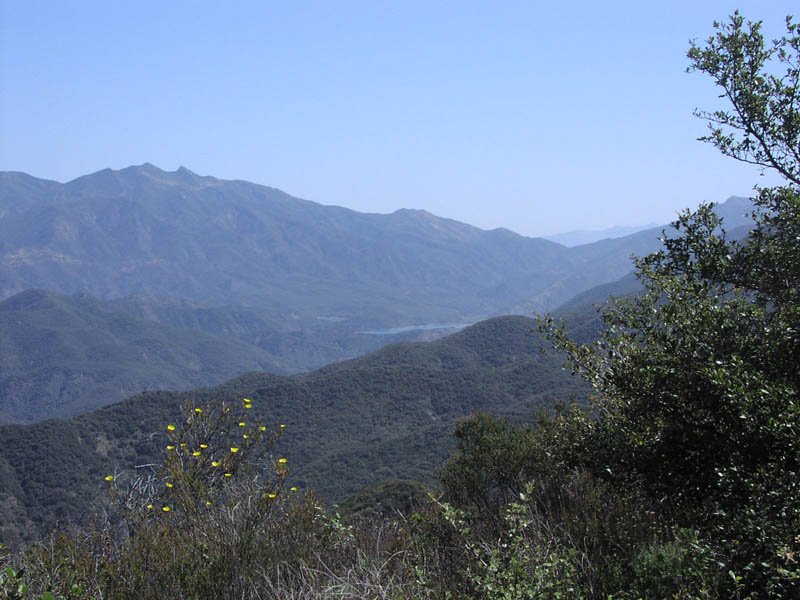
Jameson Reservoir (center), Santa Ynez Mountains (right), Los Padres back country and Old Man Mountain (left), Reyes Peak (background). Public domain, via Wikimedia Commons
The Trump administration is moving to end a 25-year-old rule protecting an estimated 45 million acres of pristine national forest from road construction and logging, a move conservation groups warn will devastate some of America's last intact wilderness and the wildlife that depends on it.
The Roadless Area Conservation Rule, introduced in 2001, has prohibited almost all road construction, reconstruction, and logging in designated wilderness areas in national forests. The land, roughly the size of Washington state, is home to many iconic species already struggling for survival, including the grizzly bear, Canada lynx, steelhead salmon, gray bat, and northern spotted owl.
The proposal would not apply in Idaho and Colorado, which are governed by separate rules. Most of the affected land lies in western states, though the rule also covers forests in Appalachia and New England.
The move continues a pattern of rolling back wildlife protections by the administration, most recently ending the rule forbidding the destruction of habitat of endangered species, a measure currently being challenged in court.
The administration's plan would allow local land managers to decide what roads can be built. The United States Forest Service (USFS) explained in its announcement that rescission of the national-level prohibitions "provides responsible officials with flexibility to better guide management of National Forest System lands and respond to changing local resource conditions."
The administration says it wants to increase logging, at the same time it is threatening to reduce availability and increase the price of timber by threatening tariffs on Canadian wood imports. It also says building roads can help firefighters put out forest fires and help cope with insect invasions and droughts affecting national forests.
USFS says the “Roadless Rule limited the Forest Service's ability to conduct vegetation management within inventoried roadless areas and has contributed to the lack of active management of the national forests, which in turn has contributed to challenges in addressing forest health concerns.” It also cites the need for “access for minerals or energy use.”
Conservation advocates see it differently. “Roadless areas are scarce resources nationally and globally. Those areas are a really high priority to maintain. They are some of our last remaining intact forests important for many types of wildlife,” said Keats Conley, senior policy and planning specialist at Defenders of Wildlife.
Conley points out, for instance, that roadless areas constitute about 25 percent of the grizzly bear habitat. Grizzlies are listed as a threatened species by the Fish & Wildlife Service.
Part of the justification for the roadless rule issued was that the areas were necessary for the health of the steelhead and coho salmon populations. When these fish reach the Pacific Ocean, they constitute an essential food source for critically endangered whales, so harming their population creates a cascading effect through the ecosystem.
Before rewriting the rule, the government is required to put a measure up for public comment. The public gets 30 days to respond. Within the first three days, more than 13,000 people wrote in, many opposing the idea.
One said, for instance, “(A)s a lover of our back country, I strongly oppose reversing the current protections of roadless area protection. Using the guise of firefighter access ignores the facts that most wild fires happen within roads currently. I urge all involved parties to protect our beautiful tracts of forests by ensuring roadless conservation continues. Corporation land grabs are a direct reality of such decisions. Money will be made at the high cost of depriving those that wish to hand an untainted land to our children.”

A California Condor soaring over Los Padres National Forest, California, US. Public domain, via Wikimedia Commons

A coalition of 29 organizations wrote in asking that the 30-day comment period be extended and that the Forest Service conduct public meetings around the country. “Meaningful engagement with the DEIS (Draft Environmental Impact Statement) and Proposed Rule requires analysis of detailed factual and scientific information that cannot reasonably be completed, compiled, and presented to the agency in only 30 days.”
Byron Weckworth, chief conservation and advocacy officer for the Mountain Lion Foundation, warned that “as you build more infrastructure…it makes it more difficult for populations to be healthy.” More roads means more “access for poachers and illegal hunting,” he said, and it could take years for the full damage to be done and realized.
“We are obviously going to take them to court," said Randi Spivak, public lands policy director at the Center for Biological Diversity (CBD). It’s not clear to what extent logging will actually occur if the rule changes, as states, tribes and local governments would control the road building along with local USFS land managers. But Spivak warns that “when there is no prohibition on building roads, it will be much easier for other development.”
CBD can sue under the Administrative Procedures Act on the grounds that the administration hasn’t shown that ending the rule would improve forest health. “You can change rules but you cannot do it in an arbitrary and capricious way,” Spivak said. Evidence suggests the contrary: a study in Forest Ecology concluded “that building roads into roadless areas is likely to result in more fires. These fires will, on average, be smaller than fires farther from roads, but there will be more of them, and some of them will grow to become large fires.”
Congress could also turn the rule into a federal law that no administration could rewrite. Senator Maria Cantwell (D-Wash.) and Representative Andrea Salinas (D-OR.) introduced the Roadless Area Conservation Act in June 2025 that would do exactly that. But Congress hasn’t moved it.
On the day USFS proposed the rule, House Natural Resources Committee Ranking Member Jared Huffman (D-CA.) issued a statement saying the “administration fired thousands of Forest Service employees, including people trained to fight fires, slashed the agency’s budget, and let fire prevention work collapse. Now they want to build thousands of miles of new roads through our national forests, when we know most wildfires start within a half mile of a road, all so they can make it easier to clear cut old growth forests that have stood for centuries.”
Huffman’s chief of staff on the committee declined to elaborate on what action Democrats could take.
What you can do
The public comment period closes September 21. You can submit a letter to USFS opposing the rule change and urging the preservation of wilderness for American wildlife. Contact your representatives in Congress and include specifics about your region.
”Comments don’t have to be long or technical,” Spivak said. Environmental groups will provide the legal and scientific evidence. All comments become part of a public record and officials are required to read them and respond. A large volume of letters also demonstrates public support for the rule and makes Congress more likely to act.
With animal stories making up less than 2% of the news cycle, we're here to fill that gap. Sign up for Species Unite’s weekly news digest.
The animals need a newsroom in their corner
Every week we dig into the animal stories the mainstream news overlooks. Investigations, exposés, legal battles, and victories - none of it happens without your support. A monthly gift of as little as $5 keeps us covering the 98% of animal news the world isn't seeing.
More stories:
New report finds international development banks pouring billions into large-scale industrial animal farming, despite their own commitments to sustainable food systems and climate action.