
New NIH office aims to advance animal-free, human-based research
Reducing animal use is one of the main aims of the new office.
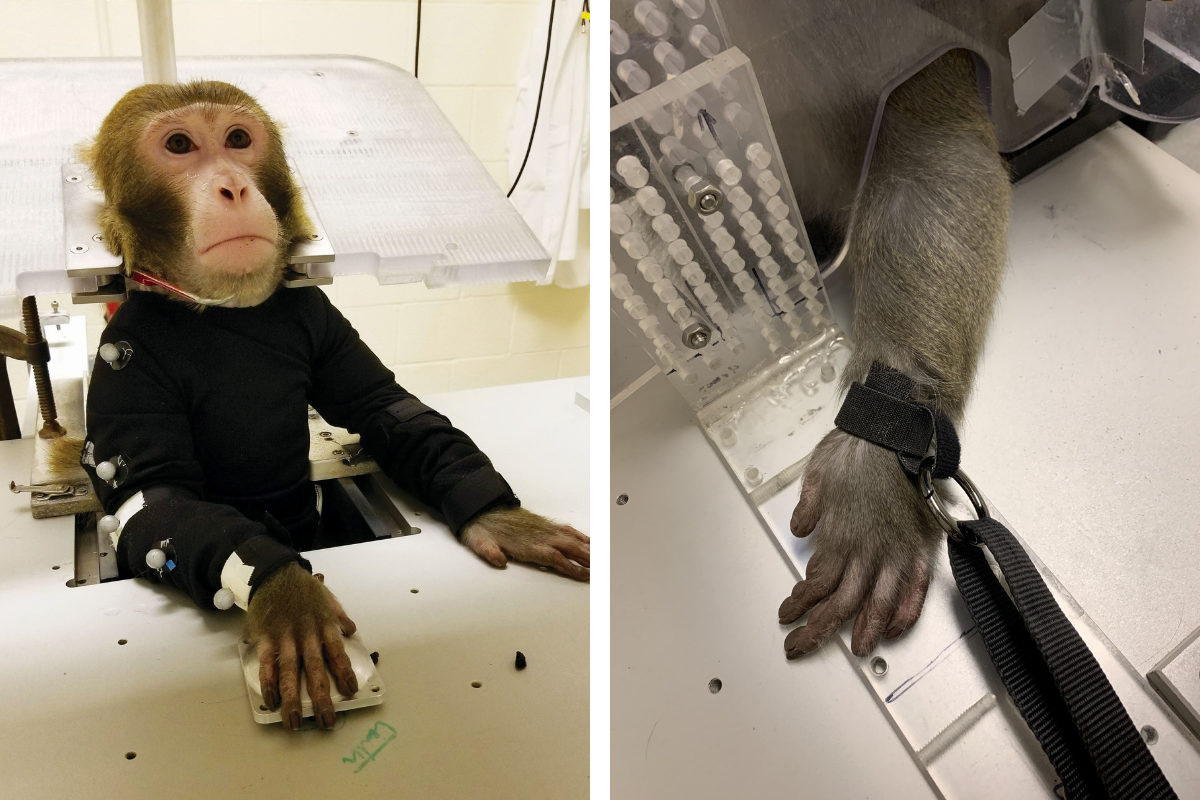
Primates restrained in a research laboratory (Photo: Arizona State University / Obtained by Rise for Animals)
The National Institutes of Health (NIH) has announced the launch of the Office of Research Innovation, Validation and Application (ORIVA) to promote and facilitate the use of human-based research technologies.
Developing, validating and scaling new methodologies, this new office could mean enormous progress for animals suffering in laboratories.
“Complex computational models, 3D human tissue models, and other emerging technologies have improved by leaps and bounds in recent years and may hold the key to a more effective research enterprise,” said NIH Director Jay Bhattacharya, M.D., Ph.D. “By strategically capitalizing on these tools and encouraging further innovation, NIH aims to steer biomedical research in this direction.”
ORIVA is part of the Division of Program Coordination, Planning, and Strategic Initiatives (DPCPSI) in the NIH Office of the Director (OD). Some of the methods that ORIVA will champion include 3D human tissue models, organs on a chip, and computational AI tools. These new research methodologies are increasingly considered more reliable and accurate than animal research.
Biological and physiological differences between humans’ bodies and those of other animals mean that cutting-edge human-relevant technologies can provide better results than relying on animal experimentation.
There are also the crucial ethical implications of animal-based experimentation. The life of animals in laboratories and the procedures they are subjected to can cause extreme stress and undeniable suffering: the barren conditions of captivity deprive animals of everything that makes life worth living for them, such as interacting with their peers and exploring their natural environments.
The procedures they are subjected to are commonly stressful and painful, such as being force-fed chemicals, having wires implanted in their brains, invasive surgery, and more. At the end of the experiment, most animals are killed.
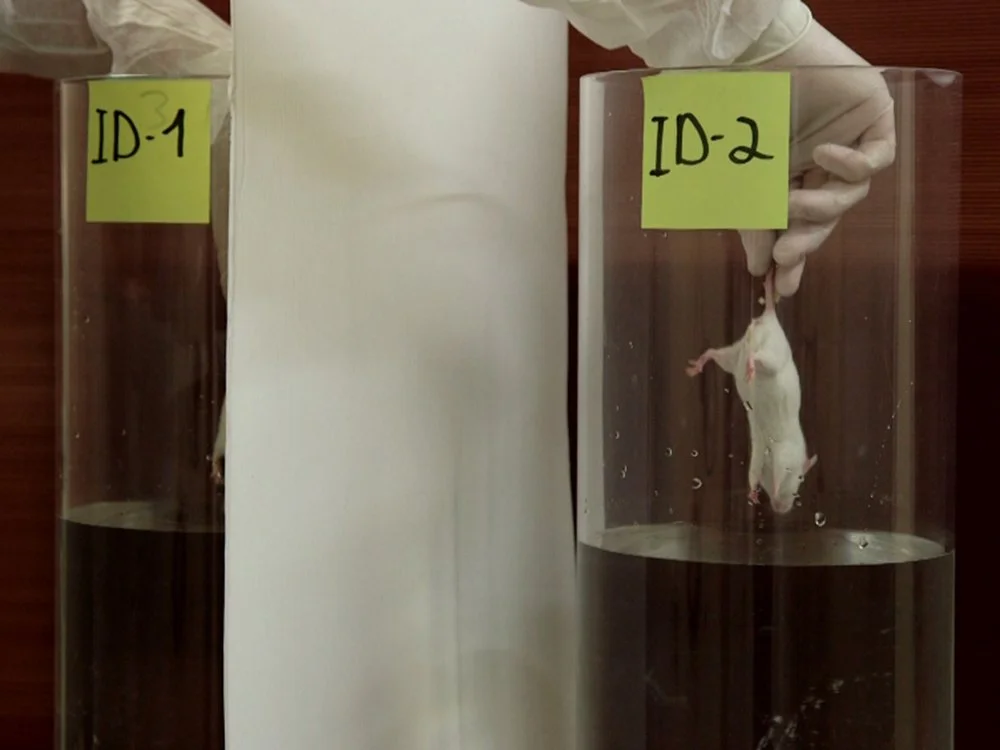
A researcher prepares to release a mouse into an inescapable, water-filled cylinder for a forced swim test (Source: JoVE)
Kathleen Conlee, vice president for animal research issues at Humane World for Animals, said: “This is exactly the kind of forward-looking investment in scientific progress for which we have been advocating for decades. With the creation of ORIVA, NIH has signaled its understanding that advancing public health in the middle decades of the 21st century will require building the infrastructure needed to support modern, human-relevant research methods.”
ORIVA will take a two-pronged approach: one of its divisions will support research innovations and create funding opportunities, as well as research infrastructure and training resources. The other will focus on efforts to facilitate the acceptance of new research methods that do not use animals, but focus on more reliable outcomes for human health.
“In the past, biomedical research has relied on animal models that often fail to predict human outcomes,” continues Conlee. “Now, new technologies like organ-on-a-chip systems, advanced cell models and artificial intelligence tools are creating opportunities to study disease and evaluate treatments in ways that are more relevant to human biology. By providing dedicated leadership, coordination and support for these approaches, ORIVA can help move promising technologies from the laboratory into widespread use.”
Species Unite News is a weekly round-up of the most important animal stories happening around the world. Join over 200,000 others who start their week with the latest animal stories delivered straight to their inbox.
We Have A Favor To Ask…
Species Unite amplifies well-researched solutions to some of the most abusive animal industries operating today.
At this crucial moment, with worldwide momentum for change building, it’s vital we share these animal-free solutions with the world - and we need your help.
We’re a nonprofit, and so to keep sharing these solutions, we’re relying on you - with your support, we can continue our essential work in growing a powerful community of animal advocates this year.
More stories:



A new study has implanted human brain tissue into bioengineered mice, leading to debate over animal welfare.