
Stray dog burned alive in China exposes the devastating cost of no animal welfare law
Wang Wang's death is sparking international outrage, with her viral story exposing a legal void that leaves millions of animals in China completely unprotected.
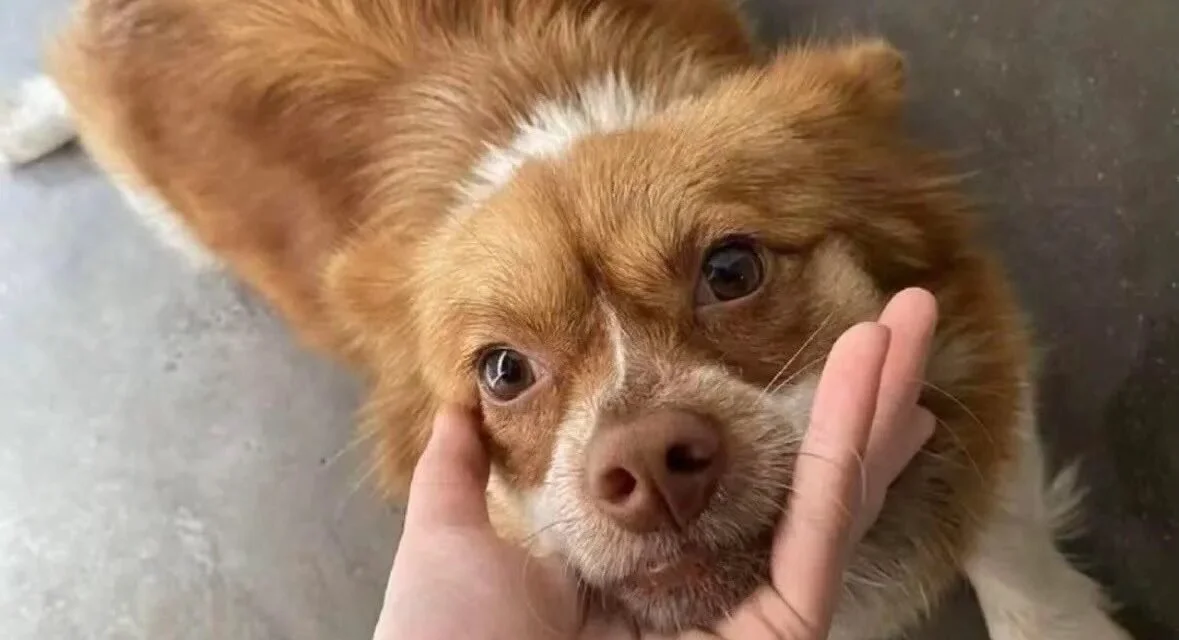
Wang Wang, the stray dog whose killing in Jieyang, China sparked international outrage and renewed calls for nationwide anti-cruelty legislation.
Wang Wang was just an ordinary stray dog, living on the streets in China and caring for her newborn puppies. But her life ended tragically one day when she was beaten and set ablaze in the city of Jieyang, Guangdong province. Devastating footage began circulating online in June 2026, showing a group of teenage boys violently hitting a stray dog and her newborn puppies with sticks before dousing the mother in fuel and setting her on fire.
The video sparked widespread outrage in the country and internationally, prompting a response from the local authorities. In a statement released by the Xinheng government on June 30, 2026, officials said they have launched investigations and that the boys, all under 14, had been sent to specialized education facilities. Under Chinese law, minors under 16 generally do not face full criminal liability, except for a list of serious offences such as murder, rape, robbery and drug trafficking. But, even if the perpetrators had been 16 or older, they would still face no legal consequences because China has no nationwide anti-cruelty legislation to protect animals.
Another case occurred recently in the city of Chongqing, where a 39-year-old man allegedly adopted dogs solely to abuse them. Police from the Liangjiang New District released a statement saying the man had been placed under “administrative detention”. Under China’s Law on Public Security Administration Punishments, such detention can last no more than 15 days for a single offence.
Why does the law matter?
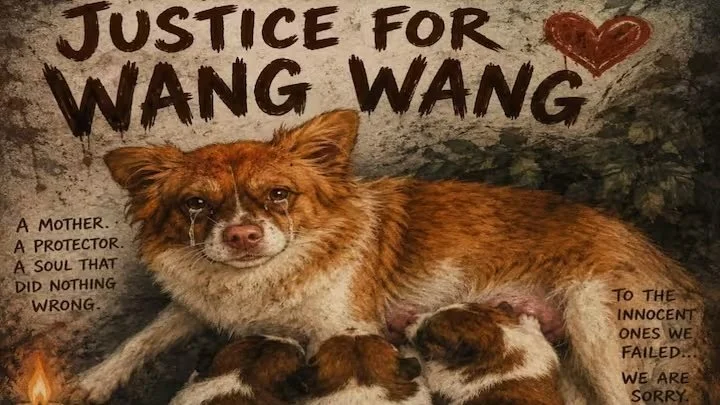
Wang Wang with her newborn puppies, shortly before she was beaten and set ablaze by a group of teenage boys in Jieyang, China in June 2026.
Susan Lai, a lawyer and the founder of the Animal Rights and Welfare Association, said the traditional legal model treats animals as mere property, and laws help recognize animals as sentient beings instead.
“Law grants authorities, like the police or animal inspectors, the power to intervene when a stray is injured or in danger,” Lai said. “Prosecutors and courts also need clear sentencing guidelines, including banning orders that prevent convicted offenders from owning animals in the future.”
So, does China currently have any law to protect animals and how effective are they?
The legal loophole
China does have legislation protecting certain categories of animals. The Law on the Protection of Wildlife, formulated in 1988 and further revised in 2022, focuses on protecting endangered wildlife species. Meanwhile, the Animal Husbandry Law, adopted in 2005 and revised in 2022, regulates livestock production in China and requires livestock and poultry breeding farms to provide suitable environments for the growth of animals.
Some cities have local regulations prohibiting dog abuse, such as Shanghai where owners are fined up to 2,000 yuan (around $300) if they abuse or abandon their dogs. However, these local regulations are insufficient and provide little protection especially for stray animals, according to Dr Peter Li, a Chinese policy expert of Humane World for Animals. “Current provisions are not designed to respond to shocking acts of cruelty,” said Li, who is also a professor of Animal Policy and Law at the University of Houston-Downtown.
The world’s first modern anti-cruelty law was adopted in 1822 in the United Kingdom. China, Li said, is more than 200 years behind. Although calls for a nationwide anti-cruelty law have continued for decades, the discussions have stalled due to resistance from business interests.
“China has one of the world’s biggest laboratory animal breeding, farming operations, and one of the biggest zoo animal industries. They fear that if an anti-cruelty law is adopted, they will be forced to improve welfare conditions on the farm. And improving those conditions would result in increased cost of production.”
Growing momentum
Public anger has been growing as cases of abuse continue to surface one after another. Individuals wrote about the incidents on social media, while others shared the story of Wang Wang through advertisements and even a billboard in New York City's Times Square. Animal rights organizations, including People for the Ethical Treatment of Animals (PETA) Asia, have called on the Chinese government to introduce "strong anti-cruelty legislation" so that those who harm animals can be held accountable. Li noted that the public outcry, protests and petitions have been noticed by the Chinese authorities and these created a momentum for change.


According to the China Pet Industry White Paper (Consumption Report), the number of pet dogs and cats in China's urban areas reached 126 million in 2025 — a 1.8 percent increase from the previous year. Given the upsurge in the number of pet-owning families in China, Li suggested that the country could take a first step by adopting a companion animal protection law which would focus specifically on dogs, cats, and other household pets, including strays. This approach, he said, will be more achievable in the initial stage and face less resistance from industries.
Pei Su, founder of an international animal welfare organization ACTAsia, emphasized that legislation alone is not enough. Education is essential to address the problem at its roots. “Law enforcement in many countries is always a problem because of a lack of foundations.” said Su. “Without public understanding and support, legislation will be less effective.”
Animal welfare groups are urging people to share information about recent abuse cases to raise awareness and offer concrete support to organizations working to protect animals. “Help us stop the same incident from happening again,” said Su.
Help spread the word:
Wang Wang’s story represents countless animals across China who have no legal protection. By sharing this article, you can help build the pressure on the Chinese government to finally act. Help us make sure her death was not in vain by sharing this story with everyone you know using the buttons below.
Learn more about the work being done to help animals in China with these Species Unite podcast episodes:
Pei Su is the co-founder of ACTAsia, an organization that’s dedicated to creating change in China through humane education. Listen here.
Albert Tseng is co-founder of Dao Foods, an impact investment firm backing plant-based and alternative protein companies in China, with the aim of reducing consumer demand for animal products and their environmental and health impacts. Listen here.

Written by Vanessa Cheng
Vanessa Cheng is a journalist and writer covering politics, animal welfare, environmental issues, and culture news.
We Have A Favor To Ask…
Species Unite amplifies well-researched solutions to some of the most abusive animal industries operating today.
At this crucial moment, with worldwide momentum for change building, it’s vital we share these animal-free solutions with the world - and we need your help.
We’re a nonprofit, and so to keep sharing these solutions, we’re relying on you - with your support, we can continue our essential work in growing a powerful community of animal advocates this year.


A cleaner New York Harbor has drawn hundreds of humpback whales back to its waters for the first time in generations, but the same busy port that welcomes them is also killing them.