
Former pig farm transformed into thriving mushroom-growing operation
A sixth-generation Iowa farming family has converted their pig barns into a mushroom-growing operation, with the support of a nonprofit that helps animal farmers transition to plant-based alternatives.
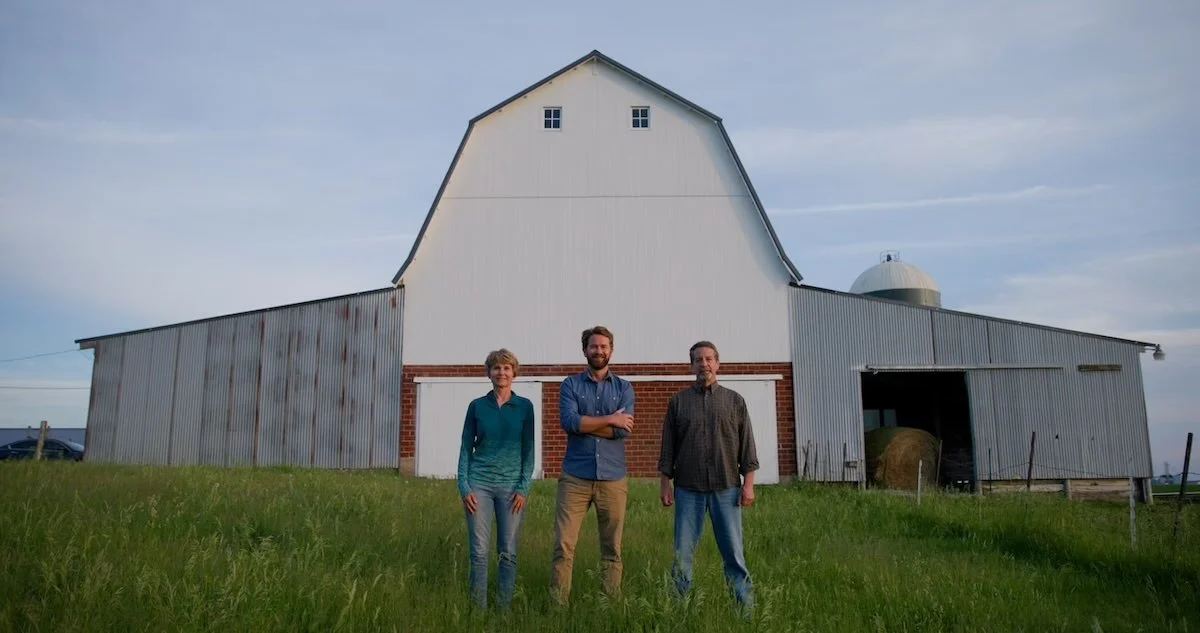
Tanner Faaborg (center) and his parents on their family farm in Iowa. Photo: Transfarmation/Mercy for Animals
A family-owned pig farm in Iowa, the largest pork-producing state in the United States, has been transformed into a mushroom-growing operation to great success.
The1100 Farm is located in Radcliffe, Iowa, used to raise 8,000 pigs per year in barns that housed 1,100 pigs at a time, hence the farm’s name.
The farm’s owners, the sixth-generation Faaborg family, worked with The Transfarmation Project to convert one of the barns into a mushroom-growing space.
The facility also holds a research center and a Demonstration Hub which hosts visitors to educate about sustainable alternatives to animal farming.
“This hub represents more than a single farm transition,” said Katherine Jernigan, the director of The Transfarmation Project. “It’s proof that farmers can build resilient, profitable businesses while pursuing a different path from industrial agriculture. The Faaborg family’s journey shows that even where many believed change was impossible, a new future for farming is taking root. In an industry where many people would least expect it, this family is proving that family farms continue to be sites of innovation and that farmers can lead the way to a better food future.”
Jernigan added that the Faaborg family's success challenged assumptions about where change was possible. "Even where many believed it was impossible, a new future for farming is taking root. In an industry where people would least expect it, this family is showing that farmers can lead the way."
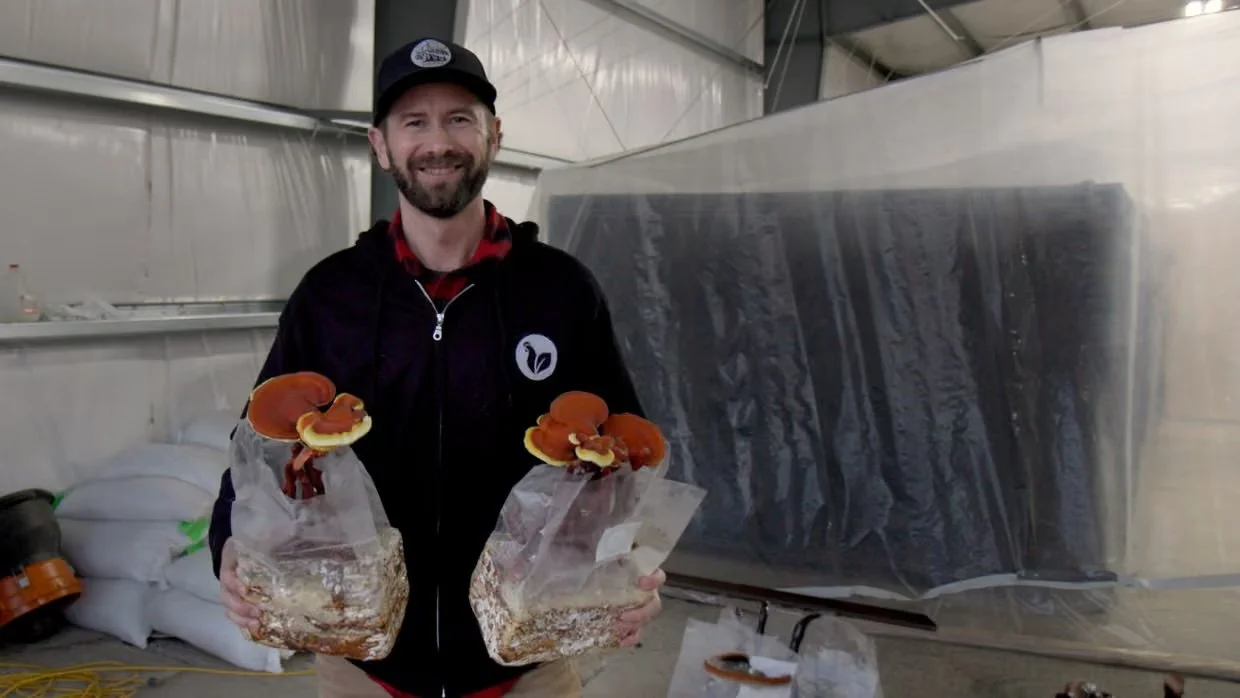
Tanner Faaborg with his mushroom crop. Photo: Transfarmation/Mercy for Animals
Iowa has 4,000 factory farms and is the largest producer of pork, eggs, and poultry in the US. There are seven times more pigs than humans in the state, and 16 chickens to each human. As a result, factory farms in the state produce a total of 300 million pounds of manure every day - 25 times higher than what the state’s entire human population makes.
Set up by Mercy for Animals in 2019, The Transfarmation Project works with animal farmers who wish to transition to plant farming. The organization gives advice on using existing infrastructure for a different type of farming, along with offering support on marketing, branding, and finding an audience.
Many animal farms work under contract for large meat companies, which can have a negative impact on communities and the environment. This was the case for the Faaborg family, who went from a small-scale operation to a commercial factory farm three decades ago.
Many farms working with The Transfarmation Project have stories of going into debt as a result of working with large meat companies to expand their operations.
Converting the farms into plant-growing operations brings their businesses closer to their former, smaller-scale operations, offering the farmers more autonomy.
The Faaborg family is now selling tinctures and salts made from functional mushrooms to great success.
“Our family is not a likely candidate for this story and for this success,” farm owner Tanner Faaborg told The Guardian. “We’re not like a hippy family, or a rich family who had spare money and said: ‘Yeah, this will be fun.’ My dad was a welder for about 40 years. We had the hog barns for more than 30 years. My parents were not into change. But if our family can do it, any family can do it.”
Take the 30-Day Plant-Powered Challenge: Join Species Unite's 30-Day Plant-Powered Challenge, a free month of recipes and tips to help you eat in a way that's better for your health, better for the planet, and better for the animals. One meal at a time.
We Have A Favor To Ask…
Species Unite amplifies well-researched solutions to some of the most abusive animal industries operating today.
At this crucial moment, with worldwide momentum for change building, it’s vital we share these animal-free solutions with the world - and we need your help.
We’re a nonprofit, and so to keep sharing these solutions, we’re relying on you - with your support, we can continue our essential work in growing a powerful community of animal advocates this year.

As opposition to octopus farming grows worldwide, Colombia is moving to ban the practice before a single farm is built.