
After Ridglan, the fight against beagle breeding for testing turns to Marshall BioResources
From the State Capitol in New York to Marshall BioResources, a 200-mile march is set to challenge the country's largest dog-breeding facility for animal testing this month.
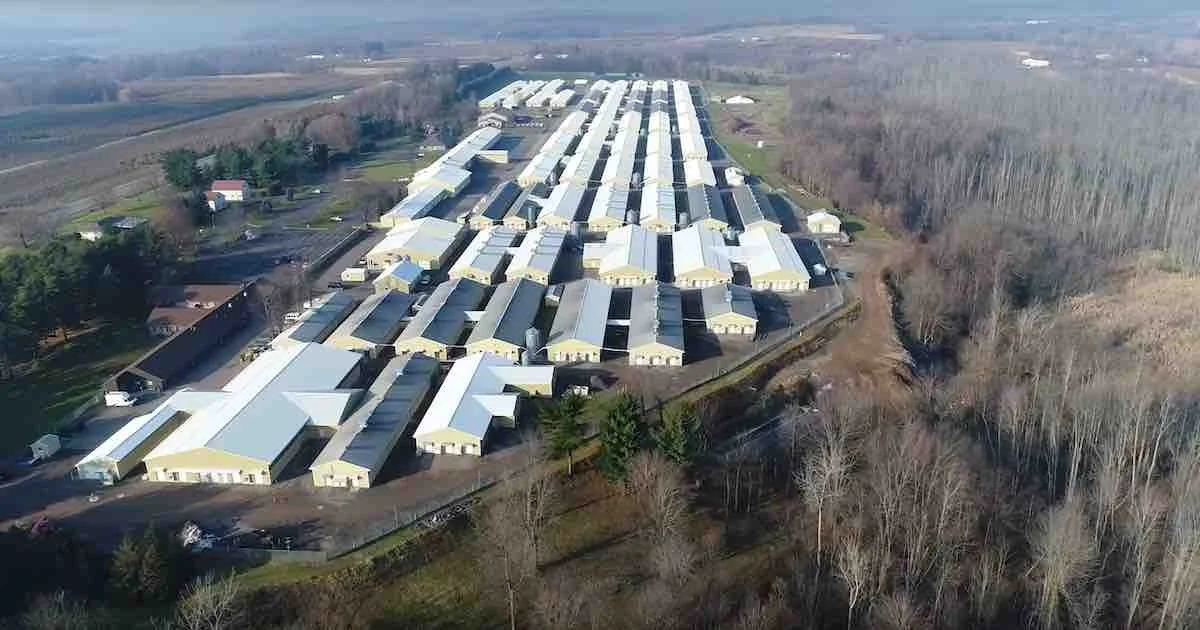
Aerial view of Marshall BioResources' facility in North Rose, New York, where around 14,565 are being held, as of July 2026 records. Credit: Rise for Animals
Earlier this year, images of activists walking out of Ridglan Farms carrying rescued beagles captured the nation as they rushed to rescue the animals from a planned killing. The mass media attention was the culmination of a multi-month operation, coordinated by rescue organizations across the country, that became one of the largest rescues of laboratory beagles in United States history. Alongside giving 2,115 beagles new homes and a dramatically different future, the story of Ridglan Farms also drew attention to the hidden world of purpose-bred research animals and started national conversations about ending the practice.
The Ridglan rescue was an example of open rescue, a movement that combines compassion and civil disobedience. Activists argue that this transparency helps expose hidden practices, while companies and prosecutors argue that this is theft or trespassing. The rescue at Ridglan reflects how open rescue has become one of the most visible and controversial forms of protest. It also demonstrates the lengths to which activists will go to end the suffering of animals.
But for the activists, the fight doesn’t end with the release of thousands of beagles from Ridglan. They have now turned their eyes to the industry’s biggest player: Marshall BioResources. This September, hundreds of advocates will begin a 207-mile, 14-day march from Albany that will end at the Marshall BioResources' gates, as part of a campaign to shine a light on animal testing.
“We refuse to accept animal suffering as the price of scientific progress—because we know there is a better way,” said Ella Magers, co-director of March to Abolish Animal Testing (MAAT). “This march is about ordinary people coming together to do something extraordinary, and proving that when enough of us refuse to look away, we can change systems that once seemed impossible to change.”
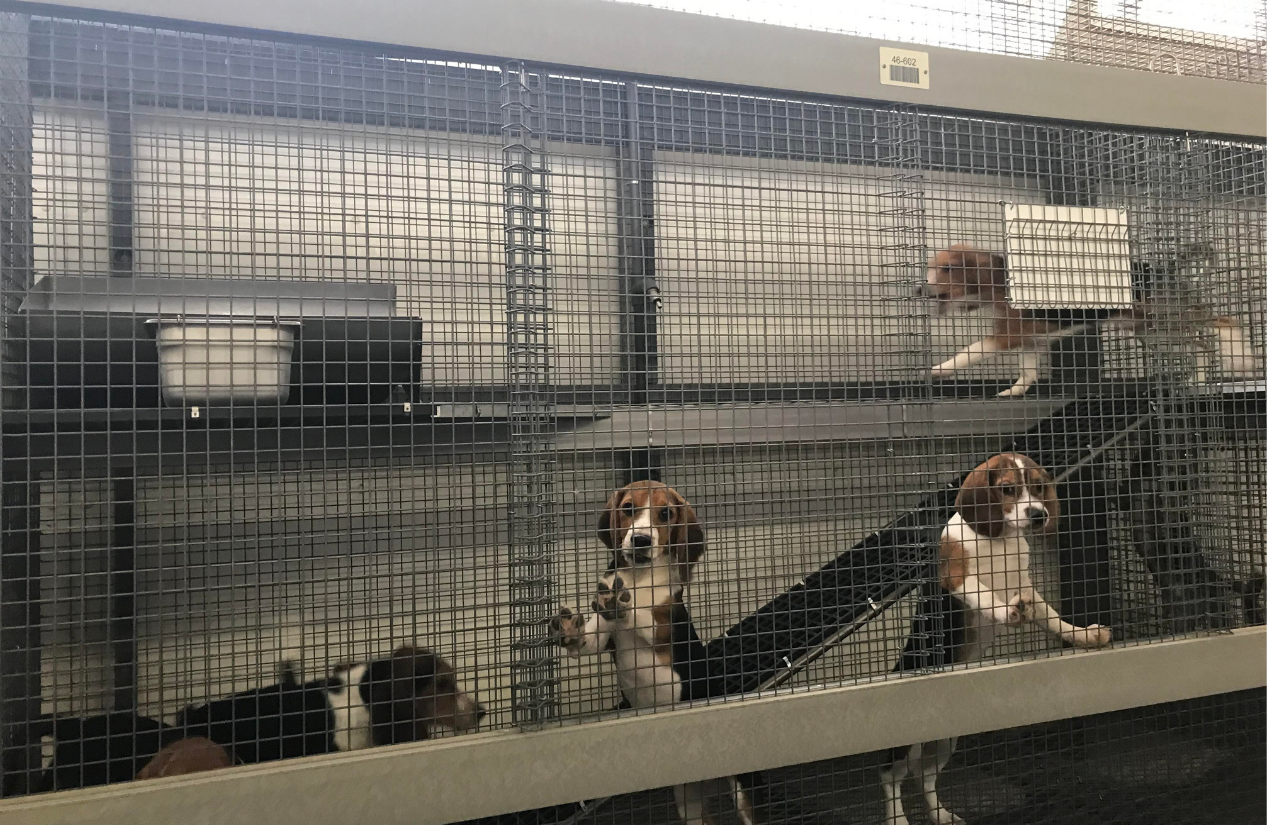
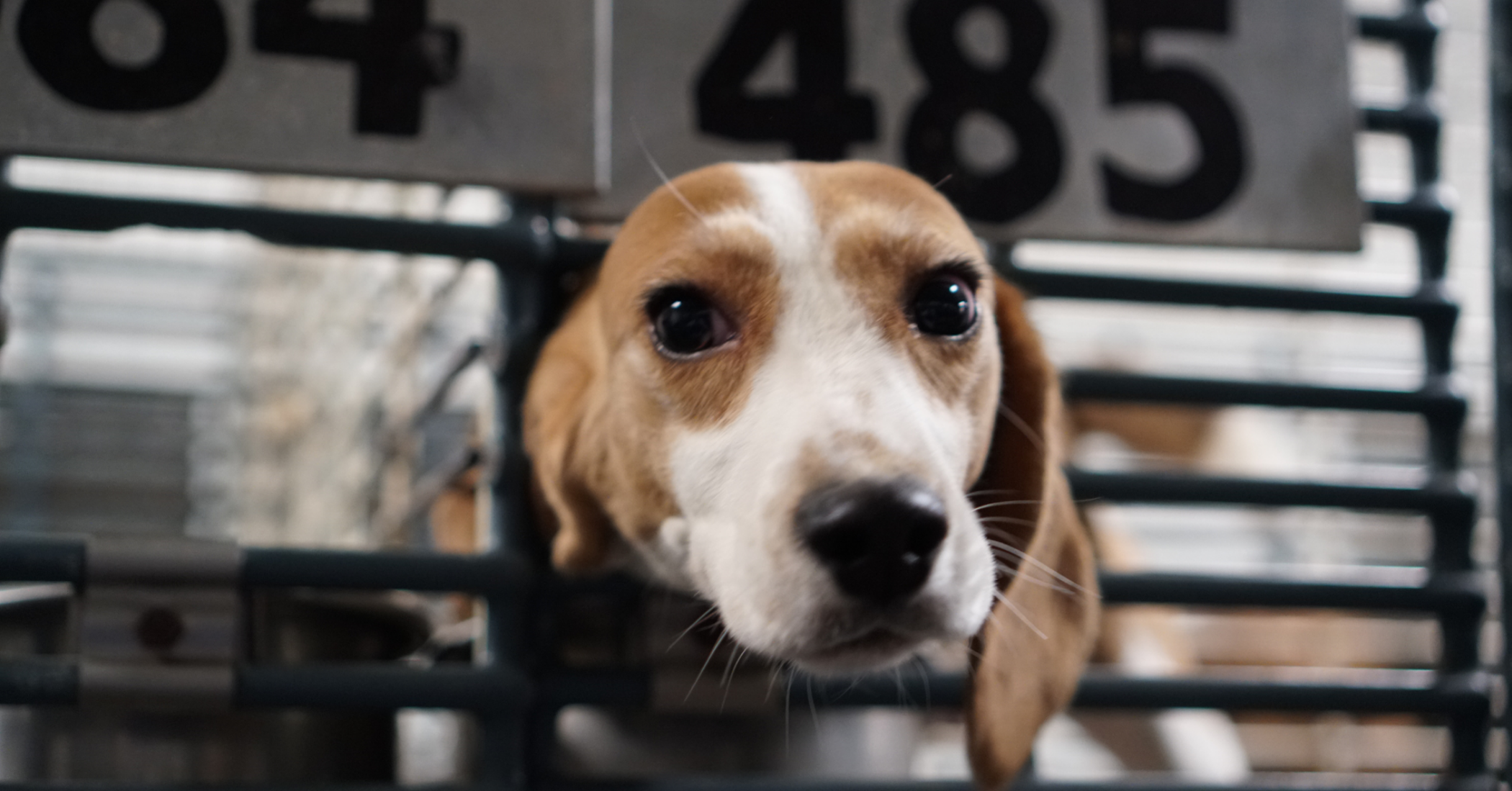
Beagles inside cages at Marshall BioResources, in a photo shared by a former employee. Credit: Camp Beagle
Marshall BioResources, also known as Marshall Farms, is one of the largest dog breeders in the U.S., a global supplier of animals specifically raised and supplied for scientific research, testing, and has around 23,000 dogs inside its sheds at any given time. In addition to beagles, Marshall also breeds and sells cats, ferrets, minipigs, and other animals to laboratories.
The nonprofit animal rights organization Rise for Animals uncovered an experiment by a Ph.D. student at Temple University who used mixed-breed hounds from Marshall BioResources. The student sliced the spinal roots of these dogs, cut off their tails, implanted electrodes on their bladders, and then euthanized them. This is one of several documented cases involving dogs from Marshall while the company banked its profits. According to records obtained by Rise for Animals, laboratories were paying Marshall Farms upward of $1,000 per dog.

A beagle puppy is trained to wear an inhalation mask at Marshall BioResources. Credit: The Camp Beagle
Footage reportedly filmed at Marshall BioResources and shared across social media shows a beagle puppy struggling against a tight-fitting mask covering his snout, similar to the inhalation masks dogs are forced to wear during chemical testing. “He's being trained to wear a mask so Marshall BioResources can charge more money for him. Once he's sold to experimenters, he'll be forced to inhale toxic substances,” PETA said in a statement, noting it received the footage from inside the facility.
The majority of the dogs bred at the facility are beagles, because of their gentle and docile nature. According to Humane World for Animals, more than 40,000 dogs, the majority of them beagles, are used in experiments each year. Lauree Simmons, founder of Big Dog Ranch Rescue, one of the organizations involved in the Ridglan rescue, explains why this breed of dog is chosen.
“They choose beagles because they’re easy to handle and they’re so forgiving. You hurt them one day and they’re going to forgive you the next and let you do it all over again.”
The company also generates profits through Marshall Pet Products, whose ferret-focused brand is sold in pet stores across the country. What many consumers don't realize is that the company they're buying their treats and toys from breeds dogs for experiments described by advocates as inhumane, and has been repeatedly cited by the U.S. Department of Agriculture (USDA) for violations of the federal Animal Welfare Act. According to the Beagle Freedom Project, violations included animals subjected to overcrowding, untreated injuries, hazardous living conditions, rusted equipment contaminating food supplies, and unethical breeding.
The campaign against Marshall BioResources by MAAT will see hundreds of advocates making the 200-mile trek from the State Capitol in New York to what MAAT calls the epicenter of dog experiments: Marshall BioResources. The campaign argues that while victories at Ridglan and Envigo have shown how public pressure can disrupt dog-breeding operations, Marshall remains the largest stronghold in the industry. To animal advocates, Marshall is a symbol of animal abuse, and that’s why they’re fighting to take it down.
"Regular people trying to tackle Goliaths like Marshall BioResources and the animal testing industry need an awfully strong action,” said Gretchen Primack, co-director of MAAT. “I wanted this march to be exactly that: a bold call for science without cruelty, science that is effective, efficient, responsible, and kind."
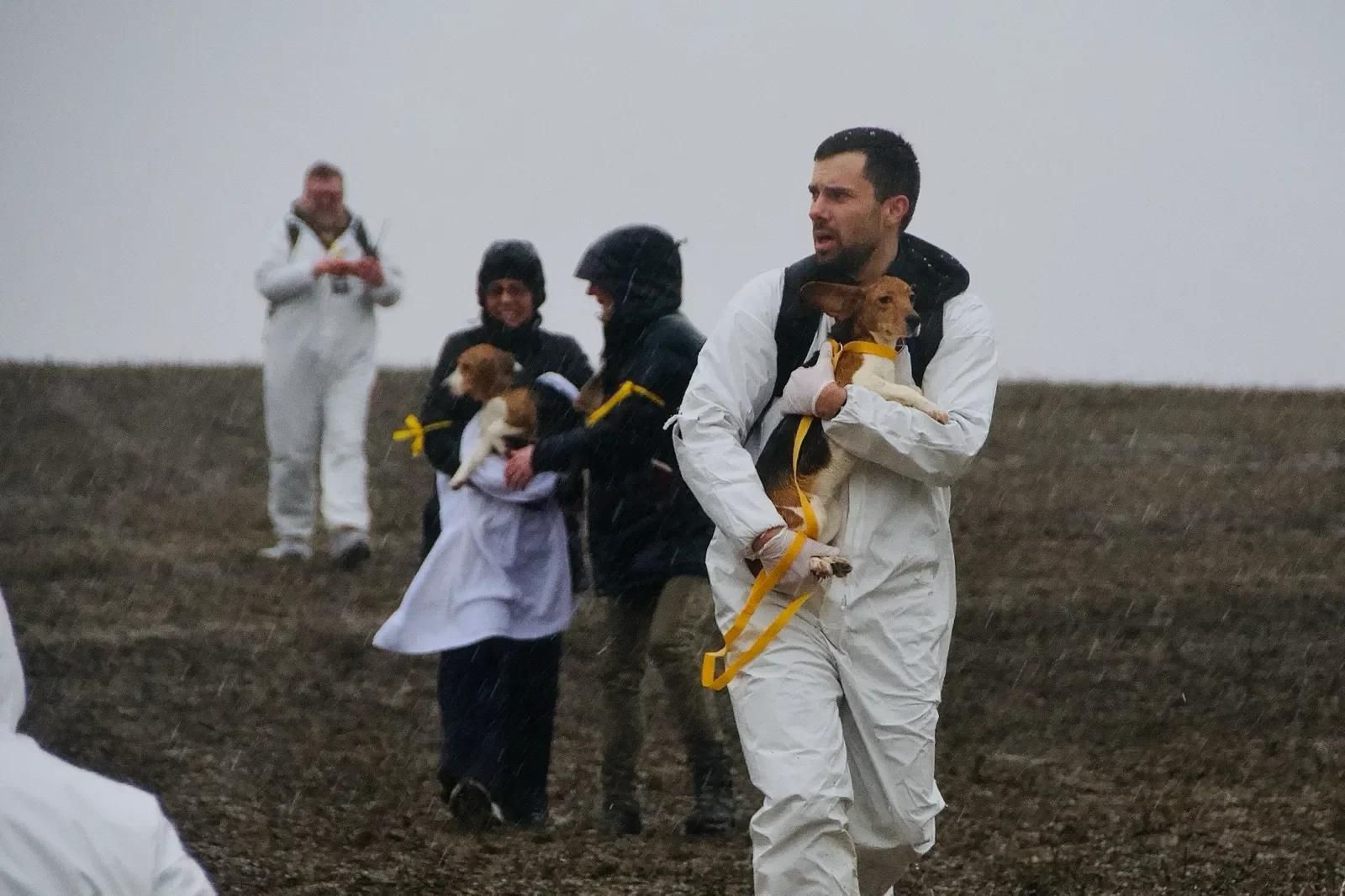
Activists removing beagles from Ridglan Farms on March 15, 2026. Credit: Yash Mangalick/Coalition to Save the Ridglan Dogs
Part of MAAT’s campaign core goals is to ban the use of dogs in experimentation and end federal funding for animal experimentation. For example, the Environmental Protection Agency (EPA) requires that new pesticides be tested on dogs for 90 days before they can be registered. However, growing evidence suggests that dog testing requirements are no longer scientifically necessary. A 2023 review found that the 90-day dog toxicity study added little value for human risk assessment in most cases.
With heightened public awareness from cases such as Ridglan, and rapidly developing alternative options, the industry is starting to change. In 2025, the U.S. Food and Drug Administration (FDA) announced it would be replacing animal testing in the development of monoclonal antibody therapies and other drugs with more effective, human-relevant methods, such as AI-based computational models.
FDA Commissioner Martin A. Makary, M.D., M.P.H., said in a statement, “For too long, drug manufacturers have performed additional animal testing of drugs that have data in broad human use internationally.”
But while change is happening, it’s been slow. Developing these alternatives is a complex process facing many obstacles, such as inadequate funding, regulatory barriers, and slow validation of new non-animal alternatives.
While the beagles who were at Ridglan might have escaped the system, 14,565 more still remain inside what MAAT calls the epicenter of dog experiments, as of July 2026 records. In the coming weeks, hundreds of advocates plan to walk 200 miles to try to bring them home too.
Credit: March for Animals
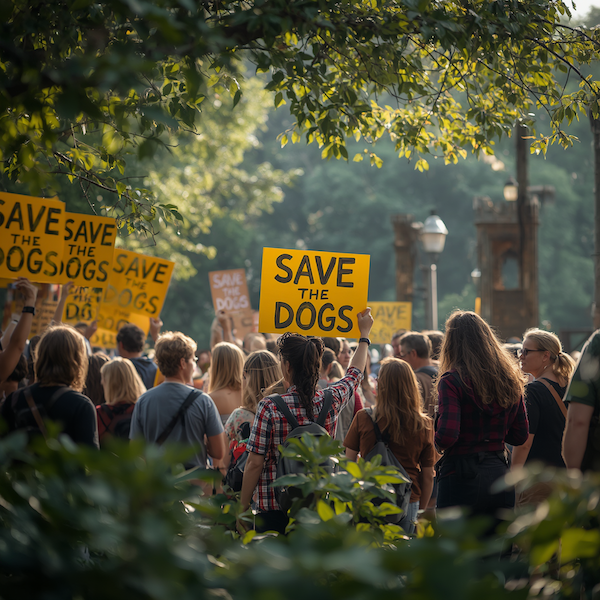
Join the march: The March to Abolish Animal Testing begins September 12 in Albany and is intended to build public pressure for an end to animal experimentation in the United States. The route takes participants across New York to Marshall BioResources, where the event will conclude with a peaceful rally on September 26. Get involved here.
Speak out:
In Species Unite’s home state of New York, Marshall BioResources operates one of the largest breeding facilities for animals used in experimentation in the country. Sign the petition calling on NY State lawmakers to investigate Marshall BioResources and take every action available to end the breeding and sale of animals for experimentation at its North Rose facility.
After years of sustained pressure from various groups including Species Unite, Chewy has stopped selling merchandise from Marshall Pet Products, an affiliate of Marshall Farms. Now, we’re calling on Petco and PetSmart to follow suit. Add your name to the petition here.

Written by Jason Collins
Jason Collins is a writer and editor with more than ten years of experience and a bachelor’s degree in English. A lifelong animal lover, he is drawn to stories about the connection between people, animals, science, and the natural world. His work focuses on helping readers see other species with more care and curiosity, while connecting everyday choices to a kinder future for animals.
We Have A Favor To Ask…
Species Unite amplifies well-researched solutions to some of the most abusive animal industries operating today.
At this crucial moment, with worldwide momentum for change building, it’s vital we share these animal-free solutions with the world - and we need your help.
We’re a nonprofit, and so to keep sharing these solutions, we’re relying on you - with your support, we can continue our essential work in growing a powerful community of animal advocates this year.

From the State Capitol in New York to Marshall BioResources, a 200-mile march is set to challenge the country's largest dog-breeding facility for animal testing this month.