
Up to 300 wolves could be killed in Montana this hunting season, despite lower quota recommendation
Montana approved a wolf hunting quota higher than officials recommended, after admitting it had overestimated the wolf population for years.
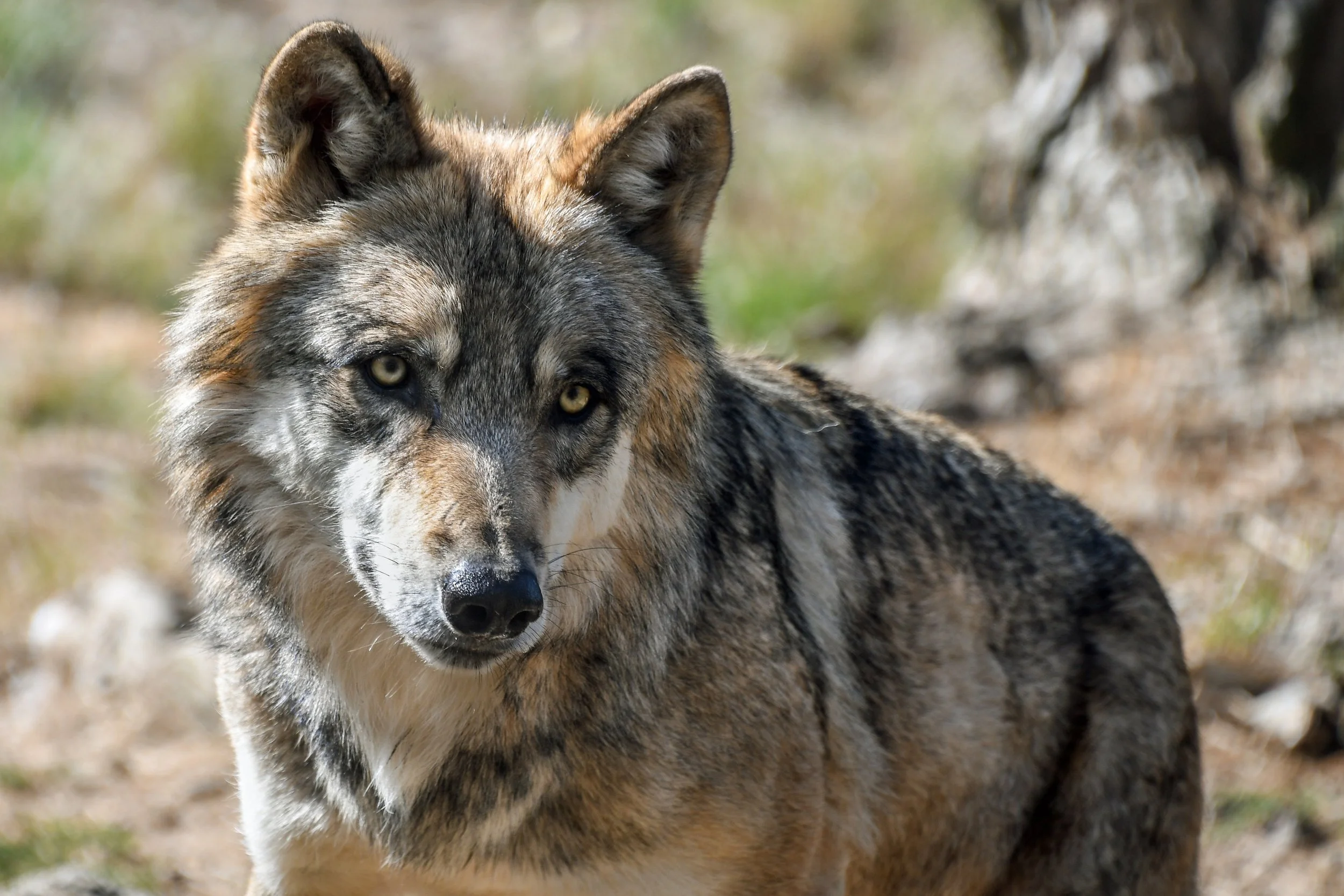
Up to 300 wolves could be killed in Montana this hunting season, a higher number than the state's own wildlife agency recommended, after officials admitted they'd been overestimating the wolf population for years.
The Montana Fish & Wildlife Commission (FWC) voted at an August 19 meeting to set the quota at 300 wolves, 50 more than the 250 proposed by Montana Fish, Wildlife & Parks (FWP).
With the hunting season opening September 5, that means nearly half of the state's wolves could be killed in the coming months using methods including bait, traps and snares, artificial light, night vision, and thermal and infrared imaging.
The FWP made headlines in July after publishing two very different sets of figures estimating the local wolf population in its 2025 Annual Report.
One set of figures was based on the integrated Patch Occupancy Model (iPOM), which the FWP has used for the past decade, and the other was based on an updated model, known as iPOM 2.0.
According to the original iPOM, there are around 1,100 wolves living in the state. But iPOM 2.0 puts the figure at just 725.
As a result, the FWP, the agency charged with monitoring and enforcing wildlife regulations, had proposed a hunting and trapping quota of 250, down from last year’s quota of 450.
The FWC, the seven-member, governor-appointed body that sets policy, disregarded that recommendation and set the quota at 300 instead. That means nearly half of Montana's wolf population could be killed in the coming hunting season, which opens September 5.
During the meeting, Governor Ian Wargo reportedly said that iPOM 2.0 “didn’t make a whole lot of sense … iPOM 2.0, I feel, is overly conservative.” More than 2,100 public comments were submitted ahead of the meeting, most of them concerning iPOM. This is not the first time that iPOM has faced scrutiny.
An independent, peer-reviewed study of iPOM’s efficacy, published last year in Academia Biology, identified three sources of bias in the model, leading to a "substantial" overestimation of wolf abundance.
The authors listed several recommendations for improving the model and concluded that "iPOM produces unreliable predictions, is irreproducible, and is misleading by reporting accurate and precise abundance predictions when abundance is severely biased (overestimation) and imprecise."
Critics have repeatedly pointed out that iPOM's annual wolf population estimates have stayed almost the same every year, despite hundreds of wolves being killed during hunting and trapping season.
Since 2013, the model's annual estimate has held between 1,100 and 1,200 wolves, even though the FWP's own figures show more than 200 wolves have been killed every year since 2017.
The advanced model for calculating wolf populations paints a very different picture. According to iPOM 2.0, the population stood at 1,100 wolves in 2013, and has since fallen to just over 700 in 2025. It shows greater year-to-year fluctuation, with a steady downward trend since 2023. Both models agree the population is declining overall.
As the environmental group WildEarth Guardians has noted, none of the seven commissioners currently serving on the FWC has a background in wildlife science or management, and all have said they enjoy hunting, trapping, and/or fishing.
A similar controversy is playing out in Wyoming, where wolf advocates are campaigning to stop a hunt starting September 15 in an area denned by Yellowstone's oldest wolf pack, the Mollie's, including its 12-year-old matriarch, Wolf 1090F. Wyoming's Game and Fish Commission has said it has no plans to reverse its decision, despite messages from around the world calling for the hunt to be shut down.
Species Unite is calling on the Wyoming Game and Fish Commission to close Hunt Area 1 for the 2026 wolf hunting season and give Mollie’s Pack the chance to survive. Add your name to the petition here before we submit the signatures on Friday, 11 September.
With animal stories making up less than 2% of the news cycle, we're here to fill that gap. Sign up for Species Unite’s weekly news digest.
The animals need a newsroom in their corner
Every week we dig into the animal stories the mainstream news overlooks. Investigations, exposés, legal battles, and victories - none of it happens without your support. A monthly gift of as little as $5 keeps us covering the 98% of animal news the world isn't seeing.
More stories:

Wildlife cameras, night-vision binoculars, GPS devices, fire sensors, and snowshoes are among the items that have been available to borrow free of charge at a new public nature library.