
Big cats moved to sanctuaries after years trapped in shuttered Argentine zoo
After years stranded in a closed-down Argentine zoo, 30 neglected lions and tigers have finally been moved to sanctuaries in South Africa and the U.S.
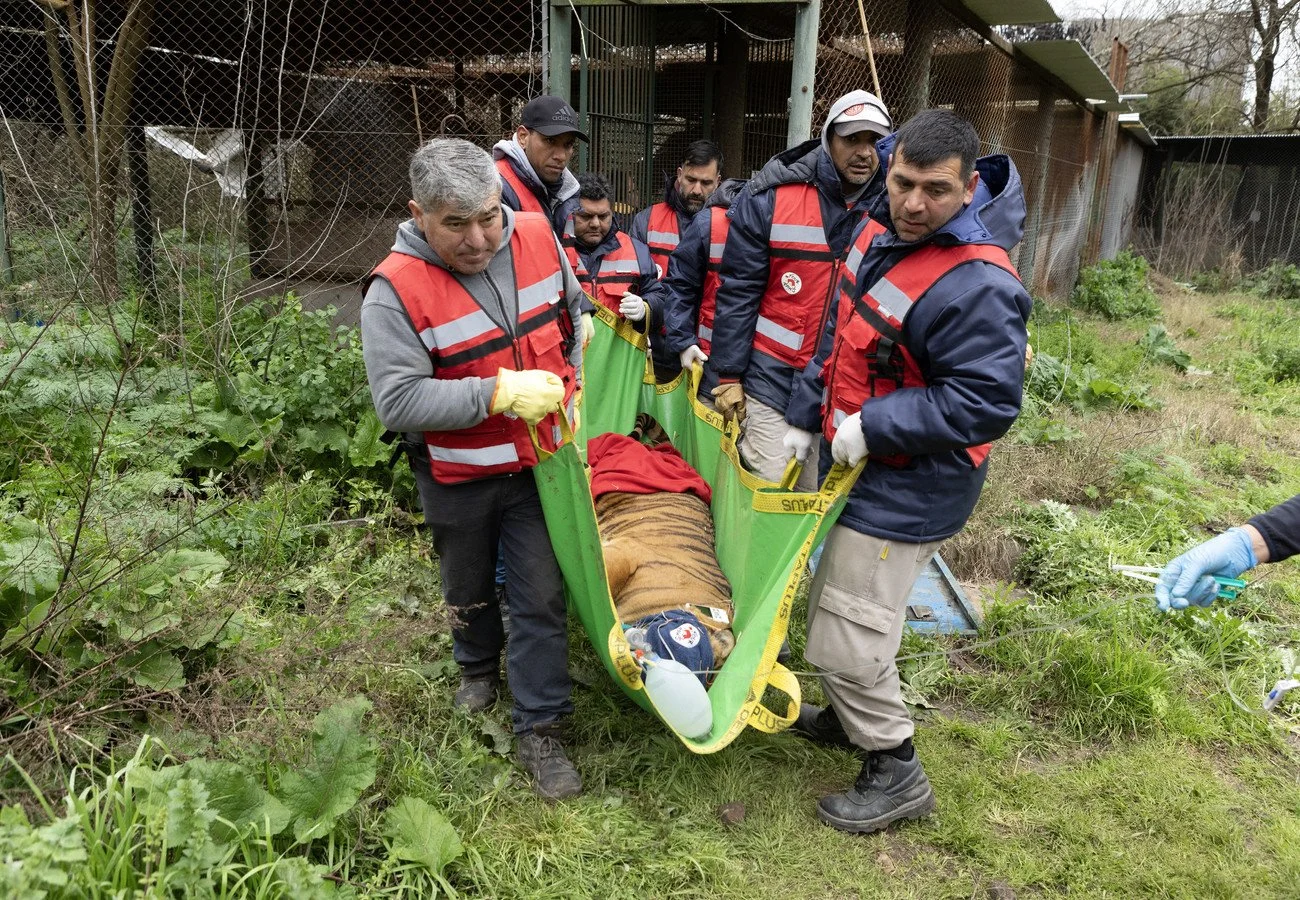
The team lifts a sedated tiger (Panthera tigris) in preparation for the transfer. Credit: FOUR PAWS/Hristo Vladev
Thirty lions and tigers have been relocated to sanctuaries after years trapped inside a shuttered Argentine zoo that once let visitors stroke, cuddle, and pose for selfies with them in their enclosures.
In August, nine tigers and six lions were transferred to Lionsrock Big Cat Sanctuary in South Africa, while eight tigers and seven lions made it safely to The Wild Animal Sanctuary in Colorado, all from Lujan Zoo, which closed down in 2020. Since then, the animals had been stuck at the shuttered venue on the outskirts of Buenos Aires, deprived of adequate treatment, food, or enrichment. As a result, at least 24 big cats died between 2023 and 2025, according to the Associated Press.
Some of the zoo’s former employees had voluntarily been looking after the animals, until the Vienna-based animal rights charity Four Paws assumed full responsibility in September 2025, after signing a Memorandum of Understanding (MoU) with the Argentinian government.
Before the charity could rehome the zoo’s 32 lions, 30 tigers, and two brown bears, veterinary checks needed to be carried out. Performed in November last year, these assessments revealed that many of the big cats were suffering from kidney and liver disease, while others required surgery on deep open wounds, sustained from fighting. In one of the cages, Asian tigers were housed together with African lions – a social composition that would never occur in nature.
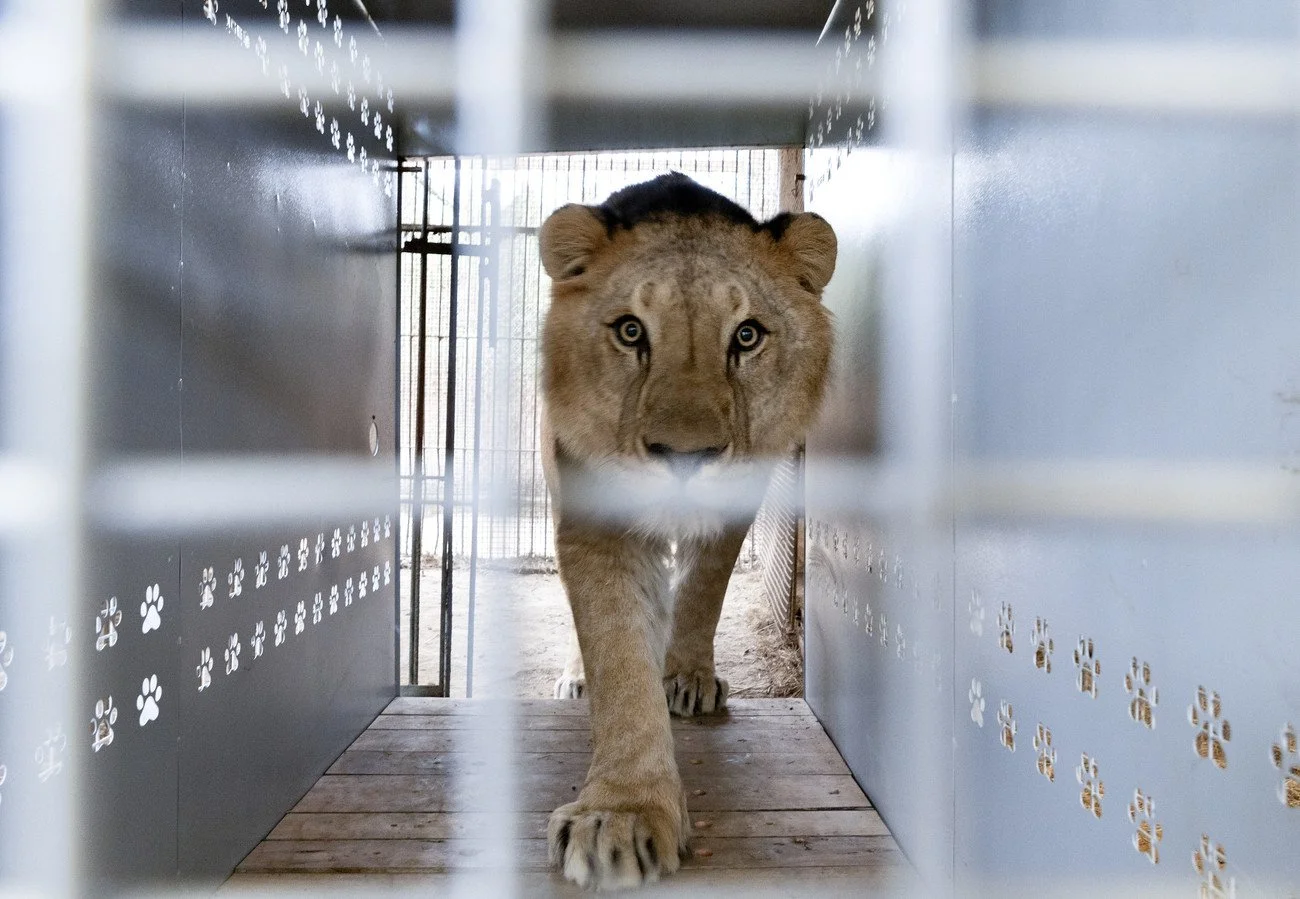
A lion (Panthera leo) undergoes crate training at Lujan Zoo in preparation for its transfer to a sanctuary. Credit: FOUR PAWS/Hristo Vladev
The animals also showed signs of lameness and arthritis. This was due to a number of factors, such as insufficient space to roam – severe overcrowding was observed throughout the zoo, with seven female lions crammed into one 10-foot-square metal cage – and declawing, a painful procedure carried out on cubs to prevent them from scratching visitors during interactions.
In the case of a 10-year-old tigress named Flora, her nails were so ingrown from walking on the hard plank flooring of her enclosure that she was now unable to even stand up, according to Four Paws' veterinary assessment.
Furthermore, lots of the animals required dental treatment for broken teeth, often caused by chewing repeatedly on the metal bars of their enclosures, typically a sign of boredom or anxiety.
For many years, Lujan Zoo was infamous for allowing hands-on interactions with its big cats, where tourists could pay around $25 to walk inside the enclosures and pose for selfies. Photos posted online show adults and children cuddling, stroking, feeding, kissing, and even sitting on lions and tigers.
Animal advocacy groups repeatedly stressed the risk of injury and disease to humans, while also expressing concern that the animals appeared to be “drugged.”
Ultimately, such interactions were found to be in violation of Article 8, a local law in Buenos Aires that bans direct contact with exhibited animals in parks and estates. In 2020, the zoo was closed down by the authorities. Four Paws says the ongoing emergency operation is among the biggest and most complex it has ever undertaken. In February, Four Paws relocated the zoo’s two bears – including the severely overweight Gordo – from their tiny concrete enclosures to a sanctuary in Bulgaria.
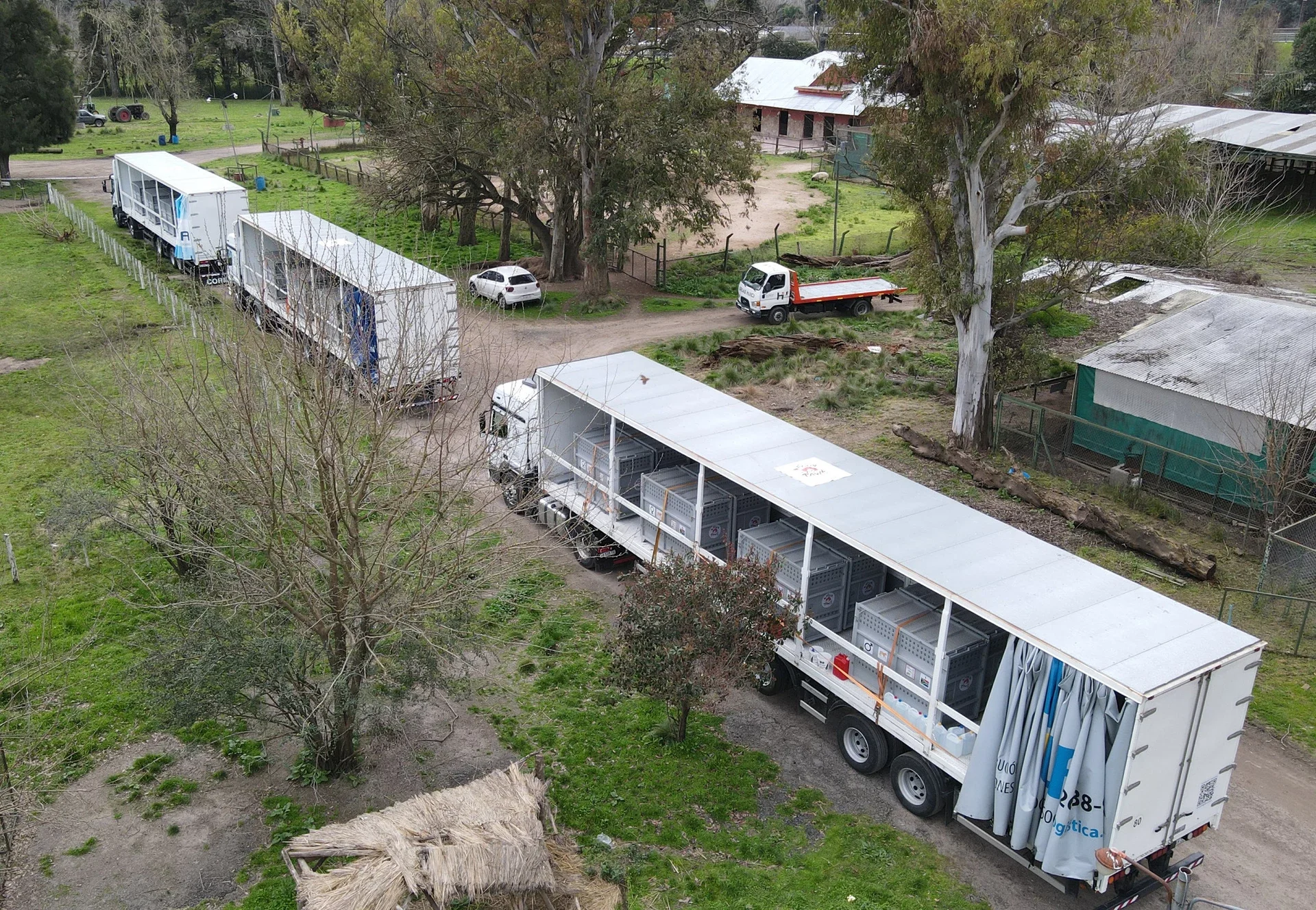
Transport trucks prepare to move lions and tigers out of Lujan Zoo to their new sanctuary homes. Credit: FOUR PAWS/Hristo Vladev
As part of signing the MoU with Four Paws, the Argentinian government has committed to banning the sale and private ownership of big cats across the country.
In Buenos Aires, the local zoo has already closed down, after then-Mayor Horacio Rodríguez Larreta described captivity as “degrading for the animals.” Larreta announced in 2016 that the 140-year-old zoo would be taken over by the Buenos Aires government, and rebranded as an EcoPark, with many of its 2,500 animals to be moved to sanctuaries.
Argentina has systematically shut down major traditional public zoos, converting them into educational ecoparks and relocating their captive wildlife to natural sanctuaries. Buenos Aires Zoo was among these. After closing in 2016, it became an educational Ecoparque focused on rescue and rehabilitation. Tomas Sciolla has since led efforts to relocate hundreds of animals to sanctuaries. Listen to the Species Unite podcast episode with Tomas here.
With animal stories making up less than 2% of the news cycle, we're here to fill that gap. Sign up for Species Unite’s weekly news digest.
The animals need a newsroom in their corner
Every week we dig into the animal stories the mainstream news overlooks. Investigations, exposés, legal battles, and victories - none of it happens without your support. A monthly gift of as little as $5 keeps us covering the 98% of animal news the world isn't seeing.
More stories:
Wildlife cameras, night-vision binoculars, GPS devices, fire sensors, and snowshoes are among the items that have been available to borrow free of charge at a new public nature library.