
Dolphin dies from H5 bird flu in South Australia
A dolphin has died from H5 bird flu in South Australia, as researchers are pulled from a remote island station amid fears of mass seal deaths from the virus.
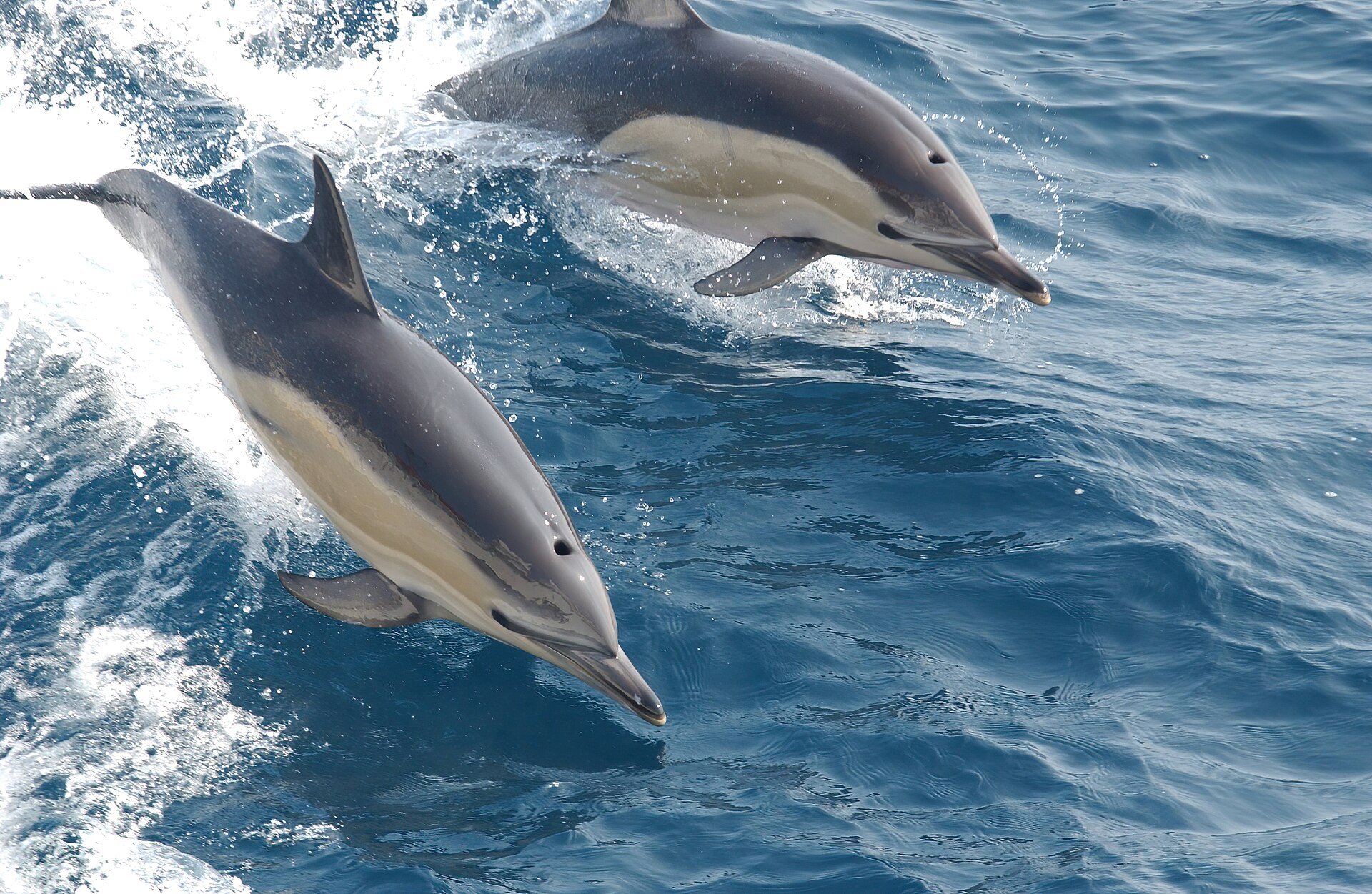
Common dolphins (Delphinus genus) doing a behavior known as ‘porpoising’. Credit: NOAA NMFS, Public domain, via Wikimedia Commons
A dolphin has become the latest mammal in Australia to die from H5 bird flu, as the virus continues spreading beyond birds, prompting researchers to be evacuated from a remote island station over fears of what they might witness next.
The dolphin's body was found near Goolwa on the Fleurieu Peninsula, South Australia, becoming the second mammal species in the country to contract the disease. State tests confirmed it had tested positive for H5N1, and samples have been forwarded to the Australian Centre for Disease Preparedness for further analysis.
Researchers are being withdrawn from the sub-Antarctic Macquarie Island research station, due to the “psychosocial risk” of being confronted with potential mass deaths of seals from the virus as the seals’ breeding season approaches. Witnessing large numbers of animal deaths is reported to have a significant impact on staff well-being.
Meanwhile, Australia is grappling with other wildlife crises that could be related to bird flu. In Tasmania, authorities are investigating the deaths of over 100 little penguins on King Island - but it has not been possible to test their bodies for bird flu due to their “decayed conditions.”
“While the detection in the common dolphin is a new development in Australia, there is evidence of dolphins and porpoises catching H5 bird flu overseas,” a spokesperson for South Australia's Department of Primary Industries and Regions told The Guardian.
The first Australian mainland mammal death from bird flu occurred earlier this year when a long-nosed fur seal died from the H5 virus in Beachport, South Australia. Federal Agriculture Minister Julie Collins said the death was “not unexpected” given the virus's spread through the country. By the time the seal was found, bird flu had already killed millions of birds globally.
Scientists also see strong evidence of possible mammal-to-human crossover after the virus was transmitted from birds to cows on a Texas dairy farm, leading to a worker contracting the disease. Cows’ milk in the US has also tested positive for bird flu, with cases on dairy farms in Texas and Kansas. Factory farming and industrial animal agriculture are responsible for more than 50 percent of zoonotic diseases, according to the United Nations.
Researchers warn bird flu could be behind the next global pandemic. The virus, which is primarily spread between migratory wild birds, can rapidly spread to farmed birds such as chickens and ducks. When infected with the H5N1 virus, humans can develop acute respiratory distress syndrome, which manifests as short, labored breathing. It spread to mammals such as seals and dolphins raises concerns about transmission to humans, especially as H5N1 kills more than half of those infected.
Cumulative human bird flu cases tracked by the World Health Organization have surpassed 1,000 across 25 countries. Sustained human-to-human transmission has not yet been observed.
With animal stories making up less than 2% of the news cycle, we're here to fill that gap. Sign up for Species Unite’s weekly news digest.
The animals need a newsroom in their corner
Every week we dig into the animal stories the mainstream news overlooks. Investigations, exposés, legal battles, and victories - none of it happens without your support. A monthly gift of as little as $5 keeps us covering the 98% of animal news the world isn't seeing.
More stories:

Wildlife cameras, night-vision binoculars, GPS devices, fire sensors, and snowshoes are among the items that have been available to borrow free of charge at a new public nature library.