
Documentary on Flaco the owl premieres in Central Park ahead of theater release
Wild Inside tells the incredible story of the owl who escaped Central Park Zoo and flourished in the wild of New York City, despite having been raised in captivity.
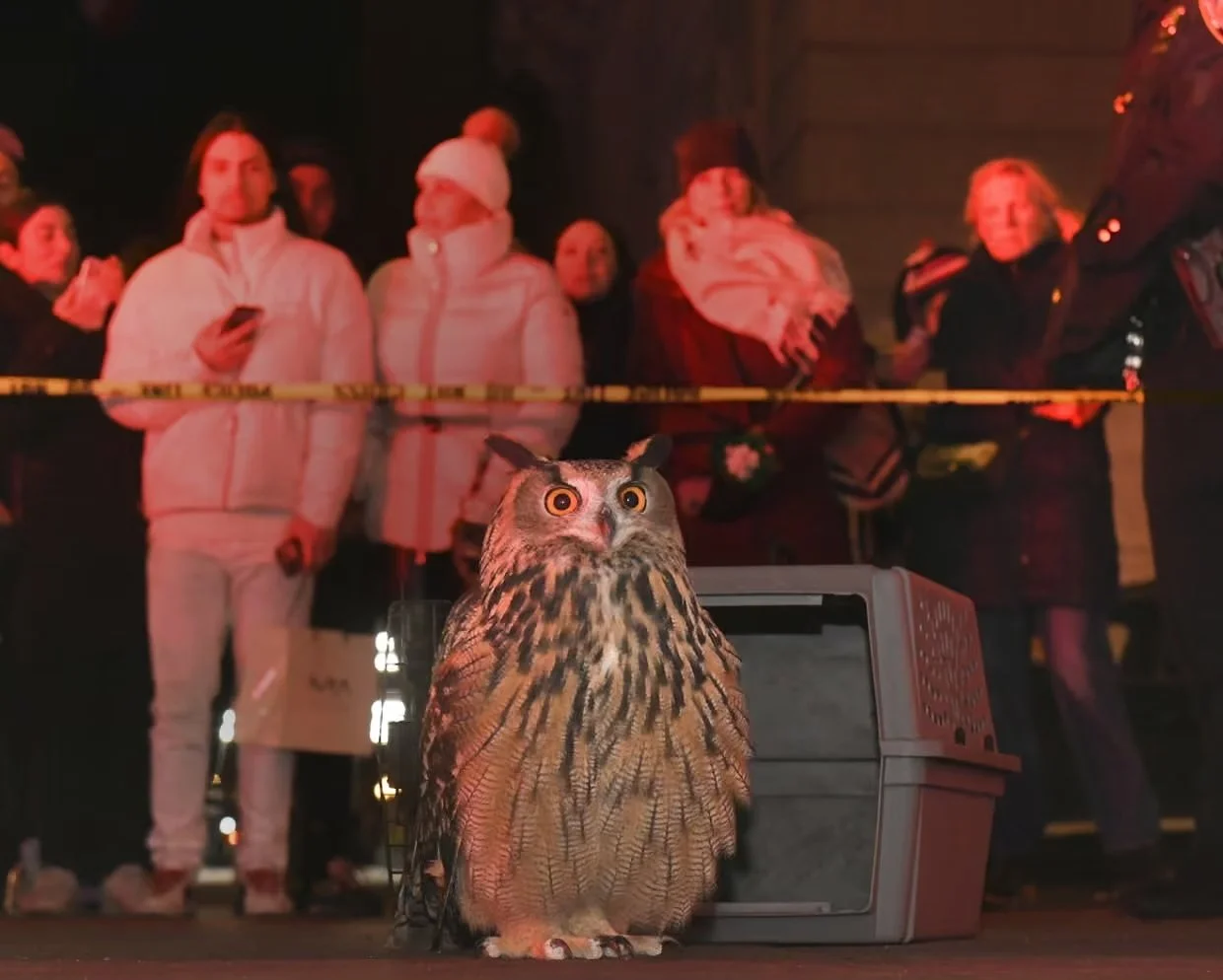
A still from Wild Inside. Photograph: Sandbox Films/Photographer Benny Polatseck
Hundreds gathered in Central Park on July 29 to watch the premiere of Wild Inside, which tells the extraordinary true story of Flaco the owl, who lived for a year in the wilds of New York City after escaping from Central Park Zoo.
The film’s director, Penny Lane, is an avid bird watcher and New York City resident. Having made previous documentaries including Nuts and Hail Satan?, Lane was adamant that Flaco should be the focus of her next project. She was also keen to ensure the film featured lots of footage of the beloved owl.
“I knew early on Flaco had his own dedicated paparazzi that was following him around pretty much 24/7,” she told The Boston Herald. “With really good lenses and pretty good cameras, they were expert at finding and photographing Flaco. That made me realize the film could be made in the first place.”
Lane says that everyone who contributed footage was given a set fee or the chance to donate it to the Wild Bird Fund. As such, the film has raised over $15,000 for the charity, which is the only wildlife rehabilitation center in New York.
Flaco’s story made headlines around the world, after he suddenly appeared on a busy sidewalk near Fifth Avenue, on 2 February 2023. Earlier that day, a trespasser had cut the wire mesh of his small enclosure, facilitating Flaco’s escape from Central Park Zoo.
Having spent his entire life in captivity, many feared Flaco would struggle to survive in the wild, especially as this particular species – the Eurasian eagle-owl – is not native to the U.S. Furthermore, while making the film, Lane discovered that Flaco was at least a third-generation captive animal, with his parents and grandparents all born in captivity.
“That made it even more remarkable to me how he was able to so quickly tap into his wild owl instincts and learn to fly and hunt, learn all the things that owls need to do,” said Lane.
Many were captivated by Flaco’s transformation. Over the next year, Flaco moved to the East Village, and then to the Upper West Side. He was often seen perching on apartment window sills and air conditioner units, or swooping down on the city’s wild rodent population, dazzling onlookers with his wingspan of some six feet wide.
“He was transforming from this hapless zoo animal who could barely fly and couldn’t hunt for himself, to what he really was,” Lane told CBS New York ahead of the premiere.
Flaco survived in New York City for just over a year, until crashing into a building on 23 February 2024. Necropsy results found rodenticide in his system. Some commentators in the film opine that Flaco would almost certainly still be alive today, had he not escaped from the zoo.
But Flaco resisted multiple efforts from the zoo to capture him. While Flaco was perched in a tree in Central Park, the zoo tried for two weeks to catch him, first with mosquito nets, and then with the offer of dead lab rats – which he had been fed every day for the past 13 years. Flaco was unmoved throughout – proof, some argue, that he didn’t want to return to captivity, having experienced freedom for the first time in his life.
According to Variety’s Owen Gleiberman – who described the film as “a moving and even wrenching experience” – “Central Park Zoo should have funded the following mission: taking Flaco to a wild habitat in one of the lands he was native to.”
Ultimately, the film provokes difficult questions and different opinions, but what can’t be disputed about Flaco’s story is nature’s ability to inspire and unite people, from all walks of life.
“We personified this bird,” said a member of the public who attended the Central Park screening. “Each one of us had our own relationship and story with him.”
For Lane, her memories of Flaco will last a lifetime. “There are certain places in New York City that will forever be changed for me by his existence in those places,” she told The Guardian. “Everywhere he went, he left that place a little more magical, and that magic is still there.”
In September 2024, New York City Council voted unanimously to enact Flaco’s Law, a pilot scheme to use rat contraception instead of rodenticide, which is one of the main causes of death among the city’s wild bird population.
Wild Inside opens in 40 theaters nationwide from August 7.
Take the 30 Days of Action for Animals challenge: This August, we're challenging you to take one action for animals every single day. From signing petitions and contacting lawmakers to making different choices at the dinner table, every action adds up. Sign up now to get your first action from tomorrow.
Species Unite News is a weekly round-up of the most important animal stories happening around the world. Join over 250,000 others who start their week with the latest animal stories delivered straight to their inbox.
We Have A Favor To Ask…
Species Unite amplifies well-researched solutions to some of the most abusive animal industries operating today.
At this crucial moment, with worldwide momentum for change building, it’s vital we share these animal-free solutions with the world - and we need your help.
We’re a nonprofit, and so to keep sharing these solutions, we’re relying on you - with your support, we can continue our essential work in growing a powerful community of animal advocates this year.
More stories:
Leading racetracks including Churchill Downs, Keeneland, and Aintree can no longer sell tickets through Tripadvisor, after the platform cited its Animal Welfare Policy.