
Biomedical research company Charles River purchases Cambodian monkey breeding farm
Animal advocates say the $510 million deal contradicts the company’s claims of moving toward non-animal science.
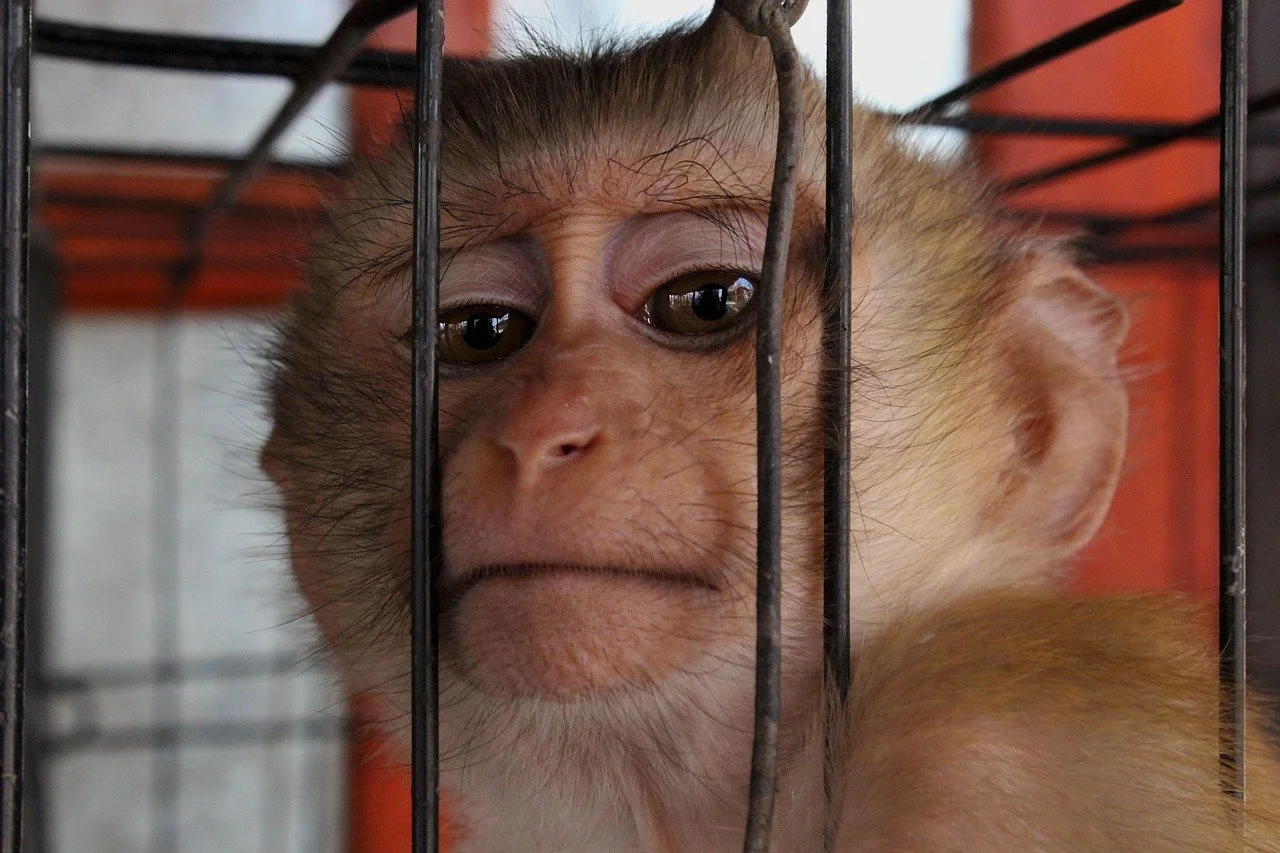
Charles River Laboratories has announced plans to buy a monkey breeding farm in Cambodia.
The $12 billion biomedical research company said it would acquire K.F. (Cambodia) Ltd. for around $510 million, Reuters reports. The company has supplied an estimated 30 percent of the nonhuman primates used by Charles River over the last two years.
Animal rights advocates have criticized the Cambodia acquisition, saying it contradicts Charles River’s public claims that it is committed to expanding non-animal research methods.
“The official line is that Charles River wants to be a key player in validating non-animal methods in biomedical research,” said PETA Senior Science Advisor for Primate Experimentation Dr. Lisa Jones-Engel. “But it then invests half a billion dollars in acquiring a primate breeding operation that is already part of a supply chain linked to falsified origin records, weak traceability, and documented infectious disease risks.”
Charles River has not imported nonhuman primates from Cambodia since 2023, after the U.S. Fish and Wildlife Service (FWS) launched an investigation that year into possible violations of monkey-importation laws.
One of Charles River’s shipments of long-tailed macaques from Cambodia previously left 1,269 monkeys in limbo for over a year after the animals were confiscated as part of an investigation by the FWS, the Department of Justice, and Homeland Security.
People for the Ethical Treatment of Animals (PETA) says the animals were almost certainly trafficked from the wild and falsely labeled as captive-bred. The FWS’s five-year investigation found that tens of thousands of macaques were illegally poached from forests to supply U.S. laboratories.
Despite the investigation, and despite PETA’s claim that Charles River has never provided proof the monkeys were legally sourced, the confiscated monkeys were returned to the company in 2025.
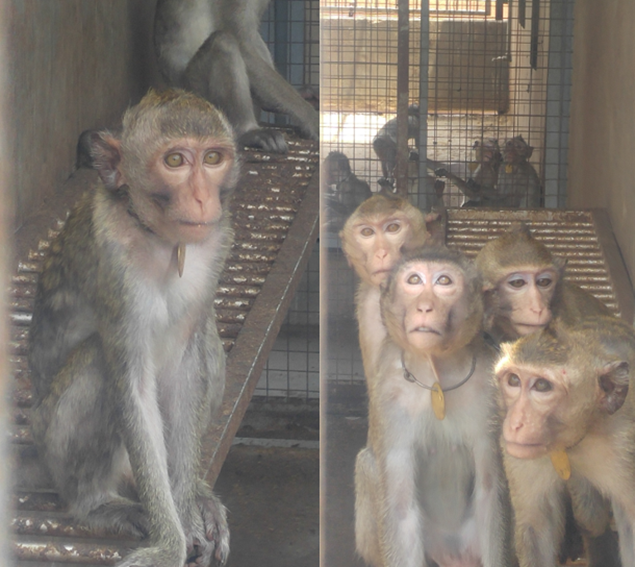
Photo: PETA
Charles River’s move to purchase K.F. (Cambodia) Ltd. comes at a time when major shifts are underway in the animal testing world. In November 2025, the Centers for Disease Control and Prevention (CDC) announced it is ending its monkey research, while new Food and Drug Administration (FDA) is encouraging alternative testing methods.
“They’ve literally ‘bought the farm’ by digging deeper into animal-dependent infrastructure at the exact moment regulatory modernization is accelerating toward human-relevant benchmarks,” said Jones-Engel. “Using animals sourced from that system to ‘validate’ new methods doesn’t modernize science—it hard-wires failure into the next generation of tools.
“Charles River’s only real commitments are to decimating the forests of long-tailed macaques and lining its own pockets, not to the future of non-animal research,” she added.
The conservation status of the long-tailed macaque was downgraded from vulnerable to endangered in 2022 by the International Union for Conservation of Nature (IUCN). Over the last three decades, long-tailed macaque populations have plummeted by 50 to 70 percent, in part due to demand from the animal experimentation industry.
A 2025 report by anthropologist Malene Hansen warned that the rate of decline is expected to continue over the next 30 years, leading the IUCN to reaffirm the endangered status of long-tailed macaques.
“Long-tailed macaques are highly intelligent beings with complex social structures, but they’re being driven to extinction by the animal experimentation industry and through apparent unethical backroom deals,” said Jones-Engel.
What can you do?
Watch and share: 30,000 Monkeys in Our Backyard. This new Species Unite documentary exposes the hidden realities of the animal research trade and reveals what happens when corporate power meets small-town America.
Demand the U.S. government ban monkey imports from Cambodia. Sign here.
We Have A Favor To Ask…
Species Unite amplifies well-researched solutions to some of the most abusive animal industries operating today.
At this crucial moment, with worldwide momentum for change building, it’s vital we share these animal-free solutions with the world - and we need your help.
We’re a nonprofit, and so to keep sharing these solutions, we’re relying on you - with your support, we can continue our essential work in growing a powerful community of animal advocates this year.
More stories:

A cleaner New York Harbor has drawn hundreds of humpback whales back to its waters for the first time in generations, but the same busy port that welcomes them is also killing them.