
CDC makes unprecedented move to end monkey testing
Campaigners hail the CDC’s decision to end monkey experiments and retire 200 primates as a “historic” breakthrough.
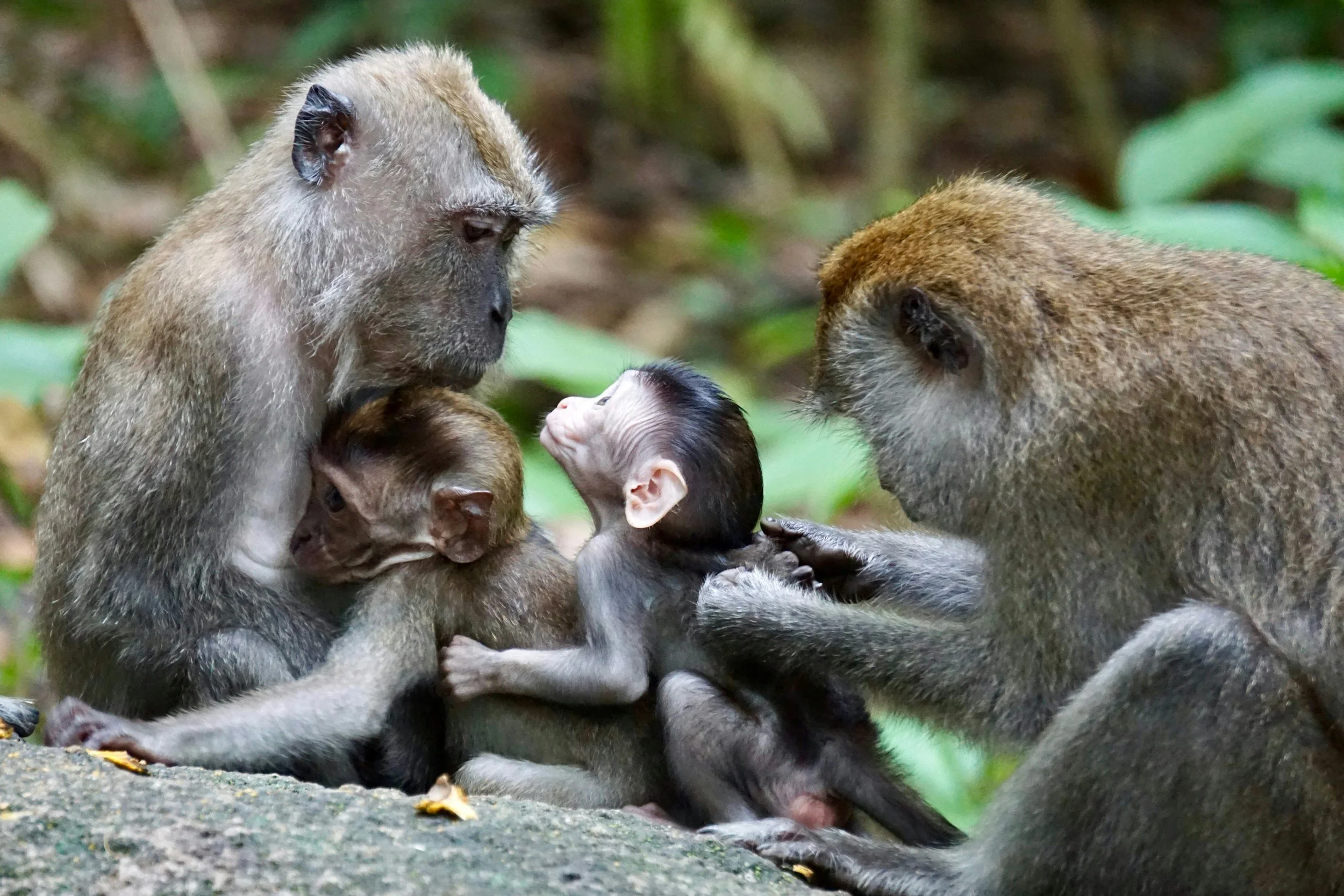
Campaigners are celebrating the ‘historic’ decision to end monkey testing at the Centers for Disease Control and Prevention (CDC).
The move will see a complete shutdown of its primate laboratories, sparing approximately 200 rhesus and pig-tailed macaques from further captivity and suffering.
The announcement came from Sam Beyda, Deputy Chief of Staff at CDC, acting under the authority of Robert F Kennedy Jr, U.S. Secretary of Health and Human Services, according to Science.
People for the Ethical Treatment of Animals (PETA) described the news as “historic” and “visionary”.
“CDC’s own data shows monkeys arriving with tuberculosis, melioidosis, and other pathogens, weak testing protocols, and a supply chain riddled with escapes, disease lapses, and regulatory failures. PETA has exposed these dangers at every turn, and today’s announcement proves that the system is finally confronting the truth.”
In a further boost for animal rights campaigners, there appears to be genuine plans to rehome the 200 monkeys, and quickly.
Beyda has contacted Scott Kubisch, who runs the Peaceable Primate Sanctuary, in Winamac, Indiana, one of the largest monkey refuges in North America, according to Science. “He wanted to know how many monkeys we could take immediately, and whether it would be possible to retire all of them within a year,” said Kubisch.
The monkeys held in the CDC’s Atlanta, GA, laboratories are used primarily in HIV studies.
This development would mark the first time in more than a decade that a U.S. agency has ended its in-house nonhuman primate program, following the National Institutes of Health’s (NIH) decision to end all research on chimpanzees, in 2015.
“This is exceeding our expectations,” said Justin Goodman, of the White Coat Waste Project, an organization committed to ending government-funded animal testing. “We think this will set a standard for other agencies.”
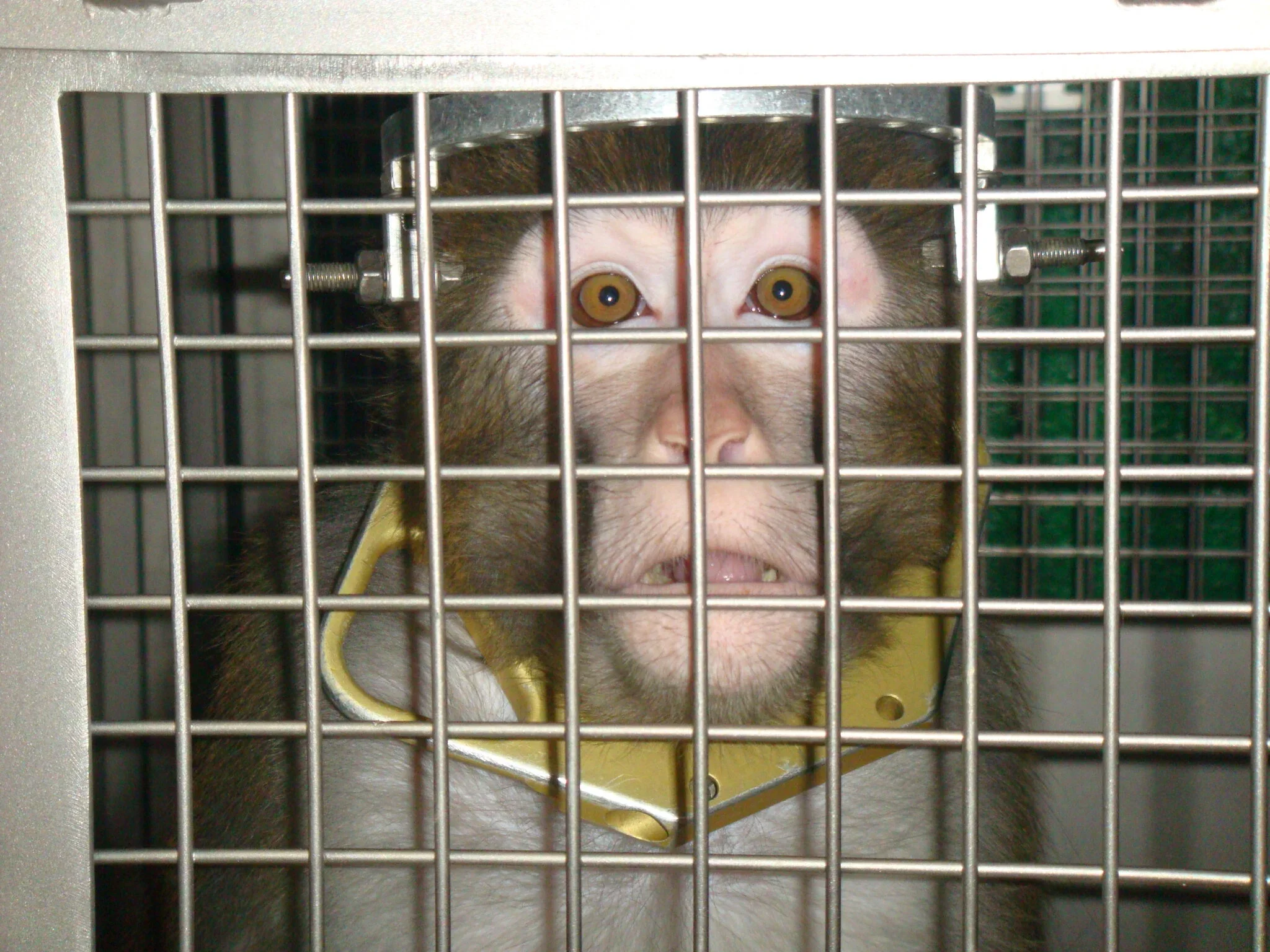
Credit: PETA
Indeed, the CDC is just the latest government agency to follow this trend.
Notably, earlier this year, the Food and Drugs Administration (FDA) set out a “groundbreaking” roadmap to develop monoclonal antibody therapies and other drugs with exclusively human-relevant methods.
“This initiative marks a paradigm shift in drug evaluation and holds promise to accelerate cures and meaningful treatments for Americans while reducing animal use,” said FDA Commissioner, Martin A. Makary. “By leveraging AI-based computational modeling, human organ model-based lab testing, and real-world human data, we can get safer treatments to patients faster and more reliably, while also reducing R&D costs and drug prices. It is a win-win for public health and ethics.”
The NIH has also announced that it will set up a new Office of Research Innovation, Validation, and Application, to increase funding and training in non-animal approaches. In addition, the NIH is no longer seeking proposals for research exclusively in animal models.
Such concerted efforts to move away from animal testing are a direct result of Robert F Kennedy Jr’s ‘Make America Healthy Again’ campaign.
The current administration is promoting the use of organs-on-chips and other new approach methodologies (NAMs) as a safer and more effective alternative.
Since they use human data and cells, NAMs are thought to be more advantageous than testing on animals. Indeed, the failure rate for the translation of drugs from animal testing to human treatments remains at around 90%.
The momentum for NAMs and other technologies is not just countrywide, but global. The European Commission will soon release a roadmap for ending animal testing in chemical safety assessments, while the U.K. government has just unveiled a multi-million-pound strategy for replacing animal testing with new technologies, such as AI, bio-printed tissues, and organs-on-chips.
What can you do?
Help end FDA-mandated animal testing. Please reach out to your senators and urge them to do the right thing by cosponsoring the FDA Modernization Act 3.0. Send an online letter to your senator directly here - it takes less than 30 seconds.
Learn more by listening to our podcast episode with Justin Goodman, the Vice President of Advocacy and Public Policy at White Coat Waste Project.
We Have A Favor To Ask…
Species Unite amplifies well-researched solutions to some of the most abusive animal industries operating today.
At this crucial moment, with worldwide momentum for change building, it’s vital we share these animal-free solutions with the world - and we need your help.
We’re a nonprofit, and so to keep sharing these solutions, we’re relying on you - with your support, we can continue our essential work in growing a powerful community of animal advocates this year.

Some developers suggest that adopting cultivated meat could also improve animal welfare by significantly reducing the number of farmed animals slaughtered.