
Zurich Zoo faces calls to end its elephant breeding program immediately, following the death of another calf
The Swiss zoo has now suffered 11 elephant deaths in the past decade, with one mother losing all four of her calves.
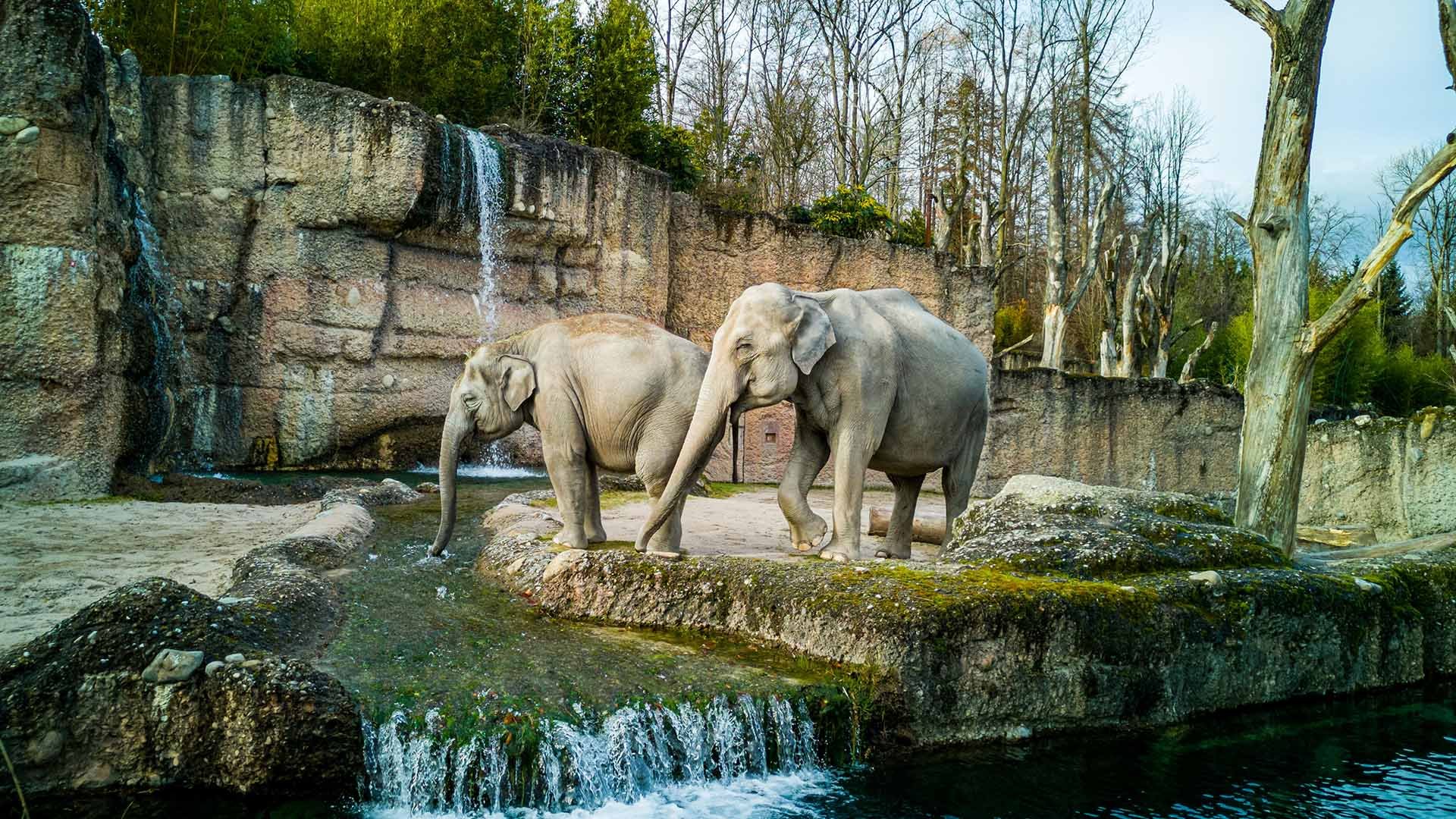
Elephant at Zurich Zoo.
Twenty-nine leading scientists, conservationists, welfare specialists, and policy professionals from around the world are calling on Zurich Zoo to end its elephant breeding program immediately, following the death of another newborn calf.
The male calf was euthanized on June 1 at just one day old, after being born with a malformation of the hind legs. His death means that 11 elephants – mostly newborns and juveniles – have died at the zoo since 2016.
“This latest death once again demonstrates that elephants do not belong in captivity, and raises serious questions about the zoo’s elephant management,” said Fondation Franz Weber (FFW) in a statement.
The grieving mother, Indi, has now given birth five times as part of the zoo’s breeding program. Only two have survived beyond infancy – her daughter, Chandra, currently lives at the zoo, while her son was transferred to Copenhagen Zoo.
Zurich Zoo’s director described the latest death as a “natural reproductive risk,” which had nothing to do with the zoo’s husbandry. “Malformations are part of prenatal development,” said Severin Dressen. “It is part of nature that not all animals develop as they should."
However, according to FFW, “the causes of mortality repeatedly observed in Zurich are extremely rare in wild elephant populations.”
Three elephant calves have succumbed to elephant endotheliotropic herpes virus (EEHV) – typically more fatal to elephants that are young and captive-born – while another was beaten to death inside his enclosure by other elephants.
And then there is Zali, who died in September last year, aged just five months. He had suffered a serious injury to his front left leg while playing, and received veterinary treatment via painkillers and infusions. Although the anesthetic went well, and Zali had seemingly recovered, he collapsed and died hours later from a twisted small intestine.
"As sad as it is, a complication like this can occur at any time when an animal is under a lot of stress and pain – in this case it was irreversible," said Dressen at the time.
He added that during his final hours, Zali was comforted by his mother, Farha. Tragically, Farha had already lost her previous three calves at the zoo – her daughter died in infancy, in 2020; her son was stillborn, in 2023; and Ruwani succumbed to EEHV in 2022, aged 5.
The regularity of Farha’s pregnancies – every two to three years – raised concern among experts, as in normal populations elephants have a long gap of four to five years between giving birth.
“It is physically and psychologically harmful to a female elephant to subject her to repeated pregnancies in such a short space of time, especially since all her preceding calves have died,” said Dr Keith Lindsay, elephant biologist and member of the IUCN African Elephant Specialist Group. “The Zoo’s obsession with breeding is cruel and irresponsible.”
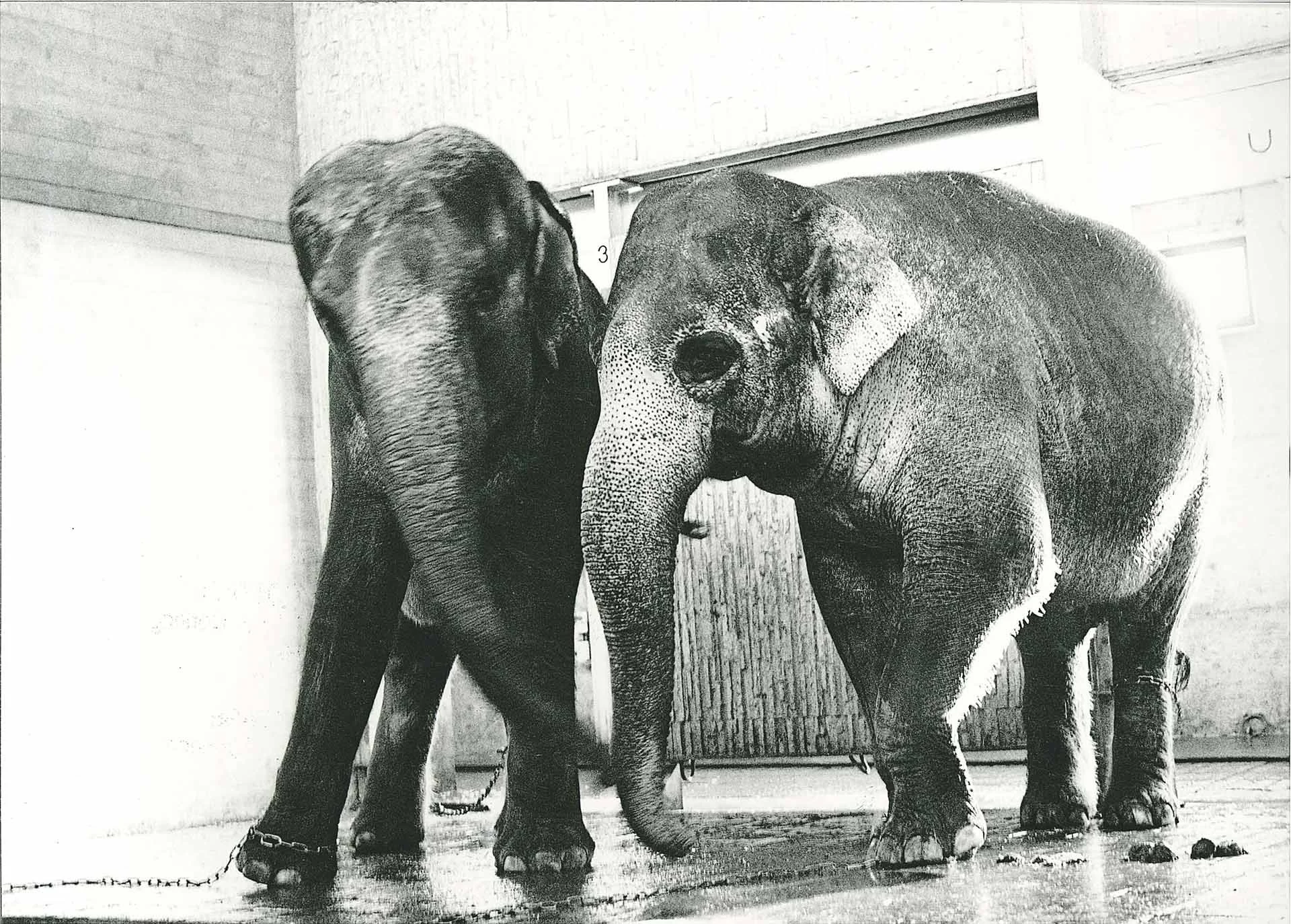
Elephants at Zurich Zoo in 1987, photographed by Born Free founder, Bill Travers.
At 22 months, elephants have the longest gestation period of any mammal, and the powerful bond between mothers and their calves is well-documented. Equally, research has shown that elephants experience grief and profound social disruption when family members die. Mothers, especially, often stay with their dead calf for days.
The breeding program at Zurich Zoo raises serious ethical and welfare concerns, say campaigners.
“Swiss animal protection law requires that the welfare and dignity of animals be respected,” said FFW. “Yet the repeated cycle of births, deaths, and transfers observed at Zurich Zoo calls into question whether these principles are truly being upheld.”
Switzerland has already banned the use of whales and dolphins in the entertainment industry, and FFW is working to achieve similar outcomes for the country’s captive elephants.
The open letter has been signed by 29 experts from across the world, including Dr. Cynthia Moss and Professor Phyllis C. Lee, directors of the Amboseli Trust for Elephants in Kenya; Dr. Mark Jones, head of policy at Born Free Foundation; Jake Davis, senior staff attorney at the Nonhuman Rights Project; Scott Blais, CEO of Global Sanctuary for Elephants; and Dr. Rob Atkinson, former head of wildlife at the RSPCA and former CEO of The Elephant Sanctuary in Tennessee.
Other signatories include elephant researchers, veterinarians, neuroscientists, conservation biologists, and policy specialists from the United States, South Africa, the Netherlands, Australia, Scotland, and Switzerland.
Species Unite is examining elephant captivity in the United States and the growing movement to change the system. Our upcoming documentary follows the legal challenges brought by the Nonhuman Rights Project to secure the release of elephants held at zoos. Help us bring this film to life here.
Join Species Unite today by pledging never to visit a zoo that keeps elephants in captivity. Together, we can help build a future where no elephant is born simply to spend its life on display. Take the pledge here.
Species Unite News is a weekly round-up of the most important animal stories happening around the world. Join over 250,000 others who start their week with the latest animal stories delivered straight to their inbox.
We Have A Favor To Ask…
Species Unite amplifies well-researched solutions to some of the most abusive animal industries operating today.
At this crucial moment, with worldwide momentum for change building, it’s vital we share these animal-free solutions with the world - and we need your help.
We’re a nonprofit, and so to keep sharing these solutions, we’re relying on you - with your support, we can continue our essential work in growing a powerful community of animal advocates this year.
More stories:
Pronghorn have used the overpass to cross Interstate 25 safely for the first time in 30 years, while bears, coyotes, deer, elk, moose, frogs, and a threatened species of mouse have also been taking advantage of the $15 million crossing.