
Protestors stage open rescue at controversial beagle farm in Wisconsin
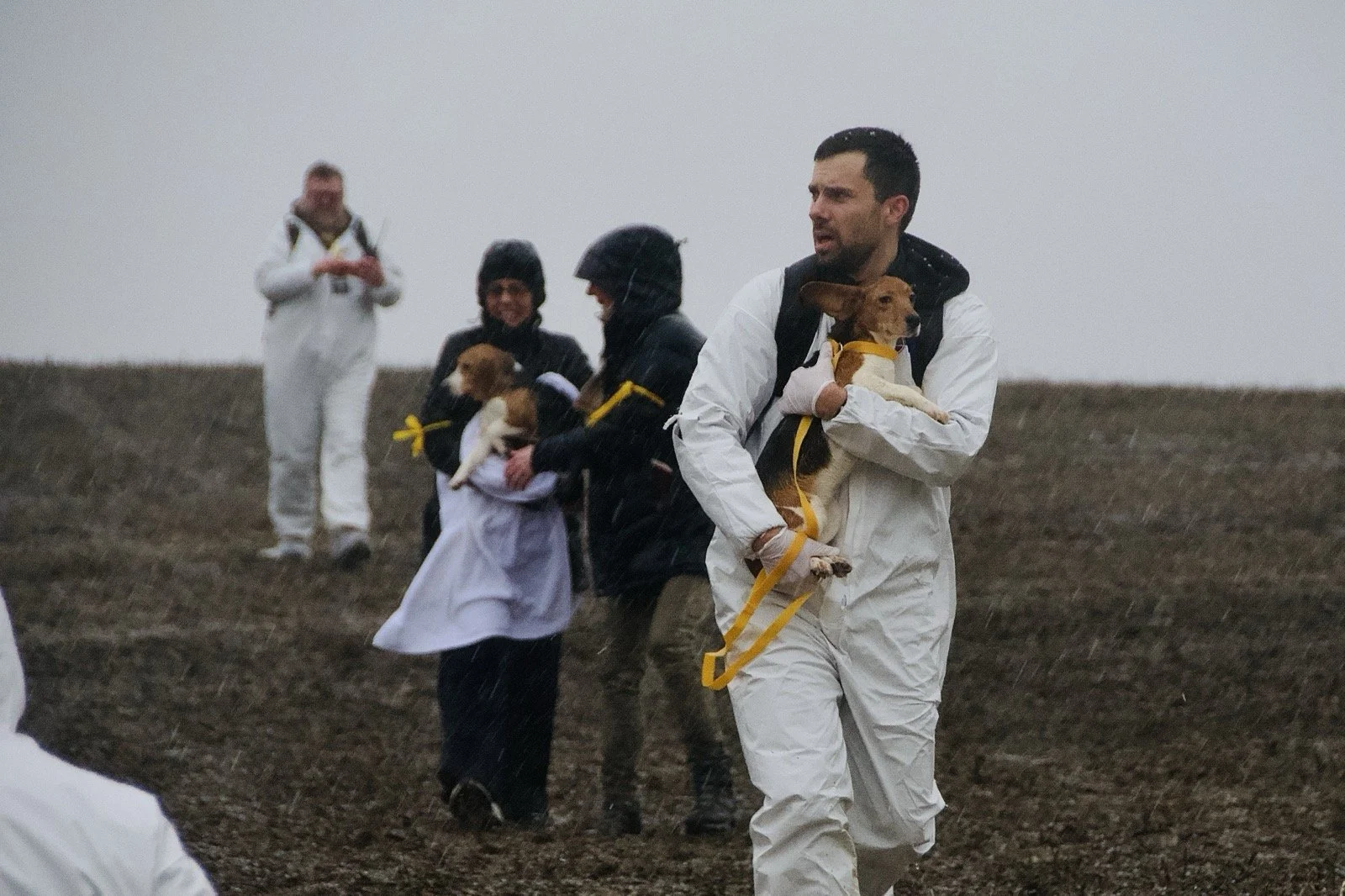
Around twenty beagles were rescued from Ridglan Farms, which has a well-documented history of committing “ongoing unaddressed violations.”
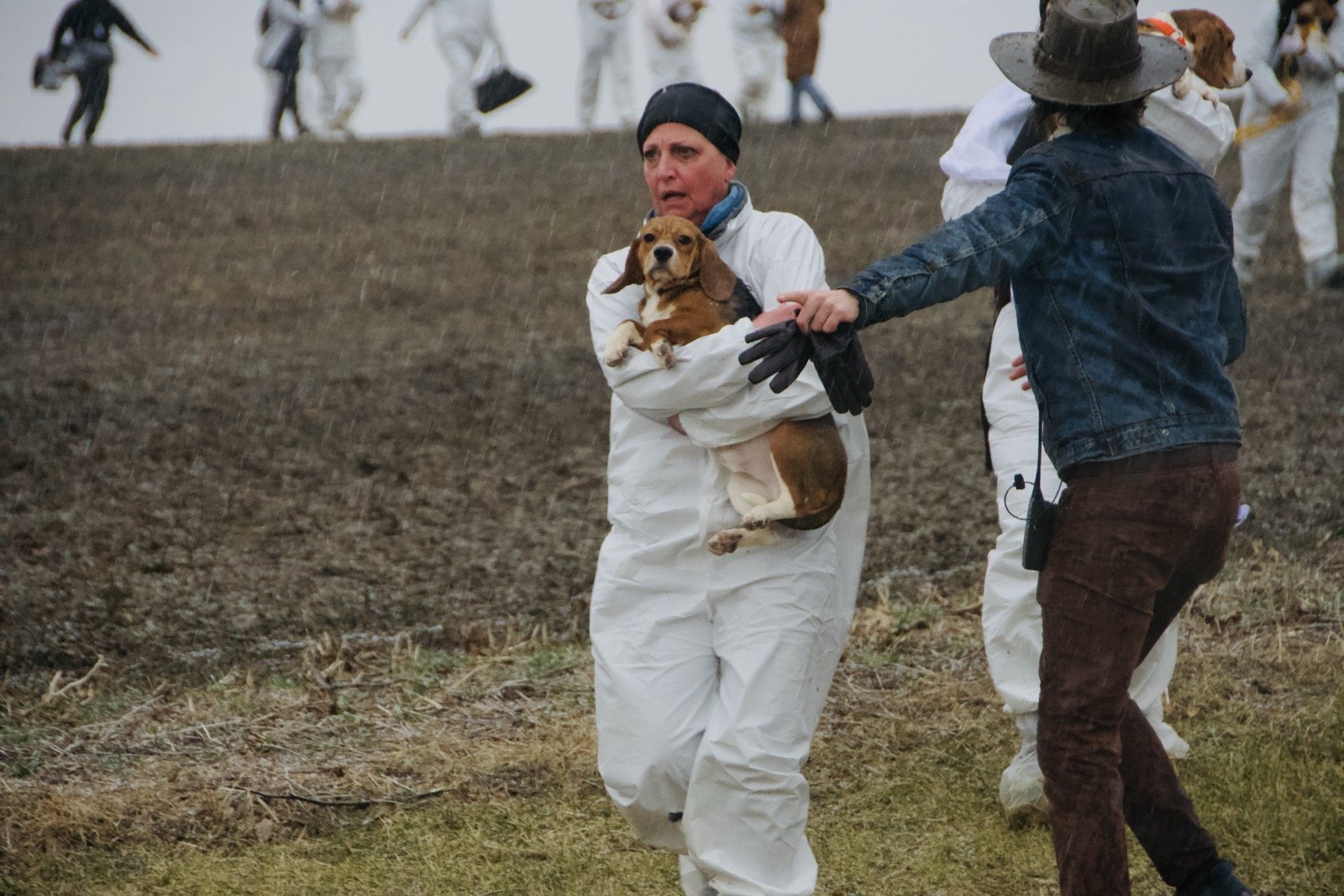
Credit: Wayne Hsiung
On March 15, around sixty animal activists entered Ridglan Farms to openly rescue some of its 3,000 abused beagles.
A total of 27 people were arrested in Dane County, including Alexandra Paul, the former Baywatch actress, and Wayne Hsiung, an attorney who led the effort.
Hsiung has spent over a decade exposing the horrifying conditions at Ridglan, America’s second-largest breeding facility of beagles for experimentation.
Arrested for burglary and trespass, Hsiung said that the “non-violent direct action” was borne of frustration at the authorities’ refusal to enforce animal welfare laws.
The Wisconsin Department of Agriculture, Trade and Consumer Protection (DATCP) has repeatedly cited Ridglan for “ongoing unaddressed violations,” but no charges have ever been filed by the Dane County District Attorney, which Hsiung says is likely down to “collusion” and “corruption.”
With the support of animal rights organizations Dane4Dogs and Alliance for Animals, Hsiung petitioned for a special prosecutor to investigate Ridglan, which was granted early last year, following an all-day evidentiary hearing in October 2024.
However, Hsiung says that the special prosecutor appointed, Tim Gruenke, is “working with them (Ridglan) to cover up the abuse.”
Gruenke reached an agreement with Ridglan in October last year, which saw the facility shutting down its dog sales and breeding-for-sale operations. In return, the state would not file criminal charges.
However, as part of the agreement, Ridglan has been allowed to sell the remaining dogs until July 1. Furthermore, Ridglan will remain in operation, and will still be able to breed dogs and conduct its own experiments.
Gruenke said that he could have charged Ridglan with a felony for mistreating animals, relating directly to a procedure known as ‘cherry eyes,’ in which the dogs were restrained while a gland from the corner of their eye is cut off.
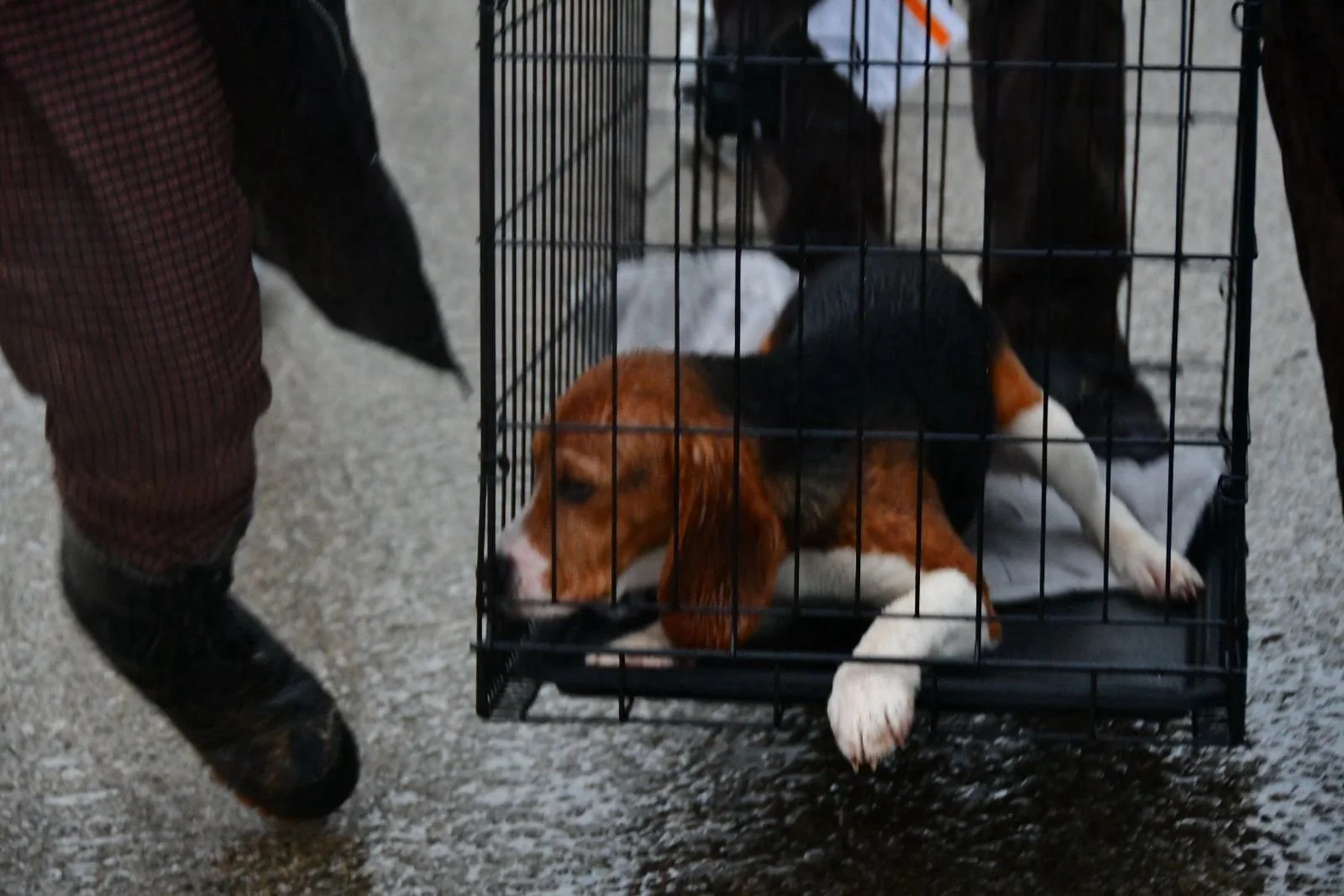
This was performed without any anaesthesia or pain medication, and there was no effort to stem the considerable bleeding, which one former employee said lasted “several minutes.”
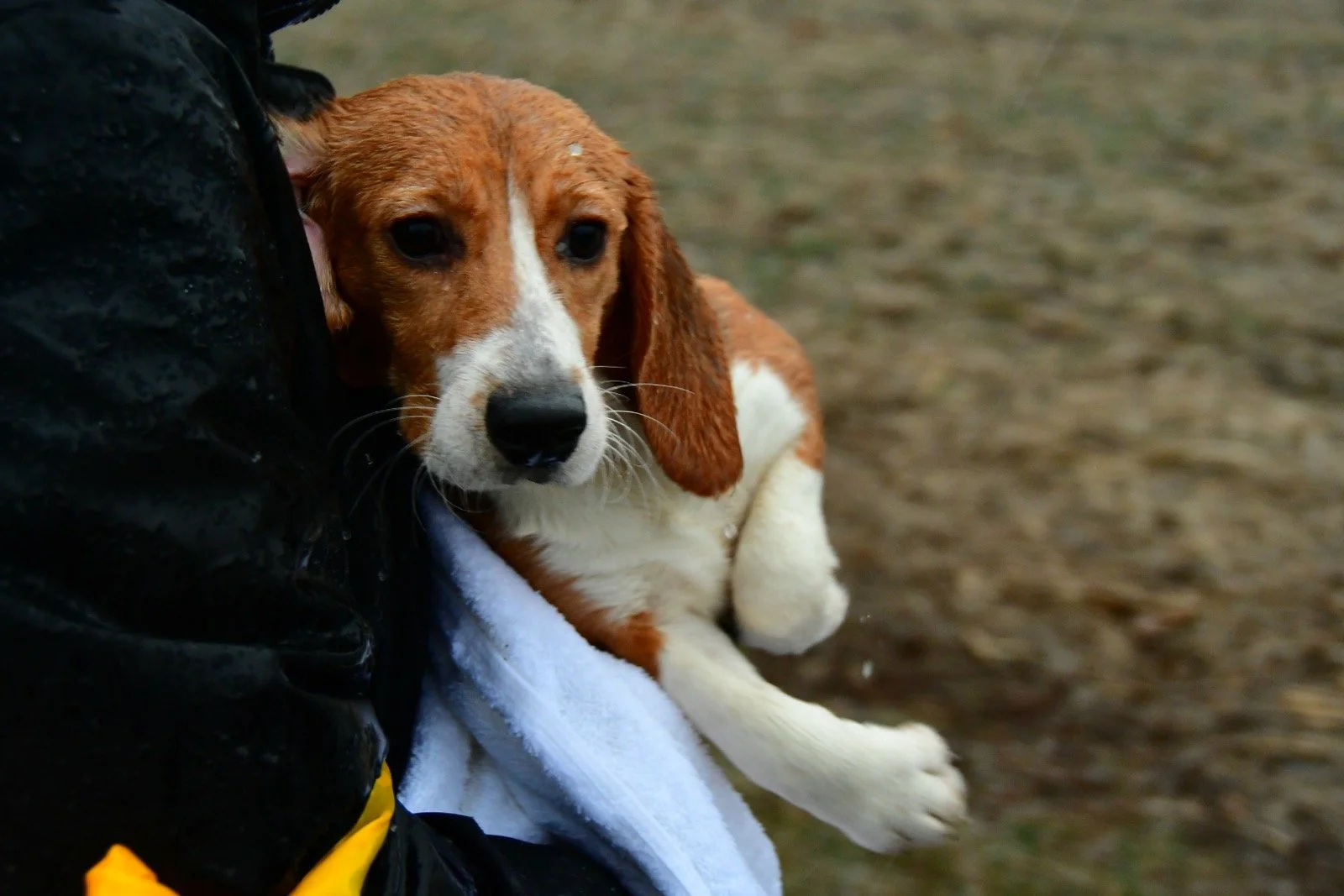
Credit: Wayne Hsiung
Gruenke noted that the execution of these operations fell well below the state’s veterinary care standards. Furthermore, those who conducted the eye operations were not veterinarians, in violation of Wisconsin law.
But the many other violations, as detailed in DATCP reports, and in witness testimony given by former workers and experienced veterinarians, went unaddressed.
For example, ex-Ridglan employee Matt Reich testified at the evidentiary hearing that his colleagues mutilated dogs’ vocal chords, simply to prevent them from barking at full volume. A paralytic agent rendered the dogs unable to move, but they were not given any anaesthesia or pain medication. The dogs’ mouths were then pried open and held in place by a contraption, and a Ridglan employee would reach down their throat with a sharp tool and sever the flaps in the back of their throat.
This procedure was conducted on thirty to forty dogs at a time, every month by non-veterinarians, said Reich.
Another former Ridglan worker, Scott Gilbertson, described how many dogs would bark continuously, and spin in circles. Dr Marc Bekoff, professor emeritus of ecology and evolutionary biology at the University of Colorado at Boulder, testified that such behaviors were “way beyond anything I’ve ever seen in what I would consider to be a normal dog.”
DATCP inspectors also noted a buildup of feces in the kennels, and a strong smell of amonia due to poor ventilation. Dogs were deprived of any socialization or exercise, and only removed from their kennels for experiments. The kennels were 2” x 4” metal cages with wire flooring, which led to untreated blisters and ulcers on the dogs’ feet, exacerbated by constant confinement.
Dr Sherstin Rosenberg, a veterinarian of more than two decades, testified that the housing conditions at Ridglan were worse than Envigo, the Virginia-based beagle farm shut down in 2022 by federal government and later fined a record $35 million.
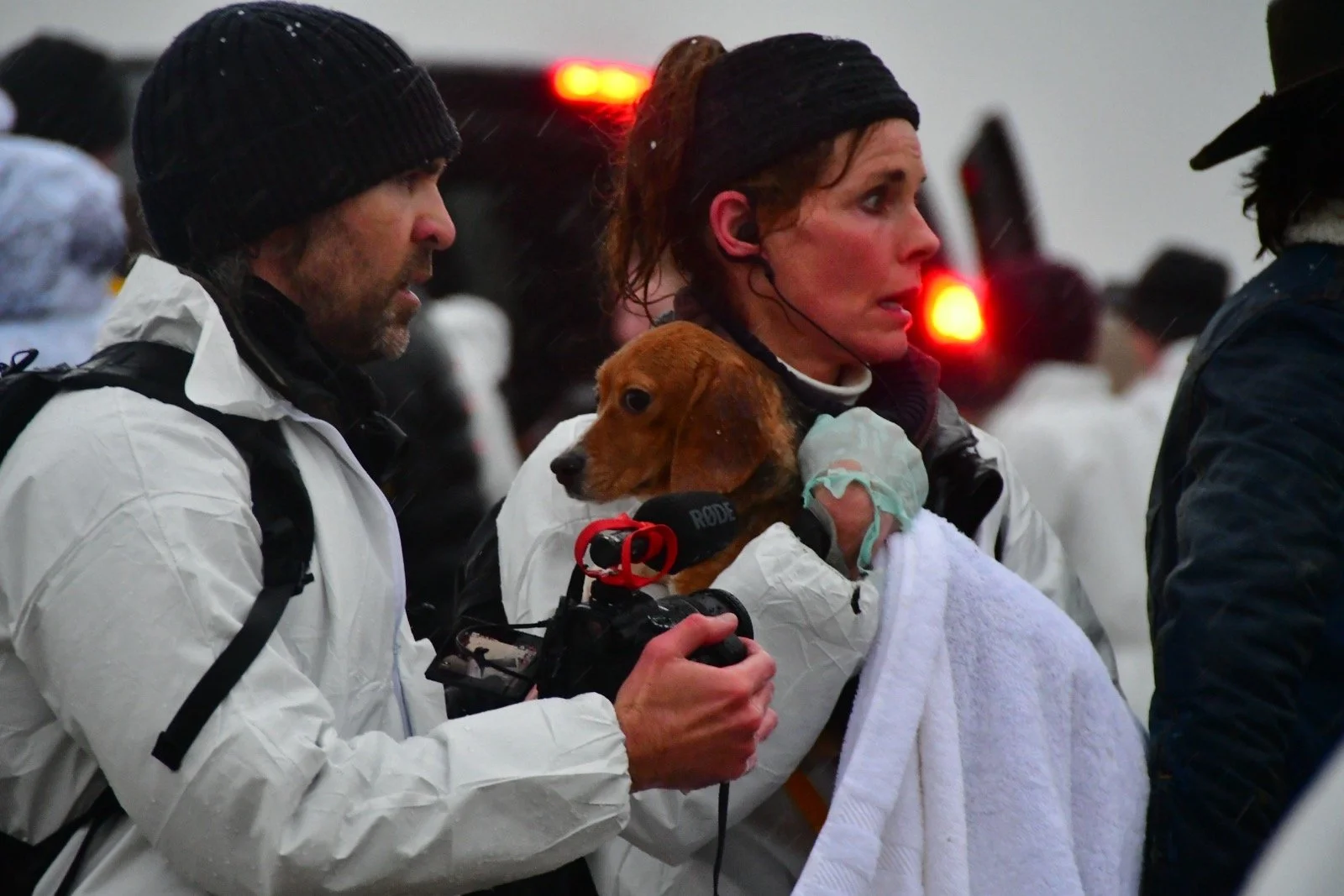
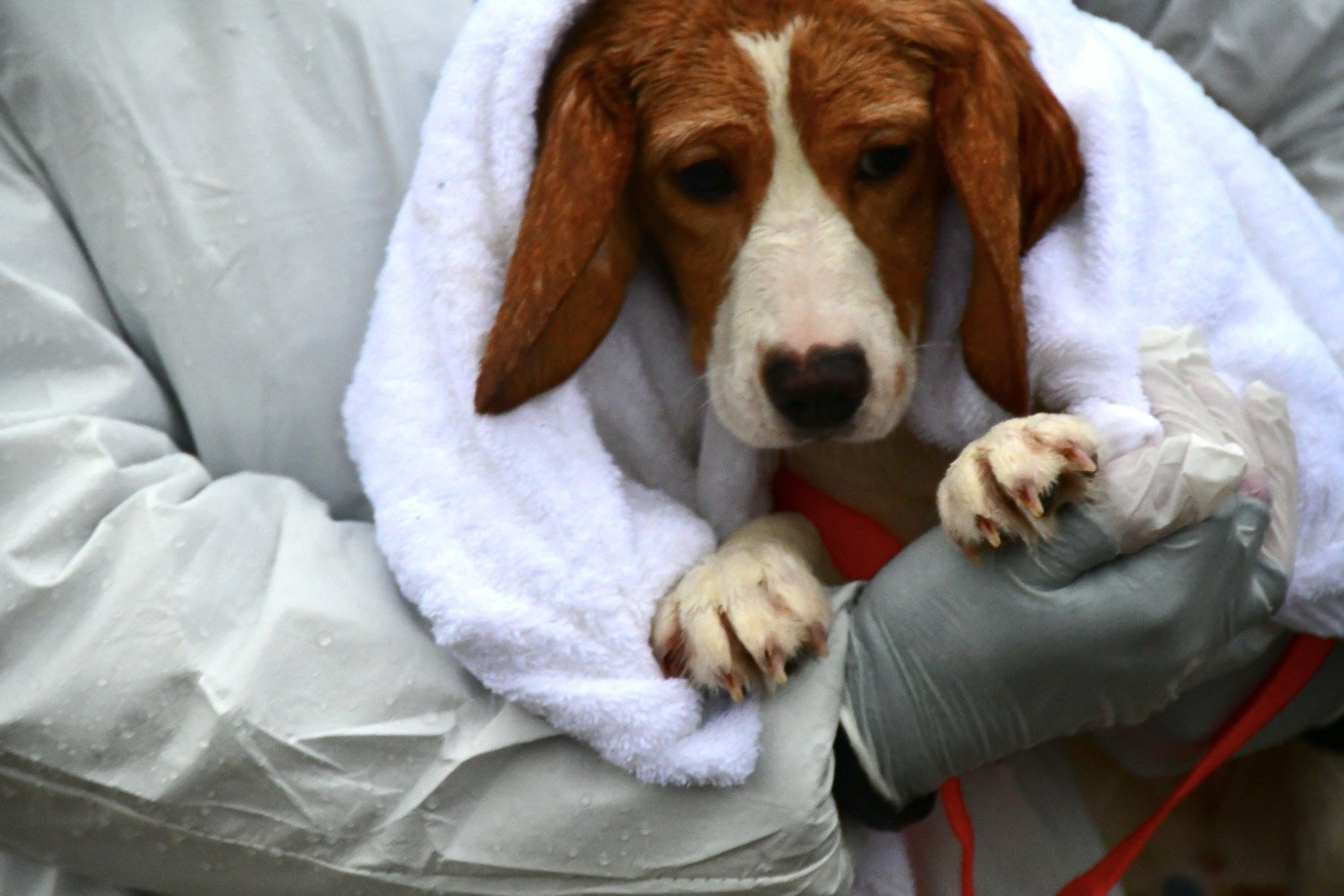
Ridglan has been operating since 1966. Although testing on dogs has reduced in America by eighty percent since 1979, some 40,000 dogs are still used every year for research. Beagles are especially useful in experiments, given their docile and trusting nature.
They are used in all manner of experiments; indeed, under the Animal Welfare Act, there are no restrictions on experimental design or purpose, regardless of how traumatic or trivial.
In March of last year, Dr Jane Goodall co-authored an op-ed for The Washington Post calling for an immediate moratorium on federal funding for experiments on dogs, and ultimately a ban on dog experiments.
In 2022, Rose Patterson and other Animal Rising activists openly rescued beagles from the UK's last beagle breeding facility for animal testing, fully aware that they could face prison for doing so. Listen to the Species Unite podcast episode with Rose here.
We Have A Favor To Ask…
Species Unite amplifies well-researched solutions to some of the most abusive animal industries operating today.
At this crucial moment, with worldwide momentum for change building, it’s vital we share these animal-free solutions with the world - and we need your help.
We’re a nonprofit, and so to keep sharing these solutions, we’re relying on you - with your support, we can continue our essential work in growing a powerful community of animal advocates this year.
Plant-leather boots, cruelty-free bags, and animal-free versions of your favorite brands - see our full guide to the best cruelty-free alternatives to iconic fashion staples.