
Joy as rescue groups agree to buy 1,500 beagles from Ridglan Farms
The first 300 beagles left the Wisconsin breeding and research facility on May 1, experiencing grass and sky for the first time.
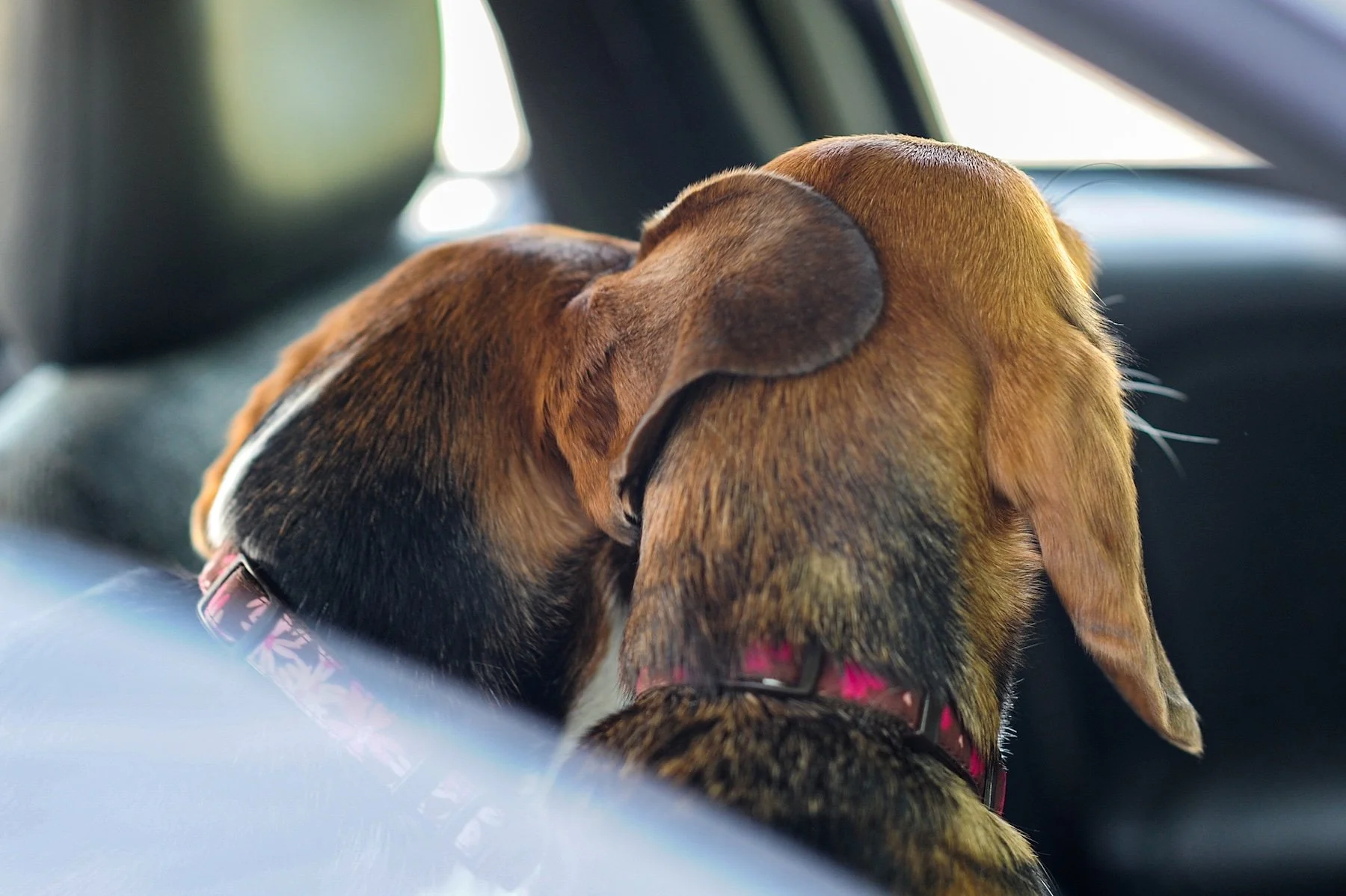
Credit: Jo-Anne McArthur/ We Animals
Some 1,500 beagles can now look forward to a new life, free from cruelty and captivity, after rescue groups reached an agreement with America’s second-largest beagle testing facility.
The first phase saw 300 beagles leave Ridglan Farms on May 1. Three buildings have now been emptied, and further transfers from the facility in Blue Mounds, Wisconsin, will continue next week.
“This is a moment to celebrate that 1,500 dogs will soon know only the kindness of the most caring people,” said Wayne Pacelle, president of the Center for a Humane Economy, in a press conference announcing that they had reached an agreement with Ridglan.
“This life-saving project comes as we also charge ahead with our work to wind down the archaic and inhumane era of animal testing and embrace 21st-century strategies that do not harm and deliver more palliatives and cures to people,” he continued.
The dogs were taken to a staging area, where they received vaccines, microchips, and initial care, before spending some time outside. For many of the beagles, this was their first experience of touching grass, and of seeing the sky.
At Ridglan, they were deprived of any socialization or exercise, and only removed from their kennels for experiments.
The kennels were a 2” x 4” metal cage, with wire flooring, which often led to untreated blisters and ulcers on the dogs’ feet, exacerbated by constant confinement.
Recent inspection reports noted a buildup of feces in the kennels, and a strong smell of ammonia due to poor ventilation.
Many of the dogs would display stereotypic behaviors, such as barking continuously and spinning in circles.
Former Ridglan employees described how painful procedures were conducted by non-veterinarians, and without anaesthesia or pain medication. One of these procedures involved mutilating the dogs’ vocal chords to stop them barking all day.
Following a court hearing in October 2024 – at which experts, former workers, and animal rights campaigners testified – a judge appointed a special prosecutor to investigate Ridglan.
An agreement was later reached, which saw Ridglan shutting down its dog sales and breeding-for-sale operations. In return, the state would not file criminal charges.
However, many were disappointed with the lack of charges, and furthermore, that Ridglan had until July 1 to sell the remaining dogs. This meant they were likely to end up in another research facility.
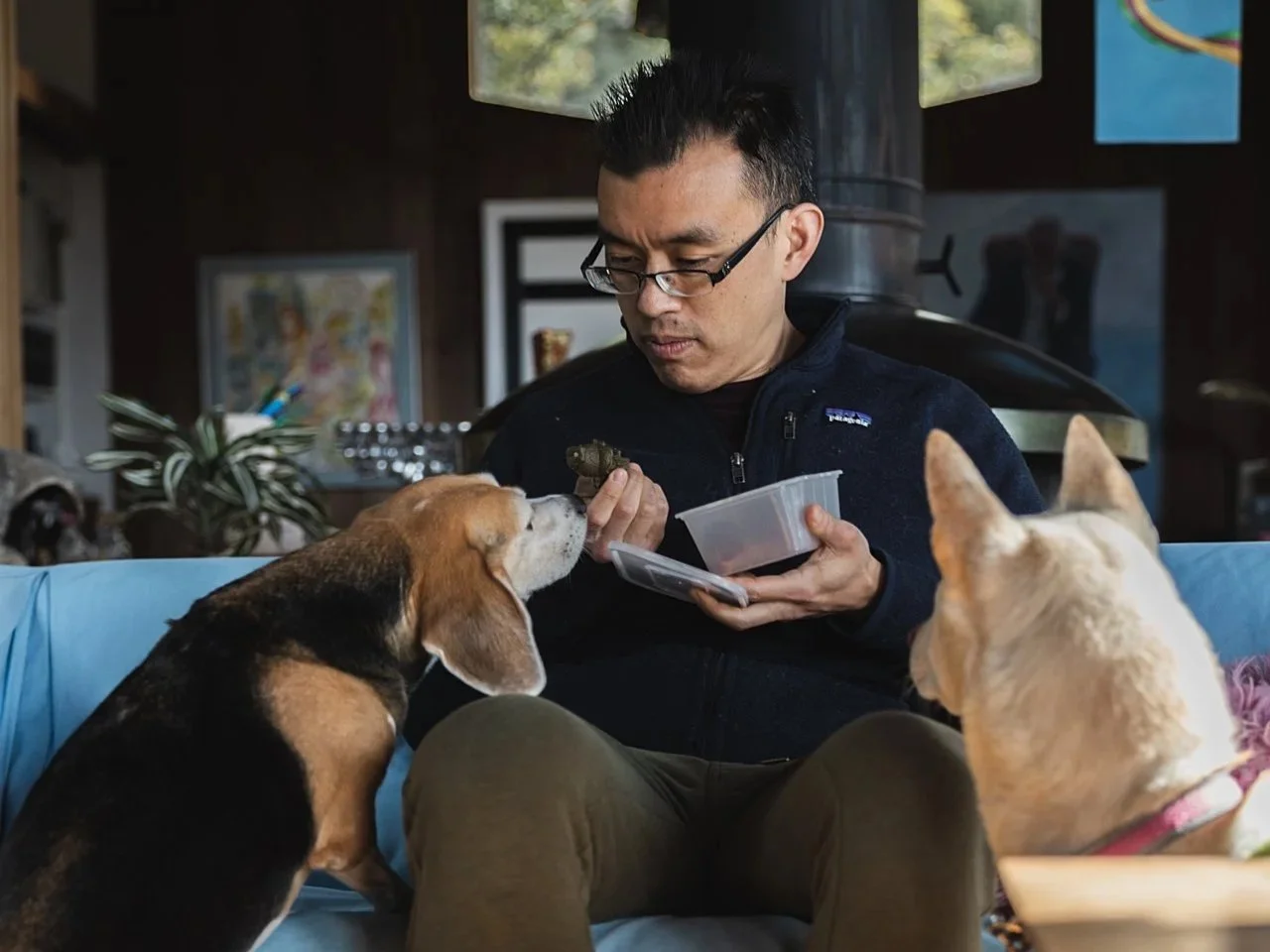
Julie (left), a beagle rescued from Ridglan Farms and Ollie (right), a dog rescued from Yulin, China, Wayne Hsiung (middle). Credit: Rebecca Cappelli Loviconi /We Animals
Wayne Hsiung, an attorney who has long campaigned against Ridglan, accused the special prosecutor, Tom Gruenke, of working with Ridglan to “cover up the abuse.”
On March 15, Hsiung organised an open rescue at Ridglan, with around sixty activists breaking into the facility.
The story gained mass media attention and inspired a huge wave of public sympathy. As a result, over 1,000 people took part in the next open rescue operation, on April 18.
Activists were attacked by law enforcement, who used rubber bullets, pepper spray, and tear gas. Several activists sustained injuries, and a civil lawsuit has since been filed against the Dane County Sheriff’s Office over the use of force.
Now, the legal removal of 1,500 beagles represents the most positive development so far.
The Big Dog Ranch Rescue, which has facilities in Florida and Alabama, will take responsibility for 1,000 of the beagles, while the Center for a Humane Economy will work with partner organizations including the Beagle Freedom Project and the Wisconsin Puppy Mill Project to handle and rehome the rest.
Lauree Simmons, founder of Big Dog Ranch Rescue, said that the details of the agreement would remain confidential, and so couldn't disclose how much was paid for the 1,500 beagles.
While crediting the activists for “putting the message out”, Simmons said that “what we did, we wanted to do legally and in the best way and for the best outcome of these dogs for the future.”
The beagles will need medical care, socialization, and time to adjust, before being made available for adoption. If adoption doesn’t work out, they can stay at the Big Dog Ranch Rescue in Loxahatchee, Florida, which is the largest cage-free, no-kill facility in the country.
We Have A Favor To Ask…
Species Unite amplifies well-researched solutions to some of the most abusive animal industries operating today.
At this crucial moment, with worldwide momentum for change building, it’s vital we share these animal-free solutions with the world - and we need your help.
We’re a nonprofit, and so to keep sharing these solutions, we’re relying on you - with your support, we can continue our essential work in growing a powerful community of animal advocates this year.
Plant-leather boots, cruelty-free bags, and animal-free versions of your favorite brands - see our full guide to the best cruelty-free alternatives to iconic fashion staples.