
One of the United State’s largest primate research centers could become a sanctuary
The potential transformation of the Oregon National Primate Research Center could offer freedom to thousands of monkeys used in biomedical research.
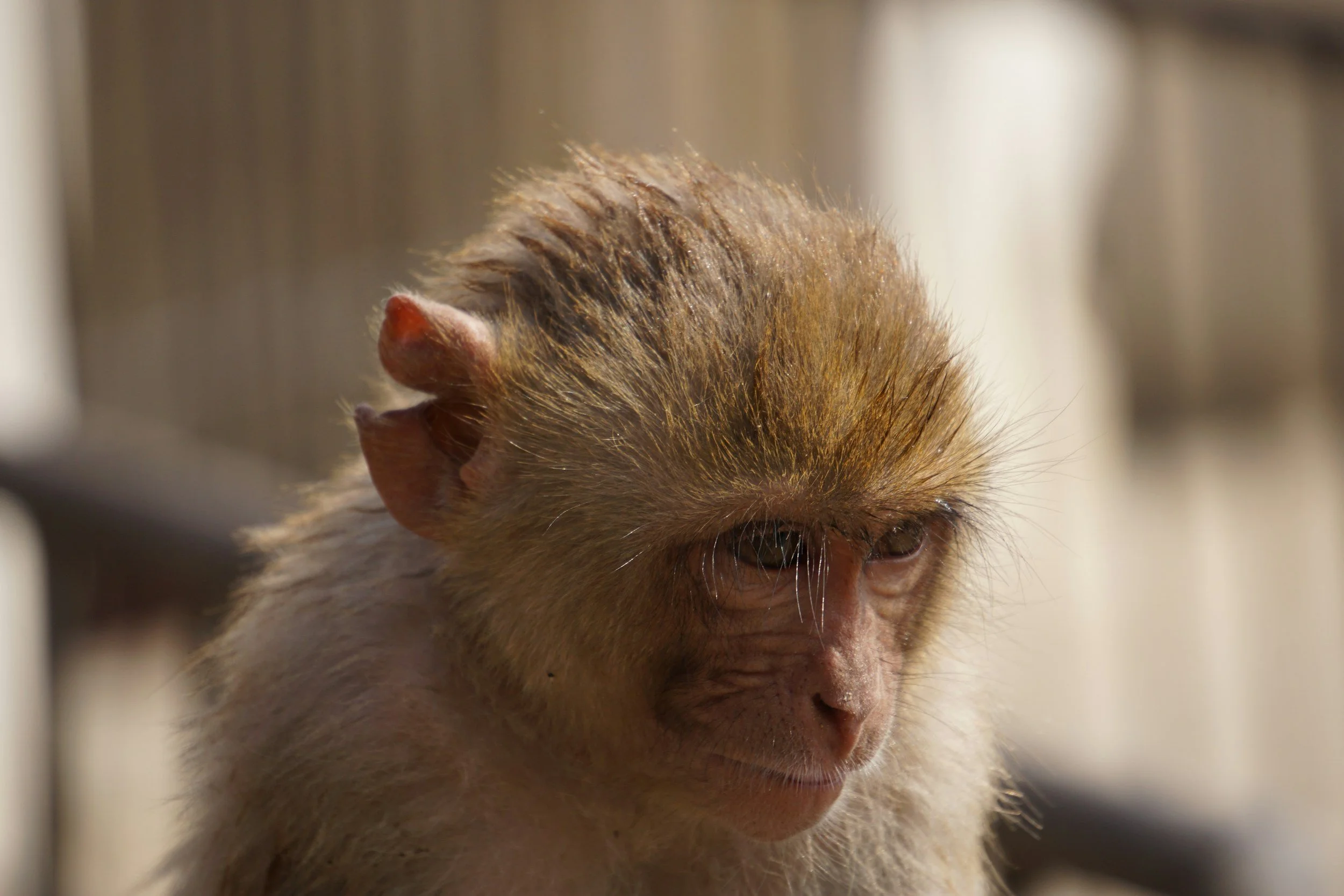
One of the largest monkey research centers in the United States could transition into a primate sanctuary in a move that could see approximately 5,000 monkeys retire from biomedical research.
The Oregon National Primate Research Center (ONPRC), operated by the Oregon Health & Science University (OHSU), is one of seven national primate research centers.
The OHSU was approached by the National Institutes of Health (NIH) earlier this year about the possibility of federal funding being used to retire the primates and transition the research facility into a sanctuary.
On February 9, the OHSU’s board of directors voted unanimously to explore the potential transition plan. This means there will now be a six-month negotiation period with NIH during which, the majority of primate breeding will be paused.
“Today’s resolution by the Oregon Health and Science University Board of Directors was truly overdue, and so welcome,” said Kathleen Conlee, vice president of animal research issues at Humane World for Animals. “The Oregon National Primate Research Center history of failing to meet even minimal standards of animal care has resulted in immense suffering and the deaths of hundreds of primates.
“The university’s commitment to work with the NIH to explore transitioning the research center into a federally funded primate sanctuary represents a rare and critical opportunity that all should welcome, because it will set us on a path toward better science without causing animal suffering,” Conlee continued.
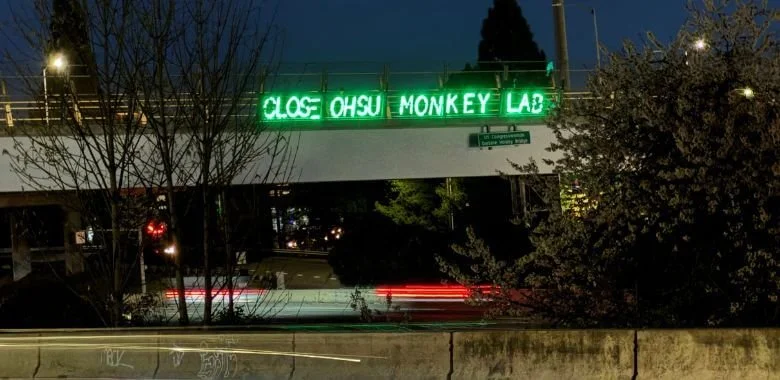
Credit: PETA
The research center is the largest and oldest site in the U.S., and holds an estimated 5,000 primates including various macaque species (Rhesus, Japanese, and Cynomolgus) and a small number of baboons and squirrel monkeys.
Nearly 1,000 monkeys each year are subjected to substance abuse and infectious disease experiments, often using pregnant mothers, before they are killed, according to Humane World for Animals. In connection with these experiments, OHSU has accumulated multiple federal Animal Welfare Act violations and warnings.
“It will require bold actions like this to meet the commitment of the current administration to reduce and end federally funded animal experimentation,” said Tracie Letterman, vice president of federal affairs at Humane World Action Fund. “Federal agencies are shifting toward modern, non-animal testing methods, a sign of major transformation in how biomedical research and safety testing are conducted. By working with the NIH to consider closing the Oregon National Primate Research Center, invest in these new technologies, and provide safe retirement for thousands of monkeys, OHSU can distinguish itself as a leader in the drive toward more effective, humane approaches that better protect human health and the lives of animals.”
Dr. Melissa Lee, a pathologist and graduate of OHSU medical school, told OPB that monkeys are a poor model for humans, and argued that scientists have an obligation to look past the impulse to preserve tradition: “Humans have 46 chromosomes, rhesus monkeys have 42. Those differences are not abstract,” she said. “Too often, studies that appear promising in animals fail when applied to humans.”
The move comes at a time when major shifts are underway in the animal testing world. In November 2025, the Centers for Disease Control and Prevention (CDC) announced it is ending its monkey research, while new Food and Drug Administration (FDA) is encouraging alternative testing methods.
What can you do?
Watch and share: 30,000 Monkeys in Our Backyard. This new Species Unite documentary exposes the hidden realities of the animal research trade and reveals what happens when corporate power meets small-town America.
Demand the U.S. government ban monkey imports from Cambodia. Sign here.
We Have A Favor To Ask…
Species Unite amplifies well-researched solutions to some of the most abusive animal industries operating today.
At this crucial moment, with worldwide momentum for change building, it’s vital we share these animal-free solutions with the world - and we need your help.
We’re a nonprofit, and so to keep sharing these solutions, we’re relying on you - with your support, we can continue our essential work in growing a powerful community of animal advocates this year.
More stories:
Significant investment and revised regulations across four government agencies are part of an ongoing effort to support innovative scientific research ahead of “outdated” testing on animals.