
Gray wolf appears in LA county after over a century
A three-year-old grey female crossed into the county in early February – a first in a hundred years.
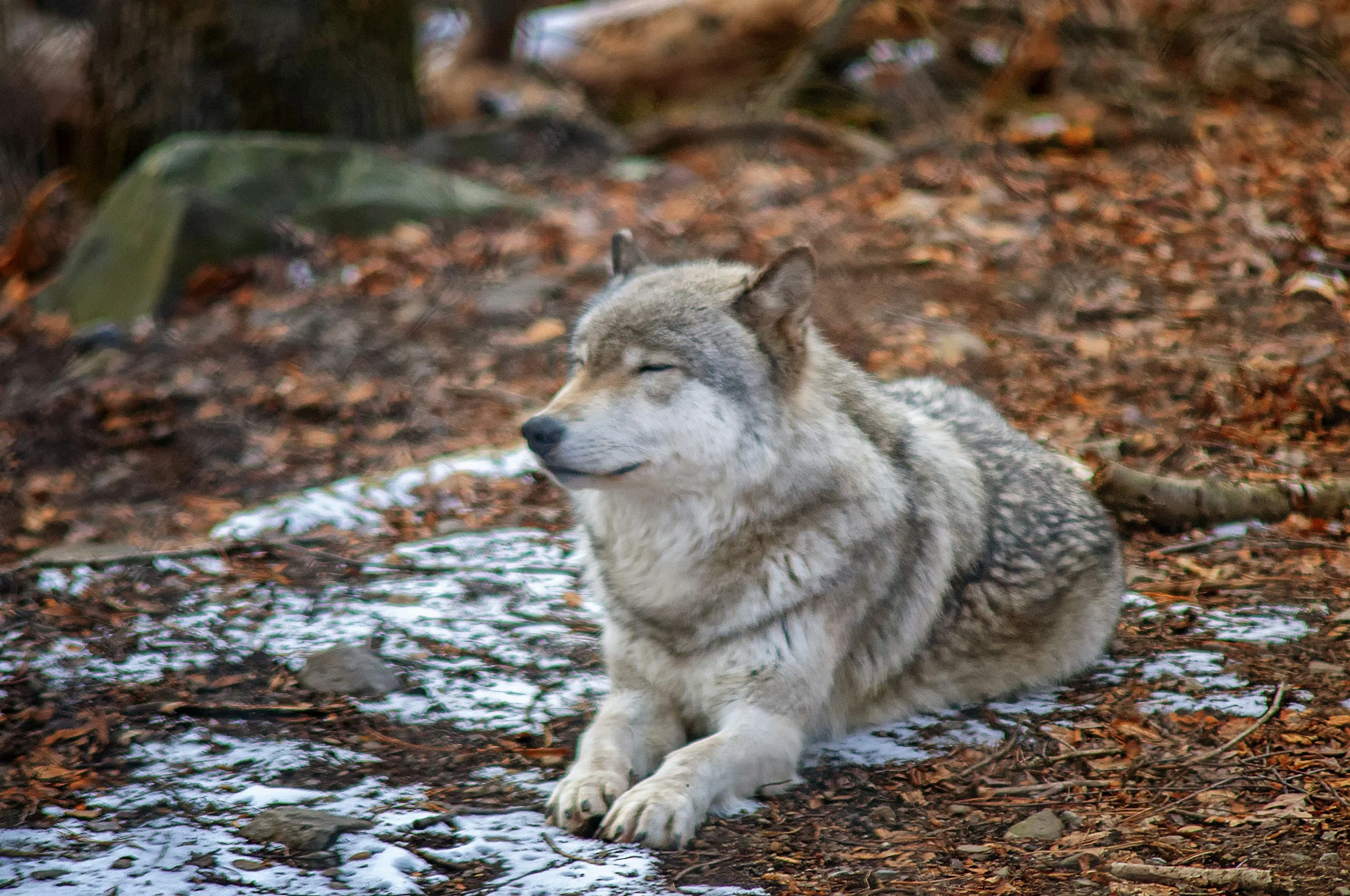
On Saturday 7 February, a female grey wolf was seen crossing into Los Angeles county around 6am, in Neenach, a town located in the northwestern part of the county.
This individual, born in 2023 as part of the Beyem Seyo pack in Plumas county, is believed to have walked across the Sierra Nevada mountains in search of a mate.
Wildlife experts were able to track the wolf's position due to a GPS collar that she was fitted with in May 2025 as she was passing through Tulare County. The wolf, referred to as BEY03F, marks the first sighting in the area in over a hundred years.
“This is the most southern verified record of a gray wolf in modern times,” Axel Hunnicutt, gray wolf coordinator for the California department of fish and wildlife, told The Guardian. “It’s possible she may continue to travel hundreds of miles in search of a mate or she may come across a male tomorrow.”
Historically, thousands of grey wolves were part of the continental United States ecosystem (including species native to California) prior to the 1920s, before their population was eradicated by habitat loss, hunting and trapping. In fact, human activity is the leading cause of the decline in wolf numbers.
The animal agriculture industry also played a big part in the disappearance of the species: perceived as a threat to livestock, wolves have been euthanized due to the threat they are believed to pose to cattle ranchers' income.
Over the past few decades, wolf populations have slowly but steadily started to rebound – and a huge part of that is the Endangered Species Act of 1973. This legislation protects animals for hunting and trapping activity and allows them to expand their populations.
Reintroducing wolves into Yellowstone National Park in the 1990s also led to numbers increasing. Today, at least 70 wolves can be found in California, with nine confirmed packs in the state. Even so, the species is considered endangered in the contiguous United States.
Do wolves constitute a threat to humans?
Since the animals' return to California, no humans have been harmed or attacked. Experts conclude that attacks on humans are very rare. In contrast, humans are an immense threat to wolf populations. This is particularly evident when taking legislation into account: in February, the Center for Biological Diversity filed a lawsuit against the Trump administration’s refusal to work on a recovery plan for grey wolves – something the Biden administration's Fish and Wildlife Service had announced in 2024. A year later, these plans were dismissed, with the grey wolf's listing under the Endangered Species Act considered “no longer appropriate.”
With the climate crisis still raging and human activity still harming a variety of species on an alarming rate, action is still needed – and while BEY03F wandering into the area is a good sign, a lot of work is yet to be done to truly restore a once-thriving species.
We Have A Favor To Ask…
Species Unite amplifies well-researched solutions to some of the most abusive animal industries operating today.
At this crucial moment, with worldwide momentum for change building, it’s vital we share these animal-free solutions with the world - and we need your help.
We’re a nonprofit, and so to keep sharing these solutions, we’re relying on you - with your support, we can continue our essential work in growing a powerful community of animal advocates this year.



Significant investment and revised regulations across four government agencies are part of an ongoing effort to support innovative scientific research ahead of “outdated” testing on animals.